Posts in Technology
Apple Trains Their Sights on Google (and Waze)

Sami Fathi, also reporting for MacRumors:

Starting with iOS and iPadOS 14.5, Apple will proxy Google's "Safe Browsing" service used in Safari through its own servers instead of relying on Google as a way to limit which personal data Google sees about users.

While Google doesn't know which specific URL you're trying to visit, it may collect your IP address during its interaction with Safari. Now on iOS/iPadOS 14.5, that's no longer the case.

Juli Clover, reporting for MacRumors:

The iOS 14.5 beta, available to developers and public beta testers, adds a new Apple Maps feature that lets you report accidents, hazards, and speed checks along your route when getting directions.

Apple is out for blood with the privacy measures, and I’m here for it.

The change for safe browsing doesn’t seem like a big deal and it isn’t something users will notice, since Google wasn’t getting the URL you were gong to in the first place, but this also prevents them from getting your IP address, and a good rule of thumb is the less information funneled through Google, the better.

However, the change for Maps is huge. If it proves popular, it could effectively kill Waze on iOS. Apple’s implementation of crowdsourced traffic conditions certainly isn't as robust and feature heavy as Waze, but honestly, Waze was a pain to use from a design perspective, and its feature set was bloated. Apple’s option is a lot more straightforward while still conveying most of the data you’d want. I could see them expanding it a little bit in the future (to give more specific options for road hazards, or to indicate heavy traffic without any apparent accidents), but since it is a feature that most people will use while driving, the simpler it is to report conditions, the better.

These are two great steps to reducing iOS users’ reliance on Google, but the most obvious step remains: stripping Google’s status as the default search engine in Safari. That may not be super popular with users at first, but if more people realized that Google remembers every query they make and then uses that data against them, AND the new default search engine is at least 90% as good as Google (which has been getting steadily worse, increasingly bloated with advertisements), I think Apple could throw up a splash screen that would convince people to try the new option (or just don’t even clue users in until they start making queries and notice they aren’t landing on Google). Speaking of that new option, I think the best bet would be for Apple to just build their own search engine, but they could also set DuckDuckGo (the browser I personally use, because it doesn’t track or record your search history and sell you out to companies looking to buy that data) as the out-of-the-box browser and make users change it back to Google if they don’t like DDG, perhaps even explaining the privacy differences in the settings menu or forcing them to tap accept on a pop up acknowledging that they’re choosing to use a search engine that tracks them.

The Insurrection and the Faustian Bargain

Charlie Warzel and Stuart A. Thompson, reporting for The New York Times:

Surrendering our privacy to the government would be foolish enough. But what is more insidious is the Faustian bargain made with the marketing industry, which turns every location ping into currency as it is bought and sold in the marketplace of surveillance advertising.

[…]

A source has provided [The New York Times with] another data set, this time following the smartphones of thousands of Trump supporters, rioters and passers-by in Washington, D.C., on January 6, as Donald Trump’s political rally turned into a violent insurrection.

[…]

The sacking of the Capitol was a shocking assault on the republic and an unwelcome reminder of the fragility of American democracy. But history reminds us that sudden events — Pearl Harbor, the Soviet Union testing an atomic bomb, the Sept. 11 attacks — have led to an overreach in favor of collective security over individual liberty that we’d later regret. And more generally, the data collected on Jan. 6 is a demonstration of the looming threat to our liberties posed by a surveillance economy that monetizes the movements of the righteous and the wicked alike.

The data we were given showed what some in the tech industry might call a God-view vantage of that dark day. It included about 100,000 location pings for thousands of smartphones, revealing around 130 devices inside the Capitol exactly when Trump supporters were storming the building.

[…]

The data presented here is a bird’s-eye view of an event that posed a clear and grave threat to our democracy. But it tells a second story as well: One of a broken, surreptitious industry in desperate need of regulation, and of a tacit agreement we’ve entered into that threatens our individual privacy. None of this data should ever have been collected.

[…]

This collection will only grow more sophisticated. This new data set offers proof that not only is there more interest in location data than before, but it is also easier to deanonymize. It gets easier by the day. As the data from Jan. 6 eerily demonstrates, it does not discriminate. It harvests from the phones of MAGA rioters, police officers, lawmakers and passers-by. There is no evidence, from the past or current day, that the power this data collection offers will be used only to good ends. There is no evidence that if we allow it to continue to happen, the country will be safer or fairer.

In our previous investigation, we wrote that Americans deserve the freedom to choose a life without surveillance and the government regulation that would make that possible. While we continue to believe the sentiment, we fear it may soon be obsolete or irrelevant. We deserve that freedom, but the window to achieve it narrows a little more each day. If we don’t act now, with great urgency, it may very well close for good.

Excellent reporting, you should really read the full article. For additional context, also check out their 2019 piece, “One Nation, Tracked” as well as CopyrightBro’s commentary on it.

The thing to understand here is that it wasn’t just the insurrectionists at the Capitol that were being tracked, and they weren’t specifically targeted for this tracking beforehand. Granted, they’re probably a little bit stupider on average than most Americans, but probably not to the extent that they were more susceptible to the tracking and data collection that made it possible for a private company to compile all this information and recreate minute-by-minute itineraries of their little field trip to D.C.

Everyone’s phones (Android devices to a greater degree than iPhones, but still) are collecting troves of data about their lives and their behavior, practically at all times, and turning it over to creepy companies you’ve never heard of that can sell it or use it themselves to do astoundingly unethical, privacy-invasive shit like what we’ve seen here. Sure, there are some settings you can change to make it harder for them to spy on you, and CopyrightBro is committed to helping you understand what you can do, but this problem is too big to be solved by any amount of accountability journalism, hard hitting exposés from the New York Times, or even attempts by well intentioned companies like Apple to pressure their competitors to play by a fair, understandable set of rules. This problem requires sweeping regulation.

This is so much bigger than any one company, but it bears repeating: #deletefacebook

Apple & Privacy: An Explainer

Apple’s Privacy page has gotten a fresh update that explains how their products work together to keep your data safe from prying eyes. It includes this useful PDF, which uses an anecdote of a father-daughter date at the park to flesh out all the unethical, privacy invasive data collection tactics companies use to spy on you. It’s a good way to get your arms around just how ready and able companies are to unethically collect, analyze, and redistribute your data without your consent, and it also demonstrates how the tools Apple builds into their products can help you protect yourself in tangible ways. Even if you already have an Apple product, I implore you to check out the site and read the PDF.

If you aren’t sure about whether Apple’s commitment to privacy is genuine, or you don’t believe their products and services are substantially more respectful of their users privacy, the PDF explainer should convince you. Apple’s commitment to privacy is real, and it’s infinitely stronger than the other tech giants like Facebook and Google because Apple’s bottom line depends on selling you cool devices rather than selling you out to advertisers.

PSA: Turn Off iCloud Backup to Prevent Government Surveillance

Given CopyrightBro’s founder’s history of employment with Apple, Inc., we are especially well equipped to serve and inform Apple product owners of the best practices to get the most out of their devices while protecting their privacy. This PSA, like many of our PSAs, is intended for people who use Apple products, and the advice contained herein is not applicable to Android devices or non-Apple PCs. If you have an iPhone or iPad, continue on:

That’s a bold, scary headline, we get it. Here’s what you need to know: there is an intentional design flaw present in Apple’s iCloud Backup system that can allow the government to spy on you and that can provide them with complete access to the full contents of your device. But it is fixable, and we’ll tell you how.

The first question, naturally, is “why is it an intentional flaw?” This is a good question, and the answer is that Apple doesn’t see it as a flaw. iCloud Backups exist to help everyday consumers who either aren’t concerned about privacy or aren’t very tech savvy by giving them a backup plan in case something happens to their device, so that they can just log into iCloud from a new device and recover all their data without missing a beat. It’s intended to be very easy for customers: they happen automatically, they’re turned on by default, and there’s really nothing you need to do, and if you forget your password, Apple can still help you access your data because they keep a spare key. However, this ease of use comes at a price: privacy. Because Apple does keep that key to help you recover your data if you lose your password, the data can never be totally safe. The keys Apple keeps are subject to government subpoenas, meaning the government could at any time force Apple to turn over your iCloud backups, which would provide them with a snapshot of everything on your device at the moment the backup was created.

While Apple wants to be able to help their customers in case they forget their passwords and sees the spare key as a feature, CopyrightBro sees it as a design flaw. We’ve been aware of this flaw for months now, but the reality was that it wasn’t really something that everyday people needed to worry about, so we didn’t warn our readers. However, following the terrorist attack at the U.S. Capitol, the facts on the ground have changed. In recent days, there have been a lot of conversations about domestic terrorism and how the government may adapt to face the challenge that white supremacists, Qanon, and other extremist groups pose to our nation, with a lot of speculation that authorities may seek to expand their power to surveil U.S. citizens to collect intelligence that could aid in the prevention of these types of attacks.

CopyrightBro stands firmly against any and all violent extremist groups, but we don’t believe the United States government needs any more tools to allow them to spy on law abiding U.S. citizens; with just a little bit of reform, we can remove some of the institutional racism that plagues our government agencies, allowing them to be much more effective at stopping far right extremism (or any other domestic terrorism threats) without invading everyone else's privacy.

In the past few months, government officials have argued that we should get rid of end-to-end encryption altogether, but that is simply not feasible and it would put countless vital government and civilian systems in jeopardy of being exploited. Our society depends on some information being able to stay truly private, and we should not budge when it comes to protecting our right to digital privacy.

Given those pushes and the renewed interest among the intelligence community to increase surveillance of American citizens to prevent domestic terrorism, CopyrightBro feels that now is the proper time to warn our readers about this design flaw in the iCloud Backup system. Until Apple implements an option for customers to protect their backups with end-to-end encryption, knowing the risks of holding the only key to their data, iCloud Backups are simply too vulnerable to government overreach to be trusted. However, there are still iCloud tools you can use to protect the vast majority of your data in a manner that (while still not 100% secure in some cases) is much less susceptible to government surveillance.

This is what CopyrightBro recommends:

  1. Go to Settings → [Your Name] → iCloud

  2. Scroll down and tap “iCloud Backup,” then switch the toggle OFF.

  3. Go back to the previous screen, and under the section called “Apps Using iCloud,” make sure all of the toggles here are switched ON, including “Messages.” These toggles control which of your data use iCloud to sync between devices, and are therefore preserved in iCloud. If you leave any of these switches off and you don’t have a backup, the data in that app won’t be saved if something were to happen to your device.

  4. Tap “Manage Storage" near the top of the page, and then scan the list for any leftover backups. If you find one, tap on it, and then tap delete. You’ll likely have a couple, do this for each of them.

It’s unfortunate, but until such time as Apple introduces a truly private iCloud backup option, disabling it and instead relying on the iCloud syncing toggles is the best balance between privacy and protecting your data.

Apple Announcement via Tim Cook Interview with Gayle King Tomorrow on ‘CBS This MORNING’

I can’t quite imagine what this could be. There are a few things I think it could be, but none seem any more likely than the next.

King made it a point to clarify that Apple’s announcement is not necessarily related to Cook’s comments about holding Donald Trump accountable, and that this announcement/interview was already scheduled. It wouldn’t be like Apple to just whip something up in the days following the attack on the Capitol; this is something they’ve been working on for a while. That said, it did seem relevant enough that they made room in the interview for questions about what should happen to Trump and others who incited the insurrection, so that leads me to think this is something related to politics. Some people think it will be COVID related, but that just doesn’t seem likely to me. Apple has already done the contact tracing thing, and it was rather poorly received. I can’t think of much else they could do in that realm, especially things that would be more well-implemented.

If I’m correct that it will be more related to politics than COVID, there are a number of projects I would like for Apple to be working on that seem within their wheelhouse and could solve some of the problems with our politics. A search engine or social media network that actually values privacy and doesn’t lead people to misinformation would be great, but those both seem too close to “products”, even though they aren’t products in the physical-device sense.

If I had to guess what we’re going to see, I would say they’ll announce something along the lines of a software framework or program that is designed to spur citizens to take more initiative in shaping our politics. Maybe some sort of donation program, or a way to contact legislators and share feedback. Highly unlikely given the challenges of working with 50 different state governments, but what if they’d worked out a secure, verifiable platform for digital voting; that would be revolutionary and absolutely more exciting than any product they could announce.

Time will tell, but I’m very excited to hear what they’ve got to say.

UPDATED: 01/12/21, 23:30

Agonize In Hell, Parler

Tony Romm and Rachel Lerman, reporting for The Washington Post:

Amazon suspended the pro-Trump social network Parler from its Web-hosting service this weekend, a move that threatens to darken the site indefinitely after its users glorified the recent riot at the U.S. Capitol.

Describing Parler merely as a “pro-Trump social network” is a bit rosy, let’s not get it twisted. From racism, sexism, homophobia, antisemitism, and white supremacy, to outright calls for and plans to commit physical violence and anti-democratic terrorism/insurrection like what we saw at the U.S. Capitol, hate speech and vitriol are omnipresent and essential elements of the Parler experience. It is/was a home and a breeding ground for Nazis and Proud Boys.

The e-commerce and Web-hosting giant said Parler had violated its terms of service given its inadequate content-moderation practices, adding in a letter that it would implement its punishment just before midnight Pacific time Monday.

The move by Amazon Web Services, or AWS, marks the latest and most crippling blow for the pro-Trump social network, which has emerged as a haven for conservative users who have fled more mainstream Silicon Valley sites that crack down on harmful, viral falsehoods online. Earlier this week, Apple and Google removed Parler’s app from their stores for smartphone downloads, similarly citing concerns that posts on Parler could contribute to violence.

Parler’s whole schtick was that they were going to be an unmoderated online space for free speech, but they have never been the beacon of free speech they claimed to be. The free speech cover was a thin veneer for an operation intended to provide a Wild West environment for Trump’s base to drive one another closer and closer to the edge of complete delusion and radicalization.

Private companies like Amazon, Apple, and Google have absolutely no constitutional obligation to provide their services to companies who violate their rules or whose values they disagree with. Facebook and Twitter have no obligation to allow users who incite violence and inspire coups to enjoy their platforms. Publishers have no obligation to publish books by seditious senators. It is not censorship and it is not a violation of Parler’s or anyone else’s first amendment rights, it’s the free market at work. Parler, immediately upon its launch, became an infinite cesspool of hatred. Since hate speech is not protected by the first amendment, it’s important to understand that not only can private companies refuse to do business with them, but even if it were Congress that had banned Parler, it still wouldn’t be an infringement of anyone’s first amendment rights. However, that’s exactly what Republicans have tried to assert.

Over the past few days, the far right has gotten a small taste of the social justice they deserve for the first time as the big tech companies have finally stood up to them, one by one. Faced with this incomprehensible reality where their actions have actual consequences, far right mouthpieces from Capitol Hill to trailer parks have been left spluttering, the only semi-coherent talking point they’ve been able to stitch together is that the radical left and big tech have teamed up to cancel and deplatform conservatives. Your dime-a-dozen Trumpers are embarrassing themselves by advertising their primitive understandings of “freedom of speech,” while their Republican elected officials CONTNUE to mislead those very same idiots by perpetuating misinformation about what type of speech the first amendment actually protects and from whom. Cynical assholes Ted Cruz and Josh Hawley have learned no lessons. They deserve to be expelled from the Senate and they deserve to be shamed publicly, never to be taken seriously again.

Bringing things full circle, Parler was funded by the Mercer family, who were directly involved in the Cambridge Analytica scandal that unethically collected mountains of personal data from American voters’ Facebook pages and used it to build profiles of them, which were then used to send them highly targeted ads designed to influence how they voted. Most people familiar with the Cambridge Analytica scandal know that the Trump campaign paid them to help target and turn out persuadable voters in key precincts of swing states, but most people don’t know that before Cambridge Analytica was hired by the Trump campaign (which was only after Trump won the nomination) they had previously been helping none other than Ted Cruz who, with their help and despite his perpetual “I just shit the bed” face, went from the bottom of the list of serious contenders to the last man standing before Trump ultimately clenched the nomination.

Hopefully Parler won’t find another company willing to host their site for any amount of money, but if Republicans are good at anything, it’s finding others whose morality is trumped by their greed.

I was going to title this article “Rest-in-Peace, Parler,” but after 0.5 seconds of consideration, it occurred to me that that would be far too kind a sentiment for the greedy, ill-intentioned assholes at Parler.

Trump Suspended From Twitter, Facebook, Instagram, Online Store Disabled

Should’ve happened a long time ago, but silencing this manipulative, selfish, petty monster is an important step in holding our democracy together for the next two weeks. I wonder if Elon Musk had anything to do with it, his tweet was clever and spot on.

For what it’s worth, Shopify also disabled Trump’s online store. Now Amazon needs to step up and remove all Trump merchandise from their marketplace.

Google Hasn’t Updated Any of Their iOS Apps in a Month, Seemingly Wanting to Avoid Apple’s Privacy ‘Nutrition Labels’

Michael Grothaus, reporting for Fast Company:

The last time any Google iOS app was updated was on December 7. This includes updates to major Google apps like Google Drive, YouTube, Google Docs, Google Sheets, YouTube Music, Google Duo, Google Authenticator, and Gboard.

Why is December 7 a significant date? Because starting on December 8, Apple mandated that any new apps or app updates submitted to the App Store would require the developer to fill out the privacy label information for the app it was submitting. This privacy label reveals exactly what data the app is collecting about the user and how that user data is being used. 

I’m sure this is just a coincidence. 🙄

Facebook Employees Aren't Buying Their PR Department's "Apple's Privacy Features Hurt Small Business" Spiel

I guess we’re taking “Buzzfeed News” seriously now? Whatever. Craig Silverman and Ryan Mac, reporting for Buzzfeed News:

[…]Facebook employees complained about what they called a self-serving campaign that bordered on hypocrisy, according to internal comments and audio of a presentation to workers that were obtained by BuzzFeed News. A change in Apple’s iOS 14 mobile operating system — which requires iPhone owners to opt in to allow companies to track them across other apps and websites — hurts Facebook, some employees argued on the company’s private message boards, and their employer was just using small businesses as a shield. […]

“It feels like we are trying to justify doing a bad thing by hiding behind people with a sympathetic message,” one engineer wrote […]

Several employees seemed unconvinced by the presentation. Some did not understand how Apple’s changes would negatively affect small businesses, while one said Facebook’s attempt to undermine Apple’s privacy policy made it “a traditional trojan virus.” […]

“The only thing I’m hearing, again and again, is ‘this is bad for the businesses,’ and I’d really like someone at the top to explicitly say, ‘People are better off if they don’t know what we’re doing, if we don’t have to explain ourselves to them, if they don’t get a choice to opt in or opt out of our practices, if we obscure it as much as possible behind interesting features and then get them to accept surreptitious tracking on the back end as long as we downplay it,’” they wrote

I’m glad these individuals are speaking up about how shitty Facebook’s tracking practices are, but where have their voices been for the past decade? They’re way late to the party; they aren’t heroes, they’re squeamish accomplices.

Thoughts on The Possibility of Touchscreen Macs

The possibility of touchscreen Macs coming to market in the next handful of years is a hot topic with a lot of intense debate, and I want to add my thoughts to the discourse about what I think Apple will do and what I would like Apple to do.

I think Apple is going to introduce Macs with touchscreens the next time they update the physical design, likely in late 2021 or 2022. I was curious if they would introduce touch screens when they announced the M1 Macs, but in hindsight, it wouldn’t have made a ton of sense.

For argument’s sake, let’s presume that Apple always knew that within the next two years or so that they were going to 1. transition to Apple Silicon chips, 2. update the physical design of the MacBook Pro (which has been the same since 2016) and possibly the MacBook Air (which has been the same since 2018), and 3. add touchscreens. That’s a lot of advancements. And as difficult as it is to get sustained attention in today’s media environment, I think it makes sense from a marketing perspective that they would try to time these advancements to give them the most positive coverage as possible. Given how powerful and efficient the M1 is, it seems obvious that Apple knew beforehand that they would get a lot of great press when they released machines that used it, regardless of whether the machines looked the same on the outside or not. That’s exactly what happened. The other two changes, however, had the potential to feel cosmetic (in the case of the physical design update) and overdue and gimmicky (in the case of touchscreens), if they were to incorporate those features asynchronously. To me, it seems like the best way to roll out those three updates would be to first put out the new chips, let people “oooh” and “aaah” over them, and use the next year or so to iron out any kinks. Then, a year or two later, release machines with a new form factor and touchscreen support, completely ushering in a new era of Mac hardware, and reap the media coverage benefits of a new design and a new input method at the same time.

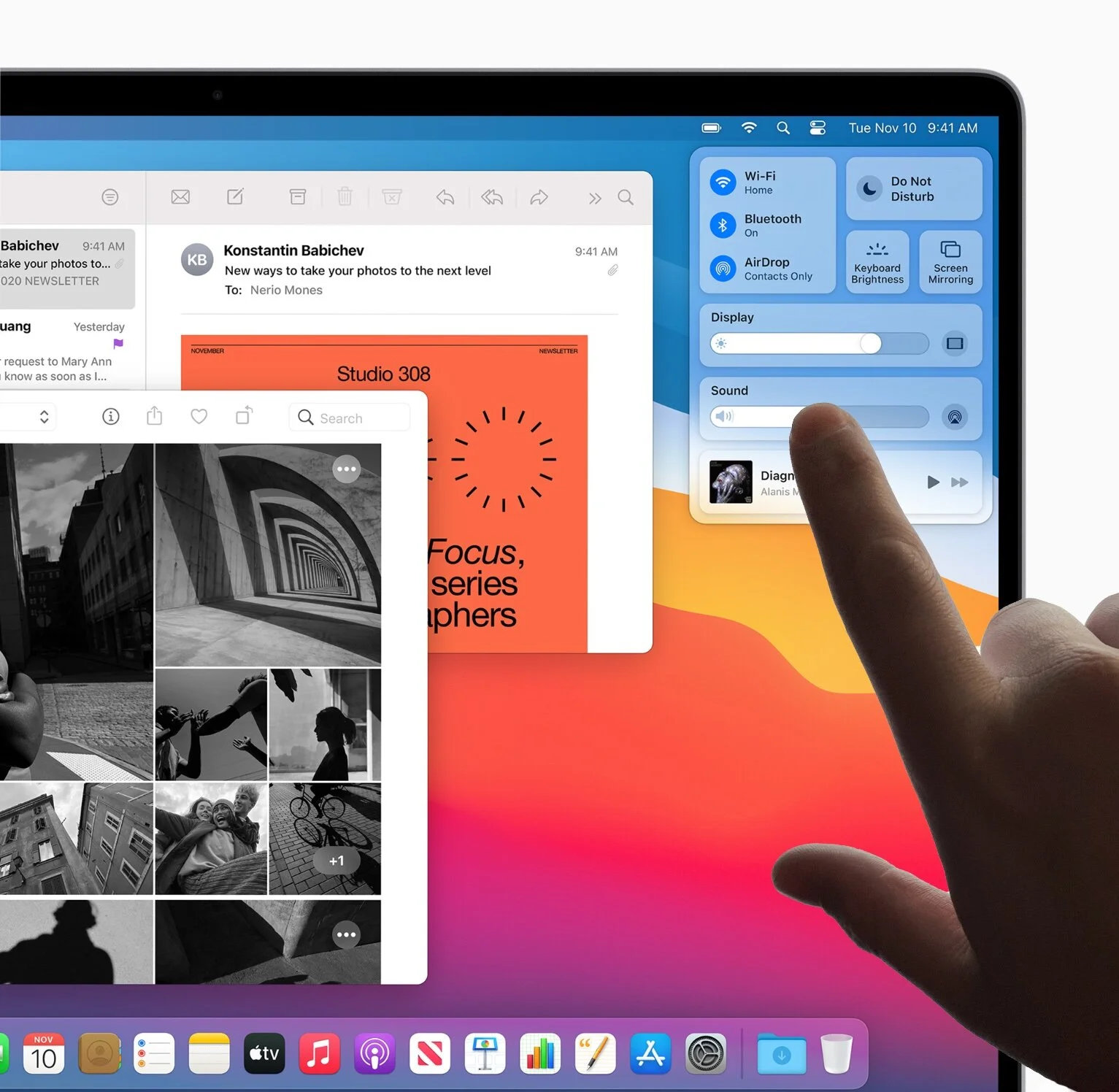
There are a few breadcrumbs I point to as indicators that this is probably Apple’s plan, namely the updated UI elements in macOS Big Sur. I know, I know, Craig Federighi has said that they didn’t even consider touchscreen support when redesigning some interface elements, but of course he said that. The truth is that elements like the Control Center, the straight-from-iOS widgets, and the new, rounded-off-square app icons are all begging to be poked by a crude, imprecise finger, as opposed to clicked by a nimble little cursor. Frankly, if they weren't designed for touch, then they’re just unattractive and inefficient, wasting display real estate (particularly Control Center, they could’ve fit so many more toggles and checkboxes in there if they were appropriately sized for manipulation with a cursor).

As far as what I would like for Apple to do: I want them to add touchscreens.

Now, I understand the concern that touchscreen Macs would have to go through some rather extensive UI redesigns to make the whole operating system navigable via touch. For a while, I was solidly on the team who never wanted touchscreen Macs. After all, pretty much all touchscreen laptops suck, and it’s uncomfortable to spend any amount of time with your arm hovering in the air to touch a vertical pane. But just because other companies couldn’t do something well doesn’t mean Apple can’t come right in and eat their lunch, “best not first” is Apple’s whole schtick. But the fact that touchscreen laptops are uncomfortable and finicky to use is not at all the point. Many PC manufacturers really put their eggs in the touchscreen basket, and they positioned their touchscreen machines in a very gimmicky way and created so much (undeserved) hype that made it seem like you were supposed to use your finger to control them all the time.

Apple knows the Mac is at it’s most powerful as a cursor-first device, and they won’t try to change that any time soon for a brief spell of good advertising fortune. I think they love the Mac as it is, but I think they recognize that they can make it better by allowing people to use their fingers to interact with the Mac when it feels natural. Not everything needs to be done with a finger, and redesigning the entire UI to that end would waste tons of screen real estate and slow down most users. But they could redesign a few things without harming the experience, and the convenience of being able to touch the screen would provide more value than it would cost.

When I first tried the iPad Pro Magic Keyboard, I was skeptical about cursor support on a device that was always designed for Touch. The truth is, it’s not a perfect experience. There are instances where the cursor seems too small and slow, and where my finger could whip around the operating system with a lot more ease. But it does have its advantages: for example, selecting text is far more convenient with a cursor. The situation would be similar on the Mac. Using your finger all the time wouldn’t be a perfect experience, but for simple gestures like scrolling or tapping an app icon, it can be a lot faster and more convenient. In fact, since I bought the iPad Pro Magic Keyboard, my use of my iPad has increased by a factor of ten, seriously. I’m so used to it that on a weekly basis now, I embarrass myself by reaching up to touch the screen of my Mac. It’s not that I don’t like my Mac and have therefore made a conscious choice to use the iPad instead, it’s just that it offers me more input methods that give me greater flexibility to manipulate small on-screen objects with precision and still enjoy the convenience and expediency of swiping and tapping the screen with a finger. More input methods has directly led to fewer annoyances when interacting with the device, and I think the Mac could enjoy the same (inverse) benefits.

American Citizens’ Zoom Calls Are Being Censored By The Chinese Government

Drew Harwell and Ellen Nakashima, reporting for The Washington Post:

A security executive with the video-tech giant Zoom worked with the Chinese government to terminate Americans’ accounts and disrupt video calls about the 1989 massacre of pro-democracy activists in Tiananmen Square, Justice Department prosecutors said Friday.

[…]

Prosecutors said the China-based executive, Xinjiang Jin, worked as Zoom’s primary liaison with Chinese law enforcement and intelligence services, sharing user information and terminating video calls at the Chinese government’s request.

Jin monitored Zoom’s video system for discussions of political and religious topics deemed unacceptable by China’s ruling Communist Party, the complaint states, and he gave government officials the names, email addresses and other sensitive information of users, even those outside China.

We’ve known Zoom has plenty of issues for a while now, but this is outrageous. Where is our strongman president when foreign adversaries are directly impeding American citizens’ freedom of speech? He’s made a huge issue about social media companies and their alleged censorship of conservative voices (which is bullshit), but now that there’s real censorship of Americans by China, he’s silent, either too stupid to understand what’s going on, too selfish to care, or so pathetic that he’s still nursing his post-election wounds.

The first amendment was designed to protect Americans against government overreach, but I never imagined we would have our first amendment rights challenged or stripped away by another government than our own. There has to be consequences for this.

The Feds Versus Facebook

Rob Price, writing for Business Insider earlier this year:

In an email to Facebook's chief financial officer at the time, Zuckerberg said Facebook wanted to buy Instagram to give itself more time to fend off competitors.

"One way of looking at this is that what we're really buying is time. Even if some new competitors springs up, buying Instagram, Path, Foursquare, etc now will give us a year or more to integrate their dynamics before anyone can get close to their scale again," he wrote. "Within that time, if we incorporate the social mechanics they were using, those new products won't get much traction since we'll already have their mechanics deployed at scale."

Mark Zuckerberg.

Isobel Asher Hamilton, Katie Canales, and Paige Leskin, reporting for Business Insider last week:

The lawsuits allege that Facebook used a strategy of neutralizing competitors before they could threaten the company's dominance of the social-media market. The suits call out Facebook's decisions to buy rather than compete with Instagram and WhatsApp, and they allege it imposed "anticompetitive conditions" on software developers.

Both complaints seek a "divestiture of assets" for Facebook — that is, breaking off Instagram and WhatsApp from the social-media giant. Additionally, Facebook could be required to get approval from the government before any mergers or acquisitions in the future.

[…]

The coalition of attorneys general, led by New York Attorney General Letitia James, began an investigation into Facebook in September 2019, and the FTC subsequently joined. Attorneys general from 46 states as well as Washington, DC, and Guam have signed on to the lawsuit. The only states whose attorneys general have not signed on are Alabama, Georgia, South Carolina, and South Dakota.

Forty six states. That’s more than enough to pass a constitutional amendment. Facebook is about to get fucked up.

This investigation (and any resulting regulation) is clearly focusing on antitrust issues, but I sincerely hope that congressional leaders take a long hard look at Facebook’s privacy practices while they’ve got them under the microscope.

I hope Facebook gets what they deserve for capitalizing on the destruction of privacy and the polarization of the American people.

#deletefacebook

Facebook Attacks Apple In The Name Of Small Business. No, Seriously.

Hartley Carlton, reporting for MacRumors:

Facebook has today attacked Apple in a series of full-page newspaper ads, asserting that iOS 14's privacy changes regarding data gathering and targeted advertising are bad for small businesses (via Bloomberg).

The ads are running in the New York Times, Wall Street Journal, and Washington Post, feature the headline "We're standing up to Apple for small businesses everywhere."

Earlier this year, Apple introduced a number of privacy changes that curb the ability of companies like Facebook to gather data on users and target adverts. In ‌‌iOS 14‌‌, Apple has made the "Identifier for Advertisers," used by Facebook and its advertising partners for ad targeting, an opt-in feature, providing more transparency for users who would prefer not to be tracked in apps and on websites. The update simply asks users if they want to agree to ad tracking or prevent cross-app and cross-site tracking to provide targeted ads.

I was going to post the text of the ad and pick it apart line by line, but it would be a waste of time. Facebook has committed a logical fallacy, completely misrepresenting what Apple has chosen to do (which is give people more control over what data they share with big companies) as some sort of offensive play against small businesses. It’s a strawman argument designed to make small businesses look like the victims of Apple’s “forced software update”.

John Gruber recently wrote about this on Daring Fireball, again making the salient point that the privacy issue boils down to entitlement:

The entitlement of these fuckers is just off the charts. They have zero right, none, to the tracking they’ve been getting away with. We, as a society, have implicitly accepted it because we never really noticed it. You, the user, have no way of seeing it happen. Our brains are naturally attuned to detect and viscerally reject, with outrage and alarm, real-world intrusions into our privacy. Real-world marketers could never get away with tracking us like online marketers do.

This so clearly isn’t about small businesses not being able to advertise as effectively, it’s about facebook no longer being able to run behind you with a shop-vac, sucking up every crumb of data you leave behind. Don’t think they aren’t still trying though, Apple’s privacy tools are just limiting their ability to do so a little, taking them down from an industrial grade shop-vac to a consumer grade Dyson.

But still, let’s humor Facebook for a second and respond to their strawman argument. Here’s my take: if you built a small business that relies on Facebook (for advertising or any other aspect of your business), then you built a shitty small business. You put all your eggs in one basket, so captivated by the reach they could offer you that you didn’t consider the risks of relying on a company whose business model was inherently unethical and who could pull the rug out from under you at any moment. The problem here is not Apple giving people control over their own data, it’s that your small business was built on a foundation of stolen information that facebook gobbled up and turned into something you could use to target potential customers with. Looks like it’s time for you to find a more honest way to reach potential new customers.

iPhone 12 & iPhone 12 Pro

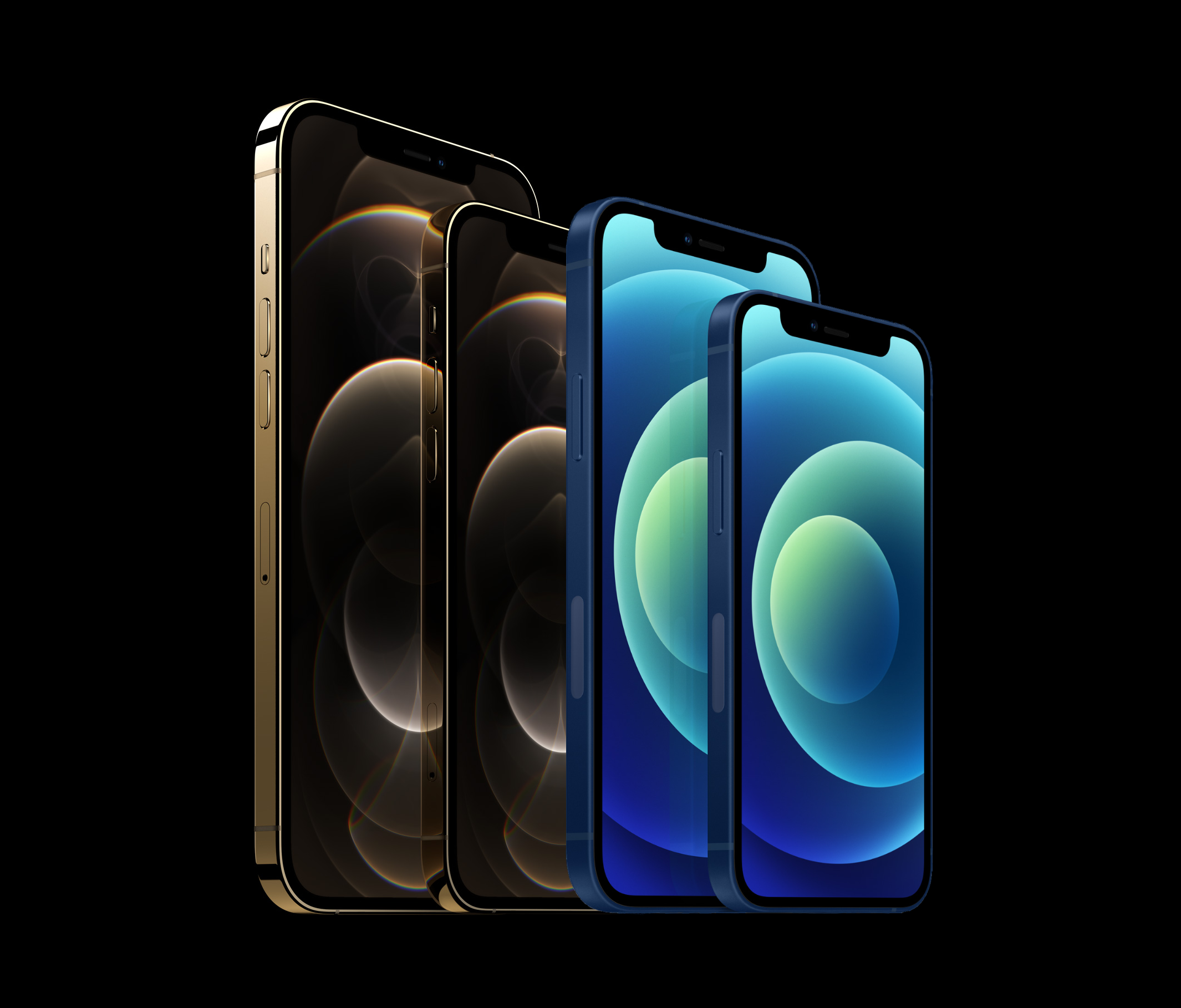
Apple announced four new iPhone models at their event in October, and they’re all very similar to one another. The easiest way to think of them is in two distinct groups: the 12 series (which consists of the iPhone 12 mini and the iPhone 12), and the 12 Pro series (which includes the iPhone 12 Pro and the iPhone 12 Pro Max).

We’ll break down thew differences between these models, but first, it’s important to understand what they all have in common. There are three tentpole features that define the new iPhones, and they are the newdesign, the new processor, and 5G. In each of these areas, the new iPhones are all identical.

All of the new iPhones feature:

  1. A new design. The form factor finally got a nice upgrade, having remained basically the same since the iPhone 6. This years models feature squared off edges, similar to the current iPad Pro models. It’s reminiscent of the iPhone 5, but a little more premium. They also have stronger glass on the front, which is supposed to be up to four times more shatter resistant.

  2. Apple’s brand new processor, the A14 chip. The A14 is an absolute powerhouse that is faster than a significant number of PC laptops. These phones are fast, and they will be fast for years.

  3. 5G connectivity. While Apple spent a lot of time talking about 5G at their event, it’s not all its cracked up to be. Most people will notice a slight speed increase (roughly 20%) when doing things over a cellular connection like opening web pages or downloading apps. Still, it’s not a bad thing to have.

The 12 Series

The iPhones 12 have the exact same camera system, featuring two sensors (the normal camera and the ultra wide camera). These cameras are both improvements over the cameras in last years iPhones, but the differences are subtle. The iPhone 12 mini is the smallest X-class iPhone Apple has made (X-class, referring to the fullscreen design with Face ID and no Home button) with a 5.4” OLED display. The iPhone 12 is a 6.1” OLED display, but is otherwise exactly the same as the iPhone 12 mini. Both of these phones are solid upgrades over last year’s iPhone 11 models, and the new design makes them feel much more premium. They come in five colors, and they all look pretty nice (though I’m personally not a huge fan of the green).

The bang for your buck is strongest with these two models, and the only questions you need to answer here is which size you want and how much storage you need. For the vast majority of people, one of these iPhones would be a perfect choice.

The 12 Pro Series

Yours truly, from my pre-event thoughts: “I’m not a huge fan of massive phones, but I am a huge fan of great cameras, and with four new models, that doesn’t seem like a compromise I should be forced to make.”

Unfortunately, Apple does expect you to make that compromise this year, because only one model features the best camera system, and it is the iPhone 12 Pro Max. There are a few notable camera differences between these models and I’ll flesh them out below, but aside from the cameras, the battery life, and the size, they’re identical. A quick note on colors, though: these phones come in four colors: silver, gold, graphite, and pacific blue. I was excited for the pacific blue color and had hoped it would be a sort of metallic navy, but in person it was more of a shimmery, bluish teal, so I decided to go with a graphite model. It’s also worth pointing out that the stainless steel sides on the Pro model are absolute fingerprint magnets, and am constantly wiping the phone down to get rid of them.

iPhone 12 Pro

The biggest reason for my choosing this model was the third camera lens, which is its only real advantage over the iPhone 12. While the iPhone 12 has the normal camera lens and the ultra wide camera lens, the iPhone 12 Pro adds the telephoto lens which allows you to zoom in twice as far without losing any image quality.

iPhone 12 Pro Max

The iPhone 12 Pro Max has a 6.7” OLED display, and the same stainless steel and glass design of the 12 Pro. However, it does have the best camera by several metrics, though these improvements are mostly unnoticeable except for in situations with relatively low light where you’re trying to photograph a moving subject. The most attractive camera feature of the 12 Pro Max, to me, is the increased optical zoom of the telephoto lens, which is 2.5x instead of 2.0x. The primary camera also has some improvements, including a larger sensor and better image stabilization technology that moves the sensor as opposed to the lens, and these changes result in faster shutter speed, contributing to the 12 Pro Max’s better moving subject/low light performance.

I personally don’t feel like these changes are worth dealing with the increased size, and I sincerely hope that they stop the fragmentation between pro model camera systems in future years. I opted for the iPhone 12 Pro.

MagSafe

This is not my point, and I don’t remember who said it first, but Apple doesn’t have a great track record with getting proprietary connectors off the ground, and I wonder how successful MagSafe will be in the long run. As it currently stands, I like having MagSafe for iPhone, but it’s not exactly a game changer.

I’ve tried the most common MagSafe accessories, and they’re a mixed bag.

  • Let’s get this one out of the way: the wallet sucks. The magnets are no strong enough to hold it firmly on the phone, and this was particularly a problem with the frosted glass back of the Pro models. Retrieving a card requires you to remove the wallet; the magnets are not strong enough for you to get one out while leaving it attached. For $60, I was very disappointed with the wallet.

  • The phone case is an easy one. It’s a nice phone case, but MagSafe is practically useless. It’s not the magnets that attach the case, as some thought, its just the physical design of the case wrapping over the edges of the phone enough to stay attached. The only thing MagSafe does here is give you a little on-screen animation, color matched to the case when you first attach it.

  • Now, the MagSafe charger. This is certainly the best use of the MagSafe technology, and it is convenient that it lines it up perfectly for you. However, the situation with the charging brick is absurd, and for $40, they should really include the power adapter. I get not making being able to make it charge at the full 15 watts with an adapter below a certain threshold, but you would think that chargers above that threshold would still function properly and that isn’t the case. I used the MagSafe puck with my 61w MacBook Pro power adapter, and it charged incredibly slowly, far below the advertised 15w with the 20w adapter. That whole situation is just a mess. On another note, it should also come in a longer length; if they want people to use it while its connected, three feet is not nearly enough.

Daydreams

The ideal MagSafe product would’ve been if they could make this puck also charge the Apple Watch (I realize their discrete charging systems, but they seemingly had figured out how to get close to making it work with AirPower), and in a perfect world, it would’ve been a great little base for the HomePod mini (throw a thick battery in that sucker and give us a couple hours of unplugged playback).

I liked the size of the 12 mini a lot. If they made a Pro model that size, it would be very tempted to go for that one. I think my ideal device would be a Pro-level phone with a size somewhere between the 5.4” mini and the 6.1” Pro.

One More Paragraph

All in all, these iPhones are exciting because they look fresh. If you have last year’s models, you don’t really need to upgrade unless you’re just ready for something that looks a bit nicer and some incremental improvements. If you have an iPhone from 2018 or before, you’ll be really impressed by these devices.

Breaking Olds: Samsung Copies Apple, Won’t Include Power Adapter With New Phones

Reporting from Felipe Ventura of tecnoblog (translated to English by Safari’s webpage translation feature):

The documents in Anatel state, however, that none of the three devices will be sold with a charger in the box; the headset will also not be included, following Apple's steps with the iPhone.

So predictable, even after Samsung put out ads giving Apple shit for not including a power brick.

The U.S. Military Is Purchasing Location Data Unethically Collected From Millions of Smartphone Users

Joseph Cox, reporting for Motherboard:

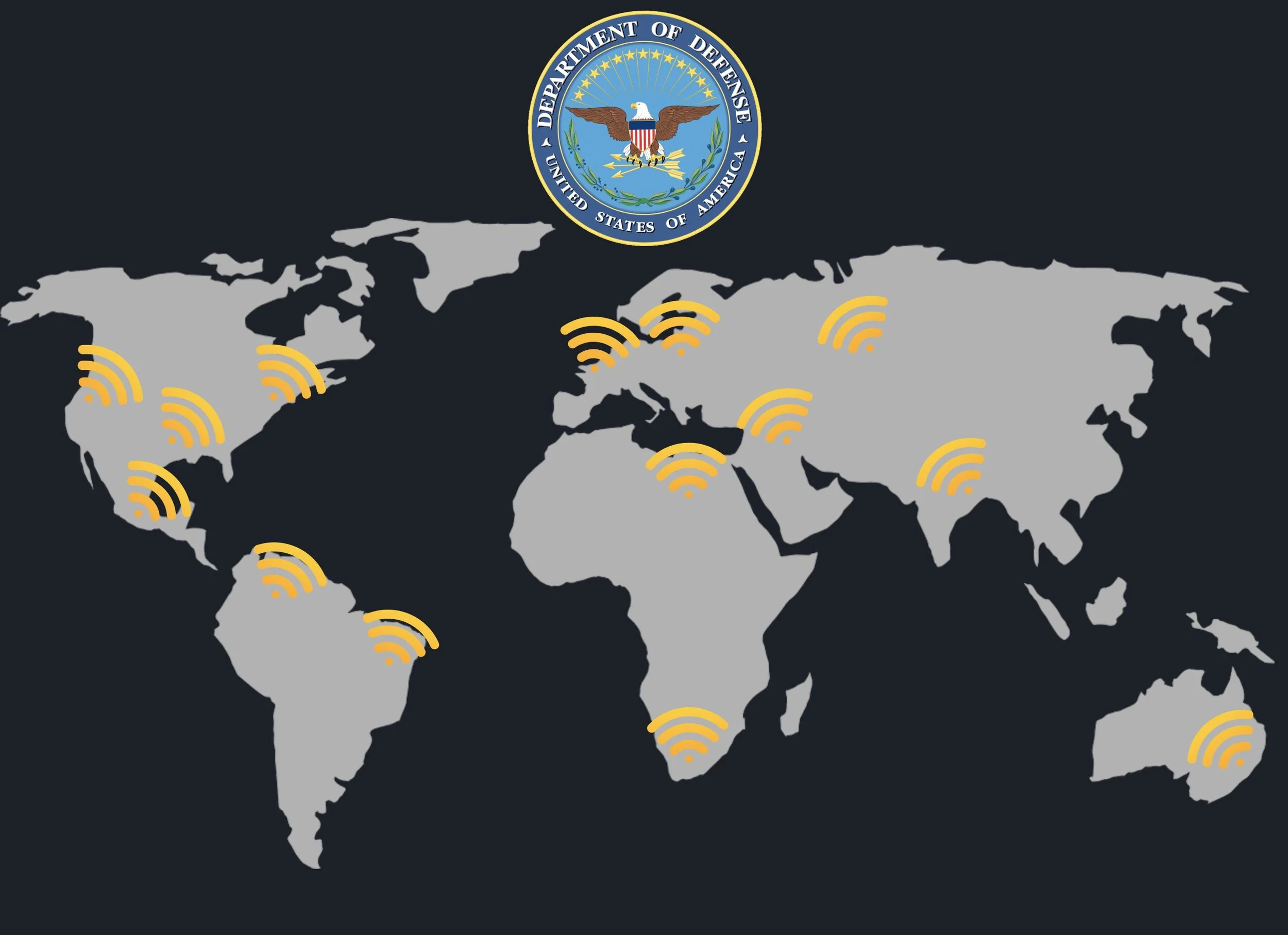
The U.S. military is buying the granular movement data of people around the world, harvested from innocuous-seeming apps, Motherboard has learned. The most popular app among a group Motherboard analyzed connected to this sort of data sale is a Muslim prayer and Quran app that has more than 98 million downloads worldwide. Others include a Muslim dating app, a popular Craigslist app, an app for following storms, and a "level" app that can be used to help, for example, install shelves in a bedroom.

Through public records, interviews with developers, and technical analysis, Motherboard uncovered two separate, parallel data streams that the U.S. military uses, or has used, to obtain location data. One relies on a company called Babel Street, which creates a product called Locate X. U.S. Special Operations Command (USSOCOM), a branch of the military tasked with counterterrorism, counterinsurgency, and special reconnaissance, bought access to Locate X to assist on overseas special forces operations. The other stream is through a company called X-Mode, which obtains location data directly from apps, then sells that data to contractors, and by extension, the military.

How many times must someone sound the alarm before people start taking digital privacy seriously?

In a recent interview with CNN, X-Mode CEO Joshua Anton said the company tracks 25 million devices inside the United States every month, and 40 million elsewhere, including in the European Union, Latin America, and the Asia-Pacific region. X-Mode previously told Motherboard that its SDK is embedded in around 400 apps.[…] [One of] the apps sending data to X-Mode [is] Muslim Pro, an app that reminds users when to pray and what direction Mecca is in relation to the user's current location. The app has been downloaded over 50 million times on Android, according to the Google Play Store, and over 98 million in total across other platforms including iOS, according to Muslim Pro's website. […] Another app that sent data to X-Mode was Muslim Mingle, a dating app that has been downloaded more than 100,000 times.

This is clearly wrong and they’re targeting people of a particular faith. Imagine the outrage if it turned out that the CIA was buying location data in shady, back alley deals to keep track of people who use Bible apps: there would be riots.

Other apps sending location data (including info like wifi network names, time stamps, and device information) to X-Mode include a storm tracker app, a craigslist client, and a step counter app.

X-Mode then sells access to this sort of data to a wide range of different clients. Motherboard has previously shown that one of those clients includes a private intelligence firm whose goal is to use location data to track people down to their "doorstep."

The Locate X data itself is anonymized, but the source said "we could absolutely deanonymize a person." Babel Street employees would "play with it, to be honest," the former employee added.

[…]

In a statement, Navy Cmdr. Tim Hawkins, a U.S. Special Operations Command spokesperson, confirmed the Locate X purchase, and added "Our access to the software is used to support Special Operations Forces mission requirements overseas. We strictly adhere to established procedures and policies for protecting the privacy, civil liberties, constitutional and legal rights of American citizens."

Worth noting that he only refers to American citizens here, indicating that they don’t give a shit about the privacy of non-citizens. Still, the reason he’s able to make that claim in regards to U.S. citizens is because our laws are woefully outdated and insufficient; they don’t protect us.

This problem is so widespread and it’s certainly not just Facebook that’s doing wrong here, but they’re a hub for so much of this shady, unethical behavior because they’ve built frameworks that enable smaller companies to get away with it that it’s worth reiterating: #deletefacebook.

Privacy means people know what they’re signing up for, in plain English, and repeatedly. I’m an optimist; I believe people are smart, and some people want to share more data than other people do. Ask them. Ask them every time.

Make them tell you to stop asking them if they get tired of your asking them. Let them know precisely what you’re going to do with their data.

— Steve Jobs

The Apple M1 Chip Macs

Nobody who went into Apple’s November announcement with any idea of what they could reasonably expect came away from it disappointed (unless you were expecting AirTags, which wasn’t an unreasonable expectation, but didn’t come to fruition).

Apple’s first custom designed laptop/desktop processor is called the M1, and while nobody’s gotten their hands on one yet and Apple’s claims were a little light on specifics, it seems like it’s going to be kicking ass and taking names. They’ve put in into the MacBook Air, the MacBook Pro, and the Mac mini, and thhe’re claiming it’s going to yield significantly better performance (up to 3x faster CPU) and allow for nearly double the battery life when compared to the intel processor based models that preceded them. Usually better battery life comes at the expense of performance and increased performance comes at the expense of speed, but Apple has managed to make remarkable jumps in both. And these aren’t even going to be Apple’s most impressive chips; all the machines they announced that are shipping with the M1 are casual consumer level machines. Just wait until they unveil their processors for machines built for professional use.

If you’re in the market for a new MacBook and aren’t afraid of buying a first generation product, now is the time to buy. Usually choosing which Mac is best for you can be an arduous process, but since the new MacBook Air and the new MacBook Pro both use the M1 chip, the differences are almost negligible.

The new MacBook Air comes in two preconfigured models (with the option to custom config). Both have 13” retina displays, and they have the same physical design and weight (2.8 lbs). They both have Touch ID sensors, neither have a Touch Bar.

  • The baseline config costs $1000, it has 256GB of storage, and its M1 chip has an 8-core CPU and a 7-core GPU.

  • The upgraded config costs $1250, it has 512GB of storage, and its M1 chip has an 8-core CPU and an 8-core GPU.

The differences between the preconfigured models are three: the amount of storage, the number of GPU cores on the M1 chip, and the price.

If you’re looking for more RAM (up to 16GB) or storage (up to 2TB), you can custom configure the new MacBook Air. While you can’t upgrade just the M1 chip to get that extra GPU core, you can toy around with the custom config options and deduce that the extra GPU core costs $50. The baseline model can be custom configured with 512GB of storage (to match Apple’s upgraded pre-configuration) for a $200 up charge, which would put it at $1200. At that point the only difference between the two machines is that extra GPU core, showing that it effectively costs $50. Not a terrible price for slightly better graphics performance, but you can’t get that upgraded GPU on the baseline model, so the only way to get it is to spring for the upgraded config which means you also have to pay for the extra storage. My recommendation would be to ignore the GPU difference and order the configuration with the amount of storage you need. If you know you don’t need 512GB of storage, there’s no point in paying a $250 up charge to get the better GPU. If you do want the 512GB of storage, don’t custom config the baseline, go ahead and get the upgraded preconfiguration and enjoy the benefits of that extra core for only $50. That said, I generally don’t think 256GB is enough storage for most people on a laptop these days. Once you sync your photos, download a movie or two, and backup your iPhone, its going going to fill up: my advice to anyone who wants a machine to last more than six months before you have to start deleting files to make room for new stuff is to go for the 512GB model.

The new M1 MacBook Pro also comes in two configurations, with even fewer differences. They both have 13” retina displays, and the same physical design and weight (3.0 lbs). Both have the Touch Bar. Both have the same M1 chip with an 8-core CPU and 8-core GPU.

  • The baseline config costs $1300, and has 256GB of storage.

  • The upgraded config costs $1500 and has 512GB of storage.

The only difference between these machines is the storage and the price. As I said before, I don’t think 256GB is going to stretch very far for most people these days, so would recommend the 512GB model.

So taking all that into account, these four models look very similar. Across the four of them, three have the exact same M1 chip, and there are only two storage options. There are other differences worth noting, but not ones that should make a huge difference in which machine you should go for. These differences are direct results of the physical design of the machines. While the MacBook Air is slightly lighter and has less physical volume than the MacBook Pro, the reduced amount of internal space results in reduced thermal capacity and less space for batteries.

  • More space for batteries obviously allows for the MacBook Pro to have slightly longer batter life—roughly 10%, based on Apple’s claims. That’s not insignificant, but both of these machines already have battery life that is so much better than the ones that came before them that either would feel like a huge upgrade over any MacBook you may currently have.

  • Thermal capacity matters because even though both machines have the same chip, the MacBook Pro can use that chip at high speeds for longer amounts of time because it is better equipped to deal with the heat produced by the chip (the design of the MacBook Pro allows for better dispersal of heat than the MacBook Air’s design does, plus the MacBook Pro has a fan inside while the MacBook Air does not). Both of these computers are going to be extremely fast and very capable of everyday tasks, but the MacBook Pro will be a little better for amateur creatives or gamers: people who want to game or edit photos and videos for an extended period of time would benefit from the MacBook Pro’s increased thermal capacity. However, despite the “Pro” designation, neither of these machines are intended for truly professional use; as I mentioned before, Apple’s truly “Pro” machines are yet to come. That doesn’t mean that these machines aren’t going to be blazing fast; one of these new models will be perfect for 80% of Apple’s customers. This isn’t something you need to worry about.

  • The MacBook Pro has the Touch Bar — the touchscreen panel that replaces the keyboard’s top row of function keys — and the MacBook Air does not. A few people love the Touch Bar. A lot of power users hate it. Most casual users think it’s neat and flashy, but are more or less indifferent to it. While it does add functionality, I find that the existence of an additional display on a separate physical plane from the primary display causes a little mental lag when you go to use it; because it changes dynamically to show controls for whatever app you’re using, the buttons are always in a different place making you look down and find what you’re looking for every time, whereas with a row of static, physical function keys, you can memorize which ones perform which functions so that you don’t have to look down at it each time. Whether you want a Touch Bar or not comes down to personal taste.

If you take my advice about going for the upgraded storage, there’s really only crucial decision to make, and that is whether or not you want a Touch Bar. If you do, go for the MacBook Pro for $1500. If you don’t, you should pick the MacBook Air for $1250.

For mental ease, I’ve rounded all of Apple’s prices up by $1.

Apple Event, November 2020; Pre-Event Thoughts

The big news for this event will be the introduction of Apple Silicon. The fact that they’re using “one more thing” in the announcement for the event is, I think, in itself significant, as well as indicative of how Apple views today’s announcements as a milestone in the history of the Mac. I’m truly expecting mind blowing announcements today.

Apple’s chip team will be the star of today’s show, but they’ve deserved more praise than they get for years now; they’re massively under appreciated. The A14 that they’ve just introduced in the new iPad Air and iPhones is significantly faster than most new PC notebooks and Chromebooks. They’ve been years ahead of their competition for many years at this point, putting out new chips every year that are only rivaled by their own chips from the previous year. Qualcomm, in the smartphone industry, simply cannot keep up. Apple is about to jump years ahead of Intel in the PC market.

Just look at some of the benchmarks from the Developer Transition Kits that run macOS on a chip that they originally designed for iPhone (the A12, from 2018) and optimized for iPads (the A12Z, which is exactly what’s in the DTKs). Imagine what they’ll be able to when they really put their weight behind notebook and desktop chips.

On that note, there‘s been speculation about whether Apple will announce notebooks or desktops, but I wouldn’t be surprised to see one or two of each. The AR graphic from Apple’s event page certainly seems to indicate that new MacBooks will be present; I’m hoping we will see the 12” MacBook from 2015 — which remains Apple’s most impressive notebook from a design perspective — reincarnated.

Recent leaks also seem to indicate that we may see AirTags today, but that’s an interesting possibility because AirTags aren’t a product that couple naturally with Macs; they’re iPhone accessories. We’ll see; maybe they see enough potential in AirTags to let them be the “one more thing” after they announce the Apple Silicon Macs.

Samsung Copied Apple’s… Face Masks

We’ve known Samsung will copy just about anything Apple does, including reusing Apple’s symbols and logos rather than just making their own, but it’s always been tech related. Now it seems that Samsung has even ripped off Apple’s in-house designed face masks.

Apple’s mask on the left, Lee Jae-yong’s mask on the right

Apple’s mask on the left, Lee Jae-yong’s mask on the right

Apple’s design was fairly unique, with multiple panels assembled to create a more fitted, ergonomic mask. I have more than five years of experience in the healthcare field and used plenty of PPE, including masks, and I’d never seen a design like the one Apple came up with. I think it was an original.

Nonetheless, here is Samsung heir Lee Jae-yong wearing a mask that looks strikingly similar to the Apple mask, shown in a screenshot from an Unbox Therapy video.

The complete lack of respect for intellectual property is gross. These Asian companies have no shame.

Apple Event, October 2020: Pre-Event Musings

My last round of predictions and gut feelings was astoundingly incorrect, but there are a few things that have been on my mind leading up to this event, so here they are.

Obviously, we’re going to get iPhones. 5G seems inevitable. The rumors are suggesting there’ll be four new models this year, which in my opinion is too many. The rumors are also suggesting that between the two pro models (both of which are rumored to be getting bigger, which sucks), the Pro Max is going to get better camera improvements than the Pro (non-max), which really blows. I’m not a huge fan of massive phones, but I am a huge fan of great cameras, and with four new models, and that doesn’t seem like a compromise I should be forced to make.

AirTags seem to have been shelved yet again, but the HomePod mini rumors have been swirling up. I don’t know how excited I am about a smaller HomePod. The HomePod has always focused on quality sound over it’s smart capabilities, and frankly that’s been a good play because Siri is quite a disappointment these days. I don’t see why they would introduce a smaller, cheaper HomePod that ultimately will not sound as good (and again, sound quality is the only area the HomePod has excelled in), unless they’ve got some serious Siri improvements up their sleeve as well. But my god, don’t count those chickens yet.

It doesn’t seem likely that we’ll see Apple Silicon at this event, but that would be a nice surprise. I can’t wait to see what they’re capable of doing in that arena.