Posts tagged #deletefacebook
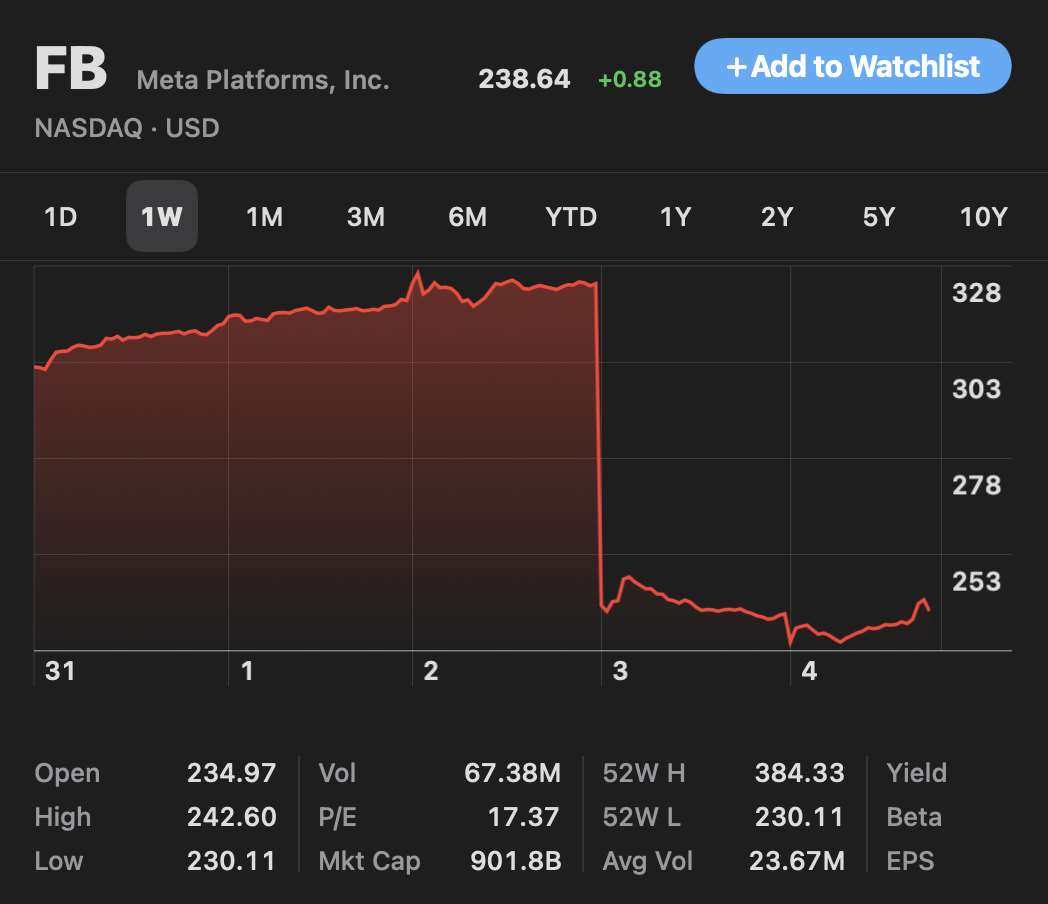
Facebook (Meta; whatever) Loses 25% of Their Value

This is the sort of story you love to see. From Deepa Seetharaman and Salvador Rodriguez at The Wall Street Journal (via Apple News+):

Meta shares plunged after the results were announced, dropping more than 20%. If shares dropped that much when trading opens on Thursday, it would wipe more than $175 billion from the tech giant’s market capitalization.

Quick update: the Journal’s story was published on the evening of Facebook’s report, before the market opened the next day. They ended up dropping slightly more than 25%, and they lost over $200B.

The company said it expected revenue growth to slow because users were spending less time on its more lucrative services. Meta cited inflation as a weight on advertiser spending and estimated that ad-tracking changes introduced by Apple Inc. last year would cost Meta some $10 billion this year. 

I bet Apple is happy about this. And they certainly should be. Their App Tracking Transparency policy wasn’t designed to cripple Mark Zuckerberg’s company, it was designed to give users a little more control over their data and prevent unwanted tracking. Facebook blaming Apple for the loss would be like a peeping tom blaming his victim for his blue balls when they finally close the curtains of the window he’s looking through. Merlin Mann put it well on Twitter (quipping about a particularly stupid framing of the issue by the New York Times):

“Local burglar blames revenue shortfall on industry-hostile doors.”

From the Journal again:

Meta also lost about a million daily users globally and stagnated in the U.S. and Canada, two of the company’s most profitable markets, the results show.

The fact that they’re losing users is a good sign, but it it shouldn’t take Facebook by surprise unless they’re so high on their own supply that they've completely isolated themselves in echo chambers reaffirming how much good they’re doing in the world (probably by means of Facebook groups). The global social media market is saturated, this plateauing shouldn’t come as a surprise, and Facebook acting like this caught them off guard is bullshit. They clearly did see it coming because they decided to refocus the whole business on personal porn theaters virtual reality goggles. We’ll see how that goes, but here’s to the next Google Glass.

I must say though, it pisses me off that Wall Street is gonna get the credit for finally dealing a significant blow to Facebook when those of us who have been paying attention have been screaming about how terrible they are for years. Fuck capitalism, fuck Facebook.
#deletefacebook

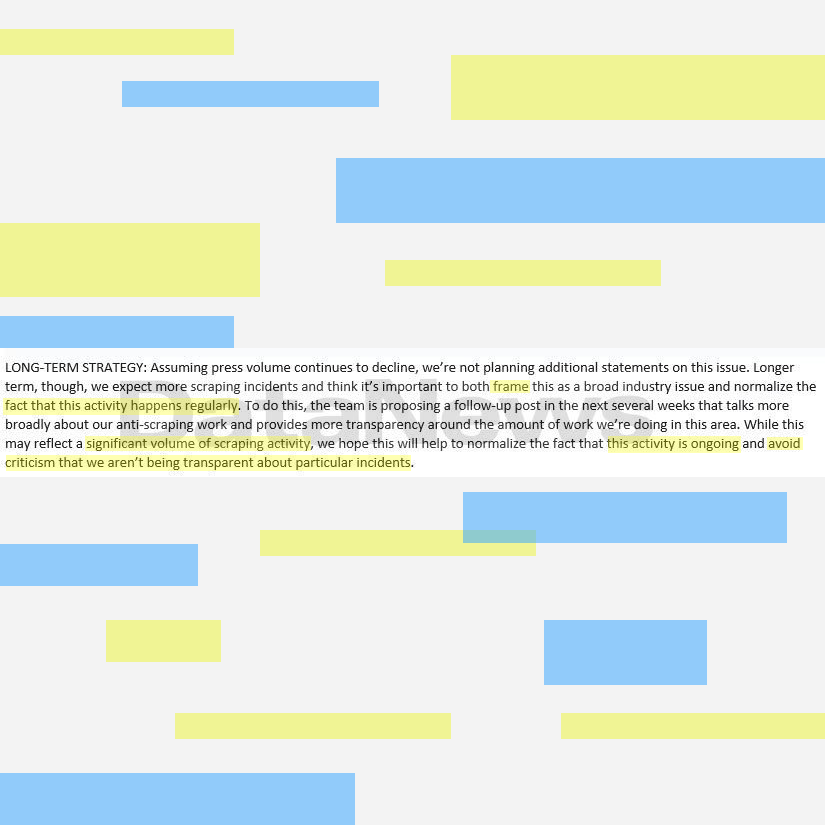
Facebook Accidentally Admits They Won’t Focus on Preventing Future Data Leaks, Instead Hoping To Normalize Them

These fuckers are absolutely shameless. Rather than putting forth any meaningful effort to actually prevent data leaks from their surveillance network, they just want to convince you that it’s something you’ll have to live with and not really a big deal. It’s just a part of their larger to plan to keep user’s from realizing how much value all the data Facebook steals from them really holds.

#deletefacebook

The Feds Versus Facebook

Rob Price, writing for Business Insider earlier this year:

In an email to Facebook's chief financial officer at the time, Zuckerberg said Facebook wanted to buy Instagram to give itself more time to fend off competitors.

"One way of looking at this is that what we're really buying is time. Even if some new competitors springs up, buying Instagram, Path, Foursquare, etc now will give us a year or more to integrate their dynamics before anyone can get close to their scale again," he wrote. "Within that time, if we incorporate the social mechanics they were using, those new products won't get much traction since we'll already have their mechanics deployed at scale."

Mark Zuckerberg.

Isobel Asher Hamilton, Katie Canales, and Paige Leskin, reporting for Business Insider last week:

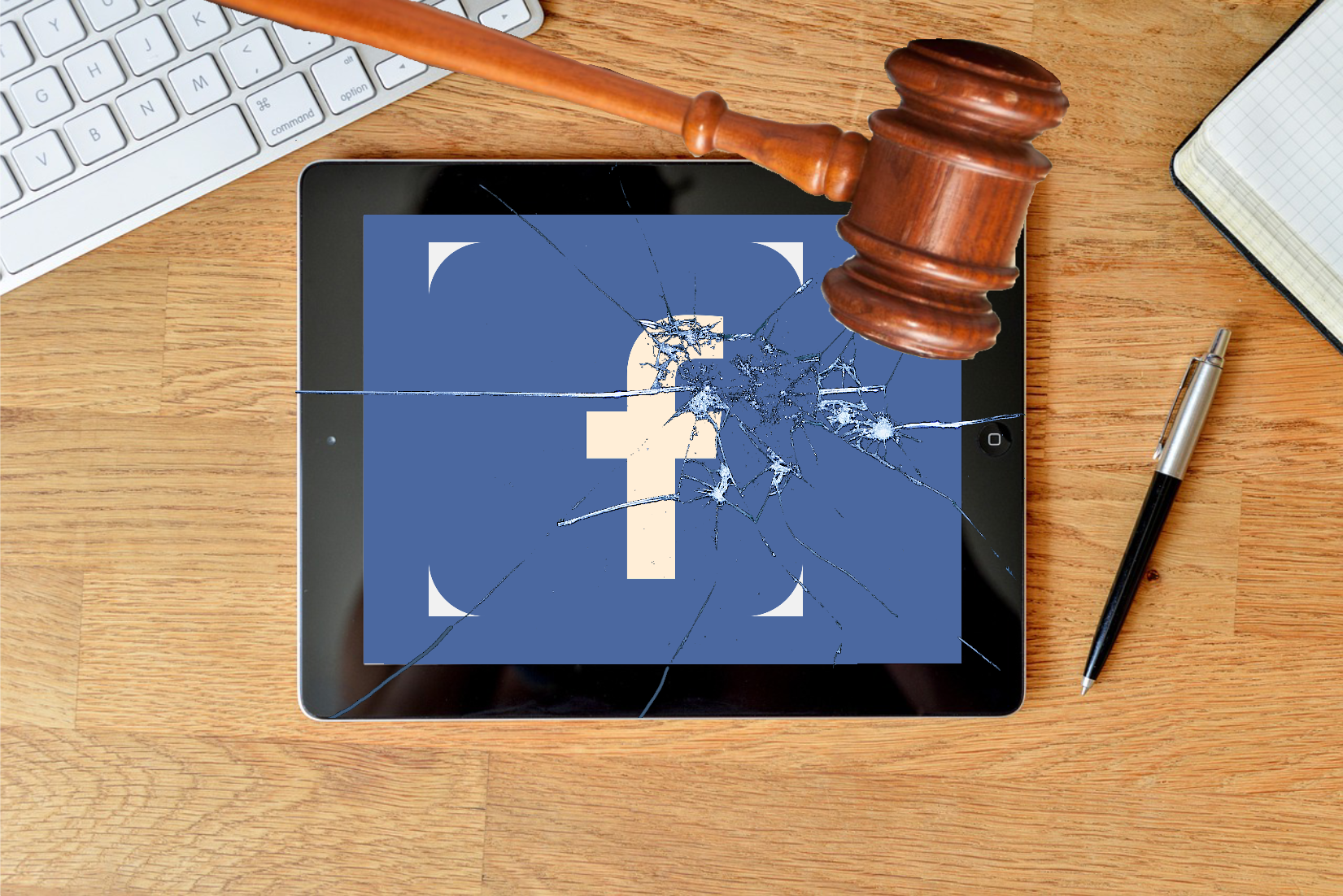
The lawsuits allege that Facebook used a strategy of neutralizing competitors before they could threaten the company's dominance of the social-media market. The suits call out Facebook's decisions to buy rather than compete with Instagram and WhatsApp, and they allege it imposed "anticompetitive conditions" on software developers.

Both complaints seek a "divestiture of assets" for Facebook — that is, breaking off Instagram and WhatsApp from the social-media giant. Additionally, Facebook could be required to get approval from the government before any mergers or acquisitions in the future.

[…]

The coalition of attorneys general, led by New York Attorney General Letitia James, began an investigation into Facebook in September 2019, and the FTC subsequently joined. Attorneys general from 46 states as well as Washington, DC, and Guam have signed on to the lawsuit. The only states whose attorneys general have not signed on are Alabama, Georgia, South Carolina, and South Dakota.

Forty six states. That’s more than enough to pass a constitutional amendment. Facebook is about to get fucked up.

This investigation (and any resulting regulation) is clearly focusing on antitrust issues, but I sincerely hope that congressional leaders take a long hard look at Facebook’s privacy practices while they’ve got them under the microscope.

I hope Facebook gets what they deserve for capitalizing on the destruction of privacy and the polarization of the American people.

#deletefacebook

Facebook Attacks Apple In The Name Of Small Business. No, Seriously.

Hartley Carlton, reporting for MacRumors:

Facebook has today attacked Apple in a series of full-page newspaper ads, asserting that iOS 14's privacy changes regarding data gathering and targeted advertising are bad for small businesses (via Bloomberg).

The ads are running in the New York TimesWall Street Journal, and Washington Post, feature the headline "We're standing up to Apple for small businesses everywhere."

Earlier this year, Apple introduced a number of privacy changes that curb the ability of companies like Facebook to gather data on users and target adverts. In ‌‌iOS 14‌‌, Apple has made the "Identifier for Advertisers," used by Facebook and its advertising partners for ad targeting, an opt-in feature, providing more transparency for users who would prefer not to be tracked in apps and on websites. The update simply asks users if they want to agree to ad tracking or prevent cross-app and cross-site tracking to provide targeted ads.

I was going to post the text of the ad and pick it apart line by line, but it would be a waste of time. Facebook has committed a logical fallacy, completely misrepresenting what Apple has chosen to do (which is give people more control over what data they share with big companies) as some sort of offensive play against small businesses. It’s a strawman argument designed to make small businesses look like the victims of Apple’s “forced software update”.

John Gruber recently wrote about this on Daring Fireball, again making the salient point that the privacy issue boils down to entitlement:

The entitlement of these fuckers is just off the charts. They have zero right, none, to the tracking they’ve been getting away with. We, as a society, have implicitly accepted it because we never really noticed it. You, the user, have no way of seeing it happen. Our brains are naturally attuned to detect and viscerally reject, with outrage and alarm, real-world intrusions into our privacy. Real-world marketers could never get away with tracking us like online marketers do.

This so clearly isn’t about small businesses not being able to advertise as effectively, it’s about facebook no longer being able to run behind you with a shop-vac, sucking up every crumb of data you leave behind. Don’t think they aren’t still trying though, Apple’s privacy tools are just limiting their ability to do so a little, taking them down from an industrial grade shop-vac to a consumer grade Dyson.

But still, let’s humor Facebook for a second and respond to their strawman argument. Here’s my take: if you built a small business that relies on Facebook (for advertising or any other aspect of your business), then you built a shitty small business. You put all your eggs in one basket, so captivated by the reach they could offer you that you didn’t consider the risks of relying on a company whose business model was inherently unethical and who could pull the rug out from under you at any moment. The problem here is not Apple giving people control over their own data, it’s that your small business was built on a foundation of stolen information that facebook gobbled up and turned into something you could use to target potential customers with. Looks like it’s time for you to find a more honest way to reach potential new customers.

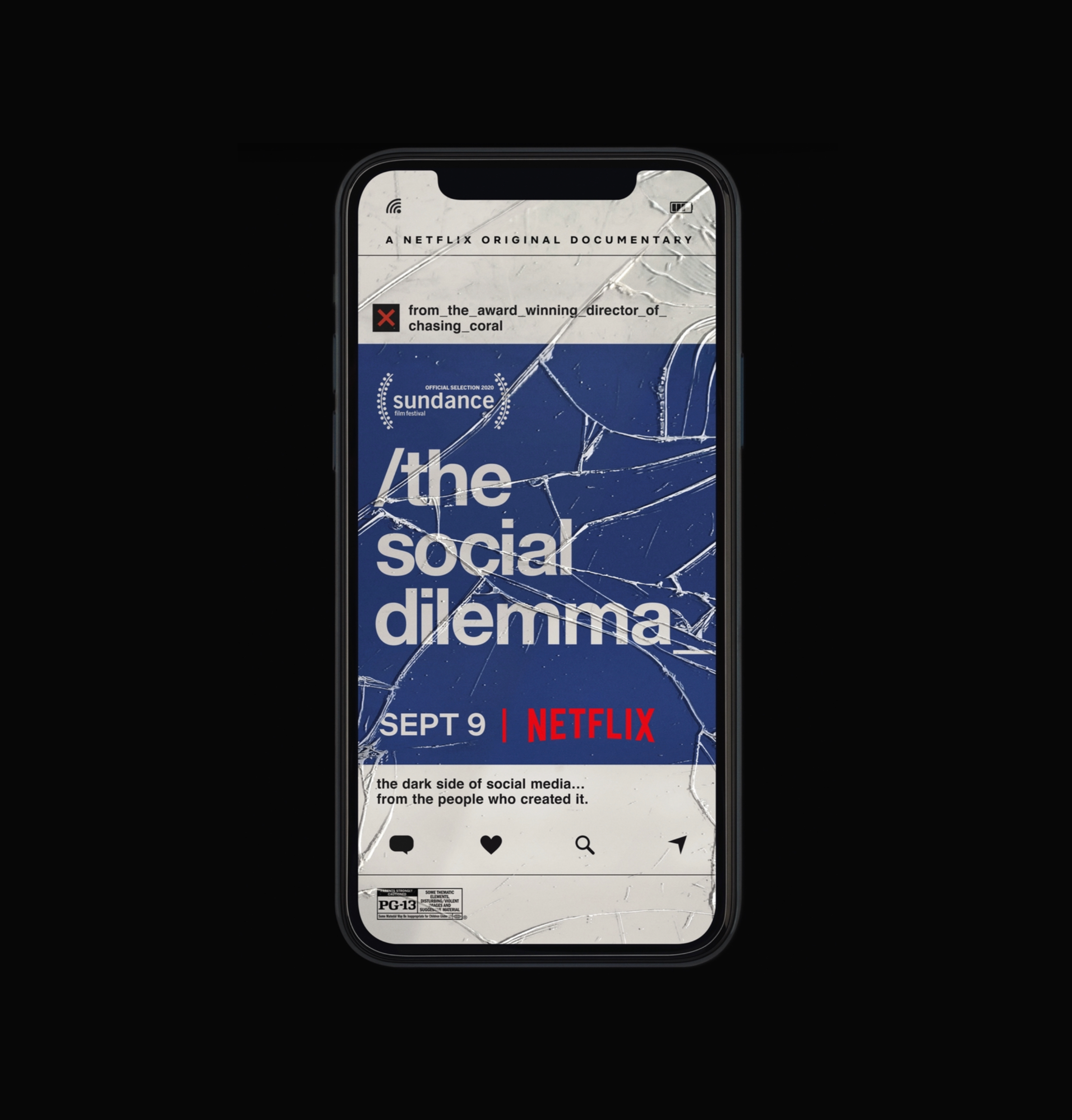
‘The Social Dilemma’

“The Social Dilemma” is a new documentary on Netflix that talks about the dangers posed by social networks and other big tech companies who draw large portions of their revenue from advertising. It details how the people who created platforms like Facebook, Instagram, Google, and others intentionally designed features to exploit human psychology and make their products addictive. It’s a good follow up to “The Great Hack”, another incredible documentary that explores how dangerous these companies are through a more political lens.

“The Social Dilemma” features a long list of ex-silicon valley inventors and programmers confirming the fears I’ve had about social media for a while now. The whole problem boils down to greed. Companies that make their money from advertising are greedy, and they deal in the business of selling human attention. The more of your attention you give to them, the more they can predict and influence your behaviors, and they’ve demonstrated that they have no problems auctioning off your attention to the highest bidder, and subsequently allowing those bidders to use your attention and the mountains of data they have on you to manipulate your feelings and your behavior. We saw what this can lead to with the Cambridge Analytica scandal; political polarization is only getting worse, and it’s already to the point where people are practically experiencing separate realities because algorithms — that very few people understand, even within the companies — are presenting them with inflammatory ads that offer “alternate facts” based on what they think will keep them engaged with the platform. The more time you spend on a social media app, the more ads you see, and the more money they make. Their goal is to capture 100% of your attention, and they have more than a few unsavory tricks up their sleeves.

The picture this film paints is bleak, but we do have a chance of brightening it up. People have to understand what’s going on, how if affects them, and where the path we’re currently on will lead us so that we can start a real conversation about these issues and demand that companies like Google and Facebook be regulated. On an individual level, the best thing you can do is to delete your accounts. Personally, I’ve deleted my Facebook and Instagram accounts, and I’ve switched to using DuckDuckGo as my default search engine instead of Google.

I’ll admit that deleting your social media accounts is easier said than done. Many folks are afraid they’ll lose touch with people or that they’ll be less informed. While I am in touch with fewer people on a regular basis, my connections with those people are much deeper and far more fulfilling. I’m more informed than ever, and my opinions are more reasoned and less reactive. I recognize that not everyone has the self control to delete their accounts, but there are some things you can do to reduce their influence over you. For starters:

  • Never share anything that you haven’t personally fact checked from at least one other source (by the way, your friend who also shared it isn’t a source).

  • In services that allow it, opt out of receiving personalized ads. Never click on ads.

  • Turn off notifications so you’re less tempted to log on.

Most importantly, watch this documentary, and familiarize yourself with the tactics these companies use so you can reduce their influence over you. For many people, the stakes seem low: “okay, they got me to watch a few extra cat videos, so what?” But the stakes have never been higher. Social media has led stable democratic countries into complete political turmoil, and we’re showing many of the same symptoms they did. It’s a bit like Stockholm Syndrome; you can’t solve a problem if you don’t realize that it is indeed a problem.

#deletefacebook

UPDATED: 10/12/20, 16:57

Facebook: The Social Network for Racists

As everyone knows, like a hundred years ago (last week) Twitter made headlines by finally taking a stand against some of Trump’s tweets for spreading misinformation and glorifying violence. This week, Facebook is making headlines for their refusal to take a stand against Trump for the same posts.

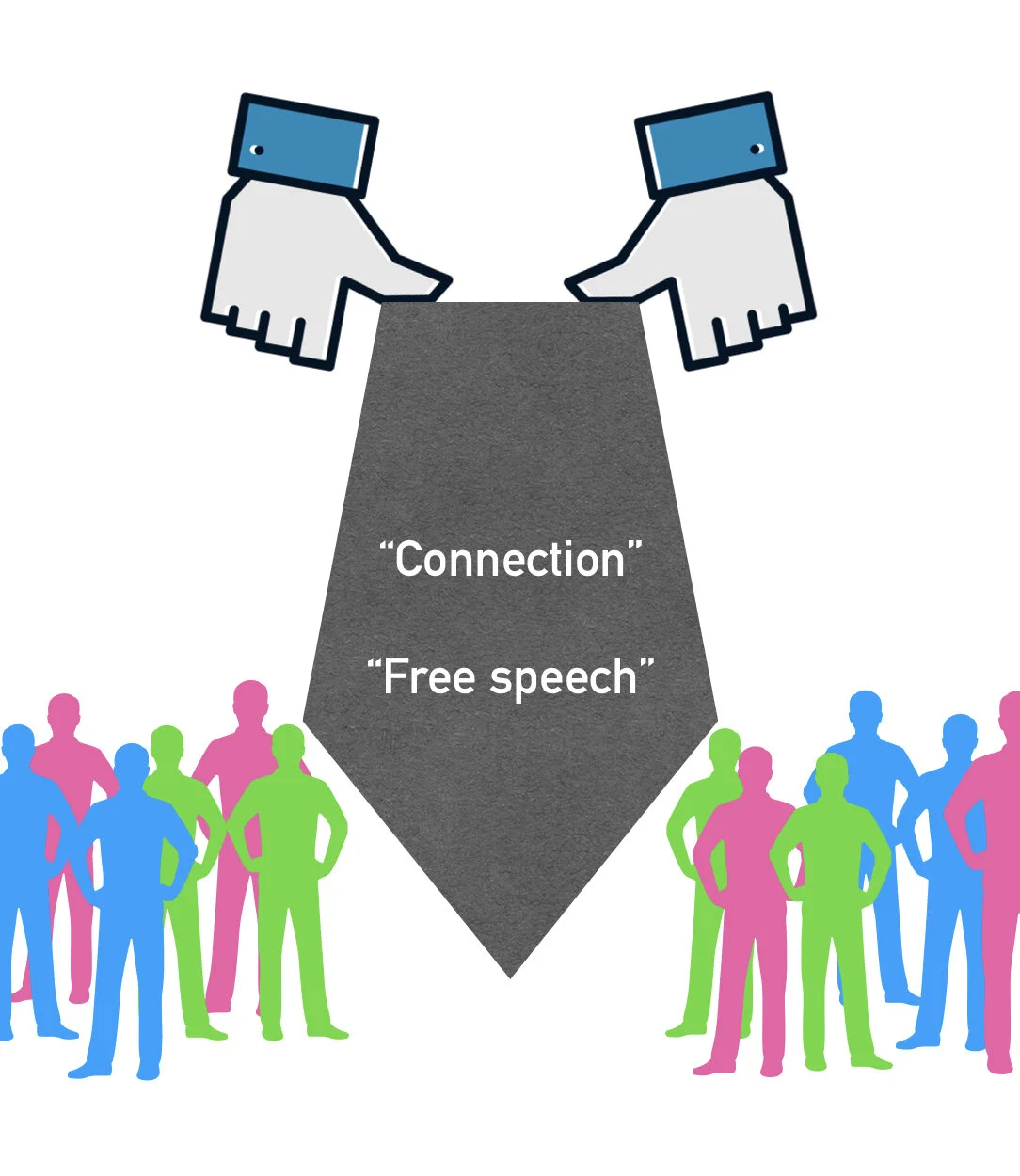
Of course, Zuckerberg has been defending this position under the guise of free speech, but we all know that on Facebook, sowing division reaps ad revenue. His creepily robotic statement was as follows: “Personally, I have a visceral negative reaction to this kind of divisive and inflammatory rhetoric, but I’m responsible for reacting not just in my personal capacity but as the leader of an institution committed to free expression.” That’s definitely how normal people talk, affirmative?

On Friday, Zuckerberg had a phone call with the President regarding the call. In an open call with employees, he expanded on the nature of the call, saying, “I used that opportunity to make him know I felt this post was inflammatory and harmful, and let him know where we stood on it.” He then reiterated his puzzling stance that the posts didn’t technically violate the rules, because it was about “state force” which is apparently allowed under Facebook’s rules. Okay.

To their (nominal) credit, Facebook employees are speaking out against him. On Monday, The New York Times reported that a few Facebook employees were so strongly opposed to this position that they have decided to leave the company, and hundreds participated in a “virtual walkout” in protest. A large number of employees have made public remarks (usually on Twitter) criticizing Zuckerberg’s decision and saying that it makes them ashamed to work for the company. Here are a few remarks from Facebook employees:

“Along with Black employees in the company, and all persons with a moral conscience, I am calling for Mark to immediately take down the President’s post advocating violence, murder and imminent threat against Black people.”

“The hateful rhetoric advocating violence against black demonstrators by the US President does not warrant defense under the guise of freedom of expression.”

“The lack of backbone, and this weak leadership, will be judged by history. Hate speech should never be compared to free speech.”

Another employee explained his frustration with Facebook constantly moving the goalposts when it comes to holding Trump accountable. Ben Thompson and John Gruber had a good analysis of this employee’s statement on their new podcast “Dithering”. Essentially, they point out that when Zuckerberg was asked several months ago by Congress what sort of posts Facebook would remove, he explained that Facebook didn’t want to be in the business of moderating or fact checking because they saw it as a free speech issue, but he also conceded that if anyone (including a politician) posted something that incited or promoted violence, that it would be taken down. The podcast’s assessment was that in making that commitment, Zuckerberg was trying to avoid being in this position by drawing a line in the sand so far out, that even Trump wouldn’t cross it. Lo and behold, Trump crossed it, and Zuckerberg didn’t keep his word. Not a good look.

From Daring Fireball:

Facebook’s real risk here, as I see it, is getting branded as the social network for racists.

Here’s the thing, Facebook is already the social network for racists, it’s just a matter of when people start to associate racism with their brand on a fundamental level. Of course, not everyone who uses Facebook is a racist, but based on anecdotal evidence and the many structural advantages Facebook’s platform provides them, I would be willing to bet a large sum of money that people who are racists prefer Facebook over any other social network.

Not only does Facebook’s platform work well for racists to share their opinions and find one another, it helps them breed and radicalize budding racists. Facebook’s Achille's heel is that their executives are too greedy to stop this cycle. But this isn’t news, I’ve said it a hundred times: Facebook’s algorithms are designed to drive division because division drives engagement, and engagement equals ad revenue.

To back up my assessment, here’s a quote from an article posted to Medium by former Facebook employee, David Schnitt:

Unfortunately, I do not think it is a coincidence that the choices Facebook makes are the ones that allow the most content–the fuel for the Facebook engine–to remain in the system. I do not think it is a coincidence that Facebook’s choices align with the least resources required, outsourcing important aspects to third parties. I do not think it is a coincidence that Facebook’s choices appease those in power who have made misinformation, blatant racism and inciting violence part of their platform. Facebook says, and may even believe, that it is on the side of free speech. In fact, it has put itself on the side of profit and cowardice.

#deletefacebook

Facebook Knew Their Platform Was Divisive and Chose Not To Address It

Jeff Horwitz and Deepa Seetharaman, reporting for The Wall Street Journal:

In essence, Facebook is under fire for making the world more divided. Many of its own experts appeared to agree—and to believe Facebook could mitigate many of the problems. The company chose not to.

Old news.

Another concern, they and others said, was that some proposed changes would have disproportionately affected conservative users and publishers, at a time when the company faced accusations from the right of political bias.

A 2016 presentation that names as author a Facebook researcher and sociologist, Monica Lee, found extremist content thriving in more than one-third of large German political groups on the platform. Swamped with racist, conspiracy-minded and pro-Russian content, the groups were disproportionately influenced by a subset of hyperactive users, the presentation notes. Most of them were private or secret.

Facebook is the social network for racists.

The high number of extremist groups was concerning, the presentation says. Worse was Facebook’s realization that its algorithms were responsible for their growth. The 2016 presentation states that “64% of all extremist group joins are due to our recommendation tools” and that most of the activity came from the platform’s “Groups You Should Join” and “Discover” algorithms: “Our recommendation systems grow the problem.”

To their credit, some Facebook employees were concerned about this, and tried to implement new features and policies to correct course.

Building these features and combating polarization might come at a cost of lower engagement, the Common Ground team warned in a mid-2018 document, describing some of its own proposals as “antigrowth” and requiring Facebook to “take a moral stance.”

Zuck said “nah, imma pass”.

One early discovery: Bad behavior came disproportionately from a small pool of hyperpartisan users.

A second finding in the U.S. saw a larger infrastructure of accounts and publishers on the far right than on the far left. Outside observers were documenting the same phenomenon. The gap meant even seemingly apolitical actions such as reducing the spread of clickbait headlines—along the lines of “You Won’t Believe What Happened Next”—affected conservative speech more than liberal content in aggregate.

The fact that conservatives are more likely to publish clickbait headlines with misinformation to ensnare ignorant readers who may not be as invested in less sensationalized news says a lot about the state of conservatism in America today. The fact that they can’t play by the rules and still win every now and then doesn’t mean Facebook should write a new, less fair rule book for them.

Don’t get it twisted: Facebook executives made a conscious decision to prioritize profit over ethics. They decided that their bottom line was more important than making sure that their platform wasn’t making human beings more hostile and inflamed.

#deletefacebook

Mark Zuckerberg’s 2006 ‘Book of Change’

Check out this great piece on Mark Zuckerberg by Steven Levy, writing for WIRED.

In the early days of Facebook, Zuck kept his plans for world domination in handwritten journals. He destroyed them. But a few revealing pages survived.

Much of Levy’s piece was informed by what Zuckerberg wrote in those journals, as well as interviews with Zuckerberg himself and other Facebook executives. The pattern of corporate irresponsibility and depravity we’ve seen from Facebook recently has been there since the very beginning.

What distinguished Facebook from other social networks was the assumed privacy provided by its gated setup [when Facebook was only available to college students]. Open Reg[istration] would throw open those gates to the masses. But would people then no longer see Facebook as a safe space? In designing Open Reg, he posted one final question to himself.

“What makes this seem secure, whether or not it actually is?” He seemed at least as concerned about the perception of privacy as with privacy itself.

”What makes this seem secure, whether or not it actually is?” Incredible.

Using Facebook needs to feel like you're using a futuristic government-style interface to access a database full of information linked to every person. The user needs to be able to look at information at any depth … The user experience needs to feel “full.” That is, when you click on a person in a governmental database, there is always information about them.

A government-esque catalog of every person in the world. Charming. But not everyone would sign up for Facebook, so this wasn’t achievable. Not to fear, Zuckerberg had a plan.

He took three pages to lay out a vision for something he called “Dark Profiles.” These would be Facebook pages for people who, whether by omission or intention, had not signed up for Facebook. […]

Zuckerberg was aware that allowing the creation of profiles for people who had no desire to be on Facebook might stir up privacy concerns. He spent some time pondering how this could avoid being “creepy.” Maybe, he mused, dark accounts might not be included in search engines.

Shadow profiles are not a joke, they’ve been a part of Facebook’s plan from the very early days.

There will be a tipping point for Facebook. One after another, the curtains are being pulled back and what we’re finding is that the people behind Facebook have always been immeasurably negligent and downright disrespectful of their users. Hopefully, stories like this will move public opinion against Facebook sooner than later, and embolden people to delete their profiles.

#deletefacebook

Facebook App Records Everything Your Camera Sees While You Use The App

The Facebook app is recording everything your camera captures while you’re using the app, whether you’re using the camera or not. Do we really think this is a bug? I don’t. A few things to consider:

  1. Facebook’s privacy policy leaves the door open for them to record data from the camera even when you don’t press the shutter button.

  2. Guy Rosen, Facebook’s VP of Integrity (lol), said on Twitter that this “sounds like a bug”. Ahem, ‘sounds like’? Shouldn’t Facebook VPs know if this was a bug and be able to immediately give a negative or affirmative answer as to whether this is expected behavior for the app?

  3. Facebook hasn’t made an official statement addressing this issue.

So, that sucks, but what can you do? You can delete your Facebook account, first and foremost. If you’re not ready to take that step, at least go into your device’s privacy settings and disable the Facebook app’s access to your camera and microphone.

#deletefacebook

Facebook Is Trying To Pick A Side. Don't Let Them.

Facebook has long been a bit vague when it comes to laying out their political leanings. That seems to be coming to a calculated end.

This excellent piece from Popular Information illustrates a case where Facebook is breaking their own rules, seemingly, for political reasons. In this instance, they’re refusing to enforce a rule that bans networks of political “news” pages that work together but don’t acknowledge that they’re affiliated. It seems that most who’ve read this piece are, understandably, perceiving it as a threat because of the massive power Facebook demonstrably holds over the American electorate, which is a valid concern. However, I don’t believe that Facebook’s decision to allow one very successful, very political network of allegedly unaffiliated pages to continue operating was made for the sake of promoting a political agenda; no, this is an exercise in self preservation.

Facebook’s malfeasance is one rare topic upon which liberals and conservatives generally agree. There have been many calls for Facebook to be more heavily regulated from Republican and Democratic legislators alike, however I believe that the Democrats have slightly outpaced Republicans in calling for Facebook to be dealt with, despite the fact that the notion of privacy as a civil liberty seems to fall slightly more in line with traditional conservatism. This trend can likely be attributed to the fact that Democrats and their elected officials tend to be a bit younger than Republicans, and thus more in tune to issues of this nature.

Given the extreme political division our country is experiencing (which Facebook has cultivated for monetary gain), the fact that their deservingness of punishment is one topic most people can agree upon puts Facebook in a very dangerous position, not to mention the fact that the drum beat is growing ever louder, and more and more people are tugging at the curtain.

One solution to that looming threat? Take a side, and further capitalize upon the division you’ve sewn by allowing that side to defend you to the death. Give one side or the other a couple free passes, have a few chats with the right folks, and then step back while that side begins to see you as one of their own, and then you’re good to go. It honestly doesn’t matter which side Facebook takes, because taking either side would all but ensure that party's loyalty, not only because they don’t want to upset Facebook and have their reach limited, but because both parties are so committed to doing the opposite of what the other party wants.

Now, in this case, Facebook seems to have chosen to ally themselves with the Republicans, but again, which side they pick doesn’t really make a difference. In defense of the Republicans, Facebook just as easily could’ve jumped on the left-bound bandwagon — a few public statements in support of people with confusing genders and a few removed Trump ads, and they’d have them in their pocket, too. I believe this choice was made out of convenience; as mentioned above, slightly fewer conservative law makers have gone after Facebook.

If you’re a Republican, this should offend your sensibilities. As stated previously, privacy is a civil liberty that has long been a value of traditional conservatives, and Facebook is the biggest threat to personal privacy our country has ever seen. True conservatives should be outraged that Facebook is even trying to get in bed with them, and that their purported reason for doing so is their mutual support of free speech — what Facebook is trying to paint as free speech (political advertisements that include false statements of fact), isn’t. It’s paid speech, it’s false advertising, and it’s speech that presents a clear and present danger — it’s NOT protected by the First Amendment. In any case, free speech is a patently American value, not a partisan one.

Facebook worked hard for a long time to avoid taking a side, and we should enforce that hard earned neutrality by refusing to allow the public perception of Facebook to shift. They do not deserve to be seen as a company guided by any sort of moral compass or political agenda, because in reality, their chief motivators are, and have always been, financial.

TL,DR: Facebook is picking a political side so that their own regulation will become a partisan issue, and therefore never actually gain enough traction for any meaningful legislation to pass.

#deletefacebook

The Facebook Origin Story

I’m not the only one linking to this article right now, but in the wake of Mark Zuckerberg’s recent attempts to rewrite the Facebook origin story, it seems a good time to remind ourselves exactly how the company came to be.

Katharine Kaplan, writing for The Harvard Crimson in 2003:

Mark E. Zuckerberg ’06 said he was accused of breaching security, violating copyrights and violating individual privacy by creating the website, www.facemash.com, about two weeks ago. The charges were based on a complaint from the computer services department over his unauthorized use of on-line facebook* photographs, he said.

“I understood that some parts were still a little sketchy.“ “Issues about violating people’s privacy don’t seem to be surmountable,” he wrote at that point.

Students were ranked within the general Harvard community and individual Houses according to attractiveness. Zuckerberg hacked into House websites to gather the photos, and then wrote the codes to compute rankings after every vote. The programming and algorithms that made the site function were Zuckerberg’s primary interest in creating it, he said.

He’s clearly still interested in algorithms. Facebook is clearly still sketchy. He clearly doesn’t understand the concept of privacy. Is it a coincidence that Zuckerberg was born in 1984? Probably not.

#deletefacebook

*the word “facebook” in this quote is not referring to the social network; it didn’t exist at this time. A face book was an online source of ID photos and names for a group of people, a directory of sorts.

UPDATED: 11/28/19, 13:45

Mark Zuckerberg Doesn't Want To Censor Politicians, He Wants To Censor Users

This has been quite a week for everyone’s favorite lifeless-eyed big tech CEO. First he got into it with Elizabeth Warren over whether or not politicians should be able to publish ads that contain lies, and now this. I’m glad to see that Washington is starting to recognize what an enormous enemy of democracy Facebook truly is.

In an interview with Fox News’ Dana Perino, he was asked a question about the disagreement between Elizabeth Warren and Kamala Harris during the fourth Democratic debate over whether Donald Trump’s Twitter account should be suspended. Zuckerberg responded by saying “my belief is that in a democracy, I don’t think that we want private companies censoring politicians in the news.” Of course he doesn’t want to censor what politicians say in their ads. The more ads they sell, the more money they make. The more sensational those ads are, the more engagement they deliver, and thus, the more money Facebook makes.

No, Mark Zuckerberg doesn’t want to censor politicians, in fact, he wants them to publish the most ridiculous ads possible. Then he’ll just censor all the people talking about those politicians to effectively gerrymander opinions, enabling companies like Cambridge Analytica to publish their own sensational ads (which are personally targeted to undecided voters, whose information they’ve collected and analyzed without consent), effectively allowing them to sell out major elections to the highest bidder.

He’s trying to pass this off as a free speech issue, to seem like he’s making the tough decision now that will seem like the right one in the long run. He cites his confidence in people as a reason that the truth will prevail despite this inconvenient but necessary decision to allow the erosion of truth in our society. Fortunately, I’m not the only one seeing through Zuckerberg’s bullshit here; CNBC’s Steve Kovach had a similar take:

While there’s almost no human involvement in deciding what to pump into your Facebook feed, there is an algorithm that’s making those decisions. In general, that algorithm is designed to keep users sucked in, and the best way to do that is showing them stuff that will engage, enrage or feed their biases. Truth doesn’t matter to an algorithm. But when you’re delivering news and information at a massive scale, you also carry the responsibility to get it right. Facebook is doing that on a scale never seen before in human history. And its leader admitted on Thursday that it wants no part in playing the role of fact-checker. In fact, in the case of false political advertisements, it’s willing to get paid to spread those falsehoods.

History won’t look fondly upon that.

#deletefacebook

See also: this.

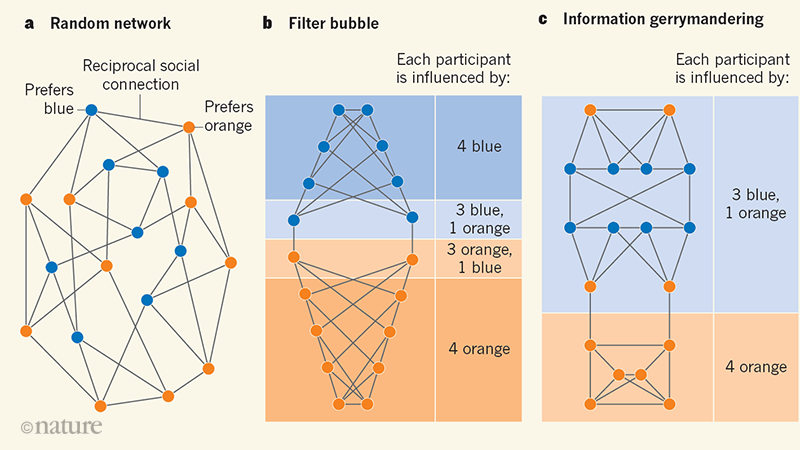
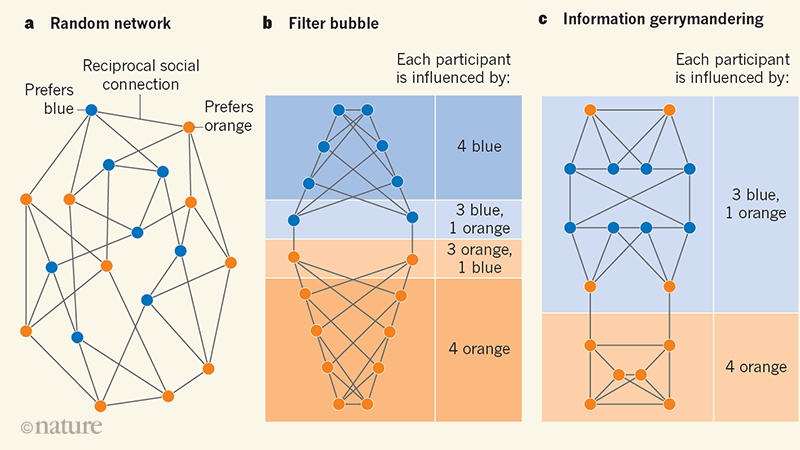
Information Gerrymandering In Social Networks

Ever feel like you’re always seeing posts from the same people on Facebook? That isn’t an accident. Your opinions are being quarantined for profit—it really is digital Gerrymandering, and it’s the reason that elections and politics are getting uglier and uglier; the electorate is becoming increasingly polarized as a result of having their beliefs affirmed by algorithms that skew their newsfeeds to lean whichever way they lean.

#deletefacebook

d41586-019-02562-z_17121850.png
‘The Great Hack’

Netflix’s ”The Great Hack” is one of the best documentaries I’ve ever seen. It explains what happened with the whole Cambridge Analytica/Facebook scandal, and makes it easy to understand for those with little prior knowledge. They take a largely nonpartisan look at how these companies were able to influence the 2016 U.S. General Election, the Brexit Referendum in the U.K., and dozens of other elections in smaller countries.

It has never been clearer that the technology we all take for granted has been taking advantage of us; it is evident that data aggregated by Facebook and exploited by Cambridge Analytica has been used to effectively brainwash the public, and the tactics they’ve used were even more efficient and dangerous than the ones utilized by the propagandists of the Third Reich. Nearly all of the blame for the explosively divisive nature of those elections belongs at the feet of Alexander Nix and Mark Zuckerberg.

“The Great Hack” very well may be the most important film of the decade, and I urge everyone to watch it. Make a concerted effort to be open minded, and don’t immediately rule out the possibility that these companies may have pulled one over on you—it’s easy to dismiss their alleged wrongdoings on the basis of “well if anyone had convinced me to think one way or the other, I think I would know.” The problem is that many people do dismiss it on those grounds, but by the very nature of what they’ve done, nobody could know until it’s too late. These are companies with billions of dollars at their disposal and a team of scientists who possess deep knowledge of how the human brain works—there is no shame in admitting they may have duped you. They certainly got me. What’s most important is what we do now that we know what they’ve done.

I’ve been pounding the #deletefacebook drum since well before the scandal broke, and there has never been a better time to get out of their corrosive network: delete your Facebook account. However, even that isn’t enough at this point.

The safety and integrity of every democracy on earth depends on everyone understanding what these companies did and calling upon our representatives to finally limit the boundless power that big tech companies have over our data. If those things don’t happen, the world will never see another free and fair election.

#deletefacebook

See also: “The Social Dilemma”

F.T.C. Approves Facebook Fine of About $5 Billion

Five billion dollars is more than a slap on the wrist, even for Facebook. That’s a ton of money, and I’m glad the FTC has approved a serious fine and not just a measly couple million bucks, as I was afraid would be the case. However, this is not significant enough to change Facebook’s business model. At the least, Facebook needs to be punished so severely that they MUST change their business model in order to remain profitable (I want them to be fined out of existence, personally). Cases like this must continue to be brought against them, because they make the same privacy violations day after day. Legislation must be enacted that safeguards the American people from such egregious privacy violations in the future.


I think the best way to fix the whole Facebook mess is to break up the company, throw Mark Zuckerberg and Sheryl Sandberg in prison, and throw away the key. They have been intentionally dishonest and immeasurably greedy. Maybe have a ceremonial Hunger Games with the rest of the company’s executives.

As far as the company’s stockpile of cash, I think it should be doled out evenly to everyone who ever had an account. Facebook has been deceitfully profiting off of our information, so I don’t think its going too far to suggest that we put a stop to this nonsense and try to compensate the citizens of the world for the data Facebook stole from them and weaponized.

As far as the actual platform, pull the plug and shut it down. Facebook makes people increasingly hostile and drives them further to the edges of the political spectrum. It upsets people, and it wastes their time. It’s a toxic wasteland of clickbait ads that serve no purpose other than to confuse, captivate, and enrage people, and it’s making “journalists” lazier by the day; we’re in dangerous territory where people on different sides of the aisle can rarely agree on facts and truth, and we need to address these issues sooner rather than later, or we’re going to lose all common understanding of truth as technology progresses and deep fake videos get more and more realistic. I know there are a lot of people whose small businesses rely on Facebook; not to be too harsh, but they should have done more work to understand the platform and the dangers of it before putting all of their digital eggs in that basket. If their businesses are providing legitimate value to consumers, they will find a way to continue doing business with them; hoorah, capitalism.

#deletefacebook

The Shady Reality of Facebook's Shadow Profiles

Most people who know me have heard me complain relentlessly about Facebook at some point, and anyone who doesn’t know me will recognize quickly upon meeting me that I believe Facebook is one of the most dangerous, corrupt, malicious companies in the world. This is a personal account that will help to illustrate why.

I deleted my Facebook account in 2017 after reading a series of articles that pulled back the curtain on their dishonest, predatory practices in regards to mishandling user data and disregarding privacy, often in undeniably intentional ways. One of these many ways included the use of “shadow profiles”,  which are unseen profiles with a wealth of information created internally by Facebook. They are created not only for people who use their services, but also for people who have never used Facebook before. These shadow profiles help Facebook improve their network of users to recommend more relevant friend requests, ads, timeline posts, etc. The problem with this was that nobody had any idea Facebook had made these shadow profiles, as they intentionally kept it a secret. Additionally, they provide no opt-out option or any way to truly remove your data from these shadow profiles; they are entirely beyond consumer access, and were created and maintained regardless of consumer consent.

This all sounds a bit Orwellian, but before you recommend I get fitted for a tinfoil hat, consider this very personal, very true account that proves the existence of Facebook’s shadow profiles.

After I deleted my Facebook account in 2017, they promised to delete my account and the associated data within 90 days. Seeing as I had no way to verify that this would happen, I tried to forget about it, and eventually made peace with the fact that even if they didn’t delete my information, I had done all I could do. Fast forward two years to the present, and I am only more distressed about how Facebook is operating. From the Cambridge Analytica scandal, to the multitude of uncovered lies and privacy debacles, I truly think they’re a criminal enterprise ran by a few greedy people who are so obsessed with their own corporate and personal wellbeing, that they are willing to destroy free speech and democracy in order to preserve themselves. I’ve increasingly felt like I should be doing more to start conversations about how corrupt they are, and I have tried diligently to get others to delete their accounts, too. In fact, CopyrightBro exists largely because I wanted a place to share my ideas, but couldn’t stomach the idea of contributing to the overall success of their operation by publishing (what I consider to be) meaningful ideas in a place where they would get mixed in with useless gender reveal videos and cat memes as a way to placate, entertain, and enslave the millions of ignorant people on whom Facebook relies for advertisement revenue.

Nevertheless, I decided it would be worth it to create a Facebook page for CopyrightBro so that people could see my (specifically anti-Facebook) posts, and I just wouldn’t create a page for Broc Gantt. It turns out, Facebook won’t let you make a business page without first creating a personal profile, so I begrudgingly entered my name and phone number, but refused ALL of the optional information (profile photo, email, etc). Despite this, the third screen Facebook showed me during the account creation process was a screen where they explained how to add friends, followed by a scrolling list of people I know from every area of my life. Family members, high school friends, old work friends, people from college, previous church members, and folks from the local community. They conveniently offered to fill in my high school and college information, as well as offered up my hometown as a suggested location to add to my profile. I knew almost every single person they recommended, and all of the other information about my schools and hometown was spot on. Ultimately, I have decided not to create an account for myself or CopyrightBro.

The bottom line is this: there is no way Facebook could recommend all of that information solely based on the name and phone number of a new user (remember, my account had been permanently deleted two years prior, and they promised to delete all the associated data). The evidence for their utilization of shadow profiles is incontrovertible, and it is a practice that absolutely must come to an end. It is mass-market stalking.

If you’d like to learn more about shadow profiles, I’d recommend checking out this article from The Verge. Of course, I’d also recommend deleting your Facebook profile, but if you can’t yet bring yourself to delete it, share this post, and maybe you can help someone else make the decision. If you’d like help making your decision, spend some more time on CopyrightBro, and I’ll do my best to convince you. Start with my comments on this article about all of Facebook’s lies and coverups.

#deletefacebook

Why Zuckerberg’s 14-Year Apology Tour Hasn’t Fixed Facebook

An absolutely scathing but completely honest summary of Facebook’s history. If you value privacy, democracy, or freedom of the press, read this article from Wired. Then delete your Facebook account.  

Still not convinced? Try this fun tip: request a copy of facebook’s data profile for your account. It includes heaps of information including all your private messages, advertising demographic data, IP addresses, your GPS coordinates from every time you’ve logged in, and more. Additionally, you’ll see a list of advertisers to whom they’ve sold all of this information without your consent. Facebook is a criminal enterprise. Delete your account. 

#deletefacebook