‘Lover’
5A3515F2-F50E-4F57-9C44-09F39A42D473.JPG

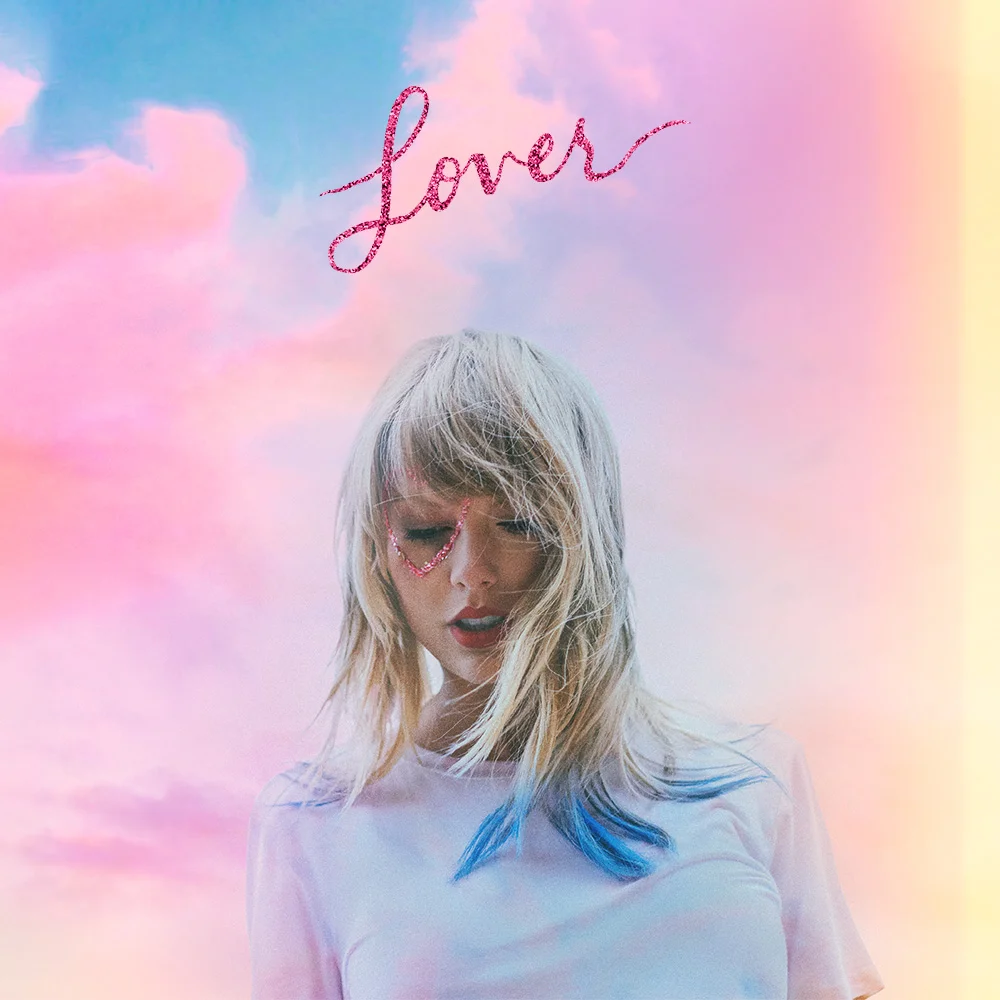
Taylor Swift’s latest album dropped in August, and I’ve been sitting on my thoughts about it for a while, giving them some time to mature.

First, my general feelings:

I was extremely excited for this album in the months leading up to its release, but in the week or two right before it came out, I started to lose a little bit of hope. After all, despite my glowing initial reviews of the first two singles, “ME!” and “You Need To Calm Down,” neither of them had a lot of replay value; I soon got tired of hearing both of them. “ME!” was too simplistic and juvenile, and YNTCD was just too political. When “The Archer” was released, I was still extremely excited, and it got me thinking that the album would have a wide range of sounds, which turned out to be completely accurate. But when the “Lover” single came out, I was taken aback by how distinctly country the beginning of the song was, which turned out to be a hint that the whole album would be extremely sonically diverse. Listening to the “Lover” single made me happy, and I’m sure it made Joe Alwyn happy, but it’s not particularly relatable for fans who haven’t found their happily ever afters (in fact, quite a few songs ended up being too specific to be relatable).

When the album was finally released and I started listening to the first track, all of the hope that had been waning away in the weeks before was immediately restored. Unfortunately, it wasn’t too many tracks later before some of that hope began to wane again. Overall I like the album, but I’ll be the first to admit this isn’t her finest work. The album has a LOT of lyrics, and it’s frankly too long. At least two songs, if not three or four, could’ve been left out altogether and the album would’ve been better for it.

There were several recurring themes that I found quite interesting, yet they’re still largely unexplained. Examples include: the color blue, religion, and patriotism.

Also, Lover is not at all sonically cohesive. It has often been compared to Red on account of it’s strong lyrics, but this is another thing they have in common. The order of the tracks is astonishingly bad, especially given how well they could’ve been placed. Seriously, a couple of the transitions gave me whiplash.

Song by Song:

“I Forgot That You Existed”: 7.5/10

This song was fun and instantly revitalized my excitement for the album the first time I heard it.

“Cruel Summer”: 9/10

One of the strongest tracks, hands down. At this point on the first run through, I was convinced the album was gonna slap. It reminded me a lot of 1989, which was, in my opinion, Taylor’s strongest record.

“Lover”: 5/10

This song is sweet and the type of thing you’d write for someone you want to spend your life with, so I don’t think you can fault her for writing it, it just isn’t super relatable for a lot of people, as I mentioned before.

“The Man”: 0/10

Taking things a step further than “unrelatable” is “The Man,” which down right alienates half the people in the world, and soured the whole album, and to an extent, her entire discography. This song tries to make a political/social point, and it sucks for that reason alone, but the misandrous nature of this track is what makes it my least favorite Taylor Swift song ever. To hear her tell it, being a man makes life a breeze. Nobody will ever question your credibility if you have a wiener. Being a man makes you complex and cool. All men have unshakable confidence and are always socially dominant alpha males with no fear. Nobody ever criticizes a man’s sexuality or paints their virility in a negative light (which is especially false for same sex attracted men — did her ignorance simply allow her to overlook that demographic, or did she determine that the lyric doesn’t apply to that group because they’re not really “real men” — in any case, it’s very problematic). She seems to think that men don’t deal with real problems and that being a man makes life easy, which is a notion I find personally hurtful. She doesn’t owe me anything and she can write whatever she wants, but as a long time fan and vociferous defender of Taylor Swift, this song made me feel extremely unappreciated. If she wanted to comment on how the media portrays her, she should’ve referred people back to “Blank Space,” because that was the purpose of that song, it didn’t presume hurtful things about entire groups of people, and she’s never going to top it anyway.

“The Archer”: 6/10

I’d been hoping for a devastatingly sad song on this album, and this is as close as we got. I’m not mad, it’s extremely introspective which I think is terrific, but I don’t think anyone is crying their eyeballs out over it.

“I Think He Knows”: 8.5/10

This is one of the album’s high points, and it kicks off the strongest segment of songs in a row (roughly tracks 6-11). The song is just fun.

“Miss Americana And The Heartbreak Prince”: 5/10

I have an unfortunate feeling that this may be the “So It Goes…” of this album. They’re both track 7 and they’re both sonically dull and to my untrained ear. However, they couldn’t be more opposite from a lyrical perspective. “So It Goes…” was very flat and repetitive, while MAATHP has a ton of lyrics and metaphors, which certainly work in its favor.

“Paper Rings”: 5/10

This feels very mid 00s, kids’ movie montage-y. It reminds me a lot of Walking on Sunshine and Daddy Daycare. It has a few good lyrics and is fun and upbeat, but I just don’t love it. Half the time, I end up skipping it before the end. It’s like musical Splenda: sweet but fake.

“Cornelia Street”: 6.5/10

This is another track that almost feels too specific, but it is very sweet and has grown on me since I first heard it. I just can’t figure out if she wrote this song about a romantic or platonic relationship.

“Death By A Thousand Cuts”: 7.5/10

This song isn’t really fast, but it’s a little faster than I expected. I really like some of the lyrics though, particularly this one:

You said it was a great love, one for the ages, but if the story’s over, why am I still writing pages?

I don’t know enough about how music is produced to know if this is a possibility, but if so, I think a mashup with “All Too Well” would be incredible.

“London Boy”: 4/10

The song sounds fun, but its another very specific song that people who haven’t been to London won’t be able to appreciate as much. Also, the weird line about a “Tennessee Stella McCartney” seems like a corporate decision to sell more ugly, airbrushed-looking t-shirts that nobody asked for.

“Soon You’ll Get Better” (feat. Dixie Chicks): 2/10

This song might have people crying, but illness and death weren’t exactly the themes I was imaging when I said I wanted something devastatingly sad. I’m surprised this track made the album actually, it seems too private to belong. It feels like you’re witnessing something indecent, as if you’ve just walked into a room to find someone mourning the death of a loved one. Call me heartless, but… skip.

“False God”: 4/10

This song is interesting. It’s a lot more, uhh, sensual than anything Taylor has made in the past. I don’t love it and I don’t hate it, it just feels different.

“You Need To Calm Down”: 4.5/10

In regards to my statement that this song is too political: don’t get me wrong, I appreciate Taylor’s contribution to the fight for LGB equality with this track. Also, I see how YNTCD fits with the overall theme of the album being “a love letter to love itself.” It’s just that you can only listen to a song with such a strong political message so many times before that’s all you hear, and I don’t think that makes for great music, regardless of how catchy it is or even how you feel about the message.

“AfterGlow”: 6.5/10

A very solid track; introspective and entertaining.

“ME!” (feat. Brendon Urie): 2/10

As I said before, this song is a bit juvenile. It’s simplistic and just doesn’t really fit with the others on the album; not what I would’ve picked for the lead single.

“It’s Nice To Have A Friend”: 1/10

The beginning of this song sounds like it should be opening credit music for a day-in-the-life documentary about a resident of Hiroshima on August 6th, 1945. It only gets worse from there. It’s slow and boring, and I skip it without hesitation.

“Daylight”: 9/10

This is probably the best song on the album. It’s reflective and refreshing, it doesn’t try too hard, and it’s a great conclusion for the album that this could’ve been.

In Conclusion:

This album just doesn’t hit the same as her previous ones. There were a couple good tracks, but there were also some really bizarre choices made, and overall, the album wasn’t very relatable. As I mentioned earlier, it’s her prerogative to write whatever sort of songs she wants to, and it certainly seems that this album was written for herself, but in turn that makes for an album that’s far less relatable than any of her past records.

Had Lover been 3-4 songs shorter, more sonically cohesive, and had less of that “musical Splenda” vibe, it would be really good. But as things stand, the album lacks replay value. I’m already tired of it, and I don’t feel obligated to keep listening to it. In fact, Taylor is on a clear downward trend since 1989, and given the slap to the face dealt by “The Man,” I’ve decided to take a step back from TS. I’m still a fan, but I don’t feel the same level of emotional commitment I did before this album. At least we have “Beautiful Ghosts” to look forward to.
UPDATED: 11/9/19, 17:00

Rudy Giuliani Needed Apple Genius Help to Unlock His iPhone After Being Named Trump Cybersecurity Adviser

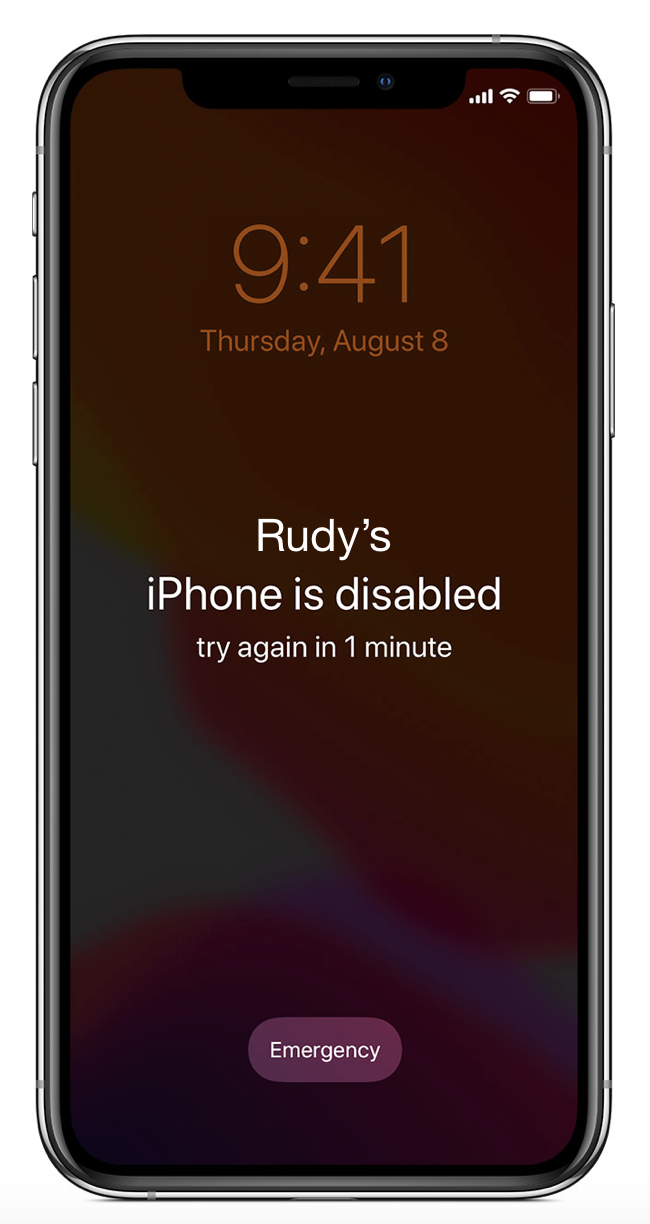
Rudy Giuliani, President Trump’s Cybersecurity Advisor, apparently had to go to the Apple Store to have his iPhone unlocked after he forgot his passcode. Giuliani confirmed this account, reported by NBC News’ Rich Schapiro, on his Twitter.

Forgive me for believing that nobody who is seventy five years old should be in any sort of IT or cybersecurity position. This gets right back to the issue of boomers not quite understanding what’s happening around them, yet remaining as cocky as ever.

As a former Apple Store Specialist, this was always the most annoying sort of customer to deal with, because in almost all cases, they knew nothing about the technology upon which they relied, other than that they could shuffle into an Apple Store to demand some person younger than them make it start working again after they’d forgotten something as elementary as a four-digit PIN. I can also vouch for the legitimacy of the photos presented by NBC: that really is what the internal system looks like on the iPad for technicians handling Genius Bar appointments.

Nancy Pelosi Is Worried 2020 Candidates Are on Wrong Track

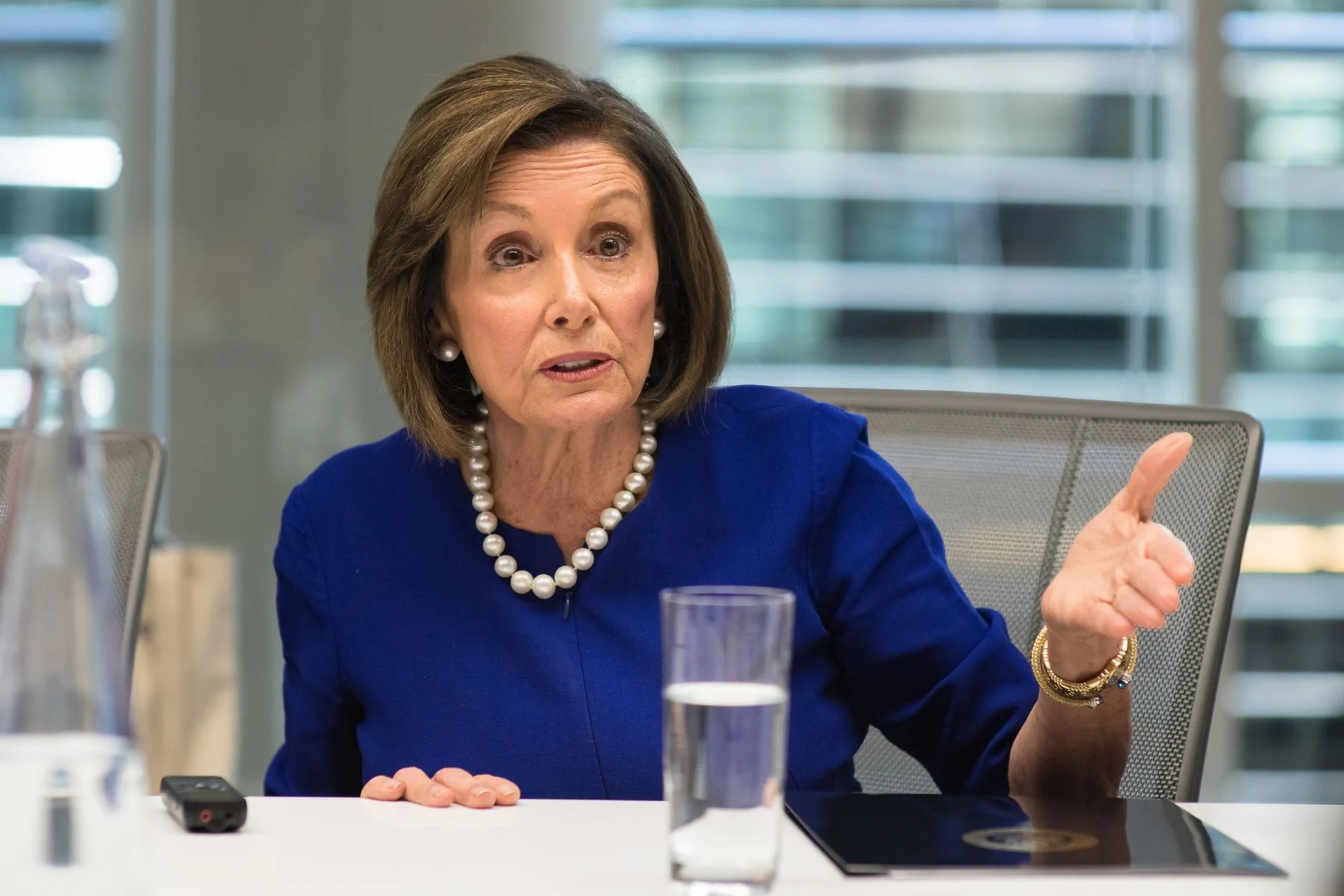
Sahil Kapur, quoting Nancy Pelosi in a Bloomberg* article:

“What works in San Francisco does not necessarily work in Michigan,” Pelosi said at a roundtable of Bloomberg News reporters and editors on Friday. “What works in Michigan works in San Francisco — talking about workers’ rights and sharing prosperity.” […]

“As a left-wing San Francisco liberal I can say to these people: What are you thinking?” Pelosi said. “You can ask the left — they’re unhappy with me for not being a socialist.”

Pelosi has a good point here, that points to a larger problem in American politics. Yes, someone needs to get Donald Trump out of the White House, but we’re never going to heal the divide between the left and right if we don’t stop the pendulum of political power and public opinion from swinging so wildly, back and forth every few years. Installing an anti-Trump “savior” won’t necessarily make things better, it will just swap the roles of which group gets to be the indignant victims and which gets to be the vindicated idiots. We’ve got to collectively take steps toward one another, not run in opposite directions.

*Quick note to remind readers that last year, Bloomberg was the publication that put out “The Big Hack”, a sensational piece by Jordan Robertson and Michael Riley which claimed that many American companies, including Apple and Amazon, were having data siphoned from their servers by a tiny, Chinese military unit designed chip which had made its way onto their motherboards during production in Chinese factories without the companies’ knowledge. All parties involved denied the claims made by the Bloomberg reporters after conducting internal investigations which yielded no evidence that such tampering had occurred. Bloomberg has offered no evidence to corroborate their “reporting”. By all accounts, it seems like The Big Hack was a big farce. Until Bloomberg retracts the story or corroborates it, their institutional credibility must be questioned.

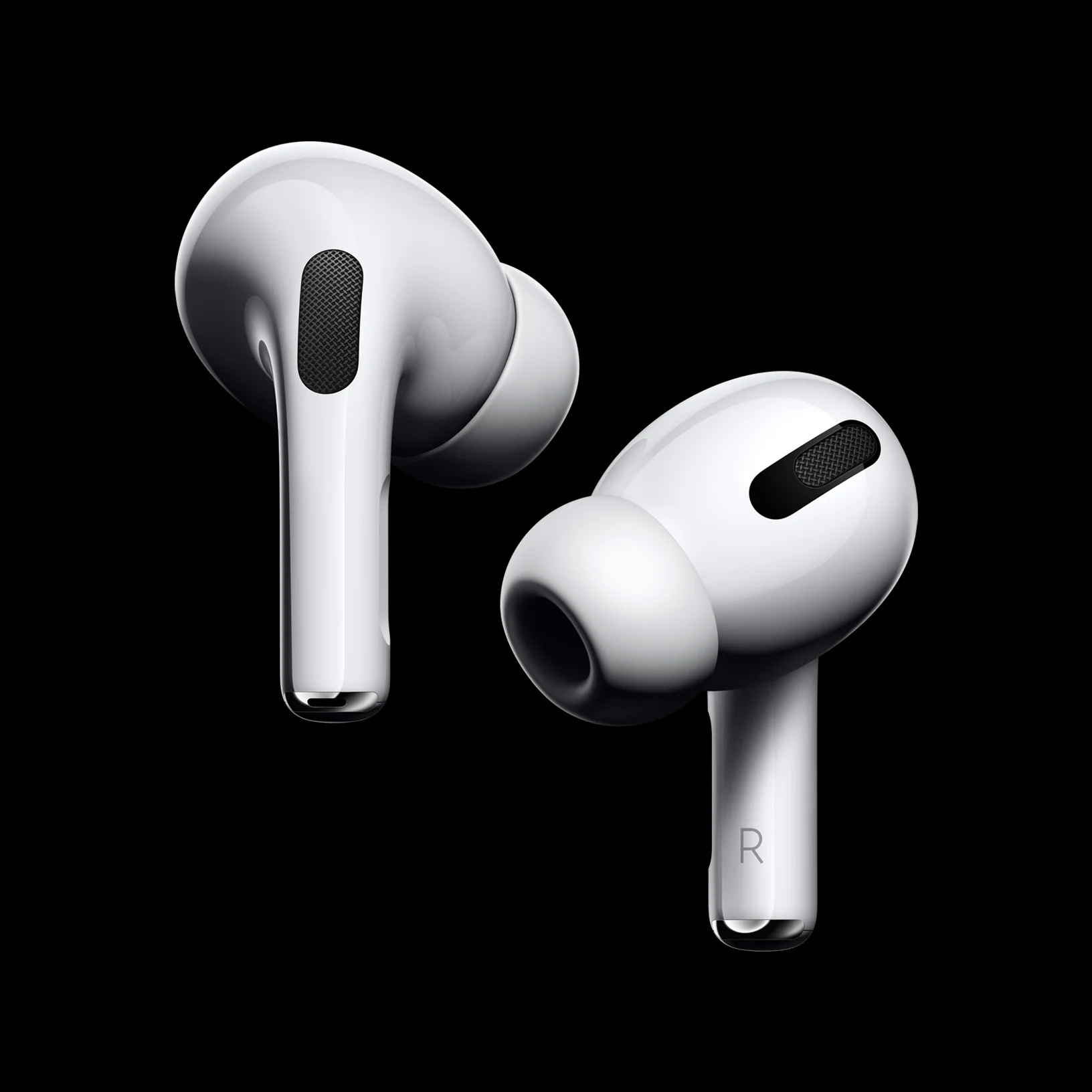
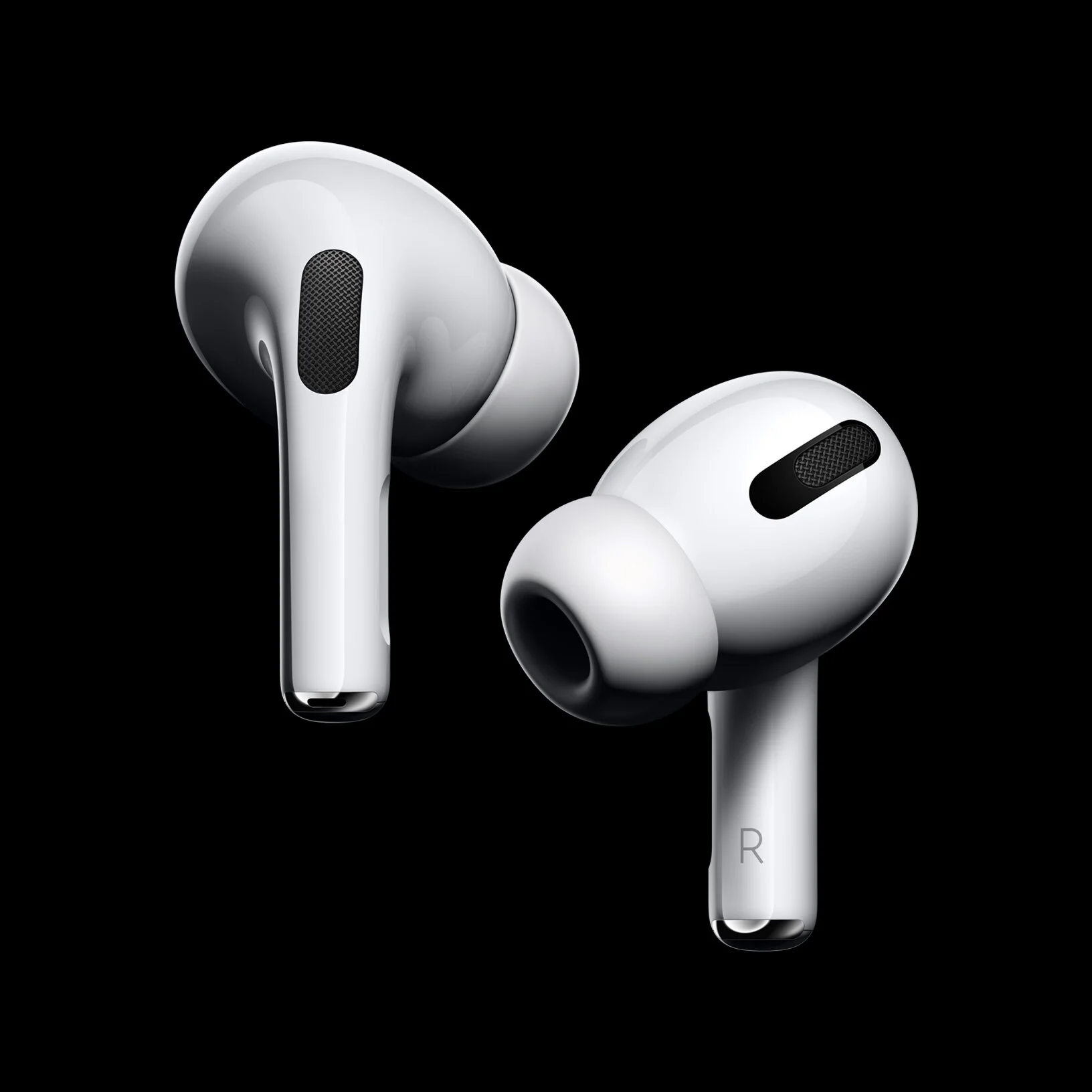
AirPods Pro
IMG_0918.jpeg

I was extremely skeptical and vocally critical of the AirPods Pro when they were first announced, but after testing them for twenty-four hours, I’ve completely changed my mind.

I’ve never had a terrific experience with noise canceling headphones, and I’ve never really found the foam/rubber tipped, in-ear style headphones to be comfortable, so those were my two primary concerns with AirPods Pro. I’m pleased to report that those are both non-issues.

The silicone tips have been designed in such a way that they snap onto the AirPods, rather than enveloping a metal or plastic barrel with a cylindrical tube of rubber or foam on the inside of the tips, as has been the case with every other pair of rubber or foam tipped headphones I’ve used. This design change allows the tips to provide a more natural seal, and they’re much more comfortable because they omit the hard metal or plastic at the center of the tip.

In regards to the noise cancellation, Apple offers two, equally impressive modes: noise cancellation, and transparency. The noise cancellation mode works extremely well, blocking out almost all of the noise in a crowded Starbucks. The transparency mode is more interesting, because it uses the microphones to transmit some of the sounds from your environment through to your ears, while blocking other sounds, so that I couldn’t hear the noise from fans in the gym, but I could clearly hear the guys clanking beside me. Transparency mode is great for listening to music in cases where you still want to be aware of your surroundings, like crossing the street or in a busy gym with lots of heavy objects moving about. The noise cancellation mode is great when you want to really get in the zone or want to relax a bit. The work they’ve done here is remarkable, and as John Gruber quips on Daring Fireball, it really is audio AR.

The force sensor on the stem of the AirPod is also far more responsive and easier to use than the previous generation’s double tap option for controlling Siri and music playback. It’s a very Apple-y feature.

I’m giving these new AirPods Pro a 9/10, because $250 is a bit expensive, but I was very impressed by the functionality and fit.

UPDATE: 11/4/19, 12:50;

Time seems to agree with me. They make some really good points in their review, and even remark that the AirPods Pro are Apple’s best product since the iPad.

PSA: Online Fingerprinting Allows Websites To Track You

Geoffrey Fowler, writing for The Washington Post:

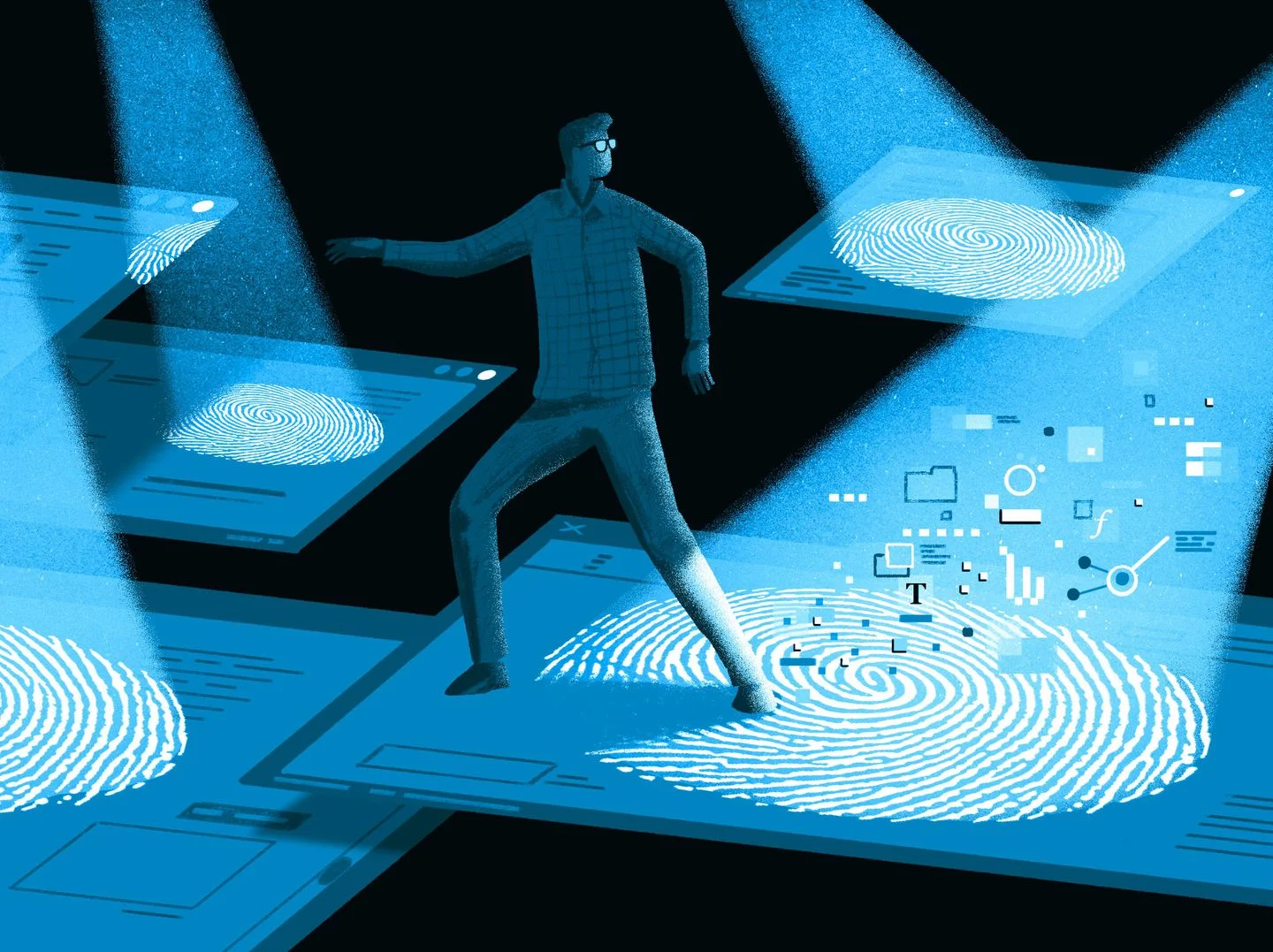
Fingerprinting happens when sites force your browser to hand over innocent-looking but largely unchanging technical information about your computer, such as the resolution of your screen, your operating system or the fonts you have installed. Combined, those details create a picture of your device as unique as the skin on your thumb.

This piece provides a good explanation of the predatory practice of online fingerprinting.

Unfortunately, there’s no clear answer on how to prevent websites from identifying you via fingerprinting, but some devices and web browsers are safer than others. As Fowler explains, Apple devices using the Safari browser are the most protected from this threat. If you have an iPhone, Mac, or iPad, you should definitely be using Safari — it’s already the fastest and most battery efficient browser for Apple products — because they’ve built in a lot of protections to keep users safe from fingerprinting. Fowler also points out that Google Chrome has almost no protections in place to prevent fingerprinting; if you use an Android phone or a Windows computer, you should use Firefox instead of Chrome as your default browser.

Also, props to Fowler for calling out his own publication for using fingerprinting on their website; that’s true, courageous journalism.

Facebook Is Trying To Pick A Side. Don't Let Them.

Facebook has long been a bit vague when it comes to laying out their political leanings. That seems to be coming to a calculated end.

This excellent piece from Popular Information illustrates a case where Facebook is breaking their own rules, seemingly, for political reasons. In this instance, they’re refusing to enforce a rule that bans networks of political “news” pages that work together but don’t acknowledge that they’re affiliated. It seems that most who’ve read this piece are, understandably, perceiving it as a threat because of the massive power Facebook demonstrably holds over the American electorate, which is a valid concern. However, I don’t believe that Facebook’s decision to allow one very successful, very political network of allegedly unaffiliated pages to continue operating was made for the sake of promoting a political agenda; no, this is an exercise in self preservation.

Facebook’s malfeasance is one rare topic upon which liberals and conservatives generally agree. There have been many calls for Facebook to be more heavily regulated from Republican and Democratic legislators alike, however I believe that the Democrats have slightly outpaced Republicans in calling for Facebook to be dealt with, despite the fact that the notion of privacy as a civil liberty seems to fall slightly more in line with traditional conservatism. This trend can likely be attributed to the fact that Democrats and their elected officials tend to be a bit younger than Republicans, and thus more in tune to issues of this nature.

Given the extreme political division our country is experiencing (which Facebook has cultivated for monetary gain), the fact that their deservingness of punishment is one topic most people can agree upon puts Facebook in a very dangerous position, not to mention the fact that the drum beat is growing ever louder, and more and more people are tugging at the curtain.

One solution to that looming threat? Take a side, and further capitalize upon the division you’ve sewn by allowing that side to defend you to the death. Give one side or the other a couple free passes, have a few chats with the right folks, and then step back while that side begins to see you as one of their own, and then you’re good to go. It honestly doesn’t matter which side Facebook takes, because taking either side would all but ensure that party's loyalty, not only because they don’t want to upset Facebook and have their reach limited, but because both parties are so committed to doing the opposite of what the other party wants.

Now, in this case, Facebook seems to have chosen to ally themselves with the Republicans, but again, which side they pick doesn’t really make a difference. In defense of the Republicans, Facebook just as easily could’ve jumped on the left-bound bandwagon — a few public statements in support of people with confusing genders and a few removed Trump ads, and they’d have them in their pocket, too. I believe this choice was made out of convenience; as mentioned above, slightly fewer conservative law makers have gone after Facebook.

If you’re a Republican, this should offend your sensibilities. As stated previously, privacy is a civil liberty that has long been a value of traditional conservatives, and Facebook is the biggest threat to personal privacy our country has ever seen. True conservatives should be outraged that Facebook is even trying to get in bed with them, and that their purported reason for doing so is their mutual support of free speech — what Facebook is trying to paint as free speech (political advertisements that include false statements of fact), isn’t. It’s paid speech, it’s false advertising, and it’s speech that presents a clear and present danger — it’s NOT protected by the First Amendment. In any case, free speech is a patently American value, not a partisan one.

Facebook worked hard for a long time to avoid taking a side, and we should enforce that hard earned neutrality by refusing to allow the public perception of Facebook to shift. They do not deserve to be seen as a company guided by any sort of moral compass or political agenda, because in reality, their chief motivators are, and have always been, financial.

TL,DR: Facebook is picking a political side so that their own regulation will become a partisan issue, and therefore never actually gain enough traction for any meaningful legislation to pass.

#deletefacebook

Google's Filter Bubbles

This research done by DuckDuckGo’s SpreadPrivacy.com does a great job of illustrating why you can’t trust Google Search. It’s rather dense, but polls suggest that online privacy is becoming a mainstream issue, so it’s well worth the time it will take you to read it.

Basically, they had a bunch of participants search for the exact same search terms on Google, and then they analyzed the results. In each case, participants were given different results in different orders based on the personal information Google had collected about them and used to predict which search results might interest them the most, effectively putting each user in their own filtered bubble, regardless of whether they had been using private browsing mode. They do this because the more links a user clicks, the more money they make from advertising. And because they’re shady.

Why is that a bad thing, you ask? Well, if Google knows enough about you to predict which links you’re most likely to click on when you search for a given term, they know enough about you to do some serious damage. Imagine the case of a Google user with strong political beliefs; in a very short amount of time, Google could learn enough about that user to show them results that are most likely to appeal to their beliefs, and they will do so, even if it means promoting results that aren’t factually correct, hiding results that may challenge their beliefs, or taking that user down a habit hole that pushes their opinions further to the edge of the political spectrum. Personalized search results yield huge confirmation bias issues and result in case by case censorship.

I can’t stress enough that everyone should stop using Google as their default search engine; DuckDuckGo is a great alternative that yields accurate search results, and is available to be set as your default search engine on Apple devices.

Botched Android Biometric Authentication Systems

Last week’s headlines were an exercise in illustrating just how far ahead of the competition Apple is in some areas, as the BBC revealed that incredible security issues exist for Google’s and Samsung’s latest flagship devices.

Google’s new Pixel 4 has a facial recognition system which they’ve made a point of touting is the only one, besides Apple’s Face ID, that is secure enough to be used for sensitive authentications, such as authorizing payments. Unfortunately, their facial recognition system doesn’t really meet that standard, because it works even with your eyes closed, as opposed to Apple’s Face ID, which not only requires your eyes to be open, but also for your eyeballs to be aimed at your device. Google admits that, in theory and in practice, this would allow a third party to unlock your device by holding it up to your face while you’re sleeping or otherwise unconscious.

Samsung, on the other hand, was trying to look cool by making an in-display, ultrasonic fingerprint scanner, which does sound pretty cool, except that it doesn’t work. Not that it won’t recognize your finger, it’s just that it WILL accept anyone’s finger if the device has a cheap plastic screen protector on it; such screen protectors are, unfortunately, ridiculously common.

Can you imagine if Apple shipped a device with a security feature that could be fooled by any finger in the world and a cheap piece of plastic? In Samsung’s and Google’s defense, both companies have announced that they intend to release software patches to address these issues in the coming weeks, but it’s astonishing that they shipped them in the first place. It’s a good thing Android has a reputation for having such a high percentage* of users on their most recent software versions.

*sarcasm.

The Facebook Origin Story

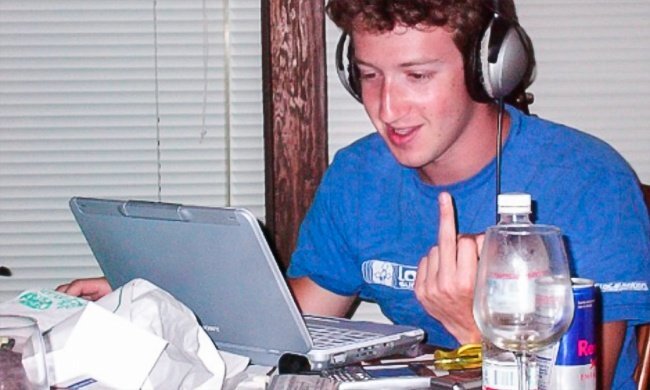
I’m not the only one linking to this article right now, but in the wake of Mark Zuckerberg’s recent attempts to rewrite the Facebook origin story, it seems a good time to remind ourselves exactly how the company came to be.

Katharine Kaplan, writing for The Harvard Crimson in 2003:

Mark E. Zuckerberg ’06 said he was accused of breaching security, violating copyrights and violating individual privacy by creating the website, www.facemash.com, about two weeks ago. The charges were based on a complaint from the computer services department over his unauthorized use of on-line facebook* photographs, he said.

“I understood that some parts were still a little sketchy.“ “Issues about violating people’s privacy don’t seem to be surmountable,” he wrote at that point.

Students were ranked within the general Harvard community and individual Houses according to attractiveness. Zuckerberg hacked into House websites to gather the photos, and then wrote the codes to compute rankings after every vote. The programming and algorithms that made the site function were Zuckerberg’s primary interest in creating it, he said.

He’s clearly still interested in algorithms. Facebook is clearly still sketchy. He clearly doesn’t understand the concept of privacy. Is it a coincidence that Zuckerberg was born in 1984? Probably not.

#deletefacebook

*the word “facebook” in this quote is not referring to the social network; it didn’t exist at this time. A face book was an online source of ID photos and names for a group of people, a directory of sorts.

UPDATED: 11/28/19, 13:45

Facebook Changes Their Advertising Rules To Allow Ads with Lies

In case you missed it, Facebook has updated their advertising policy to make it easier for people, companies, and campaigns to publish ads that contain false or misleading statements, a move which ought to be condemned equally from conservatives and liberals.

The old rule was that you couldn’t publish ads that contained such statements, but the protections were rolled back last week to allow any statement that hasn’t been proven to be false by an independent fact checking organization, and even that flimsy rule doesn’t apply to politicians, so they can, in theory and in practice, publish ads on Facebook that contain completely false information with no repercussions. Even before this rule change, misinformation campaigns on Facebook led to the extreme political division our country is experiencing, and significantly influenced several high profile elections around the world. I recognize that that’s a lofty claim — if you don’t believe me, check out this piece I wrote about a film called “The Great Hack,” and then watch it for yourself on Netflix.

#deletefacebook

UPDATED: 11/28/19, 13:30

Bias Checkup: Zuckerberg On Censorship

Here’s a fun exercise, let’s see how two of the biggest news outlets in the country, one stereotypically more liberal and the other stereotypically more conservative, chose to represent the same story. Given Zuckerberg’s actual quote and the unpartisan nature of this issue, this should be a fairly straightforward chance to identify potential bias. Let’s get started.

First Things First, Here’s What Happened:

Lest we judge too soon, it’s important to know what Mark Zuckerberg actually said, so that we can draw reasonable conclusions about how the news outlets are presenting it. In an interview that covered censorship and in the wake of Facebook’s recent policy change that allows politicians to publish ads with Information that is known to be false, Zuckerberg said “my belief is that in a democracy, I don’t think that we want private companies censoring politicians in the news.”

The Headlines:

Here were the headlines of the stories from CNN and Fox News which covered that interview.

CNN: “Facebook's Mark Zuckerberg: Private companies should not censor politicians”

Fox News: “Facebook's Mark Zuckerberg rejects calls for Trump's social media to be shut down in exclusive interview”

The Verdict:

This is only one example, so perhaps it’s just a misrepresentation, but based on this exercise alone, “fair and balanced” seems like a stretch.

PoliticsGuest Useroctober19
Mark Zuckerberg Doesn't Want To Censor Politicians, He Wants To Censor Users

This has been quite a week for everyone’s favorite lifeless-eyed big tech CEO. First he got into it with Elizabeth Warren over whether or not politicians should be able to publish ads that contain lies, and now this. I’m glad to see that Washington is starting to recognize what an enormous enemy of democracy Facebook truly is.

In an interview with Fox News’ Dana Perino, he was asked a question about the disagreement between Elizabeth Warren and Kamala Harris during the fourth Democratic debate over whether Donald Trump’s Twitter account should be suspended. Zuckerberg responded by saying “my belief is that in a democracy, I don’t think that we want private companies censoring politicians in the news.” Of course he doesn’t want to censor what politicians say in their ads. The more ads they sell, the more money they make. The more sensational those ads are, the more engagement they deliver, and thus, the more money Facebook makes.

No, Mark Zuckerberg doesn’t want to censor politicians, in fact, he wants them to publish the most ridiculous ads possible. Then he’ll just censor all the people talking about those politicians to effectively gerrymander opinions, enabling companies like Cambridge Analytica to publish their own sensational ads (which are personally targeted to undecided voters, whose information they’ve collected and analyzed without consent), effectively allowing them to sell out major elections to the highest bidder.

He’s trying to pass this off as a free speech issue, to seem like he’s making the tough decision now that will seem like the right one in the long run. He cites his confidence in people as a reason that the truth will prevail despite this inconvenient but necessary decision to allow the erosion of truth in our society. Fortunately, I’m not the only one seeing through Zuckerberg’s bullshit here; CNBC’s Steve Kovach had a similar take:

While there’s almost no human involvement in deciding what to pump into your Facebook feed, there is an algorithm that’s making those decisions. In general, that algorithm is designed to keep users sucked in, and the best way to do that is showing them stuff that will engage, enrage or feed their biases. Truth doesn’t matter to an algorithm. But when you’re delivering news and information at a massive scale, you also carry the responsibility to get it right. Facebook is doing that on a scale never seen before in human history. And its leader admitted on Thursday that it wants no part in playing the role of fact-checker. In fact, in the case of false political advertisements, it’s willing to get paid to spread those falsehoods.

History won’t look fondly upon that.

#deletefacebook

See also: this.

Elizabeth Warren Is Following Facebook’s Rules

This is why Elizabeth Warren is in my top three for the 2020 election; she has a terrific way of playing by the rules while embarrassing her critics. Her response to last week’s Facebook advertising policy change (news which led me to read the policy and notice a glaringly hypocritical policy about ads for surveillance equipment) was the best clap back anyone could’ve hoped for.

#deletefacebook

Liberal NYT ‘Journalist’ Doesn’t Understand How Any Democrat Could Disagree With Any of Her Opinions, At All, Ever

You know that identity politics has a firm hold on our nation when journalists for the New York Times are incapable of understanding why an open minded, moderate presidential candidate could attract followers. Lisa Lerer’s piece is trash, and she is only serving to further divide our country by telling the far left snowflakes and SJW’s who read her nonsense that having a variety of opinions is so bad that it’s not only considered treasonous within the Democratic Party, but that it equates to appealing to white nationalists, anti-Semites, and the alt right. Disgusting.

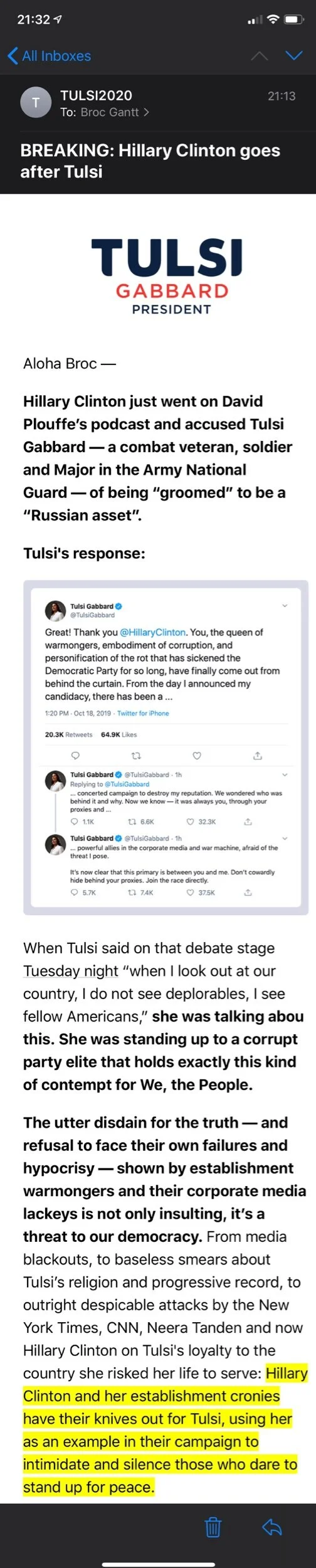
Tulsi had a pretty good response.

PoliticsGuest Useroctober19
Pentagon Deploys 1,800 Additional Troops To Middle East

Dan Lamothe, writing for Dan Lamothe writing for

The Pentagon will deploy an additional 1,800 troops to Saudi Arabia, senior defense officials said Friday, a modest increase in the U.S. military’s presence in the Middle East meant to deter Iranian aggression. […]

President Trump has approved the deployment of an additional 14,000 U.S. troops to the Middle East since spring

I am not a pacifist, but our presence in the Middle East is not a necessity, it’s war mongering. Fourteen thousand is a huge number, and the brave men and women we send to fight for us deserve the respect of only being called upon when it’s truly necessary. True patriots should see our continued military engagement in Middle Eastern affairs as a direct affront to our troops.

Specifically in the case of the Iranian attack on Saudi Arabian oil installations, that’s a situation that should be between Iran and Saudi Arabia; our dog doesn’t need to be in that fight. In any case, Saudi Arabia sure seems to fit the bill for “shithole country,” so it’s hard to imagine why Don is so apt to help defend them. Perhaps it’s because he and the Saudi crown prince share a distaste for the free press (read: the Saudi government chopped up a journalist last year).

PoliticsGuest Useroctober19
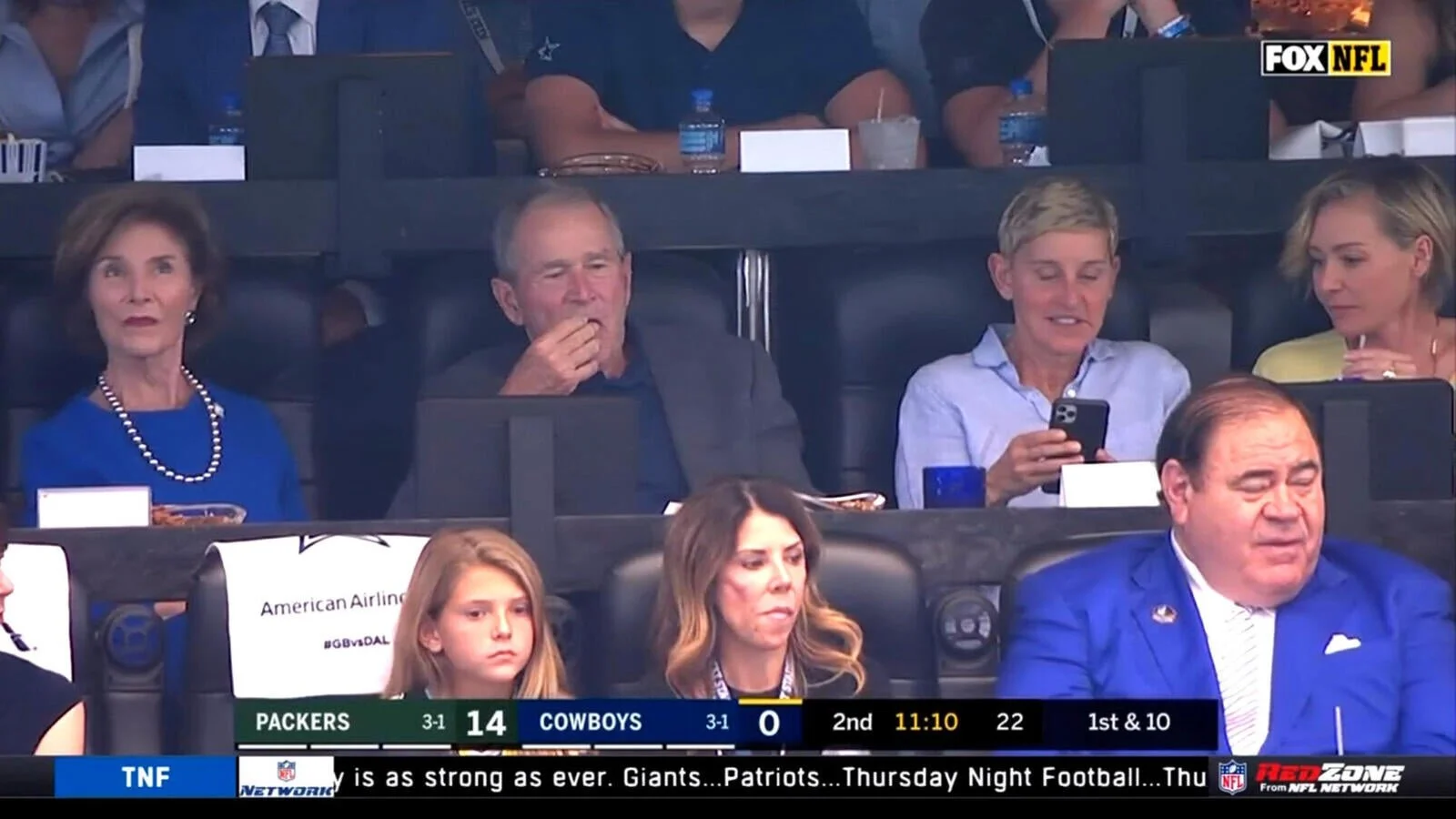
Ellen and George W. Bush

Cydney Henderson writing for USA Today:

Sunday's spotting of the unlikely duo had many fans throwing a flag on the play. 

I take issue with this verbiage. They aren’t throwing flags, they’re throwing tantrums.

We need to see more stories of people with opposing political beliefs treating each other with civility, not denigrate each other for getting along. Our country is grappling with the most intense political division since the civil war, and we need to be frequently reminded that despite our differing opinions, we’re all on the same team.

As politically divided as everyone is, it’s astonishing to me that super libs are gonna give Ellen shit for saying “be kind to everyone” — this is cancel culture at its most dangerous, and for some reason, the gays and trans people and all the SJW’s in that camp are leading the charge. My theory is that the “LGBTQIA+” label removes individual responsibility and enables those people to behave cruelly in the name of a minority group, thus serving as an outlet for the frustration caused by their own insecurities and internal conflict; they often accuse others (especially same sex attracted men who disagree with them 🙋🏼‍♂️) of hating themselves, but it’s almost is if they’re projecting when they do that…

Here’s the rub: progress is never made through cruelty or indignation. How can you negotiate if you don’t come to the table?

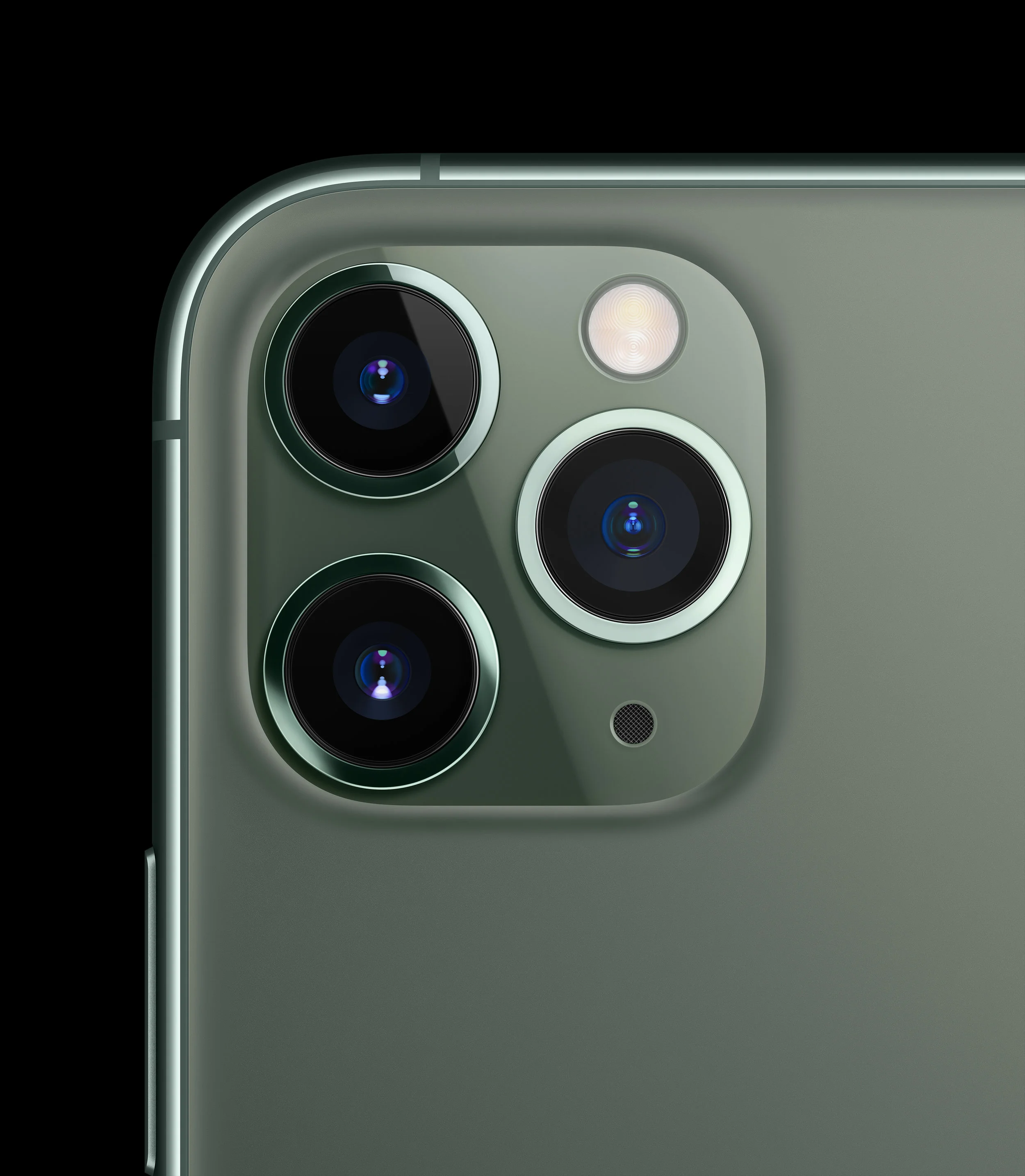
iPhone 11 Pro Camera Review
Apple_iPhone-11-Pro_Most-Powerful-Advanced_091019.jpeg

The most touted feature of the new iPhones, especially in recent years, is the camera. Each year, Apple delivers solid hardware advancements and software tweaks that usually add up to more than the sum of their parts. This year, the hardware is terrific, but the software works against it. The redesigned camera app absolutely sucks and I hate it. Here’s why:

  • The new drawer for the settings is redundant, but at least they finally got rid of that god awful square photo mode and just gave us an aspect ratio setting.

  • The zoom/lens switching interface is very inconsistent between camera modes, and it takes several seconds longer than before to go from a zoom distance somewhere between two lenses (like 1.8x zoom) back to any of the non-digitally zoomed options (0.5x, 1x, and 2x).

  • The app now also has an extremely annoying disregard for your manually adjusted settings. For instance, I wanted to use the flash for a photo but the iPhone thought night mode would be better (I tried it, and in this instance, it wasn’t). Moving my hand ever so slightly from the shutter button to toggle the flash setting at the top and back to the shutter button was enough movement to cause the iPhone to reanalyze the scene, and turn night mode back on. I had to do this four times while attempting to capture a single photo before I was able to hold the phone still enough that it didn’t override my choice to use the flash.

  • Deep Fusion was hyped up a whole lot on stage to be so astonishingly unremarkable in practice. My photos with deep fusion aren’t at all noticeably different than the ones without it.

A few positive notes:

  • Portrait mode still isn’t perfect, but it works a lot faster and more precisely than before.

  • The cool new feature that is supposed to use the wider lenses to capture what’s outside the frame so that you can rotate and adjust without cropping works very rarely and seemingly without any rhyme or reason, but when it does work, the photos are indistinguishable from the rest. Hopefully we’ll get to the point where the cameras are so tightly integrated that all three are used to capture each image, theoretically giving you remarkable detail regardless of how far away your subject happens to be.

  • Night mode impressed me.

And now for some real world examples: I wanted to put some of these features to the test, so my sister and I went kayaking to try and get some cool shots. They were good, but they weren’t overwhelmingly impressive. We left all of the settings on auto, only manually adjusting the zoom and focus.

The Auto Live feature was a disappointment, for some reason deciding not to capture a Live Photo despite obvious and intentional movement happening in the frame. The selfie camera was also very quick to refocus itself even after I’d just attempted to manually set the focus—the result was a bunch of photos like this one, where my face was fairly well exposed, but the sky was so overexposed that it appears almost completely white. The ultra wide angle camera was useful for shots like this, but generally it’s not very helpful and I think most people would benefit more from the telephoto lens—that would have been the better choice for the iPhone 11. Additionally, there seems to be so much software magic happening with each photo that you sometimes end up getting photos that are blurrier than they would’ve been before, which makes the whole thing feel a bit disingenuous. Look closely at the detail of the tree leaves and the surface of the water in this photo: it’s not exactly great.

The iPhone 11 Pro camera system can be summed up with one word: tradeoffs.

Emoji Gender Mania
public.jpeg

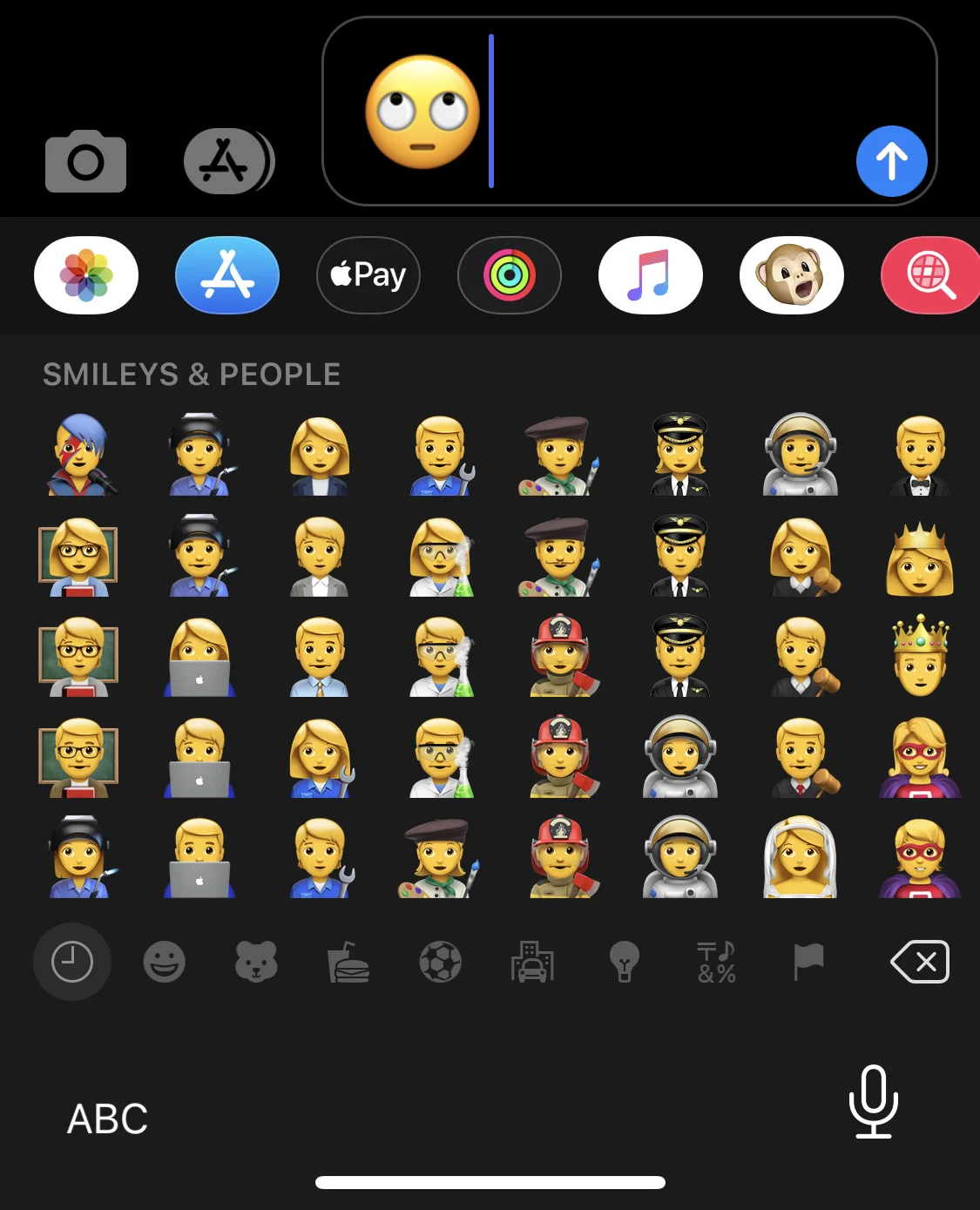
The second public beta for iOS 13.2 was recently released, and it’s a terrific update, including clearer privacy permissions for Siri, new Haptic Touch options, and a ton of new emoji.

While some of the new emoji are great, a lot of them are a bit absurd. For every character emoji, Apple has added a third gender option.

While I don’t have a problem with representation — I particularly like the ones that are more representative of folks with various abilities, like the prosthetic limbs, hearing aids, wheelchairs, etc. — I do have a problem with creating specific emojis for a microscopic portion of the population which almost only serve to overcrowd the emoji picker.

If Apple insists on implementing multiple gender options for an emoji, it should work in a similar manner to the skin tone picker, and it should remember your last choice. Overcrowding was already an issue with only two gender options, and now the emoji keyboard is just a mess. As a man, I had roughly two times more emojis than I needed under the ‘people’ category, and having all those extras made it much harder to quickly pick out the ones I was looking for. Now the problem is getting two times worse, because not only do I have to train my eye to overlook all the female emojis, but now I have to ignore all the androgynous ones as well (which usually just have the female face with a weird haircut and neutral colored clothes).

I could go down a rabbit hole here with my thoughts on the whole ‘3+ genders’ thing, but suffice it to say that I think a lot of people need to try a bit harder to overlook gender stereotypes and present themselves how they want without denouncing their genitals. In a lot of cases, I believe the tendency to do this stems from cultural and individual laziness in regards to challenging the established gender stereotypes, and I actually think it’s regressive for one to just adopt a third gender rather than attempting to broaden the parameters for the two genders that exist in direct correlation with biological factors.

Whatever — not my circus, not my monkeys. My goal is in solving the real issue here; the overcrowded emoji picker. I need the people at Apple to realize that adding more emojis every time someone comes up with a new gender (or otherwise marginalized group) is unsustainable. After all, Memoji already does the job.

Twitter ‘Unintentionally’ Used Personal Data Provided For Account Security For Advertising Purposes

This is now the third time Twitter has had an allegedly accidental privacy snafu in the past few months. As I said last time this happened, I’m getting closer and closer to clicking the ‘delete’ button on Twitter, too.

Jack Dorsey: I now speak directly to you. I want you to know that you are not special. I’ve already deleted my Facebook and Instagram accounts, and your service is not only tangibly less successful than your competitors’, but also less useful to me, personally. If these ‘accidents’ don’t cease, I will have no problem getting rid of my Twitter account and encouraging my massive readership to do the same.