Posts tagged dfbarchive1
Facebook: The Social Network for Racists

As everyone knows, like a hundred years ago (last week) Twitter made headlines by finally taking a stand against some of Trump’s tweets for spreading misinformation and glorifying violence. This week, Facebook is making headlines for their refusal to take a stand against Trump for the same posts.

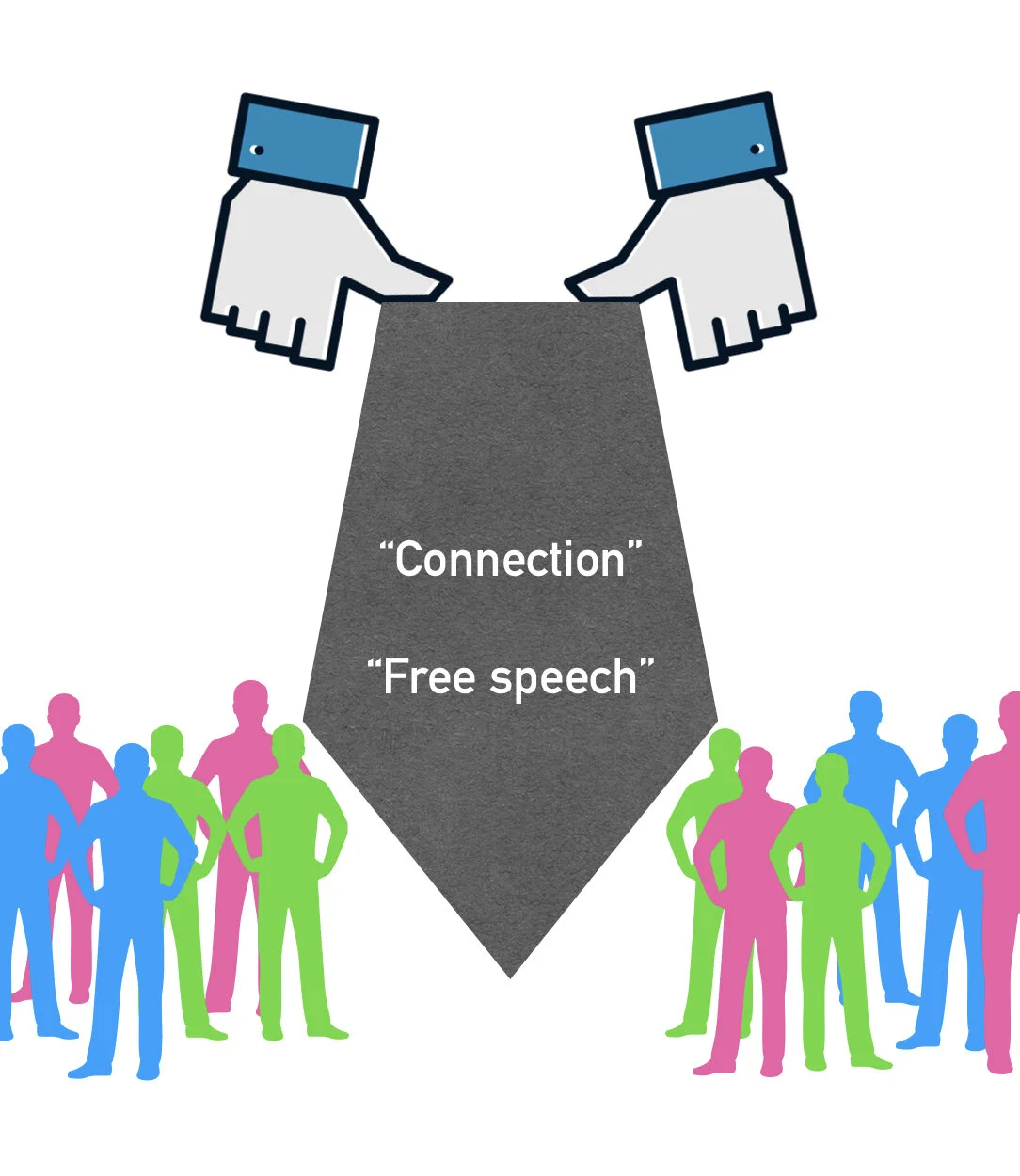
Of course, Zuckerberg has been defending this position under the guise of free speech, but we all know that on Facebook, sowing division reaps ad revenue. His creepily robotic statement was as follows: “Personally, I have a visceral negative reaction to this kind of divisive and inflammatory rhetoric, but I’m responsible for reacting not just in my personal capacity but as the leader of an institution committed to free expression.” That’s definitely how normal people talk, affirmative?

On Friday, Zuckerberg had a phone call with the President regarding the call. In an open call with employees, he expanded on the nature of the call, saying, “I used that opportunity to make him know I felt this post was inflammatory and harmful, and let him know where we stood on it.” He then reiterated his puzzling stance that the posts didn’t technically violate the rules, because it was about “state force” which is apparently allowed under Facebook’s rules. Okay.

To their (nominal) credit, Facebook employees are speaking out against him. On Monday, The New York Times reported that a few Facebook employees were so strongly opposed to this position that they have decided to leave the company, and hundreds participated in a “virtual walkout” in protest. A large number of employees have made public remarks (usually on Twitter) criticizing Zuckerberg’s decision and saying that it makes them ashamed to work for the company. Here are a few remarks from Facebook employees:

“Along with Black employees in the company, and all persons with a moral conscience, I am calling for Mark to immediately take down the President’s post advocating violence, murder and imminent threat against Black people.”

“The hateful rhetoric advocating violence against black demonstrators by the US President does not warrant defense under the guise of freedom of expression.”

“The lack of backbone, and this weak leadership, will be judged by history. Hate speech should never be compared to free speech.”

Another employee explained his frustration with Facebook constantly moving the goalposts when it comes to holding Trump accountable. Ben Thompson and John Gruber had a good analysis of this employee’s statement on their new podcast “Dithering”. Essentially, they point out that when Zuckerberg was asked several months ago by Congress what sort of posts Facebook would remove, he explained that Facebook didn’t want to be in the business of moderating or fact checking because they saw it as a free speech issue, but he also conceded that if anyone (including a politician) posted something that incited or promoted violence, that it would be taken down. The podcast’s assessment was that in making that commitment, Zuckerberg was trying to avoid being in this position by drawing a line in the sand so far out, that even Trump wouldn’t cross it. Lo and behold, Trump crossed it, and Zuckerberg didn’t keep his word. Not a good look.

From Daring Fireball:

Facebook’s real risk here, as I see it, is getting branded as the social network for racists.

Here’s the thing, Facebook is already the social network for racists, it’s just a matter of when people start to associate racism with their brand on a fundamental level. Of course, not everyone who uses Facebook is a racist, but based on anecdotal evidence and the many structural advantages Facebook’s platform provides them, I would be willing to bet a large sum of money that people who are racists prefer Facebook over any other social network.

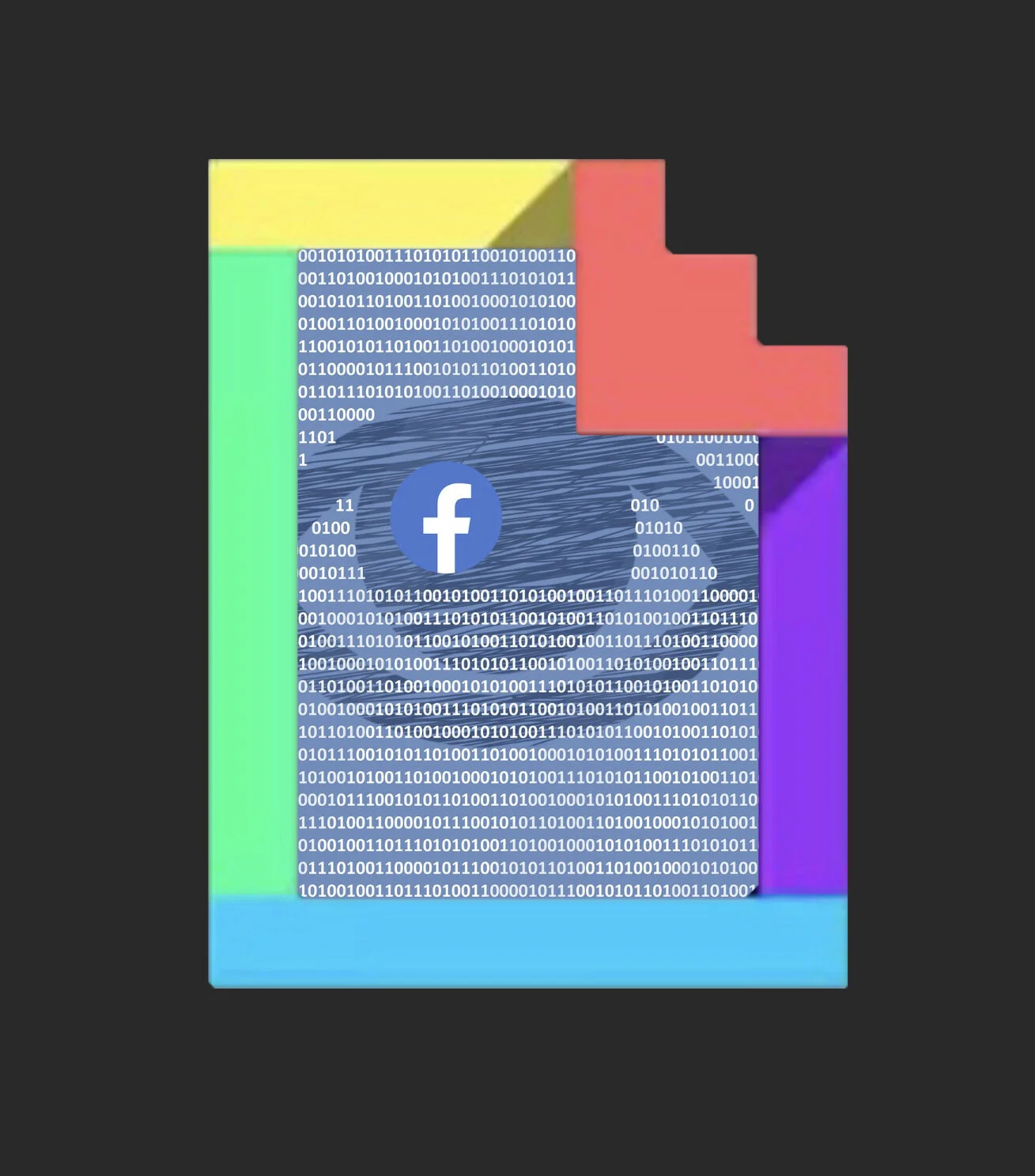
Not only does Facebook’s platform work well for racists to share their opinions and find one another, it helps them breed and radicalize budding racists. Facebook’s Achille's heel is that their executives are too greedy to stop this cycle. But this isn’t news, I’ve said it a hundred times: Facebook’s algorithms are designed to drive division because division drives engagement, and engagement equals ad revenue.

To back up my assessment, here’s a quote from an article posted to Medium by former Facebook employee, David Schnitt:

Unfortunately, I do not think it is a coincidence that the choices Facebook makes are the ones that allow the most content–the fuel for the Facebook engine–to remain in the system. I do not think it is a coincidence that Facebook’s choices align with the least resources required, outsourcing important aspects to third parties. I do not think it is a coincidence that Facebook’s choices appease those in power who have made misinformation, blatant racism and inciting violence part of their platform. Facebook says, and may even believe, that it is on the side of free speech. In fact, it has put itself on the side of profit and cowardice.
#deletefacebook

Facebook Knew Their Platform Was Divisive and Chose Not To Address It

Jeff Horwitz and Deepa Seetharaman, reporting for The Wall Street Journal:

In essence, Facebook is under fire for making the world more divided. Many of its own experts appeared to agree—and to believe Facebook could mitigate many of the problems. The company chose not to.

Old news.

Another concern, they and others said, was that some proposed changes would have disproportionately affected conservative users and publishers, at a time when the company faced accusations from the right of political bias.

A 2016 presentation that names as author a Facebook researcher and sociologist, Monica Lee, found extremist content thriving in more than one-third of large German political groups on the platform. Swamped with racist, conspiracy-minded and pro-Russian content, the groups were disproportionately influenced by a subset of hyperactive users, the presentation notes. Most of them were private or secret.

Facebook is the social network for racists.

The high number of extremist groups was concerning, the presentation says. Worse was Facebook’s realization that its algorithms were responsible for their growth. The 2016 presentation states that “64% of all extremist group joins are due to our recommendation tools” and that most of the activity came from the platform’s “Groups You Should Join” and “Discover” algorithms: “Our recommendation systems grow the problem.”

To their credit, some Facebook employees were concerned about this, and tried to implement new features and policies to correct course.

Building these features and combating polarization might come at a cost of lower engagement, the Common Ground team warned in a mid-2018 document, describing some of its own proposals as “antigrowth” and requiring Facebook to “take a moral stance.”

Zuck said “nah, imma pass”.

One early discovery: Bad behavior came disproportionately from a small pool of hyperpartisan users.

A second finding in the U.S. saw a larger infrastructure of accounts and publishers on the far right than on the far left. Outside observers were documenting the same phenomenon. The gap meant even seemingly apolitical actions such as reducing the spread of clickbait headlines—along the lines of “You Won’t Believe What Happened Next”—affected conservative speech more than liberal content in aggregate.

The fact that conservatives are more likely to publish clickbait headlines with misinformation to ensnare ignorant readers who may not be as invested in less sensationalized news says a lot about the state of conservatism in America today. The fact that they can’t play by the rules and still win every now and then doesn’t mean Facebook should write a new, less fair rule book for them.

Don’t get it twisted: Facebook executives made a conscious decision to prioritize profit over ethics. They decided that their bottom line was more important than making sure that their platform wasn’t making human beings more hostile and inflamed.

#deletefacebook

PSA: Facebook Buys GIPHY

Mitchell Broussard for MacRumors:

Facebook today announced that it has acquired the popular GIF sharing platform GIPHY. […]

The sum of the GIPHY acquisition by Facebook is reportedly around $400 million, according to Axios.

Terrific. It’s curious though, isn’t it? Why would Facebook pay $400M to acquire a service that just sends gifs?

John Gruber:

Of course Giphy is going to retain its own brand. If they renamed it to “Facebook Tracking Pixels”, usage might drop off. Think about all the messaging apps that don’t offer Facebook integration for security/privacy reasons […], where Giphy images appear. You know, like Apple’s Messages. Well, now Facebook has tracking pixels in them.

Ah, that’s why. Not sure what tracking pixels are? Spoiler alert, they’re bad news. A lot of emails have them as well, and you should do what you can to avoid them.

Check out this great gif keyboard, aptly named “GIF Keyboard”.

#deletefacebook

Facebook Releases A Scrapbook App for Couples

Ashley Carman, writing for The Verge:

[The app] connects to Spotify for music sharing, and a couple can send each other photos, notes, cards, and voice memos. They can also use custom stickers and reactions. It’s free to use and seemingly doesn’t require a Facebook account, although users are subject to Facebook’s data rules, meaning the data people provide can be used for ad targeting.

Of course it can, Facebook is not in the business of giving anything away for free: any time you use a Facebook product, you are paying for it with as much data as Facebook is able to lap up.

Despite the fact that Tuned’s App Store page uses the word “private” four times, nothing about this app is private. Every time they use this word in the context of a product or service governed by the Facebook Data Policy, they are lying to you.

Last year, we learned Facebook was setting up a dating service, so this new project obviously seems related. Not only does Facebook want to try its hand at setting people up for intimate relationships, but they also want to analyze they behavior of couples who are already together. All of this makes Facebook better at manipulating people, and it sets them up to make more money through increasingly effective targeted advertising.

If you use this app, you’re nuts.

#deletefacebook

PSA: Zoom Is Dangerous and You Shouldn’t Use It

I don't write articles on subjects where I feel like I wouldn’t truly be adding something to the conversation, and this is a case where I considered not writing this piece. It has already been covered more thoroughly than I am capable of doing here, but I felt it was still worthwhile to reiterate what others have exposed and warn the public of the dangers Zoom presents.

Most people didn’t know too much about Zoom before the pandemic started and hoards of people were suddenly tasked with finding a way to perform their jobs from home. Now, Zoom is a household name, and millions of people are being herded into their user base like swine into a slaughterhouse. Personally, I’ve never used Zoom: I rarely have the need to video conference with more than one person, and in instances where I have needed to, Group FaceTime was more than sufficient. Based on Zoom’s reputation and their habit of completely abusing their users, I would never use their services, and in fact, I think they’re such a malignant company that I’m taking the time to warn CopyrightBro readers.

Last summer, news broke that quickly turned into a scandal, when it was revealed that Zoom was flagrantly abusing users’ trust by having their app automatically reinstall itself after it had been deleted by the user, and then go on to start a Zoom call (with the webcam and microphone enabled) to any website that knew this “feature” existed and wanted to take advantage of it. This was the instance that made me distrust Zoom, and again, this was nearly a year ago.

Now, even more evidence has come out illustrating just how low user security and privacy rank on Zoom’s list of priorities.

  • Last week, Motherboard reported that Zoom was using software development kits (SDKs) created by Facebook that sends Zoom users’ personal data to Facebook, regardless of whether those Zoom users also had Facebook accounts. They have since removed this SDK, but the fact that it was used in the first place is cause for concern.

  • A few days later, The Intercept reported that Zoom was flat out lying about how Zoom meetings are encrypted and trying to pass it off as a marketing miscommunication. As John Gruber notes on Daring Fireball, the phrase "end-to-end encryption” is not open to interpretation. What Zoom was actually using is called transport encryption, and it is not as secure. Lying about how secure your platform is will certainly lead to trouble for users. It’s unethical and gross to use false claims of strong encryption for marketing.

  • Yesterday, Motherboard reported another issue that allowed Zoom users’ personal email addresses and photos to be leaked to complete strangers.

This is a staggering list of major privacy and security concerns for one company to deal with in a year, much less in a week. If your organization is asking you to use Zoom, you should forcefully object and tell them that you don’t agree with their privacy policy (which is a joke). If video conferencing is a must for you, suggest an alternative like Group FaceTime (check out this list from The Verge for some more options). If you absolutely cannot refuse to use Zoom, follow John Gruber’s advice and only use it on an iOS device, where Apple’s sandboxing will protect you more than any other platform is capable of doing. If you don’t use an Apple device, here’s another reason to consider switching.

#deletefacebook

UPDATED: 04/02/20, 13:00

The New Patriot Act

Governments are considering tracking citizens locations as a way to monitor the spread of coronavirus and enforce quarantines and lockdowns.

My thoughts are as follows: fuck that. This will be the new Patriot Act. The world is quickly becoming an episode of Black Mirror.

Israel is doing it. Fuck them.

The Israeli government has approved emergency measures for its security agencies to track the mobile-phone data of people with suspected coronavirus.

The new powers will be used to enforce quarantine and warn those who may have come into contact with infected people.

Absolutely atrocious. If Israel ever had a brain, they’ve lost it.

Unfortunately, the United States isn’t very far behind. Terrifyingly enough, this is an idea I’ve heard reverberating a bit in recent days, both on a podcast I usually enjoy (Crooked Media’s Pod Save America*) as well as a blog I stumbled across. I never expected to see the day where American government leaders would be calling for a mass surveillance system, much less American citizens themselves asking for it.

If the U.S. government allows this to happen, then fuck them, too. I‘ll stop carrying a phone before I just go along with something like this, pandemic or not. This is deeply un-American.

Those who would give up essential Liberty, to purchase a little temporary Safety, deserve neither Liberty nor Safety.

— Benjamin Franklin

And oh yeah, of course, Facebook is involved in this, so #deletefacebook

UPDATED: 04/09/20, 17:12

Check out CopyrightBro’s COVID-19 coverage roundup.

Mark Zuckerberg’s 2006 ‘Book of Change’

Check out this great piece on Mark Zuckerberg by Steven Levy, writing for WIRED.

In the early days of Facebook, Zuck kept his plans for world domination in handwritten journals. He destroyed them. But a few revealing pages survived.

Much of Levy’s piece was informed by what Zuckerberg wrote in those journals, as well as interviews with Zuckerberg himself and other Facebook executives. The pattern of corporate irresponsibility and depravity we’ve seen from Facebook recently has been there since the very beginning.

What distinguished Facebook from other social networks was the assumed privacy provided by its gated setup [when Facebook was only available to college students]. Open Reg[istration] would throw open those gates to the masses. But would people then no longer see Facebook as a safe space? In designing Open Reg, he posted one final question to himself.

“What makes this seem secure, whether or not it actually is?” He seemed at least as concerned about the perception of privacy as with privacy itself.

”What makes this seem secure, whether or not it actually is?” Incredible.

Using Facebook needs to feel like you're using a futuristic government-style interface to access a database full of information linked to every person. The user needs to be able to look at information at any depth … The user experience needs to feel “full.” That is, when you click on a person in a governmental database, there is always information about them.

A government-esque catalog of every person in the world. Charming. But not everyone would sign up for Facebook, so this wasn’t achievable. Not to fear, Zuckerberg had a plan.

He took three pages to lay out a vision for something he called “Dark Profiles.” These would be Facebook pages for people who, whether by omission or intention, had not signed up for Facebook. […]

Zuckerberg was aware that allowing the creation of profiles for people who had no desire to be on Facebook might stir up privacy concerns. He spent some time pondering how this could avoid being “creepy.” Maybe, he mused, dark accounts might not be included in search engines.

Shadow profiles are not a joke, they’ve been a part of Facebook’s plan from the very early days.

There will be a tipping point for Facebook. One after another, the curtains are being pulled back and what we’re finding is that the people behind Facebook have always been immeasurably negligent and downright disrespectful of their users. Hopefully, stories like this will move public opinion against Facebook sooner than later, and embolden people to delete their profiles.

#deletefacebook

Facebook Lies About Paying For Article About How Trustworthy They Are

John Gruber, on Daring Fireball:

An utterly uncritical story on Facebook’s anti-disinformation team appears on Teen Vogue with no byline but no “sponsored content” label. Then Sheryl Sandberg links to it approvingly. Folks at Facebook deny it’s sponsored content, including those profiled in the story. Then the article disappears from Teen Vogue. Then it reappears with a “sponsored content” label. Then it disappears again.

Facebook payed Teen Vogue to write an article hyping up how trustworthy Facebook is, and then lied about whether they had paid for it. A great look for Facebook and Teen Vogue. The hypocrisy is remarkable.

#deletefacebook

One Nation, Tracked

Fantastic reporting from Stuart A. Thompson and Charlie Warzel for The New York Times:

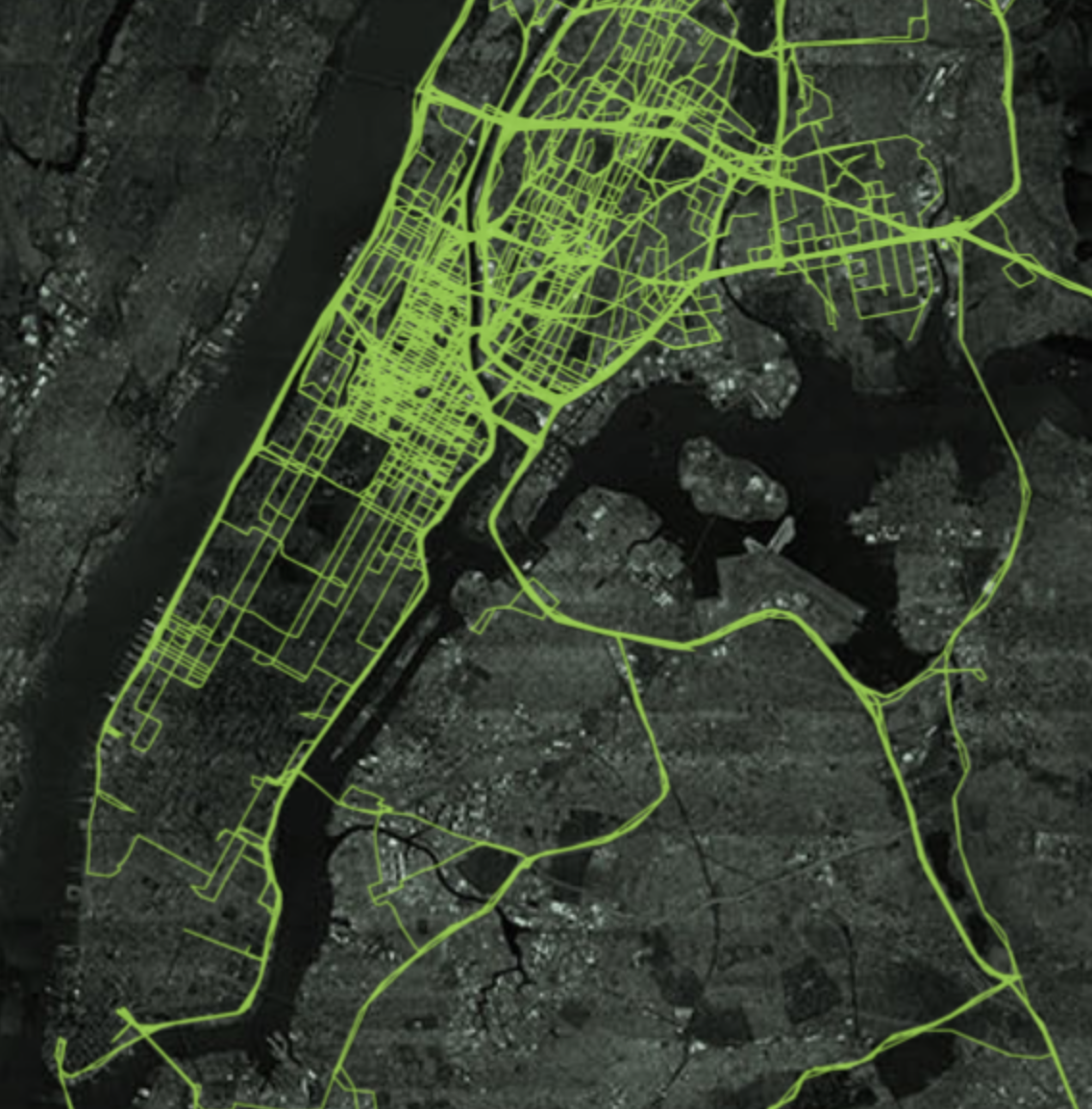
Every minute of every day, everywhere on the planet, dozens of companies — largely unregulated, little scrutinized — are logging the movements of tens of millions of people with mobile phones and storing the information in gigantic data files. The Times Privacy Project obtained one such file, by far the largest and most sensitive ever to be reviewed by journalists. It holds more than 50 billion location pings from the phones of more than 12 million Americans.

It’s about time that publications with big audiences start pounding this drum. Read their whole article, and begin to understand why this matters.

Location data is also collected and shared alongside a mobile advertising ID, a supposedly anonymous identifier about 30 digits long that allows advertisers and other businesses to tie activity together across apps. The ID is also used to combine location trails with other information like your name, home address, email, phone number or even an identifier tied to your Wi-Fi network.

The data can change hands in almost real time, so fast that your location could be transferred from your smartphone to the app’s servers and exported to third parties in milliseconds. […]

That data can then be resold, copied, pirated and abused. There’s no way you can ever retrieve it.

Unfortunately, there’s very little you can do to limit how your location data is shared. It’s important to wrangle in your location sharing settings (check out the “Privacy” section of CopyrightBro’s Digital Health Checkup), but even that isn’t enough to truly protect you. One of the best ways to limit companies’ ability to track you is to route all of your internet traffic through a VPN service. My family and I use ExpressVPN. These are paid services, but at $99/year for 5 devices (ExpressVPN’s best offer), it works out to 5¢ per device per day, which I think is worth the expense.

Is all of this surveillance and risk worth it merely so that we can be served slightly more relevant ads? Or so that hedge fund managers can get richer?

The answer here is obviously “no”. Targeted advertising is a user-hostile practice, and it deserves to be heavily regulated, if not outlawed entirely.

Today, it’s perfectly legal to collect and sell all this information. […] The companies profiting from our every move can’t be expected to voluntarily limit their practices. Congress has to step in to protect Americans’ needs as consumers and rights as citizens.

We are living in the world’s most advanced surveillance system. […] It was built to make money. The greatest trick technology companies ever played was persuading society to surveil itself.

Contact your lawmakers.

#deletefacebook

UPDATE: 12/31/19, 22:10;

As John Gruber points out on Daring Fireball, it is pretty hypocritical for The New York Times to publish such a piece while their own website is scraping up user data.

That Facebook Accidentally Removed Elizabeth Warren’s Ads Is the Point

Brian Feldman, writing for Intelligencer:

The company’s current moderation system is designed to operate in an environment where context, often implied or not easily discernible to an outsider, does not matter. […]

Understanding this is the key to understanding why Big Tech is something to be concerned about. Even when it’s assumed to be operating in good faith and attempting to be fair, Facebook still makes the wrong call.

This story from March is hardly news, but it’s interesting and important because it highlights one of Facebook’s moral dilemmas that don’t get as much much focus as their privacy-related transgressions.

Historically, Facebook has been criticized for their content moderation and censorship practices (these criticisms largely revolved around the poor mental health resources offered to their contracted content moderators, who are poorly paid and required to sort through the worst content humans try to upload to the internet). Facebook’s record here is so astonishingly poor that it’s plausible that a presidential candidate might’ve had their posts removed based on the content of their message rather than the fact that they technically broke on of Facebook’s rules (which, in this case, was completely irrelevant to the context in which such a rule should apply). I’m not saying this was an innocent mistake on Facebook’s part, I’m saying that this level of inconsistency is not only problematic on it’s own, but it offers plausible deniability in cases where Facebook truly does remove content based on the message it carries. Given Facebook’s ubiquity in the western world, this is a threat to the freedom of information in our society at large.

Facebook Launches New 'Market Research' App To Collect Even More Data From Users

I’m sure this won’t be as predatory to users as their last few attempts were.

In case you aren’t caught up, Facebook has had multiple products lately which were designed to harvest data from those they conned into using them, including the “Onavo” VPN service and the “Facebook Research” app. Both of them used shady data collection tactics where they wedged themselves deep into the settings of the devices they were installed on, and then funneled information about almost every interaction that users had on those devices back to Facebook to be analyzed and sold.

Jay Peters, writing for The Verge:

The company also says it won’t share information from the app to third parties or share your Facebook Viewpoints activity on Facebook.

Facebook says a lot of things; you’d be an idiot to believe any of it. Only an absolute fool would install this new “Viewpoints” app.

Food for thought: if a company is willing to pay you to share data with them, especially if it’s data that seems benign, imagine how much that data must actually be worth. They don’t care about your individual answers, they care about being able to manipulate people at scale. There’s proof that it works, and they’re willing to pay for the data that enables that.

Facebook App Records Everything Your Camera Sees While You Use The App

The Facebook app is recording everything your camera captures while you’re using the app, whether you’re using the camera or not. Do we really think this is a bug? I don’t. A few things to consider:

  1. Facebook’s privacy policy leaves the door open for them to record data from the camera even when you don’t press the shutter button.

  2. Guy Rosen, Facebook’s VP of Integrity (lol), said on Twitter that this “sounds like a bug”. Ahem, ‘sounds like’? Shouldn’t Facebook VPs know if this was a bug and be able to immediately give a negative or affirmative answer as to whether this is expected behavior for the app?

  3. Facebook hasn’t made an official statement addressing this issue.

So, that sucks, but what can you do? You can delete your Facebook account, first and foremost. If you’re not ready to take that step, at least go into your device’s privacy settings and disable the Facebook app’s access to your camera and microphone.

#deletefacebook

Facebook Is Trying To Pick A Side. Don't Let Them.

Facebook has long been a bit vague when it comes to laying out their political leanings. That seems to be coming to a calculated end.

This excellent piece from Popular Information illustrates a case where Facebook is breaking their own rules, seemingly, for political reasons. In this instance, they’re refusing to enforce a rule that bans networks of political “news” pages that work together but don’t acknowledge that they’re affiliated. It seems that most who’ve read this piece are, understandably, perceiving it as a threat because of the massive power Facebook demonstrably holds over the American electorate, which is a valid concern. However, I don’t believe that Facebook’s decision to allow one very successful, very political network of allegedly unaffiliated pages to continue operating was made for the sake of promoting a political agenda; no, this is an exercise in self preservation.

Facebook’s malfeasance is one rare topic upon which liberals and conservatives generally agree. There have been many calls for Facebook to be more heavily regulated from Republican and Democratic legislators alike, however I believe that the Democrats have slightly outpaced Republicans in calling for Facebook to be dealt with, despite the fact that the notion of privacy as a civil liberty seems to fall slightly more in line with traditional conservatism. This trend can likely be attributed to the fact that Democrats and their elected officials tend to be a bit younger than Republicans, and thus more in tune to issues of this nature.

Given the extreme political division our country is experiencing (which Facebook has cultivated for monetary gain), the fact that their deservingness of punishment is one topic most people can agree upon puts Facebook in a very dangerous position, not to mention the fact that the drum beat is growing ever louder, and more and more people are tugging at the curtain.

One solution to that looming threat? Take a side, and further capitalize upon the division you’ve sewn by allowing that side to defend you to the death. Give one side or the other a couple free passes, have a few chats with the right folks, and then step back while that side begins to see you as one of their own, and then you’re good to go. It honestly doesn’t matter which side Facebook takes, because taking either side would all but ensure that party's loyalty, not only because they don’t want to upset Facebook and have their reach limited, but because both parties are so committed to doing the opposite of what the other party wants.

Now, in this case, Facebook seems to have chosen to ally themselves with the Republicans, but again, which side they pick doesn’t really make a difference. In defense of the Republicans, Facebook just as easily could’ve jumped on the left-bound bandwagon — a few public statements in support of people with confusing genders and a few removed Trump ads, and they’d have them in their pocket, too. I believe this choice was made out of convenience; as mentioned above, slightly fewer conservative law makers have gone after Facebook.

If you’re a Republican, this should offend your sensibilities. As stated previously, privacy is a civil liberty that has long been a value of traditional conservatives, and Facebook is the biggest threat to personal privacy our country has ever seen. True conservatives should be outraged that Facebook is even trying to get in bed with them, and that their purported reason for doing so is their mutual support of free speech — what Facebook is trying to paint as free speech (political advertisements that include false statements of fact), isn’t. It’s paid speech, it’s false advertising, and it’s speech that presents a clear and present danger — it’s NOT protected by the First Amendment. In any case, free speech is a patently American value, not a partisan one.

Facebook worked hard for a long time to avoid taking a side, and we should enforce that hard earned neutrality by refusing to allow the public perception of Facebook to shift. They do not deserve to be seen as a company guided by any sort of moral compass or political agenda, because in reality, their chief motivators are, and have always been, financial.

TL,DR: Facebook is picking a political side so that their own regulation will become a partisan issue, and therefore never actually gain enough traction for any meaningful legislation to pass.

#deletefacebook

The Facebook Origin Story

I’m not the only one linking to this article right now, but in the wake of Mark Zuckerberg’s recent attempts to rewrite the Facebook origin story, it seems a good time to remind ourselves exactly how the company came to be.

Katharine Kaplan, writing for The Harvard Crimson in 2003:

Mark E. Zuckerberg ’06 said he was accused of breaching security, violating copyrights and violating individual privacy by creating the website, www.facemash.com, about two weeks ago. The charges were based on a complaint from the computer services department over his unauthorized use of on-line facebook* photographs, he said.

“I understood that some parts were still a little sketchy.“ “Issues about violating people’s privacy don’t seem to be surmountable,” he wrote at that point.

Students were ranked within the general Harvard community and individual Houses according to attractiveness. Zuckerberg hacked into House websites to gather the photos, and then wrote the codes to compute rankings after every vote. The programming and algorithms that made the site function were Zuckerberg’s primary interest in creating it, he said.

He’s clearly still interested in algorithms. Facebook is clearly still sketchy. He clearly doesn’t understand the concept of privacy. Is it a coincidence that Zuckerberg was born in 1984? Probably not.

#deletefacebook

*the word “facebook” in this quote is not referring to the social network; it didn’t exist at this time. A face book was an online source of ID photos and names for a group of people, a directory of sorts.

UPDATED: 11/28/19, 13:45

Facebook Changes Their Advertising Rules To Allow Ads with Lies

In case you missed it, Facebook has updated their advertising policy to make it easier for people, companies, and campaigns to publish ads that contain false or misleading statements, a move which ought to be condemned equally from conservatives and liberals.

The old rule was that you couldn’t publish ads that contained such statements, but the protections were rolled back last week to allow any statement that hasn’t been proven to be false by an independent fact checking organization, and even that flimsy rule doesn’t apply to politicians, so they can, in theory and in practice, publish ads on Facebook that contain completely false information with no repercussions. Even before this rule change, misinformation campaigns on Facebook led to the extreme political division our country is experiencing, and significantly influenced several high profile elections around the world. I recognize that that’s a lofty claim — if you don’t believe me, check out this piece I wrote about a film called “The Great Hack,” and then watch it for yourself on Netflix.

#deletefacebook

UPDATED: 11/28/19, 13:30

Mark Zuckerberg Doesn't Want To Censor Politicians, He Wants To Censor Users

This has been quite a week for everyone’s favorite lifeless-eyed big tech CEO. First he got into it with Elizabeth Warren over whether or not politicians should be able to publish ads that contain lies, and now this. I’m glad to see that Washington is starting to recognize what an enormous enemy of democracy Facebook truly is.

In an interview with Fox News’ Dana Perino, he was asked a question about the disagreement between Elizabeth Warren and Kamala Harris during the fourth Democratic debate over whether Donald Trump’s Twitter account should be suspended. Zuckerberg responded by saying “my belief is that in a democracy, I don’t think that we want private companies censoring politicians in the news.” Of course he doesn’t want to censor what politicians say in their ads. The more ads they sell, the more money they make. The more sensational those ads are, the more engagement they deliver, and thus, the more money Facebook makes.

No, Mark Zuckerberg doesn’t want to censor politicians, in fact, he wants them to publish the most ridiculous ads possible. Then he’ll just censor all the people talking about those politicians to effectively gerrymander opinions, enabling companies like Cambridge Analytica to publish their own sensational ads (which are personally targeted to undecided voters, whose information they’ve collected and analyzed without consent), effectively allowing them to sell out major elections to the highest bidder.

He’s trying to pass this off as a free speech issue, to seem like he’s making the tough decision now that will seem like the right one in the long run. He cites his confidence in people as a reason that the truth will prevail despite this inconvenient but necessary decision to allow the erosion of truth in our society. Fortunately, I’m not the only one seeing through Zuckerberg’s bullshit here; CNBC’s Steve Kovach had a similar take:

While there’s almost no human involvement in deciding what to pump into your Facebook feed, there is an algorithm that’s making those decisions. In general, that algorithm is designed to keep users sucked in, and the best way to do that is showing them stuff that will engage, enrage or feed their biases. Truth doesn’t matter to an algorithm. But when you’re delivering news and information at a massive scale, you also carry the responsibility to get it right. Facebook is doing that on a scale never seen before in human history. And its leader admitted on Thursday that it wants no part in playing the role of fact-checker. In fact, in the case of false political advertisements, it’s willing to get paid to spread those falsehoods.

History won’t look fondly upon that.

#deletefacebook

See also: this.

Elizabeth Warren Is Following Facebook’s Rules

This is why Elizabeth Warren is in my top three for the 2020 election; she has a terrific way of playing by the rules while embarrassing her critics. Her response to last week’s Facebook advertising policy change (news which led me to read the policy and notice a glaringly hypocritical policy about ads for surveillance equipment) was the best clap back anyone could’ve hoped for.

#deletefacebook

Facebook Wants To Be The Only Name In Hidden Surveillance Equipment

From category #16 of the Prohibited Content section of Facebook’s Advertising Policy:

16. Surveillance Equipment 

Ads may not promote the sale of spy cams, mobile phone trackers or other hidden surveillance equipment.

How noble of Facebook, right? Wrong; this is hypocritical of Facebook.

It’s honestly laughable, given how Facebook’s entire business model is centered around their products’ tendency to act as hidden surveillance equipment. They admit in their privacy policy that they actually ARE WATCHING YOU (any time you use their built-in camera, regardless of whether or not you actually take a photo or video) and TRACKING YOUR LOCATION (possibly twenty four hours a day, depending on your device settings).

They’re trying to make it seem like they’re looking out for their users, but it’s far more likely that they simply want to be the only big name in underhanded surveillance, so they prohibit other players in the industry from gaining traction by refusing to display their ads.

This seems like an appropriate time to remind ourselves that Facebook just announced a new camera they want you to install in your living room.

#deletefacebook

Facebook Wants To Watch You And Your Friends Watch TV

Hahahahaha this gives me anxiety.

public.jpeg

All jokes aside, this is horrifying. How anyone trusts Facebook at all is beyond me; the only explanation for trusting this company enough to PAY them to put an always-watching camera in one of the most intimate spaces in your home is blissful ignorance.

In perfect Facebook fashion, they’re trying to pass off this new “product,” Facebook Portal TV, as a unique way to connect with your friends while enjoying their video content, as if FaceTime and Skype aren’t good enough.

In any case, the Facebook Portal TV (cute name for a surveillance device, btw), despite having a name that suggests it would serve as a functional set top box like an Apple TV or Roku, doesn’t actually work with Netflix, Hulu, or really any other popular video service—just videos from Facebook Watch (whatever the hell that is). Despite the fact that it’s nearly useless, this isn’t all that surprising. After all, why wouldn’t Facebook make the most of this new “product” as a way to serve you more of their own ads? And with the built in camera (to which they have unfettered access because it’s their own hardware and they control all of the privacy permissions and device settings), they can gauge not only your reactions to the content and ads they’re showing you, but also the combined reactions of you and whichever of your friends you may be connected to via the built in video chat service.

Bottom line: if you buy this, you’re a moron.

#deletefacebook

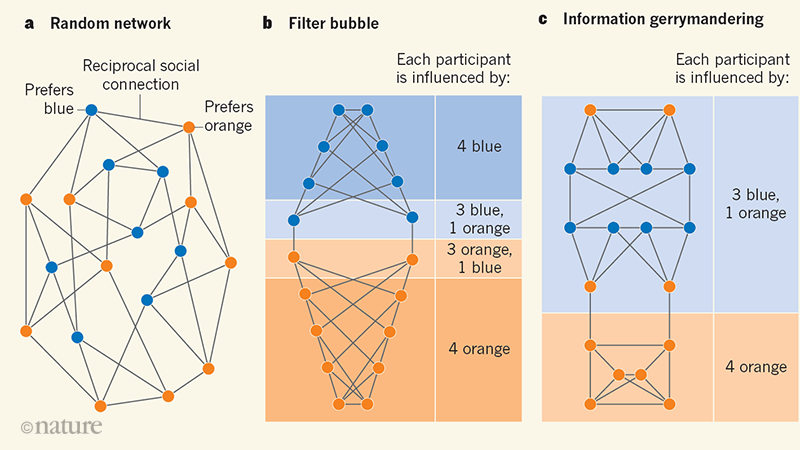
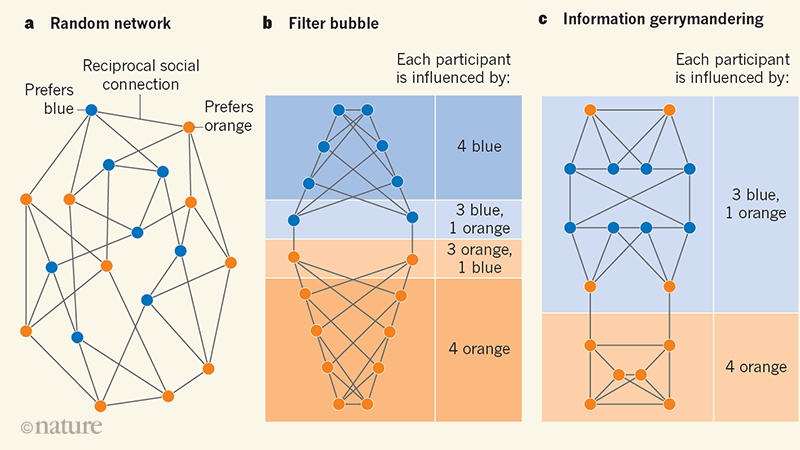
Information Gerrymandering In Social Networks

Ever feel like you’re always seeing posts from the same people on Facebook? That isn’t an accident. Your opinions are being quarantined for profit—it really is digital Gerrymandering, and it’s the reason that elections and politics are getting uglier and uglier; the electorate is becoming increasingly polarized as a result of having their beliefs affirmed by algorithms that skew their newsfeeds to lean whichever way they lean.

#deletefacebook

d41586-019-02562-z_17121850.png