Posts tagged july19
Where is the Harry Potter Encyclopedia?

Today is a magical day for Harry Potter fans: it is J.K. Rowling’s birthday, Harry Potter’s birthday, and the twelfth anniversary of the release of Harry Potter and the Deathly Hallows, the final book in the series.

Things have changed a lot since 2007, but one thing has not changed. The fans desperately want a comprehensive encyclopedia of Harry’s world. This eagerly anticipated addition to the Wizarding World has been promised and retracted more times than I care to remember, and waiting for it while seeing so many other new additions to the Harry Potter universe that nobody asked for (Cursed Child, Fantastic Beasts) has been utterly exhausting. Pottermore was an interesting and appreciated way for JKR to offer fans more of the information that we crave, but it has never been the comprehensive volume we’ve been wanting for years. On the behalf of every Harry Potter fan, as well as the charities that would benefit from the promised donation of the resulting proceeds, please, finally, give us the encyclopedia.

I've waited twelve years, I'm not going to wait much longer.

—Sirius Black

PSA: Disable Automatic Remote Image Loading in Your Email Client

The issue of digital privacy and security will always be a moving target, because no matter how many bugs are squashed or patches get pushed, bad actors and greedy corporations will continue to scope out vulnerabilities that they can use to exploit people. It is more important than ever to do what you can to protect yourself.

Lately, a lot of attention has been given to a big privacy issue that affects pretty much all email users. The problem lies in the use of something called surveillance pixels, a type of nonconsensual technology where someone who sends you an email can put something in the message that will provide them with a shocking amount of strikingly private information about the email recipient, including the dates, times, and locations for each time they open the sender’s email. This became a hot topic a couple weeks ago after a shady company called Superhuman was exposed for utilizing surveillance pixels to provide their users with access to this data for every email they send. Superhuman isn’t the only company to do this however, companies like MailChimp and other mass marketing email providers do it as well (though I believe its use for business purposes doesn’t negate the fact that it is still a breach of privacy and should be condemned just as strongly), but Superhuman does seem to be the first to make it so easily available to non-business users.

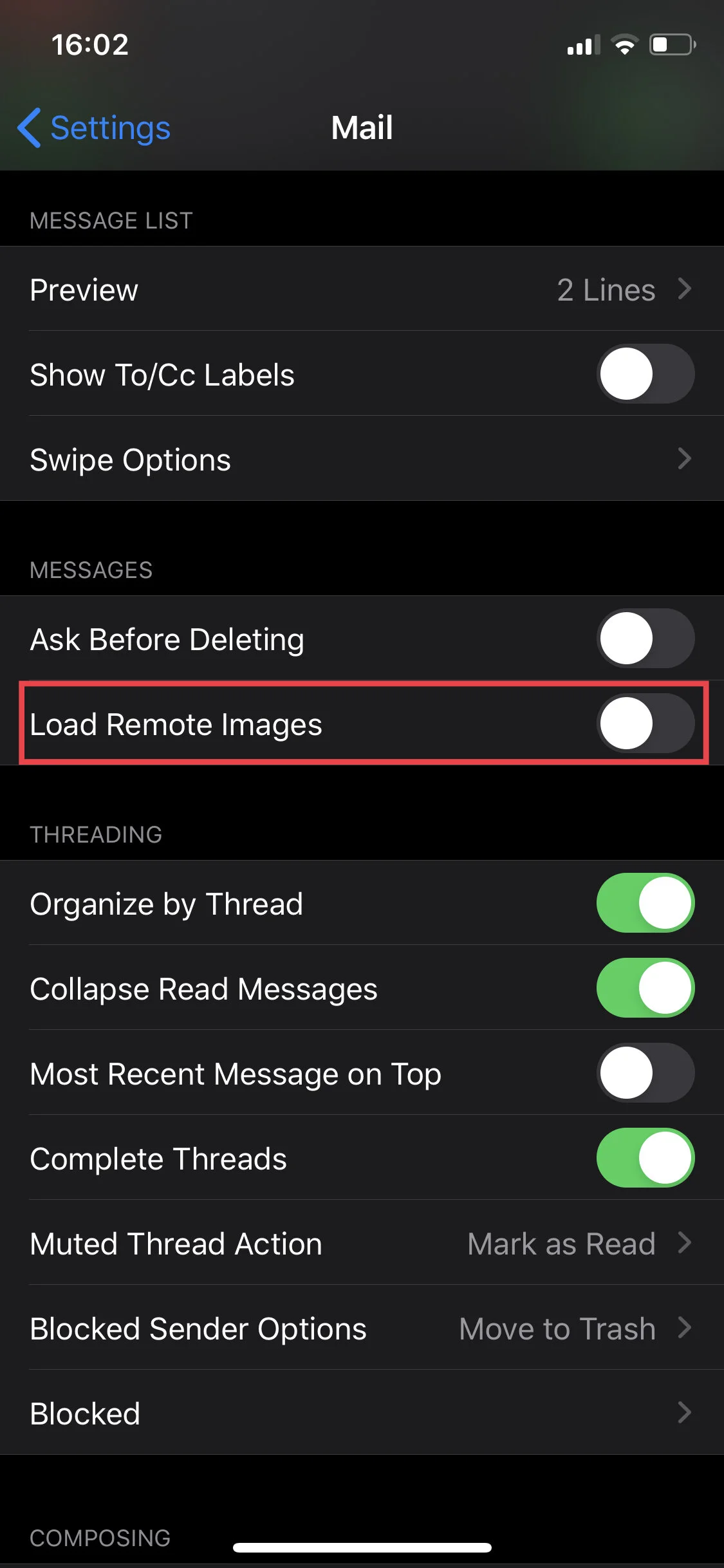
Fortunately, there is a way you can protect yourself from this privacy violation, and you should. Most mail clients offer an option to disable automatic remote content or remote image loading. Adjusting this setting will prevent your device from downloading the surveillance pixels in these emails automatically so that senders won’t be able to use them to collect this data. If you have an iPhone or iPad and you use the Apple Mail app, go to the “Settings” app, tap “Mail,” and then toggle off the switch labeled “Load Remote Images.”

After learning of how companies use this technology to take advantage of users about a year ago, I decided to disable remote image loading on my own devices, and I’m glad I did. To be clear, there is a slight downside because this will prevent some other images in emails from loading, but it is easy to chose to load the images for any individual email with a single tap if you do want to see what was attached; just know that you could also be enabling a surveillance pixel in that email if you do chose to load the images. Overall though, this is definitely a setting you should adjust if you don’t want everyone who sends you email to be able to know exactly when, where, and how many times you open their messages.

A Problem That Runs Deeper Than Presidential Candidates

This article titled My Mayor Pete Problem from The New Republic is fucking disgusting, and they were wrong to allow it to be published in the first place. People are saying that the best way to deal with it is by not acknowledging it, therefore limiting the number of people who read it, but I disagree. I think everyone should read it so they know what a gross human being this author is, and never make the mistake of giving any weight to his opinions.

The author, Dale Peck, is the type of gay who simultaneously bases his entire personality around his sexuality and also loathes himself for it. Based on this gross article, he probably hates himself more than every closeted frat guy in the SEC, combined. He seems to think that his sexuality gives him credibility to talk about others’, as if his own sexual attraction to men provides him with any meaningful insight into any other man’s character. He paints with a broad brush, and almost every aspect of his analysis is based on conjecture. He completely devalues Buttigieg’s military service and makes disgusting, homophobic assumptions about his specific sexual preferences; the whole piece was so offensively left that it seemed right-wing. It doesn’t get much slimier than this.

Funny enough, he begins the article with an anecdote describing how he has been unnecessarily hateful and cruel for the past 30 years. Gays like this are the absolute worst, and they’re the reason why so many men who are attracted to men want absolutely nothing to do with the “gay community”: it seems like the more involved in the gay community a man is, the more likely he is to be catty and dramatic, to be self-hating and self-aggrandizing, and to treat others with cruelty for the sake of his own entertainment and for a boost to his perpetually ebbing and flowing ego. Dale Peck may have a problem with Mayor Pete, but every self-respecting man who is attracted to men should have a problem with people like Dale Peck.

F.T.C. Approves Facebook Fine of About $5 Billion

Five billion dollars is more than a slap on the wrist, even for Facebook. That’s a ton of money, and I’m glad the FTC has approved a serious fine and not just a measly couple million bucks, as I was afraid would be the case. However, this is not significant enough to change Facebook’s business model. At the least, Facebook needs to be punished so severely that they MUST change their business model in order to remain profitable (I want them to be fined out of existence, personally). Cases like this must continue to be brought against them, because they make the same privacy violations day after day. Legislation must be enacted that safeguards the American people from such egregious privacy violations in the future.


I think the best way to fix the whole Facebook mess is to break up the company, throw Mark Zuckerberg and Sheryl Sandberg in prison, and throw away the key. They have been intentionally dishonest and immeasurably greedy. Maybe have a ceremonial Hunger Games with the rest of the company’s executives.

As far as the company’s stockpile of cash, I think it should be doled out evenly to everyone who ever had an account. Facebook has been deceitfully profiting off of our information, so I don’t think its going too far to suggest that we put a stop to this nonsense and try to compensate the citizens of the world for the data Facebook stole from them and weaponized.

As far as the actual platform, pull the plug and shut it down. Facebook makes people increasingly hostile and drives them further to the edges of the political spectrum. It upsets people, and it wastes their time. It’s a toxic wasteland of clickbait ads that serve no purpose other than to confuse, captivate, and enrage people, and it’s making “journalists” lazier by the day; we’re in dangerous territory where people on different sides of the aisle can rarely agree on facts and truth, and we need to address these issues sooner rather than later, or we’re going to lose all common understanding of truth as technology progresses and deep fake videos get more and more realistic. I know there are a lot of people whose small businesses rely on Facebook; not to be too harsh, but they should have done more work to understand the platform and the dangers of it before putting all of their digital eggs in that basket. If their businesses are providing legitimate value to consumers, they will find a way to continue doing business with them; hoorah, capitalism.

#deletefacebook

Memorializing The Old Taylor

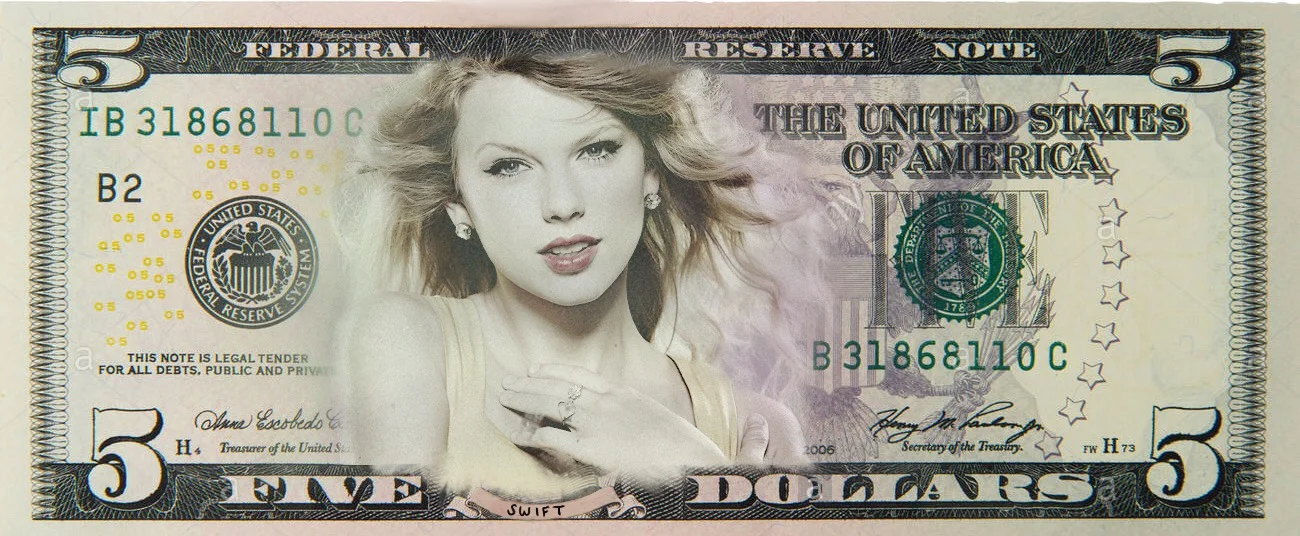
The United States Treasury has two requirements for putting someone’s image on U.S. currency:

  1. The individual must have a well known place in American history.

  2. The individual must be deceased.

Given that Taylor Swift has had one of the most successful musical careers ever, the first requirement has clearly been satisfied. In regards to the second requirement — we all know that she can’t come to the phone right now, and we all know why.

I believe this memorialization of the old Taylor is appropriate. I made this near the beginning of the reputation era, and I’m still quite proud of it.

public.jpeg
Chernobyl

I recently watched HBO’s new miniseries, Chernobyl, and it really exceeded my expectations. I know there were some historical inaccuracies as there are with any docudrama, but from my understanding, Chernobyl gets all the key events right, and most of the details as well (particularly with the costumes and set design). It also provided a good explanation of how the disaster actually happened, which was new, much appreciated information to me.

The acting was phenomenal—I particularly loved Emily Watson’s portrayal of her character. The scenes with firefighters on the night of the disaster and the following weeks, as well as the stories of the miners and the young men sent to Pripyat in the following months to do damage control were particularly gripping, and they really reinforce the humanity of the people who had to deal with this disaster—it really helps you to understand the Soviet people during the Cold War period as fellow human beings who care about and are motivated by the same things as us, rather than as mortal enemies.

The main theme of the series has to do with the importance of truth and the danger of lies, and there were some incredible quotes. My favorite:

With every lie we tell, we incur a debt to the truth.

Interestingly, HBO also produced an official podcast with episodes that corresponded with each episode of the show, where the show’s creator discusses the events of each installment; maybe I’m living under a rock, but no other show I’ve watched has done this to my knowledge, and I thought it was a great way to offer background information that otherwise wouldn’t have been provided.

Apple Discontinues the MacBook
iu-1.png

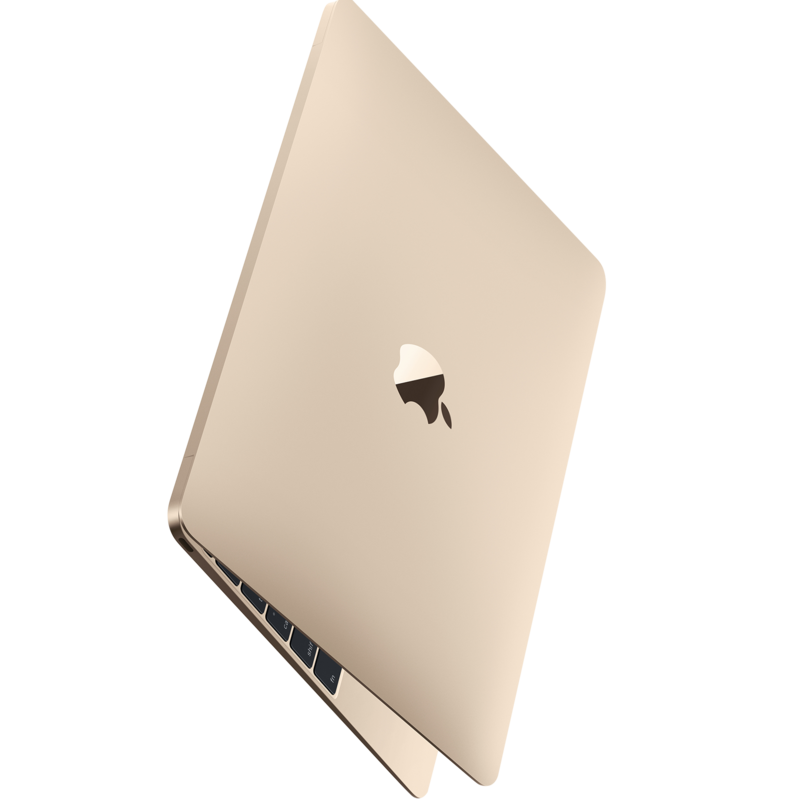
I was very sad to hear that Apple has discontinued my favorite notebook.

When the 12” MacBook was first announced in March of 2015, it was largely overlooked because it was announced alongside the Apple Watch, which cast a huge shadow over this astonishingly tiny notebook. My original thoughts were that while the MacBook was beautiful, I didn’t know who would realistically buy it, given that it was more expensive than the MacBook Air and also less powerful. Because I was working for Apple and could get a significant discount, after a few months of vain longing for such a remarkably thin and light notebook, I convinced myself to try it, and if it was too underpowered, I could always return it. I did not return it—I loved it, and I became the biggest proponent of the MacBook in the whole store.


The 12” MacBook was the first to feature the Force Touch Trackpad, which was a game changer as an input device, offering depth to the way you could interact with OS X. It was the first to feature the butterfly keyboard, and it didn’t suffer from the issues that would later devastate the MacBook Pro and MacBook Air when they adopted the second and third generation Butterly keyboards; in fact, I thought it was terrific—it offered larger, more stable keys that were evenly backlit and felt crisp. It also offered a Retina display, which was previously only available in the MacBook Pro. It was the first to make the switch to USB-C for charging, data transfer, connecting external displays, etc. To boot, it such a well designed thermal architecture with an effective enough heat sink that allowed it to operate without a fan, which meant it was the first notebook Apple had ever made that could run completely silently.

Getting into the nitty gritty, the MacBook cost $1,299, and the base model had a 1.1GHz Intel Core M processor (a point of concern for some customers, though mostly for those who didn’t know what to look for when buying a computer), 8gb of RAM, and 256gb of storage. In my mind, it was an obviously superior machine compared to the current MacBook Air, which at the time started at $999 for 4gb of RAM and 128gb of storage, with a 1.4GHz Intel Core i5 processor, if my memory serves me. The MB had a slightly less powerful chip that was designed to power ultra-portable devices, but the RAM and storage were both double what the MBA offered. AND you got all the aforementioned benefits (better keyboard, better trackpad, better display, thinner and lighter form factor, and color choices) for only $300 more.

Despite these seemingly obvious advantages, it was still a difficult sell (not that I made commission or was expected to meet any sort of sales quotas). It was particularly hard to convince the demographic to which it was best suited: college students. Most college students have a few basic needs from their laptops that the MB was beautifully equipped to handle: the new form factor facilitated extreme portability, the new keyboard provided a more stable typing experience that resulted in less typos in papers and reports, the Force Touch Trackpad with lookup feature made defining unknown words and previewing links a one click process, and the Retina display made reading and watching Netflix a much more pleasurable experience with significantly higher quality and therefore less eye strain. Unfortunately thought, many 18 year olds buying their first Mac had heard that the MBA was the way to go because it was cheaper and had more name recognition than the plain sounding MacBook, so they weren’t keen on spending an extra $300 for a machine with a smaller display. They often didn’t understand that the difference between a standard display and a Retina display meant that the MB actually had far more pixels that the MBA, and that the display could be scaled to replicate a much larger screen if necessary. The way they saw it, they hadn’t used a Force Touch Trackpad or the new keyboard before, and they had been getting along okay without them. They didn’t really understand the significance of what all the tech spec numbers meant, and parents usually only really cared about one number: the price. The fact that the MB had far smaller bezels and looked tiny next to the MBA also hurt its case by making it feel too little, even though the screen size was only one inch smaller and the increase in portability should have been a blessing to college students or business travelers. I still believe there was a bit of vanity involved in the decision making process for most people who decided against the MB—it was the first modern Mac notebook that didn’t have an illuminated Apple logo, and for young men in particular, they often didn’t like the idea of having a laptop that seemed small (despite the fact that the keys and trackpad were actually larger than on any other model).

Customers were also surprisingly unwilling to invest in a $19 USB-A to USB-C adapter, when they could just take the older MBA that already had their precious USB-A ports, despite the fact that when I asked them how they usually stored and transferred files, most were already using iCloud or Google Drive, which pretty much knocks out the need for USB-A ports for flash drives, only leaving the issue of how they would charge their phones, which I admittedly didn’t have a great solution for without purchasing an adapter or a USB-C to lightning cable. But still, what’s $19 when you’re already spending $1,000+?

All that said, I concede that the MB was not right for everyone, and I would tell customers that if I thought they would be better off with a different model. For example, l didn’t hype up the MB when talking to people who needed more processing power for something like photo editing or gaming. But generally, anyone who would have been okay with the MBA would have been great with the MB. For example, if you were just typing papers, watching Netflix, checking email, or browsing the web, I would steer you towards the MB every time.

 

I absolutely loved my MacBook, and I’m sad that Apple never gave it the promotional attention it deserved to help customers understand what a fantastic little machine it really was. It was simply ahead of its time.

Pirates Had a Form of Gay Marriage

To be sure, there was a certain amount of situational homosexuality that occurred among the all-male crews of buccaneer ships back in the golden age of piracy, much like there is in modern-day prisons and professional wrestling organizations. But it's not as though those super grizzled, hyper-masculine throat-slitting machines engaged in same-sex coupling, right? It's a fiercely divisive subject even today, so 400 years ago it must have been absolute insanity to even suggest two men getting married, much less two pirates.

On the contrary, some historians claim that the original "Pirates of the Caribbean" (pirate crews who docked, traded, and intermittently lived in port towns in the West Indies during the 17th century) had entire communities where homosexual couples were considered perfectly acceptable.

You see, pirates had a form of civil partnership called matelotage, a marriage-like institution wherein two male pirates shared all of their ... OK, we need to think of another word for "booty" here -- let's go with "loot." Additionally, each would name the other as his sole inheritor. While this makes a good I Now Pronounce You Chuck and Larry kind of economic sense, in as much as it was essentially the only kind of financial security a pirate could hope for, some commentators argue that these relationships were also romantic in nature, possibly because matelots could routinely be observed having sex with each other.

Dudes have always been boning each other, but this is fascinating and definitely more progressive than I would have expected for 14th century seafarers. These arrangements between matelots makes you consider the origins of the stereotypically pirate-y word “matey.”

Donald Trump Says Continental Army 'Took Over The Airports' In The Revolutionary War

This clip should be a source of shame for every true patriot in the United States. The fact that any U.S. President knows so little about our history is absolutely devastating to me as a someone who graduated with a History major and an American Studies minor.


The whole “Salute to America” thing was just another instance of state sponsored nationalism; Trump knows that such displays do a terrific job of riling up his base. It really pisses me off that he so callously parades our military around as a political tool, and I don’t understand why Republicans aren’t upset by his disrespect for our service members. But then again, a lot of what Republicans support these days confuses me—in what universe would a draft dodging billionaire who has publicly credited Russian interference for his being elected become the favorite of a once patriotic party that cherished honest workers and veterans?