
Apple Discontinues the MacBook
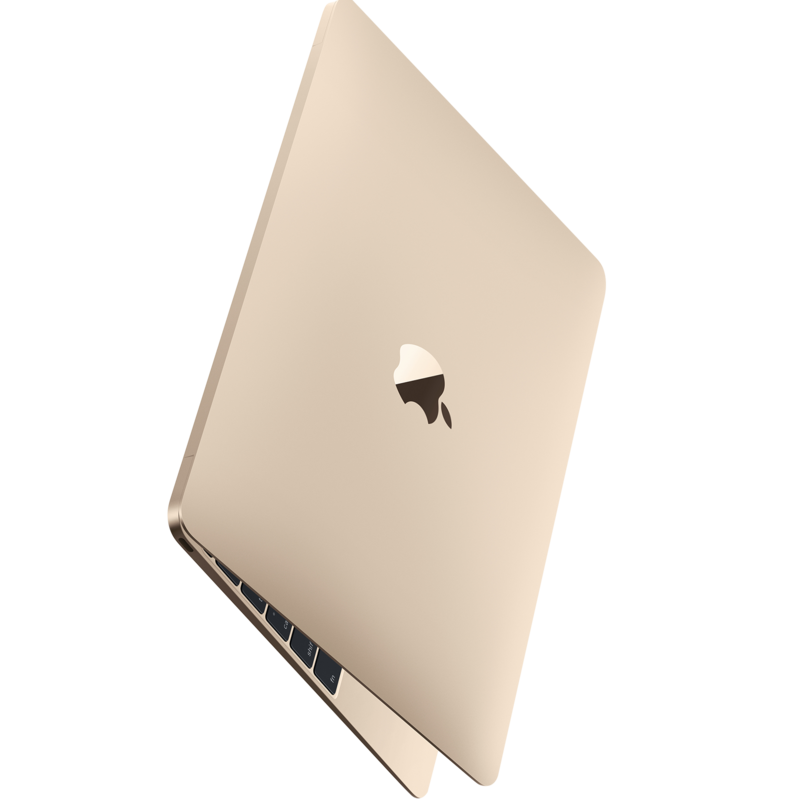
I was very sad to hear that Apple has discontinued my favorite notebook.
When the 12” MacBook was first announced in March of 2015, it was largely overlooked because it was announced alongside the Apple Watch, which cast a huge shadow over this astonishingly tiny notebook. My original thoughts were that while the MacBook was beautiful, I didn’t know who would realistically buy it, given that it was more expensive than the MacBook Air and also less powerful. Because I was working for Apple and could get a significant discount, after a few months of vain longing for such a remarkably thin and light notebook, I convinced myself to try it, and if it was too underpowered, I could always return it. I did not return it—I loved it, and I became the biggest proponent of the MacBook in the whole store.
The 12” MacBook was the first to feature the Force Touch Trackpad, which was a game changer as an input device, offering depth to the way you could interact with OS X. It was the first to feature the butterfly keyboard, and it didn’t suffer from the issues that would later devastate the MacBook Pro and MacBook Air when they adopted the second and third generation Butterly keyboards; in fact, I thought it was terrific—it offered larger, more stable keys that were evenly backlit and felt crisp. It also offered a Retina display, which was previously only available in the MacBook Pro. It was the first to make the switch to USB-C for charging, data transfer, connecting external displays, etc. To boot, it such a well designed thermal architecture with an effective enough heat sink that allowed it to operate without a fan, which meant it was the first notebook Apple had ever made that could run completely silently.
Getting into the nitty gritty, the MacBook cost $1,299, and the base model had a 1.1GHz Intel Core M processor (a point of concern for some customers, though mostly for those who didn’t know what to look for when buying a computer), 8gb of RAM, and 256gb of storage. In my mind, it was an obviously superior machine compared to the current MacBook Air, which at the time started at $999 for 4gb of RAM and 128gb of storage, with a 1.4GHz Intel Core i5 processor, if my memory serves me. The MB had a slightly less powerful chip that was designed to power ultra-portable devices, but the RAM and storage were both double what the MBA offered. AND you got all the aforementioned benefits (better keyboard, better trackpad, better display, thinner and lighter form factor, and color choices) for only $300 more.
Despite these seemingly obvious advantages, it was still a difficult sell (not that I made commission or was expected to meet any sort of sales quotas). It was particularly hard to convince the demographic to which it was best suited: college students. Most college students have a few basic needs from their laptops that the MB was beautifully equipped to handle: the new form factor facilitated extreme portability, the new keyboard provided a more stable typing experience that resulted in less typos in papers and reports, the Force Touch Trackpad with lookup feature made defining unknown words and previewing links a one click process, and the Retina display made reading and watching Netflix a much more pleasurable experience with significantly higher quality and therefore less eye strain. Unfortunately thought, many 18 year olds buying their first Mac had heard that the MBA was the way to go because it was cheaper and had more name recognition than the plain sounding MacBook, so they weren’t keen on spending an extra $300 for a machine with a smaller display. They often didn’t understand that the difference between a standard display and a Retina display meant that the MB actually had far more pixels that the MBA, and that the display could be scaled to replicate a much larger screen if necessary. The way they saw it, they hadn’t used a Force Touch Trackpad or the new keyboard before, and they had been getting along okay without them. They didn’t really understand the significance of what all the tech spec numbers meant, and parents usually only really cared about one number: the price. The fact that the MB had far smaller bezels and looked tiny next to the MBA also hurt its case by making it feel too little, even though the screen size was only one inch smaller and the increase in portability should have been a blessing to college students or business travelers. I still believe there was a bit of vanity involved in the decision making process for most people who decided against the MB—it was the first modern Mac notebook that didn’t have an illuminated Apple logo, and for young men in particular, they often didn’t like the idea of having a laptop that seemed small (despite the fact that the keys and trackpad were actually larger than on any other model).
Customers were also surprisingly unwilling to invest in a $19 USB-A to USB-C adapter, when they could just take the older MBA that already had their precious USB-A ports, despite the fact that when I asked them how they usually stored and transferred files, most were already using iCloud or Google Drive, which pretty much knocks out the need for USB-A ports for flash drives, only leaving the issue of how they would charge their phones, which I admittedly didn’t have a great solution for without purchasing an adapter or a USB-C to lightning cable. But still, what’s $19 when you’re already spending $1,000+?
All that said, I concede that the MB was not right for everyone, and I would tell customers that if I thought they would be better off with a different model. For example, l didn’t hype up the MB when talking to people who needed more processing power for something like photo editing or gaming. But generally, anyone who would have been okay with the MBA would have been great with the MB. For example, if you were just typing papers, watching Netflix, checking email, or browsing the web, I would steer you towards the MB every time.
I absolutely loved my MacBook, and I’m sad that Apple never gave it the promotional attention it deserved to help customers understand what a fantastic little machine it really was. It was simply ahead of its time.