Posts in Societal Things
Bye Bye Birdies

Karin Brulliard, writing for The Washington Post:

The sparrows and finches that visit backyard feeders number fewer each year. The flutelike song of the western meadowlark — the official bird of six U.S. states — is growing more rare. The continent has lost nearly 3 billion birds representing hundreds of species over the past five decades, in an enormous loss that signals an “overlooked biodiversity crisis,” according to a study from top ornithologists and government agencies. […]

There are 29 percent fewer birds in the United States and Canada today than in 1970.

I don’t know quite what to say about this, other than that it is very sad. Almost as sad as the fact that some people don’t believe humans are having any significant impact on our environment.

Kik Finally Kicks The Bucket, Grindr Scammers Grind Their Teeth

Good news: Kik is shutting down. If you don’t know what Kik is, all you need to know is that it’s a messaging app that was slightly popular a few years ago but is now used by practically nobody. You may be asking, “But Broc, why does this matter at all, let alone constitute good news?” Let me explain.

Now, I don’t know why this is the case, but for some reason there are a ton of trolls, bots, and pic collectors on the Grindr app (if you’re unfamiliar with Grindr, it’s an app for connoisseurs of freshly ground coffee). These trolls, bots, and pic collectors can sometimes be sneaky, but 99 times out of 100, they’re very easy to spot because they follow the same general conversation pattern, and that’s because they’re there to accomplish a task: to get you to waste your time and money on one of their pitiful scam websites where they’re promoting whatever happens to be the sketchy service du jour—one day it might be an incredible new male enhancement product, the next it could be a dating service for all of the sexy MILFs in your town who “NEED SEX NOW.” Very clickbait-y, you know the type.

Conversations with these accounts generally go like this: they introduce themselves with some funny remark or otherwise interesting statement, and then send you just enough slightly blurry photos of a decently attractive person to gain your confidence. They’ll likely also ask you to send photos of yourself in return—the images they ask for range from seemingly benign (like a photo of your face) to more private (like photos of your.. um, beans). This is when it goes south: after collecting your photos (or before, if you refuse to send any) they proceed to feed you some bullshit excuse about how the app doesn’t seem to be working properly, so that you’ll think it’s reasonable when, a few moments later, they ask you to use the Kik app to communicate with them instead. Now, Grindr can be pretty buggy at times, and users often decide to communicate on other platforms (like iMessage or Snapchat) to avoid the bugs, so to someone who isn’t familiar with the scams these trolls are trying to pull, this may seem like a reasonable request.

You’re probably wondering why they bother with Kik—it’s a fair question. The only apparent reason for this is that, to their credit, Grindr has far more stringent terms than Kik which dictate what users are allowed to send to each other, so while sending links on Grindr would quickly result in their account being banned, sending those links doesn’t cause a fuss on Kik.

You may also wonder why they would want to collect photos from you: the more photos of attractive people they collect, the more photos of attractive people they have to lure in new victims. This is especially problematic because they’re redistributing sensitive photos without permission. By chance, it’s possible that a bot may even send you photos of your OWN beans; I can tell you from personal experience that this is not a fun time, because you know that if they’ve accidentally made it back to you, plenty of other people have seen and been taking credit for that photo of your beautiful beans along the way, and aside from making you feel violated, it’s just not fair to take credit for work that isn’t your own.

This annoyance isn’t Kik’s fault, but it’s satisfying nonetheless that it will soon be brought to a grinding halt. It’s been a long time coming, but I’m glad that the next time one of these fake profiles asks me to message them on Kik, I can inform them that Kik no longer exists, and tell them to promptly go grow some beans of their own.

UPDATE: 10/20/19, 17:30;

Kik has announced that they will not be shutting down their messaging service as a result of an acquisition by MediaLab. So, damn. Hopefully the new management team will pull through on their promises to fight spam, and make it harder for people to be taken advantage of on their platform.

New Data Suggests Breathing Vaporized Chemicals Is Bad For You

I mean really, who would’ve guessed that vaping causes fatal lung diseases? I suppose I was the only one who had that yearly demonstration in elementary school of what a healthy lung looks like compared to a smoker’s lung. I mean for god’s sake, people don’t use their noodles. How gullible do you have to be to believe that inhaling vaporized nicotine and other chemicals won’t have ANY negative health consequences?

Corporations have been trying to make smoking cool for hundreds of years, and vaping is just the 21st century version of that same corporate goal. Companies like Juul should be treated (and regulated) the same as companies like Marlboro; they exist because they rely on a predatory business model of marketing their inarguably harmful products in a way that makes them seem cool, so that they can swindle money from those who are either too weak to resist the addiction, or are too uneducated to see how it could be bad for them.

Ps. Even without the astonishingly obvious health consequences, vaping is still nasty. Nobody wants to walk through a big cloud of warm, cotton candy-scented smoke that just came out of your mouth. It’s gross.

Privacy Policies

I recently made a time consuming (and kinda boring) decision. Last week, I elected to delete ALL of the apps on my iPhone (except for the built in ones). This wasn’t a permanent decision, but I told myself that I wouldn’t download another app without first reading the privacy policy of the company that built it. It’s time to start actually understanding all the legal jargon we’re hastily clicking through and agreeing to.

This whole process has been enlightening in a few ways. About a week later, I still only have nine apps on my phone; I’m learning that most of the 70+ apps on my phone were just taking up space, because I’m doing just fine without most of them. I do intend to keep downloading more as I read their privacy policies, but I’m not in a hurry.

A lot of the privacy policies I’ve read so far have surprised me; some companies were way more protective of their users than I expected, and some were worse than I had dared to imagine. Check out the whole list of privacy policies I’ve read, and make your own decisions about which companies you’re comfortable giving your information to.

Poland’s Turn Toward Anti-LGB[&]T Bigotry Is Unacceptable

Queer Eye’s Antoni Porowski, in an opinion article for The Washington Post:

This bigotry is unacceptable. Historically, Poland has survived hundreds of years of oppression and violent occupation from neighboring countries, from the invasion by the Soviet Union to the Katyn massacre to World War II. We have managed to keep our faith, language and identity through it all. It baffles me that we would choose to persecute our own because of who we love and how we identify in terms of gender. We must stop attacking our own.

Honestly, he’s hitting the nail on the head here. It’s pretty bold for the runt of Europe to be persecuting anyone, much less their own people.

‘The Great Hack’

Netflix’s ”The Great Hack” is one of the best documentaries I’ve ever seen. It explains what happened with the whole Cambridge Analytica/Facebook scandal, and makes it easy to understand for those with little prior knowledge. They take a largely nonpartisan look at how these companies were able to influence the 2016 U.S. General Election, the Brexit Referendum in the U.K., and dozens of other elections in smaller countries.

It has never been clearer that the technology we all take for granted has been taking advantage of us; it is evident that data aggregated by Facebook and exploited by Cambridge Analytica has been used to effectively brainwash the public, and the tactics they’ve used were even more efficient and dangerous than the ones utilized by the propagandists of the Third Reich. Nearly all of the blame for the explosively divisive nature of those elections belongs at the feet of Alexander Nix and Mark Zuckerberg.

“The Great Hack” very well may be the most important film of the decade, and I urge everyone to watch it. Make a concerted effort to be open minded, and don’t immediately rule out the possibility that these companies may have pulled one over on you—it’s easy to dismiss their alleged wrongdoings on the basis of “well if anyone had convinced me to think one way or the other, I think I would know.” The problem is that many people do dismiss it on those grounds, but by the very nature of what they’ve done, nobody could know until it’s too late. These are companies with billions of dollars at their disposal and a team of scientists who possess deep knowledge of how the human brain works—there is no shame in admitting they may have duped you. They certainly got me. What’s most important is what we do now that we know what they’ve done.

I’ve been pounding the #deletefacebook drum since well before the scandal broke, and there has never been a better time to get out of their corrosive network: delete your Facebook account. However, even that isn’t enough at this point.

The safety and integrity of every democracy on earth depends on everyone understanding what these companies did and calling upon our representatives to finally limit the boundless power that big tech companies have over our data. If those things don’t happen, the world will never see another free and fair election.

#deletefacebook

See also: “The Social Dilemma”

About Face

Nate Powell of Popula takes a deep look at the beginning stages and recent evolutions of some of the more common symptoms of the toxic masculinity that often accompanies southern white maleness, with an intriguing focus on the voluntary self-militarization of civilian men. A lot of people will feel targeted by his piece, but hopefully they’ll take the opportunity to ask themselves why they originally adopted some of the symbols to which they now cling.

A Problem That Runs Deeper Than Presidential Candidates

This article titled My Mayor Pete Problem from The New Republic is fucking disgusting, and they were wrong to allow it to be published in the first place. People are saying that the best way to deal with it is by not acknowledging it, therefore limiting the number of people who read it, but I disagree. I think everyone should read it so they know what a gross human being this author is, and never make the mistake of giving any weight to his opinions.

The author, Dale Peck, is the type of gay who simultaneously bases his entire personality around his sexuality and also loathes himself for it. Based on this gross article, he probably hates himself more than every closeted frat guy in the SEC, combined. He seems to think that his sexuality gives him credibility to talk about others’, as if his own sexual attraction to men provides him with any meaningful insight into any other man’s character. He paints with a broad brush, and almost every aspect of his analysis is based on conjecture. He completely devalues Buttigieg’s military service and makes disgusting, homophobic assumptions about his specific sexual preferences; the whole piece was so offensively left that it seemed right-wing. It doesn’t get much slimier than this.

Funny enough, he begins the article with an anecdote describing how he has been unnecessarily hateful and cruel for the past 30 years. Gays like this are the absolute worst, and they’re the reason why so many men who are attracted to men want absolutely nothing to do with the “gay community”: it seems like the more involved in the gay community a man is, the more likely he is to be catty and dramatic, to be self-hating and self-aggrandizing, and to treat others with cruelty for the sake of his own entertainment and for a boost to his perpetually ebbing and flowing ego. Dale Peck may have a problem with Mayor Pete, but every self-respecting man who is attracted to men should have a problem with people like Dale Peck.

Pirates Had a Form of Gay Marriage

To be sure, there was a certain amount of situational homosexuality that occurred among the all-male crews of buccaneer ships back in the golden age of piracy, much like there is in modern-day prisons and professional wrestling organizations. But it's not as though those super grizzled, hyper-masculine throat-slitting machines engaged in same-sex coupling, right? It's a fiercely divisive subject even today, so 400 years ago it must have been absolute insanity to even suggest two men getting married, much less two pirates.

On the contrary, some historians claim that the original "Pirates of the Caribbean" (pirate crews who docked, traded, and intermittently lived in port towns in the West Indies during the 17th century) had entire communities where homosexual couples were considered perfectly acceptable.

You see, pirates had a form of civil partnership called matelotage, a marriage-like institution wherein two male pirates shared all of their ... OK, we need to think of another word for "booty" here -- let's go with "loot." Additionally, each would name the other as his sole inheritor. While this makes a good I Now Pronounce You Chuck and Larry kind of economic sense, in as much as it was essentially the only kind of financial security a pirate could hope for, some commentators argue that these relationships were also romantic in nature, possibly because matelots could routinely be observed having sex with each other.

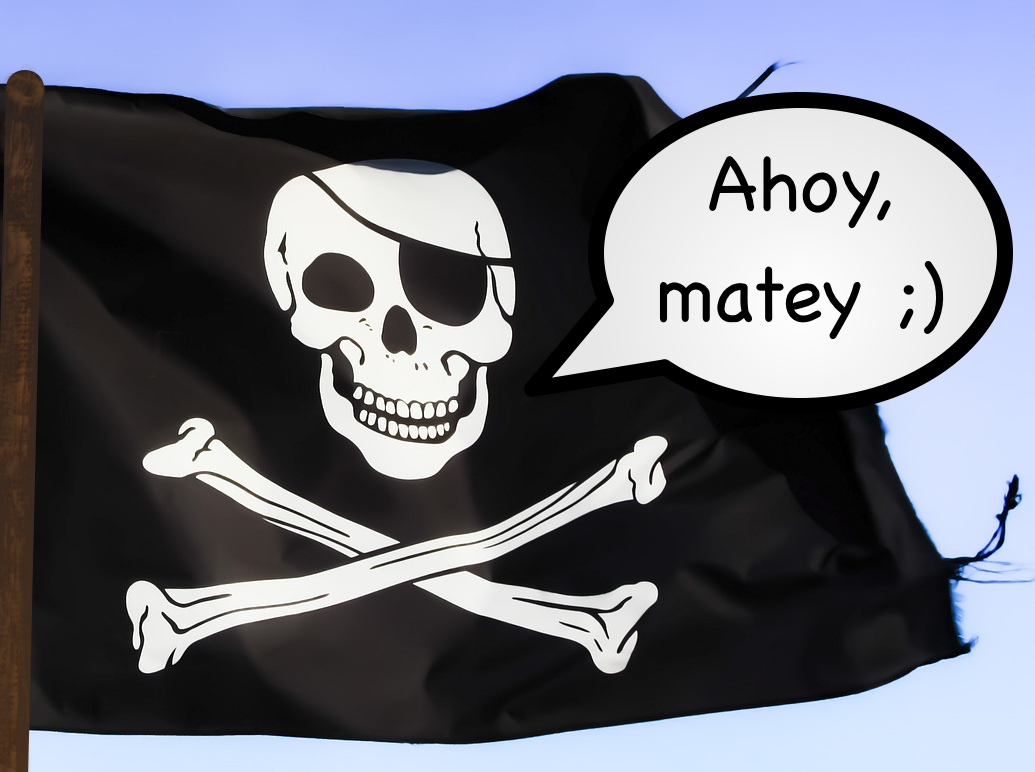
Dudes have always been boning each other, but this is fascinating and definitely more progressive than I would have expected for 14th century seafarers. These arrangements between matelots makes you consider the origins of the stereotypically pirate-y word “matey.”

The Next Step for Gay Pride

This is a pretty good article. I have a few qualms with it (like how the second half is completely irrelevant to the first half and the title) but overall I think it’s well informed. The second half provides some good insight on the Trump Administration and recent world events, but it’s pretty long already so if I were you I’d stop reading when you get to the subtitle “The Trump Code.”

However, the first half is terrific; it provides a great analysis of the the massive progress that our society has made in the past decade in regards to LGB rights and trans rights, as well as some great ideas about how we can continue to make progress without victimizing ourselves.

There has never been a better time or place in the history of the world to be gay than in 2019 and in the West.

I think it’s worth repeating that — especially in front of the younger generation — because it gives us critical perspective on where we are now and where we are headed. If you glance at media aimed at gays, lesbians, and transgender people, you might imagine we are living in a state of siege. Gay students arriving in college in 2019 will be told instantly that they are oppressed in countless ways, and trans students will be told that they can be oppressed by gay people, as well. Check out the website for the biggest gay lobbying group, the Human Rights Campaign, and you will find that gays and lesbians and transgender people “have been under constant attack” since Trump became president.

… look at what remains: marriage equality, even in Alabama; corporate America competing to brand itself as pro-gay (sometimes to an excruciating degree); full integration of gay service members; a lesbian mayor of Chicago and, in Corey Johnson, a future gay mayor of New York; a married gay man among the main contenders for the Democratic presidential nomination; a cornucopia of media-affirming gay and trans equality; openly gay and lesbian figures in almost every sphere of American life; a preventative pill for HIV and a pill to all but eradicate it from the living; and explicit legal protection from discrimination for half of the gay people in the country.

It is, I know, sometimes hard to take “yes” for an answer. It is also prudent, given human history, to be vigilant in defending the gains. But this level of openness and equality was unimaginable only a decade ago. Compared with the 1950s, when “sodomy” was illegal in every state, when the government hounded gay men and women in public service out of their jobs and demonized them as inherently treasonous, when gay people were barred from entering the country, and when psychiatrists believed them to be mentally ill, this is close to utopia. Compared with the 1980s and early 1990s, when gay men found themselves circling the drain of their own extinction, and witnessed horrors and pain and stigma as never before, this is incredible. Compared with the 1880s, or 1780s, when gay people were assumed to be merely deviant straights and were subject to execution under the law, it is an entirely different universe.

People my age really don’t realize how good they’ve got it.

Because gay men and women are almost always brought up by straight parents, this history is hard to pass on. And so perspectives can be warped. Those whose livelihoods are built on defending victims have an interest in sustaining a victim paradigm for gay America, in which they are the saviors. And victim narratives are comfortable. They allow us to avoid responsibility for our own problems, while transferring it to others. They evoke cheap but satisfying empathy. They seem to cast us as somehow noble for being “oppressed.” They actually provide status among today’s elites — and can help you advance your own career solely on the basis of your orientation if you want to go to college or get a job at a major corporation.

I think it’s time to shuck off this narrative, because it is a crude simplification of the gay experience, because it is profoundly out of date, and because it focuses us on other people we cannot always change while ignoring things closer to home that we can. What we need now, I think, is a narrative more productive and constructive, less about the harm the world can do to us, and more about the good we can give back to the world.

For many, I hope, that will mean just getting on with our lives, without our sexual orientation getting in the way. It’s the sanest approach to being gay, seeing it as an integral but by no means exhaustive way of being human. It will mean earning a living, raising kids in some cases, pursuing careers, sustaining marriages, and everything every straight person does without thinking twice about it. Being gay is not a political act; it is about deeper things than politics: love, above all, but sex and relationships as well.

My own view is that a gay politics was necessary only so that we could eventually get beyond politics, and live as our straight brothers and sisters do, with our sexual orientation being a nonissue in our wider lives. We seek, in this sense, a kind of irrelevance for our sexual orientation — a world in which the hetero and homo categories define none of us, straight or gay, and the category of human includes us all.

I love this part. The best way to normalize something is to act like it’s already normal, rather than drawing unnecessary attention to differences that shouldn’t define you — it’s the societal equivalent of fake it ‘til you make it, and this is exactly why I’m trying to avoid labeling myself as “gay.” Differentiating and victimizing ourselves has gotten us as far as it’s going to; the next step for gay pride is to look at how we can contribute to society, rather than asking what society can do for us.

I Have Decided To Stop Being Gay

With the omnipresence of identity politics in today’s society, personal identifiers and labels are playing a larger role than ever in how people understand each other. Personally, I think this is bad in almost all cases, and it’s why I’ve recently been experimenting with the idea of simply refusing to adopt the labels society says I’m supposed to carry. I have decided to stop being “gay.”

Starting now and continuing for the foreseeable future, I am not going to use the word “gay” when describing myself, nor the word “queer,” which I personally have never liked anyway; it’s a phonetically weak word which has such a broad definition that it is hardly useful (and on top of all that, it used to be an insult). Please note that this does not mean that I am now any less attracted to men than I have been since I was three years old; you cannot change your sexuality, and frankly, why would I? Men are the bomb.

Instead of calling myself “gay,” if my sexuality becomes relevant to a conversation, it is easily and more clearly described by short, simple, non-confusing, nonthreatening phrases such as “I prefer men," “I’m into dudes," or “I’m attracted to guys.”

The way I see it, my decision to shed the “gay” label flows in the same vein as the current move to adopt person-first language when referring to individuals with disabilities. For example, it’s considered more appropriate to say “a child with autism” than it is to say “an autistic child.” The point is to literally put the person first in the sentence, so that the first impression is of the individual rather than the condition. It’s the difference between describing and defining.

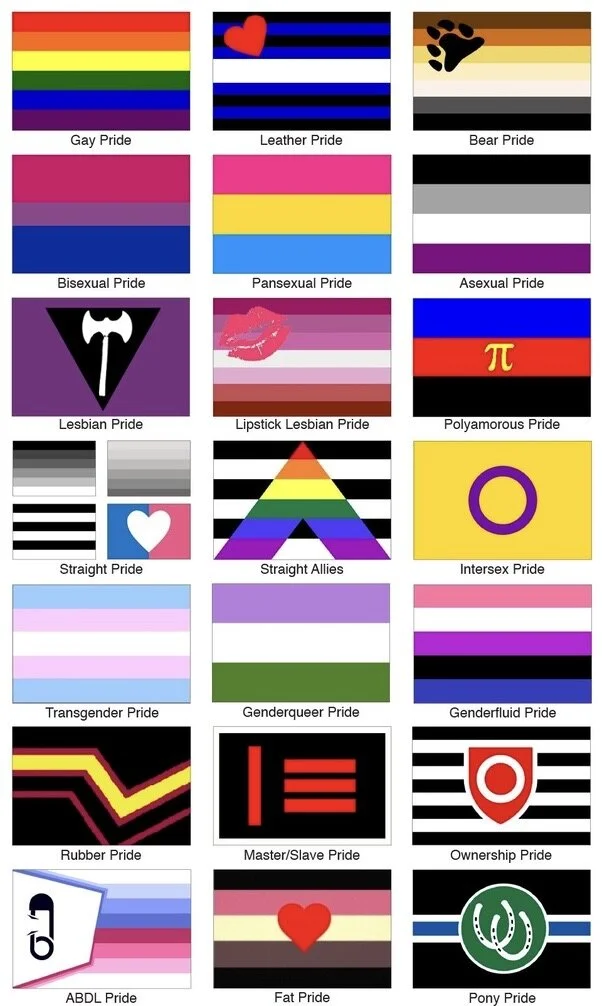
Some of the various “pride” flags adopted by the LGBTQIAPEMDAS+ community.

Some of the various “pride” flags adopted by the LGBTQIAPEMDAS+ community.

Defining is exactly the problem here. The more labels we create for ourselves, the more labels that can be weaponized and used to alienate us from the rest of society. And boy, do we like labeling ourselves—the acronym is like 19 letters long now, while it was only three letters just a few short years ago. We went from LGB to LGBTQIDGAFLMNOP+, or whatever the hell it is this week. Too many people have allowed themselves to be defined by these labels, and in doing so, they’re providing ammunition for those who seek to limit their personal freedoms and civil rights.


Still, there is some amount of criticism that could be made regarding my decision to abandon the “gay” label, but these concerns are easily addressed.

Some of my fans have said that my decision to stop using the words “gay” and “queer” is predicated on years of internalized homophobia and self-hatred, but those people clearly don’t know me well, because in reality I am one cocky son of a bitch who is usually all too pleased with himself.

Another common point brought up when I assert the uselessness of labeling sexuality is a defense of the labels’ abilities to facilitate the forming of communities. This is not a very strong argument for a few reasons. 

  1. The “Gay Community” as we understand it now didn’t exist at all until roughly fifty years ago; it is an extremely new phenomenon in human history. Furthermore, the “gay” identity itself, where someone is characterized by their same-sex attraction, really only began to form in the 1920s.

  2. I personally find no value in the “Gay Community.” Gay men have a terrible habit of becoming catty, dramatic, petty, hateful, spiteful, etc. when they congregate, and this is far from a welcoming environment. If there’s any benefit to being gay, it would be that you get to avoid the drama stereotypically associated with dating women, but nope. The “Gay Community” chews up that idea and spits out tenfold the drama, just with more testosterone. 

  3. If finding a community is so essential to people, they should look for one that will accept them regardless of their sexuality, not because of it. If all you have in common with someone is your sexuality, how much social value does that truly offer?

The last major case made against my decision to drop these labels suggests that by refusing to use the word “gay," I won’t be contributing to the deconstruction of the stereotypes that plague same-sex attracted men—I’ve given this lot of thought, and my conclusion is that it’s horse shit. Words like “gay” and “queer” are nearly synonymous with the stereotype of weak, twinky, feminine, ultra-liberal white boys who are obsessed with their sexuality, and they’re so closely tied that it would take decades to dissociate them. However, the simpler phrases I intend to utilize going forward would allow us to easily shed the negative connotations of the tired “gay” and “queer” labels, which would in turn make the coming out process easier for a lot of the more masculine, straight-seeming guys who are currently choosing to remain closeted because they don’t want to be unfairly labeled as weak or feminine on account of a single unchangeable aspect of their personality (who could blame them?). 

If anything, I think using other terms to describe sexuality WILL help to deconstruct said stereotypes, because it would clearly demonstrate that there is a portion of the same-sex attracted population for whom their same-sex attraction does not define their personality, which would be helpful in quelling stupid assumptions that people chose to be gay for attention (or any other reason). This is essential because it has the potential to have a domino effect, where closeted guys would see more and more men who don’t deny their same-sex attractions but also don’t fit the sassy, limp-wristed stereotype, and would therefore begin to feel more comfortable being open about their own same-sex attractions because they wouldn’t feel pressured to conform to a stereotype that doesn’t truly reflect their personality.

What’s really going to put prejudice and stereotypes to bed is when more of those straight-seeming guys come out, in the process shocking all the ignorant people who don’t think they’ve ever met a same-sex attracted person (all the Bible thumpers whining “dont hate the sinner, hate the sin”), and showing them that far more of us exist around them than they think. This could easily take a turn down a theological path here, but don’t worry, I won’t go there. Yet.


The time has come to retire these labels. They only serve to alienate us from the rest of society, and make it more difficult for a lot of struggling young men to come to terms with their same-sex attractions. 

In conclusion, labels are gay.

Memorial Day Musings

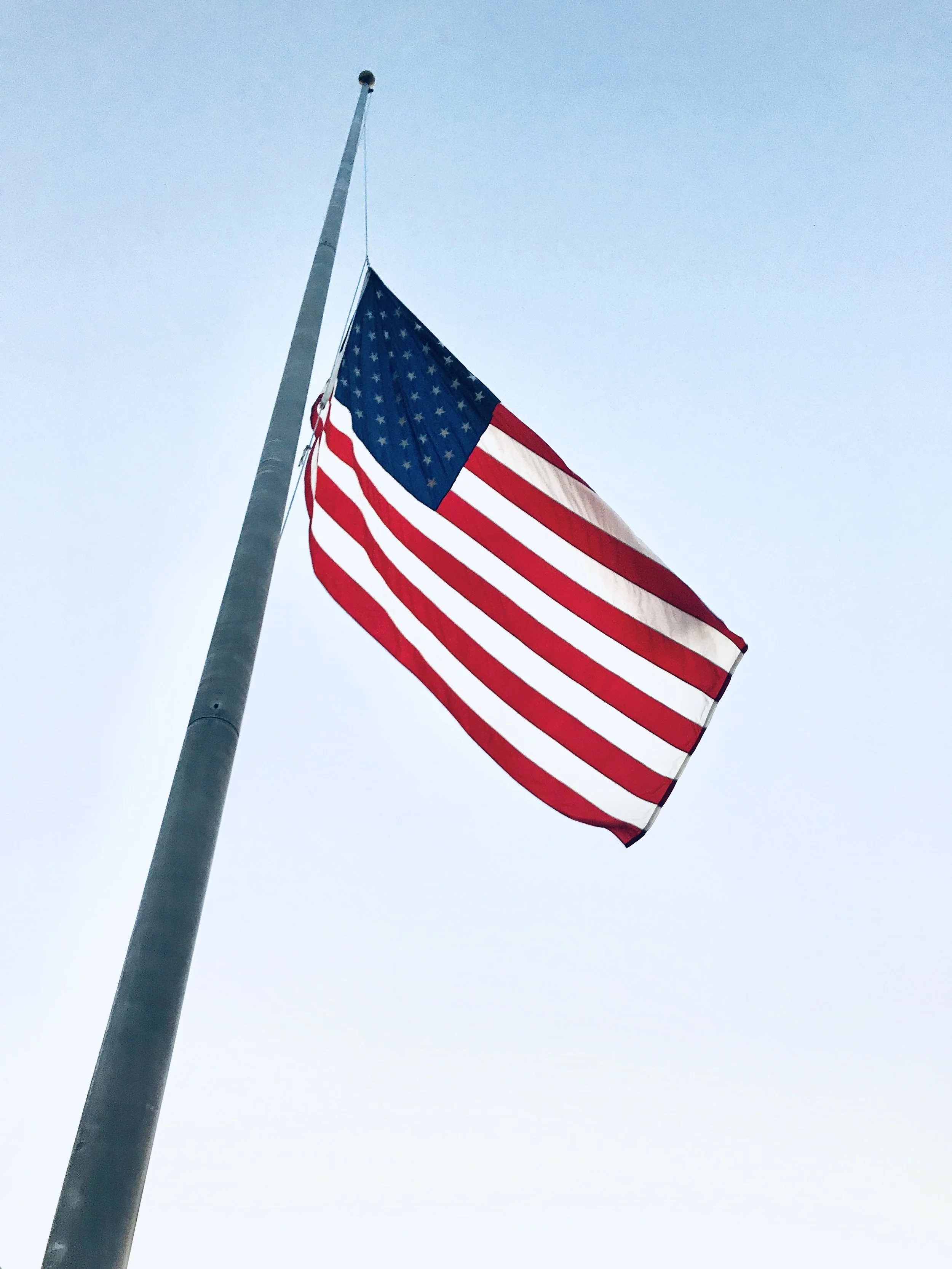
After spending Memorial Day weekend at the beach enjoying the many freedoms afforded to me by the sacrifices of countless brave men and women from the past 300+ years of American history, a few thoughts come to mind. First and foremost, thank you to all those who serve our country.

As we reflect on their sacrifices this Memorial Day, it is also important to remember why some of those sacrifices were made, and engage in some uncomfortable dialogue about the United States Military’s history.

In many cases, particularly in the last 70 years, it seems that the United States government has taken advantage of the commitments made by our troops. There are plenty of examples of the United States utilizing military force where it was less than necessary, in some cases as a result of completely fabricated stories involving unproven threats to our national security. This heinous abuse of power must be called out when it occurs, and we must demand better of our leaders than to use our troops as pawns for their own political agendas. We need to respect these brave men and women enough to only ask them to defend our country when it is truly necessitated.

It is essential that the American public wisen up and do a better job of calling out our leaders when they prematurely threaten military action as a solution to a problem, as is currently happening with the conflicts in Iran, Venzuela, and the US-Mexican border. We have to put an end to the pattern of engaging in endless wars that result in thousands of troops laying down their lives because the civilians are too ignorant and apathetic to call out our government when they deploy our troops without just cause. Military force should only be utilized when we have stone cold proof that it is the only way to resolve a direct threat to our national security, anything else is disrespectful to our troops and their families.

Revolutionary War Hero Might Have Been A Woman or Intersex

Pulaski proved his — or her, or their — mettle in 1777 by preventing advancing British troops from capturing Washington at the Battle of Brandywine.

Seems pretty problematic to posthumously redefine someone’s gender and assign them new pronouns. Regardless of what any skeletal analysis may indicate and the fact that he had male genitals, it’s clear this individual understood themself to be a man—isn’t that what we’re saying matters at this point, how you feel?

Just because the way we understand gender is more “woke” now doesn’t mean that the identities we recognize have always existed. People who lived hundreds of years ago can’t be categorized by today’s standards, because its not an accurate representation of how they would have understood themselves.