U.S. Troops to Spend a Month Painting Border Wall

This is an absolutely shameful utilization of our military. Coming on the heels of the story about the USS John McCain, Trump is once again illustrating his lack of respect for our men and women in uniform, this time by having them engage in degrading busy work that serves no practical purpose and is solely intended to make an ugly political proposal more palatable. If you believe painting a wall is a legitimate task for our troops, you are no patriot.

Increased military presence along the southern border, whether our troops are being ordered to paint walls or herd immigrant children into cages, is not what we need to fix our ineffective immigration system. Undocumented immigrants do pose a threat to our economy, and it is a huge problem, but it’s one that needs to be solved with enforceable, effective policy—not by military action. As I wrote last week, it seems clear that this administration has no moral qualm with using our military as a political tool to rile up support from their base, and the American people (on both sides of the aisle) need to do a better job of calling out our leaders and demanding more respect for our military personnel.

Former School Resource Officer at Stoneman Douglas High School Faces 11 Charges

But we need more resource officers to prevent school shootings. Okay.

After the most recent shooting in Virginia Beach, I wrote three letters (one to my representative, Patrick McHenry, and to my two senators, Richard Burr and Thom Tillis) to express my concerns and encourage our leaders to support common sense gun legislation. You should do the same. Find your representative’s and senators’ contact information with this handy app.

Source

WWDC 2019 Thoughts

I’ll break this up by platform:

tvOS:

  • The multi-user support is cool.

  • The control center panel is brilliant and overdue.

watchOS:

  • The menstrual cycle tracking prediction was correct, though of course I wasn’t the only one predicting it.

  • The noise level notifications are interesting and definitely not something anyone saw coming.

  • I really like some of the new faces and complication styles.

  • I doubt anyone uses the on-watch App Store.

iOS:

  • Dark mode (no surprise).

  • I love the focus on privacy; I had it on my wish list, and they delivered. I am absolutely stoked about the “Sign in with Apple” button (and especially that it’s mandatory).

  • The ability to buy fonts in the AppStore is great. I’ve wanted custom fonts in Pages on iOS for a long time.

  • I am disappointed about the lack of meaningful Siri updates.

  • Handoff for HomePod is great, and the whole Siri-reading-incoming-messages thing on AirPods is a great feature.

  • The video editing features are very appreciated, but why did it take so long?

  • The new maps look delightful. The Look Around feature will be really helpful.

  • I’m glad there are more Memoji customization options. I’ve always thought they weren’t quite as user-specific as Bitmojis. 

iPadOS:

  • As I mentioned in my predictions, I don’t think this year’s improvements will lead to the iPad replacing your laptop, but it is a huge step in that direction.

  • The full page option for marking up screenshots is great.

  • The new text editing features are going to be a big deal.

  • The files app will be a lot more useful, and I’m particularly excited about iCloud Drive Folder Sharing.

macOS:

  • I like the name Catalina.

  • Sidecar is super handy.

  • I’m not sure how I feel about the new Music, TV, and Podcasts app. Seems like they could’ve simplified iTunes a bit and it would’ve been alright. But the new music app doesn’t look much better than the current Apple Music implementation in iTunes—way too much of a focus on the useless recommended content rather than on your library.

  • The Voice Control feature is incredible. I’m proud to have been a part of a company that cares so much about making products that are accessible for everyone.

 Developer tools:

  • The ARKit improvements were more substantial than I’d predicted, but I still don’t think we’re going to see much meaningful implementation in apps we use everyday.

  • The Catalyst framework is interesting. The marzipan apps generally sucked, and Apple said they’ve learned a lot from them, but the Apple apps they built last year using this technology don’t seemed to have changed much, so I wonder how useful it will really be in making Mac apps, as opposed to iPad apps running in a Mac window.

Mac Pro:


All in all, I’m more excited after this one than I expected to be. I am still disappointed that they didn’t do anything to improve the layout of the iOS Music app, but that wasn’t a surprise. There were a few surprises though, and they were good ones.

WWDC 2019: Wish List and Predictions

WWDC is always a fun time for the Apple nerds out there, and a much bigger deal for most regular people than they realize. Here are my thoughts about this year’s keynote, which is set for Monday, June 3rd, at 10AM (pacific time).

First off, my wish list:

  1. Fix the atrocious Apple Music app. Get rid of the useless Browse, For You, and Radio tabs at the bottom, and replace them with Playlists, Artists, and Albums. Work in better sorting. Streamline the search feature. 

  2. I want to see more Apple Watch health features with extensive backwards compatibility, at least back to the series one models, if not the original models. Apple has such a huge opportunity with the watch to impact people’s lives in a very real, physical, measurable way, and I want to see them continue the great work they’ve done the past few years. 

  3. It is HIGH TIME for some Siri improvements. We have been waiting and watching for years, every year expecting this to be the keynote where Apple rolls out a badass new Siri. They’ve teased us a few times with things like Siri suggestions and other minor voice improvements, but at the end of the day, I don’t give a shit about having Siri tell me hockey scores.  I’m talking Iron Man-style, JARVIS-level intelligence. I know that Apple is behind the curve on this as a result of their focus on privacy, but they’ve gotta figure out a way to at least get Siri up to speed with the Google Assistant. 

  4. HomePod improvements. This flows in the same vein as the Siri thing, but a $300 speaker should be able to do more than a flip phone’s voice control can do.

  5. The rumored, Tile-like tracking devices sound like a very interesting product, and I’d love to see how Apple may work those into their product lineup.

  6. I want more privacy features. Apple has really been flexing on the rest of the industry as far as privacy and security goes, and I don’t want it to stop any time soon. I would love to see an Apple VPN service, or dare I say… a social network.

  7. I would really like for them to revamp the Apple Watch UI in a meaningful way, and finally give the side button a distinct, useful role in controlling the device.

Some Predictions:

  1. This is hardly a prediction, given the leaks, but I’m sure we’ll see an iOS dark mode (finally).

  2. I’d be surprised if we don’t get some new Apple Watch health features, whether that’s sleep tracking, menstrual cycle tracking, more heart-related features, or something else. 

  3. I do think we’ll get some new privacy features; I believe there have been a few rumors of Safari-related privacy features.

  4. I think we’re finally going to get some more substantial iPad updates. Will it finally be able to replace your laptop? Probably not. But I think this year will be an important stepping stone along that path. 

  5. Given the recent MacBook Pro updates and the new iPod Touches that were just released, it seems like Apple doesn’t want to talk too much about hardware this year. I’d say the odds are 60/40 that we’ll see a preview of the new Mac Pro, but I’ll be very surprised if we get anything more than that. 

  6. I predict that Apple will, once again, disappoint me by leaving the Music app practically untouched.

  7. I’m sure we’ll see some heavy touting for new artificial reality features that nobody will really care about. They make it look great on stage, but the technology just isn’t good enough to be useful yet. The truth is I don’t need to play an obviously fake looking LEGO video game through my iPhone’s viewfinder, I don’t need to use the stupid Measure app to find out that a 12-inch ruler sitting on a flat surface is apparently 13.5 inches long, and I don’t need to see what an ugly, yellow, cartoonish-looking chair from IKEA would look like in my living room.

All in all, this WWDC isn’t really as exciting as the past few have been, but maybe they’ll surprise me and check off a couple items from my wish list that I’m not expecting. I miss the days of watching the keynote and not being able to think of anything else for days, but the past two or three years have been really lackluster; if anything, I’d find that I had forgotten half of what they’d announced by the next day. Hopefully they’ll recapture my attention this year like they were able to do in the iOS 7 era. 

I Have Decided To Stop Being Gay

With the omnipresence of identity politics in today’s society, personal identifiers and labels are playing a larger role than ever in how people understand each other. Personally, I think this is bad in almost all cases, and it’s why I’ve recently been experimenting with the idea of simply refusing to adopt the labels society says I’m supposed to carry. I have decided to stop being “gay.”

Starting now and continuing for the foreseeable future, I am not going to use the word “gay” when describing myself, nor the word “queer,” which I personally have never liked anyway; it’s a phonetically weak word which has such a broad definition that it is hardly useful (and on top of all that, it used to be an insult). Please note that this does not mean that I am now any less attracted to men than I have been since I was three years old; you cannot change your sexuality, and frankly, why would I? Men are the bomb.

Instead of calling myself “gay,” if my sexuality becomes relevant to a conversation, it is easily and more clearly described by short, simple, non-confusing, nonthreatening phrases such as “I prefer men," “I’m into dudes," or “I’m attracted to guys.”

The way I see it, my decision to shed the “gay” label flows in the same vein as the current move to adopt person-first language when referring to individuals with disabilities. For example, it’s considered more appropriate to say “a child with autism” than it is to say “an autistic child.” The point is to literally put the person first in the sentence, so that the first impression is of the individual rather than the condition. It’s the difference between describing and defining.

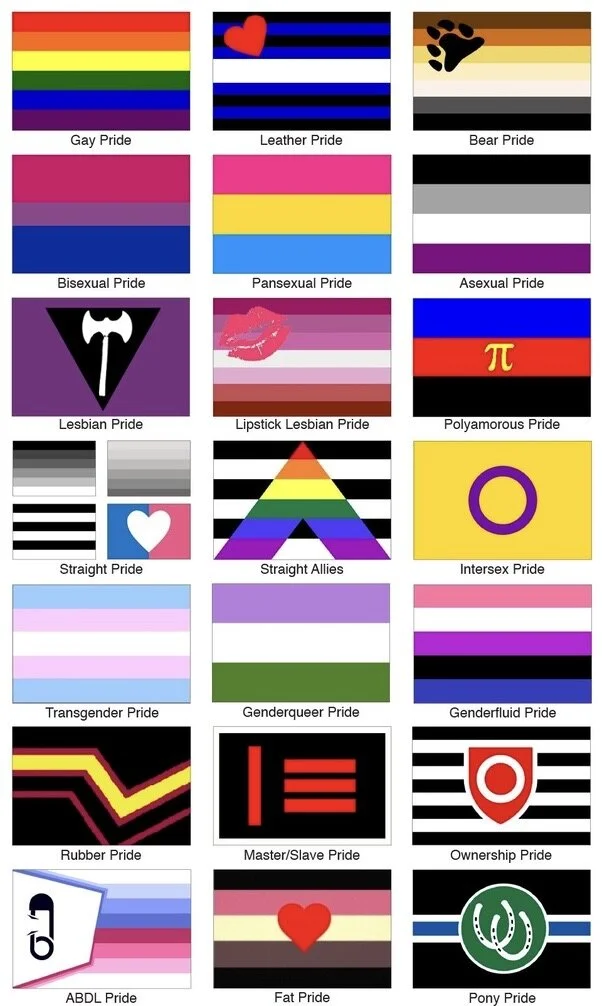
Some of the various “pride” flags adopted by the LGBTQIAPEMDAS+ community.

Some of the various “pride” flags adopted by the LGBTQIAPEMDAS+ community.

Defining is exactly the problem here. The more labels we create for ourselves, the more labels that can be weaponized and used to alienate us from the rest of society. And boy, do we like labeling ourselves—the acronym is like 19 letters long now, while it was only three letters just a few short years ago. We went from LGB to LGBTQIDGAFLMNOP+, or whatever the hell it is this week. Too many people have allowed themselves to be defined by these labels, and in doing so, they’re providing ammunition for those who seek to limit their personal freedoms and civil rights.


Still, there is some amount of criticism that could be made regarding my decision to abandon the “gay” label, but these concerns are easily addressed.

Some of my fans have said that my decision to stop using the words “gay” and “queer” is predicated on years of internalized homophobia and self-hatred, but those people clearly don’t know me well, because in reality I am one cocky son of a bitch who is usually all too pleased with himself.

Another common point brought up when I assert the uselessness of labeling sexuality is a defense of the labels’ abilities to facilitate the forming of communities. This is not a very strong argument for a few reasons. 

  1. The “Gay Community” as we understand it now didn’t exist at all until roughly fifty years ago; it is an extremely new phenomenon in human history. Furthermore, the “gay” identity itself, where someone is characterized by their same-sex attraction, really only began to form in the 1920s.

  2. I personally find no value in the “Gay Community.” Gay men have a terrible habit of becoming catty, dramatic, petty, hateful, spiteful, etc. when they congregate, and this is far from a welcoming environment. If there’s any benefit to being gay, it would be that you get to avoid the drama stereotypically associated with dating women, but nope. The “Gay Community” chews up that idea and spits out tenfold the drama, just with more testosterone. 

  3. If finding a community is so essential to people, they should look for one that will accept them regardless of their sexuality, not because of it. If all you have in common with someone is your sexuality, how much social value does that truly offer?

The last major case made against my decision to drop these labels suggests that by refusing to use the word “gay," I won’t be contributing to the deconstruction of the stereotypes that plague same-sex attracted men—I’ve given this lot of thought, and my conclusion is that it’s horse shit. Words like “gay” and “queer” are nearly synonymous with the stereotype of weak, twinky, feminine, ultra-liberal white boys who are obsessed with their sexuality, and they’re so closely tied that it would take decades to dissociate them. However, the simpler phrases I intend to utilize going forward would allow us to easily shed the negative connotations of the tired “gay” and “queer” labels, which would in turn make the coming out process easier for a lot of the more masculine, straight-seeming guys who are currently choosing to remain closeted because they don’t want to be unfairly labeled as weak or feminine on account of a single unchangeable aspect of their personality (who could blame them?). 

If anything, I think using other terms to describe sexuality WILL help to deconstruct said stereotypes, because it would clearly demonstrate that there is a portion of the same-sex attracted population for whom their same-sex attraction does not define their personality, which would be helpful in quelling stupid assumptions that people chose to be gay for attention (or any other reason). This is essential because it has the potential to have a domino effect, where closeted guys would see more and more men who don’t deny their same-sex attractions but also don’t fit the sassy, limp-wristed stereotype, and would therefore begin to feel more comfortable being open about their own same-sex attractions because they wouldn’t feel pressured to conform to a stereotype that doesn’t truly reflect their personality.

What’s really going to put prejudice and stereotypes to bed is when more of those straight-seeming guys come out, in the process shocking all the ignorant people who don’t think they’ve ever met a same-sex attracted person (all the Bible thumpers whining “dont hate the sinner, hate the sin”), and showing them that far more of us exist around them than they think. This could easily take a turn down a theological path here, but don’t worry, I won’t go there. Yet.


The time has come to retire these labels. They only serve to alienate us from the rest of society, and make it more difficult for a lot of struggling young men to come to terms with their same-sex attractions. 

In conclusion, labels are gay.

Memorial Day Musings

After spending Memorial Day weekend at the beach enjoying the many freedoms afforded to me by the sacrifices of countless brave men and women from the past 300+ years of American history, a few thoughts come to mind. First and foremost, thank you to all those who serve our country.

As we reflect on their sacrifices this Memorial Day, it is also important to remember why some of those sacrifices were made, and engage in some uncomfortable dialogue about the United States Military’s history.

In many cases, particularly in the last 70 years, it seems that the United States government has taken advantage of the commitments made by our troops. There are plenty of examples of the United States utilizing military force where it was less than necessary, in some cases as a result of completely fabricated stories involving unproven threats to our national security. This heinous abuse of power must be called out when it occurs, and we must demand better of our leaders than to use our troops as pawns for their own political agendas. We need to respect these brave men and women enough to only ask them to defend our country when it is truly necessitated.

It is essential that the American public wisen up and do a better job of calling out our leaders when they prematurely threaten military action as a solution to a problem, as is currently happening with the conflicts in Iran, Venzuela, and the US-Mexican border. We have to put an end to the pattern of engaging in endless wars that result in thousands of troops laying down their lives because the civilians are too ignorant and apathetic to call out our government when they deploy our troops without just cause. Military force should only be utilized when we have stone cold proof that it is the only way to resolve a direct threat to our national security, anything else is disrespectful to our troops and their families.

Sen. Richard Burr Doesn’t Understand What 5G Networks Do

North Carolina senator Richard Burr has demonstrated his disregard for the constituents he serves multiple times, and his ignorance related to technology issues proves that he doesn’t care enough about those he represents enough to educate himself on important issues. The most striking example of this was his prominent role in trying to force Apple to write a new, parasitic version of iOS that would’ve allowed the FBI access to the San Bernardino shooter’s iPhone, but would have come at the expense of every iPhone and iPad user’s privacy, as it would’ve created the possibility of unauthorized backdoor access for every modern iOS device in the world.

Contributing to his prior displays of technological ignorance is this pandering tweet:

As 5G networks become a reality, it’s critical we get them right. I appreciate @AjitPaiFCC working with Sprint and T-Mobile to make sure rural areas will be widely connected under 5G and that America continues to lead on this next frontier.

It’s clear based on his tweet that he does not understand 5G technology on a fundamental level. While it will increase upload/download speeds, the primary benefit of 5G is that these networks will be capable of delivering fast internet connections to enormous groups of people in the same area: think of times where your phone is practically incapacitated by the number of other devices trying to connect to the internet. Some good examples where 5G would be most helpful include times when you’re at a concert, or in the middle of Manhattan, or at a football game. These are the instances where 5G will shine—when there are thousands of devices in the same spot all vying for a connection.

While it will help everyone, the 5G rollout should absolutely NOT focus on rural areas, because that is exactly the opposite of where its deployment will be most beneficial; they should give top priority to urban areas, because to do anything else would be to ignore the true nature of the technology they’re racing* to implement.

*A race which, despite Mr. Burr’s nationalistic allusion, we are losing.

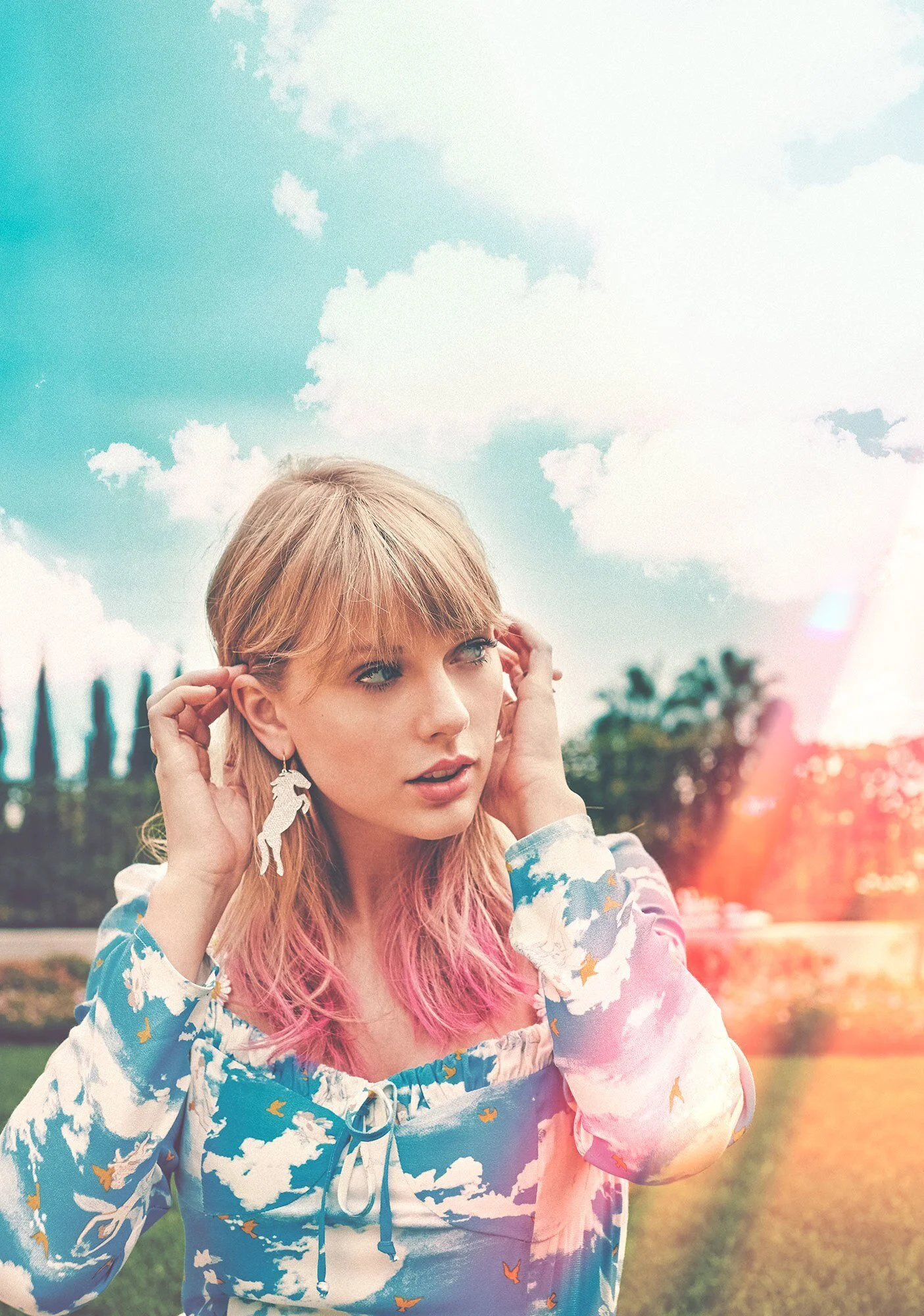
“ME!” by Taylor Swift (feat. Brendon Urie)

Taylor Swift is an incredible songwriter. She’s got an unparalleled knack for writing extremely specific yet intensely relatable lines that hit home with fans and casual listeners alike. She’s broken more records than I can name from memory, and every album she releases has multiple chart toppers. She’s become a household name, and managed to remain relevant for thirteen years without a lull in her popularity. She is perhaps the ONLY artist to successfully transition from country to pop, a feat which she managed to pull off fearlessly and with class, as opposed to the scores of country artists who have recently attempted the same transition but ended up creating a gross country-pop hybrid which, unfortunately, is becoming the new norm for country music.

I want to briefly comment of her latest release (a more thorough analysis of her new music will be coming in the next few months). Taylor’s latest single is called “ME!,” and it serves as the lead single for her upcoming 7th album (for which she still hasn’t confirmed a title, though I tend to believe it will be called Kaleidoscope). Coming on the heels of the darker, more serious reputation era that preceded it, ”ME!” is a firm step in a much lighter and more jovial direction. While a little repetitive and not lyrically groundbreaking, the track is fun and upbeat, which is a welcome shift after having spent a while with the more serious songs of reputation.

When I originally found out that the song featured Brendon Urie, I was less than excited. Taylor’s songs that feature other artists generally aren’t her best, in my opinion. I was surprised to find that I ended up liking Brendon’s role in the song a lot, despite the fact that I am not a fan of Panic! At The Disco. My only real complaint is that his voice seemed to overpower Taylor’s a bit at some points, but it wasn’t a huge issue.

Overall, I like the song, and I think we’re in for a very solid seventh album from Ms. Swift.

The Shady Reality of Facebook's Shadow Profiles

Most people who know me have heard me complain relentlessly about Facebook at some point, and anyone who doesn’t know me will recognize quickly upon meeting me that I believe Facebook is one of the most dangerous, corrupt, malicious companies in the world. This is a personal account that will help to illustrate why.

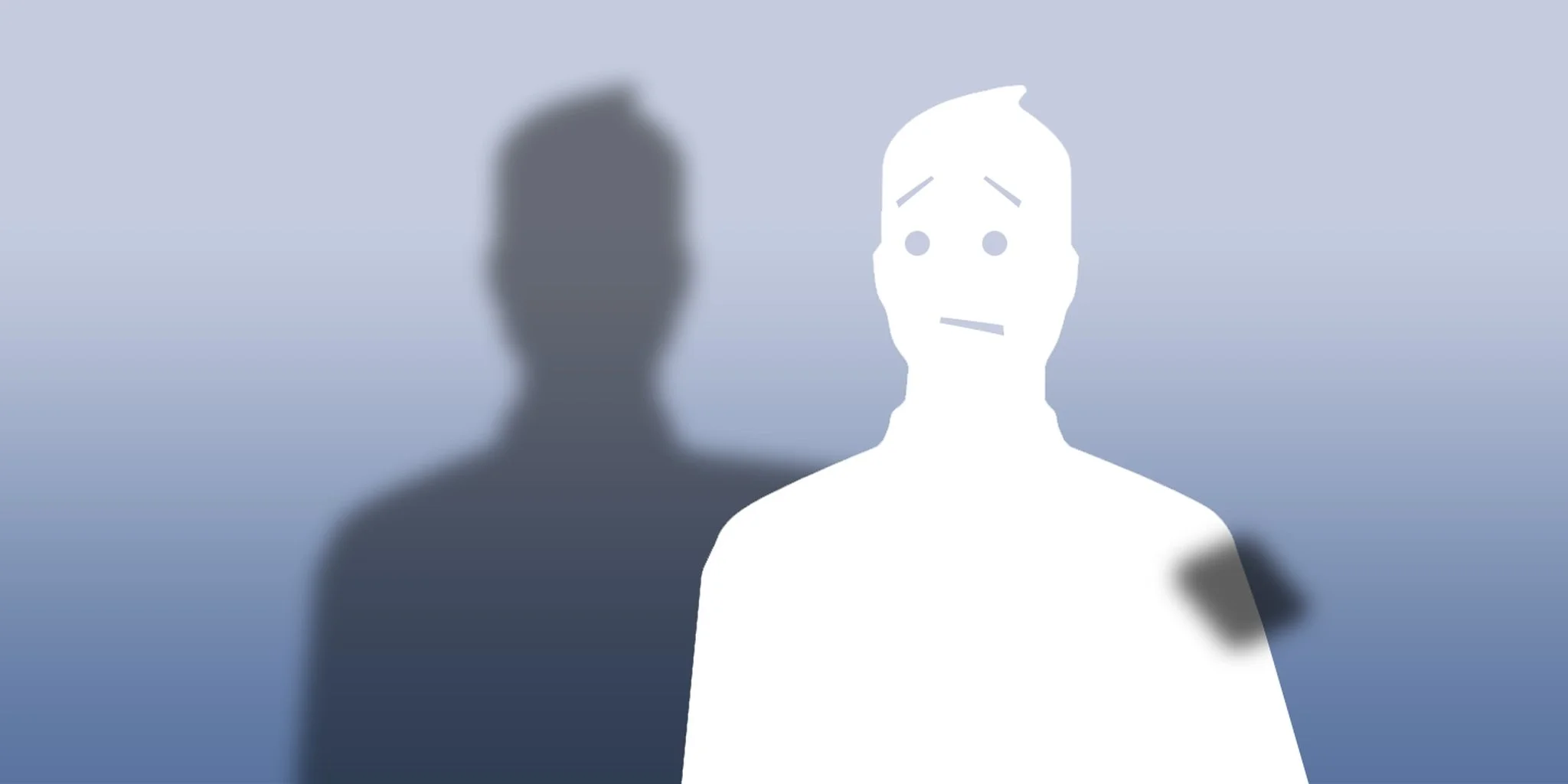
I deleted my Facebook account in 2017 after reading a series of articles that pulled back the curtain on their dishonest, predatory practices in regards to mishandling user data and disregarding privacy, often in undeniably intentional ways. One of these many ways included the use of “shadow profiles”,  which are unseen profiles with a wealth of information created internally by Facebook. They are created not only for people who use their services, but also for people who have never used Facebook before. These shadow profiles help Facebook improve their network of users to recommend more relevant friend requests, ads, timeline posts, etc. The problem with this was that nobody had any idea Facebook had made these shadow profiles, as they intentionally kept it a secret. Additionally, they provide no opt-out option or any way to truly remove your data from these shadow profiles; they are entirely beyond consumer access, and were created and maintained regardless of consumer consent.

This all sounds a bit Orwellian, but before you recommend I get fitted for a tinfoil hat, consider this very personal, very true account that proves the existence of Facebook’s shadow profiles.

After I deleted my Facebook account in 2017, they promised to delete my account and the associated data within 90 days. Seeing as I had no way to verify that this would happen, I tried to forget about it, and eventually made peace with the fact that even if they didn’t delete my information, I had done all I could do. Fast forward two years to the present, and I am only more distressed about how Facebook is operating. From the Cambridge Analytica scandal, to the multitude of uncovered lies and privacy debacles, I truly think they’re a criminal enterprise ran by a few greedy people who are so obsessed with their own corporate and personal wellbeing, that they are willing to destroy free speech and democracy in order to preserve themselves. I’ve increasingly felt like I should be doing more to start conversations about how corrupt they are, and I have tried diligently to get others to delete their accounts, too. In fact, CopyrightBro exists largely because I wanted a place to share my ideas, but couldn’t stomach the idea of contributing to the overall success of their operation by publishing (what I consider to be) meaningful ideas in a place where they would get mixed in with useless gender reveal videos and cat memes as a way to placate, entertain, and enslave the millions of ignorant people on whom Facebook relies for advertisement revenue.

Nevertheless, I decided it would be worth it to create a Facebook page for CopyrightBro so that people could see my (specifically anti-Facebook) posts, and I just wouldn’t create a page for Broc Gantt. It turns out, Facebook won’t let you make a business page without first creating a personal profile, so I begrudgingly entered my name and phone number, but refused ALL of the optional information (profile photo, email, etc). Despite this, the third screen Facebook showed me during the account creation process was a screen where they explained how to add friends, followed by a scrolling list of people I know from every area of my life. Family members, high school friends, old work friends, people from college, previous church members, and folks from the local community. They conveniently offered to fill in my high school and college information, as well as offered up my hometown as a suggested location to add to my profile. I knew almost every single person they recommended, and all of the other information about my schools and hometown was spot on. Ultimately, I have decided not to create an account for myself or CopyrightBro.

The bottom line is this: there is no way Facebook could recommend all of that information solely based on the name and phone number of a new user (remember, my account had been permanently deleted two years prior, and they promised to delete all the associated data). The evidence for their utilization of shadow profiles is incontrovertible, and it is a practice that absolutely must come to an end. It is mass-market stalking.

If you’d like to learn more about shadow profiles, I’d recommend checking out this article from The Verge. Of course, I’d also recommend deleting your Facebook profile, but if you can’t yet bring yourself to delete it, share this post, and maybe you can help someone else make the decision. If you’d like help making your decision, spend some more time on CopyrightBro, and I’ll do my best to convince you. Start with my comments on this article about all of Facebook’s lies and coverups.

#deletefacebook

My Thoughts on Harry Potter and the Cursed Child, revisited

I wrote this back on August 2nd, 2016, just two days after the script book was released. I remember how excited I was to read it, and I did so in the middle of the night after having picked up my copy at midnight from Barnes and Noble. 

⚠️ Spoiler Warning

The first act was great. The second, third, and fourth acts were an absolute plot disaster. It ignored previously-established rules within the story (Voldemort didn't love anyone, and he certainly didn't love anyone enough to have a child with them), and I wish it had never been published. I can only hope it's better as a play. The only reason I didn't stop reading halfway through the book was because Albus and Scorpius are fantastic characters, and there was a ton(≥ 12 specific examples) of evidence to support the notion that they would eventually come out of the closet and be a couple, but alas, it didn't happen. I am by no means a fan of forcing straight characters to be gay for the sake of diversity, but I consider forcing gay characters to be straight for the sake of heteronormativity just as bad. 

Unfortunately, my opinions are exactly the same three years later. Cursed Child is a plot nightmare, and an obvious money grab. 

The notion that Voldemort had sex with anyone is absurd. He could not love as a result of his conception under the influence of a love potion. He would’ve had no need for an heir, as he had gone to great measures to ensure that he would never die in the first place. Finally, while I don’t have the details on the potion from GOF that recreated a body for Voldemort in the Little Hangleton graveyard, I highly doubt that his new body would come with a functioning penis, and even if it DID, it’s still not something anyone wanted to have to think about. But alas, I guess the Dark Lord did “rise again.”

Moving forward (or rather, backwards), the overwhelming use of time travel as a cheap plot device was horrifying. Time-Turners were destroyed by J.K. Rowling in book five for a reason. They open up way too many plot problems that JKR had the foresight to get in front of before it came back to bite her, only to later undo that decision in a shoddy turn of events that served one purpose: creating this bullshit story to milk the fans for even more money. 

I could go on for a while, but I’l make this my last point. Everyone acknowledges the obvious chemistry between Albus and Scorpius, except for the writers, who apparently thought the last scene of the play was a good opportunity to unveil their supposed heterosexuality. There are SO MANY EXAMPLES of these boys literally crying over each other, hugging, and talking about how miserable they are without each other, and none of this comes across as being in any way platonic. We all know what they’re getting into in the Slytherin dormitory after the lights go out, and it ain’t Gobstones.

All in all, I wish this play did not exist. It is clear that it only serves as a way to make more money off of the Harry Potter franchise. I am immensely pleased that the Harry Potter fandom has generally decided to reject this play and consider it non-canon. It was a thinly veiled venture from the beginning, and three years later, the promise that everyone would be able to see it is not even close to having come to fruition. It would cost most fans hundreds, if not thousands, of dollars to arrange for travel accommodations to one of the very few cities where this play is being shown, and then they still have to buy tickets, which cost far more than any Harry Potter book ever did (there’s still no word of it being available as a film, which is about the only way it will every be available to all the people who care about Harry Potter’s story). I really wanted to like it, but there are just too many issues I can’t ignore.

PSA: Always Do Your iOS Updates

I have been asked by more people than I can count about whether or not they should install iOS updates. Because there is a lot of misinformation about the true pros and cons of keeping your devices on the latest software, I decided I would weigh in on the topic publicly. 

A lot of people think that iOS updates don’t matter, so they don’t bother taking the time to install them because they think it takes too long, but this isn’t really the case anymore. The most recent update (iOS 12.3) took my iPhone XS Max only 9 minutes to download and install, from start to finish. And if you can’t find nine minutes, your phone can update itself for you while you’re sleeping. 

Furthermore, the updates DO matter, and they matter a lot. A lot of bug fixes are rolled out with each update, so the reason your phone is acting up could be a direct result of the fact that it HASN’T been updated yet. Additionally, iOS updates frequently include security patches which are absolutely essential, so from a privacy and security point of view, it’s a terrible to avoid software updates. Frequent software updates are a large part of what makes the iOS platform so superior to Android when it comes to privacy and security.

Lastly, we have to address the common concern that Apple pushes out updates on a regular basis to further their own interests. I am no longer employed by Apple, so I have no reason to be dishonest when I tell you that Apple is not trying to use software updates to drive iPhone sales. They do not intentionally make your phone slower. They do not intentionally make your phone buggy. They do not intentionally try to decrease your battery life. All of these concerns are usually only reported by people using devices which are several years old, and at that point the processors are comparably inefficient and are therefore struggling to keep up with the new, more advanced software. If your iPhone is less than 4 years old, this should not be a concern for you.

The bottom line: when your iOS devices tell you that they need to be updated, it is in your best interest to update them.

Why Zuckerberg’s 14-Year Apology Tour Hasn’t Fixed Facebook

An absolutely scathing but completely honest summary of Facebook’s history. If you value privacy, democracy, or freedom of the press, read this article from Wired. Then delete your Facebook account.  

Still not convinced? Try this fun tip: request a copy of facebook’s data profile for your account. It includes heaps of information including all your private messages, advertising demographic data, IP addresses, your GPS coordinates from every time you’ve logged in, and more. Additionally, you’ll see a list of advertisers to whom they’ve sold all of this information without your consent. Facebook is a criminal enterprise. Delete your account. 

#deletefacebook

Buttigieg is Picking Up Steam, and Shapiro Knows It

I read this article thinking the whole time about how close-minded and problematic it is (not a footnote or linked source in sight), without looking to see who wrote in until the end. 

But Buttigieg is no longer operating in good faith. Now he’s attacking Christians who disagree with his policies and support Trump

You gotta love some good ol’ pandering and fear mongering with no evidence—one of Mr. Shapiro’s many specialties in the realm of toxic journalism, it seems.  

Revolutionary War Hero Might Have Been A Woman or Intersex

Pulaski proved his — or her, or their — mettle in 1777 by preventing advancing British troops from capturing Washington at the Battle of Brandywine.

Seems pretty problematic to posthumously redefine someone’s gender and assign them new pronouns. Regardless of what any skeletal analysis may indicate and the fact that he had male genitals, it’s clear this individual understood themself to be a man—isn’t that what we’re saying matters at this point, how you feel?

Just because the way we understand gender is more “woke” now doesn’t mean that the identities we recognize have always existed. People who lived hundreds of years ago can’t be categorized by today’s standards, because its not an accurate representation of how they would have understood themselves.

Apple News+

Everyone should look into (and subscribe to) Apple’s new subscription service for news. It’s called Apple News+, and it’s only $9.99/month. That price offers complete access for everyone in your family to the Wall Street Journal, the LA Times, and over 300 magazines (including People, National Geographic, Time, Forbes, ESPN, Vogue, Vanity Fair, Field & Stream, and tons of other well known publications that people care about). You can start with a one month free trial. 

A lot of people see this as just another way for Apple to milk customers for money, and they announced a lot of services at their March 2019 event that seem that way, but I really think this is the most important thing they announced. There is no similar service to this on the market today. It comes at a really crucial time when people are using the Internet to try and keep themselves informed about the world, but don’t realize that what they’re being sold as news, is really only repackaged hype intended to drive further engagement with the platform serving it up (see: Facebook) for the purpose of boosting ad revenue through ever increasing volumes of clicks, likes, comments, and shares.

Companies like this don’t care that the articles people are sharing on their platforms are often devoid of actual facts and usually have no legitimate sources for the “information” they present. Because of social media’s tendency to prioritize monetization over the truth and journalistic integrity, people in the US and in the world are being driven further and further to each end of the political spectrum, and people are becoming significantly less tolerant of people who have beliefs only slightly different than their own. And in more extreme cases, we’re seeing foreign and domestic terror groups pop up that exist to incite violence and spread hatred, and in many cases they attribute the sources that lead to their indoctrination to misinformation campaigns and sensational headlines that were fed to them by Facebook, YouTube, and other companies. I mean, literal NAZIS are making a comeback, for god’s sake. 

In addition to their commitment to journalistic integrity, Apple has made their news platform secure, so that you know from a privacy standpoint you’re getting the best of the best, and that the headlines you read won’t follow you across the Internet for advertisers to use to target you based on your interests or beliefs.

*Please note that I am not still employed by Apple and there is no direct benefit for me to promote this, I just think it’s really important. Also, delete your Facebook accounts.

#deletefacebook