Posts in Technology
Google's Filter Bubbles

This research done by DuckDuckGo’s SpreadPrivacy.com does a great job of illustrating why you can’t trust Google Search. It’s rather dense, but polls suggest that online privacy is becoming a mainstream issue, so it’s well worth the time it will take you to read it.

Basically, they had a bunch of participants search for the exact same search terms on Google, and then they analyzed the results. In each case, participants were given different results in different orders based on the personal information Google had collected about them and used to predict which search results might interest them the most, effectively putting each user in their own filtered bubble, regardless of whether they had been using private browsing mode. They do this because the more links a user clicks, the more money they make from advertising. And because they’re shady.

Why is that a bad thing, you ask? Well, if Google knows enough about you to predict which links you’re most likely to click on when you search for a given term, they know enough about you to do some serious damage. Imagine the case of a Google user with strong political beliefs; in a very short amount of time, Google could learn enough about that user to show them results that are most likely to appeal to their beliefs, and they will do so, even if it means promoting results that aren’t factually correct, hiding results that may challenge their beliefs, or taking that user down a habit hole that pushes their opinions further to the edge of the political spectrum. Personalized search results yield huge confirmation bias issues and result in case by case censorship.

I can’t stress enough that everyone should stop using Google as their default search engine; DuckDuckGo is a great alternative that yields accurate search results, and is available to be set as your default search engine on Apple devices.

Botched Android Biometric Authentication Systems

Last week’s headlines were an exercise in illustrating just how far ahead of the competition Apple is in some areas, as the BBC revealed that incredible security issues exist for Google’s and Samsung’s latest flagship devices.

Google’s new Pixel 4 has a facial recognition system which they’ve made a point of touting is the only one, besides Apple’s Face ID, that is secure enough to be used for sensitive authentications, such as authorizing payments. Unfortunately, their facial recognition system doesn’t really meet that standard, because it works even with your eyes closed, as opposed to Apple’s Face ID, which not only requires your eyes to be open, but also for your eyeballs to be aimed at your device. Google admits that, in theory and in practice, this would allow a third party to unlock your device by holding it up to your face while you’re sleeping or otherwise unconscious.

Samsung, on the other hand, was trying to look cool by making an in-display, ultrasonic fingerprint scanner, which does sound pretty cool, except that it doesn’t work. Not that it won’t recognize your finger, it’s just that it WILL accept anyone’s finger if the device has a cheap plastic screen protector on it; such screen protectors are, unfortunately, ridiculously common.

Can you imagine if Apple shipped a device with a security feature that could be fooled by any finger in the world and a cheap piece of plastic? In Samsung’s and Google’s defense, both companies have announced that they intend to release software patches to address these issues in the coming weeks, but it’s astonishing that they shipped them in the first place. It’s a good thing Android has a reputation for having such a high percentage* of users on their most recent software versions.

*sarcasm.

The Facebook Origin Story

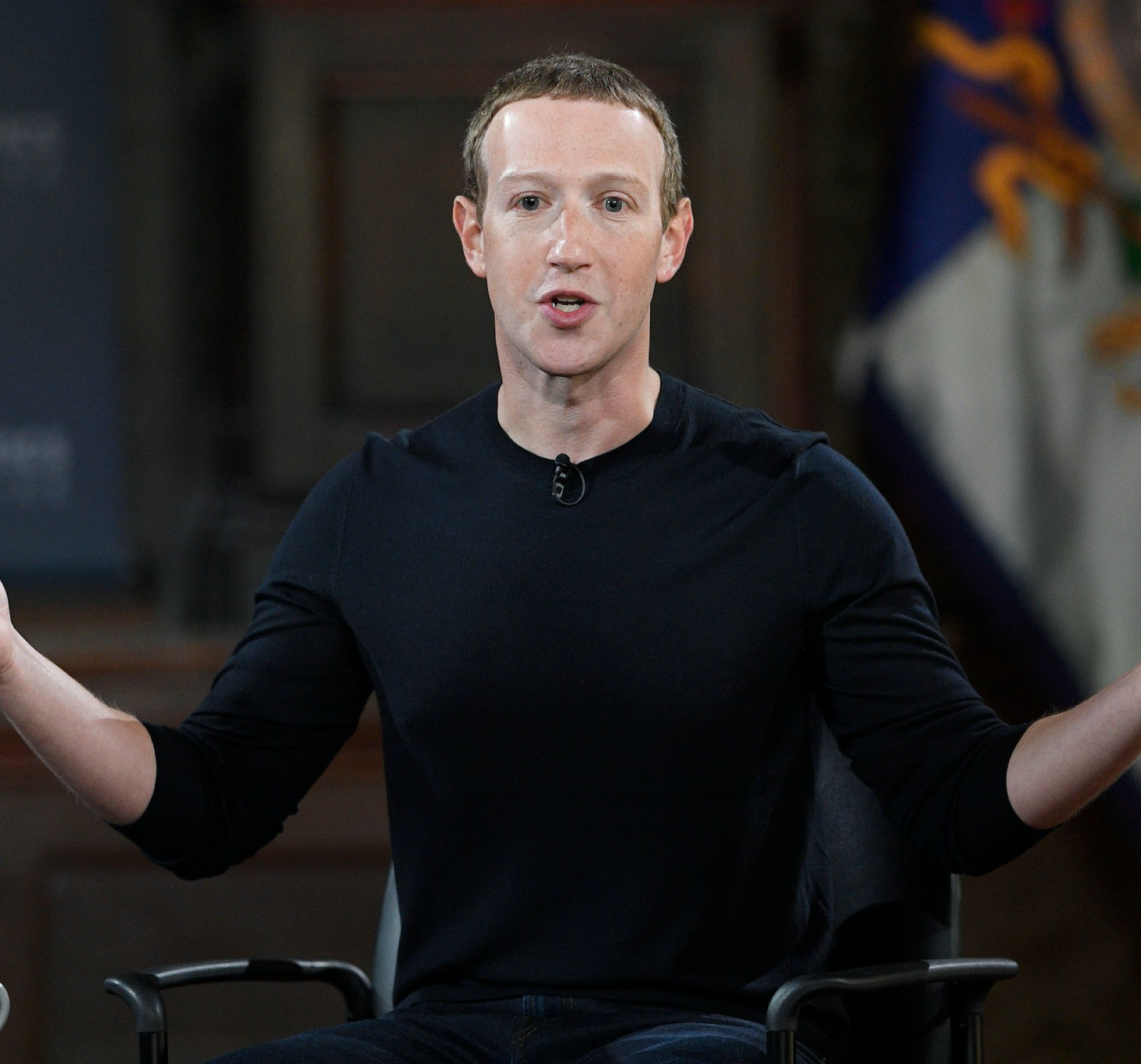
I’m not the only one linking to this article right now, but in the wake of Mark Zuckerberg’s recent attempts to rewrite the Facebook origin story, it seems a good time to remind ourselves exactly how the company came to be.

Katharine Kaplan, writing for The Harvard Crimson in 2003:

Mark E. Zuckerberg ’06 said he was accused of breaching security, violating copyrights and violating individual privacy by creating the website, www.facemash.com, about two weeks ago. The charges were based on a complaint from the computer services department over his unauthorized use of on-line facebook* photographs, he said.

“I understood that some parts were still a little sketchy.“ “Issues about violating people’s privacy don’t seem to be surmountable,” he wrote at that point.

Students were ranked within the general Harvard community and individual Houses according to attractiveness. Zuckerberg hacked into House websites to gather the photos, and then wrote the codes to compute rankings after every vote. The programming and algorithms that made the site function were Zuckerberg’s primary interest in creating it, he said.

He’s clearly still interested in algorithms. Facebook is clearly still sketchy. He clearly doesn’t understand the concept of privacy. Is it a coincidence that Zuckerberg was born in 1984? Probably not.

#deletefacebook

*the word “facebook” in this quote is not referring to the social network; it didn’t exist at this time. A face book was an online source of ID photos and names for a group of people, a directory of sorts.

UPDATED: 11/28/19, 13:45

Facebook Changes Their Advertising Rules To Allow Ads with Lies

In case you missed it, Facebook has updated their advertising policy to make it easier for people, companies, and campaigns to publish ads that contain false or misleading statements, a move which ought to be condemned equally from conservatives and liberals.

The old rule was that you couldn’t publish ads that contained such statements, but the protections were rolled back last week to allow any statement that hasn’t been proven to be false by an independent fact checking organization, and even that flimsy rule doesn’t apply to politicians, so they can, in theory and in practice, publish ads on Facebook that contain completely false information with no repercussions. Even before this rule change, misinformation campaigns on Facebook led to the extreme political division our country is experiencing, and significantly influenced several high profile elections around the world. I recognize that that’s a lofty claim — if you don’t believe me, check out this piece I wrote about a film called “The Great Hack,” and then watch it for yourself on Netflix.

#deletefacebook

UPDATED: 11/28/19, 13:30

Mark Zuckerberg Doesn't Want To Censor Politicians, He Wants To Censor Users

This has been quite a week for everyone’s favorite lifeless-eyed big tech CEO. First he got into it with Elizabeth Warren over whether or not politicians should be able to publish ads that contain lies, and now this. I’m glad to see that Washington is starting to recognize what an enormous enemy of democracy Facebook truly is.

In an interview with Fox News’ Dana Perino, he was asked a question about the disagreement between Elizabeth Warren and Kamala Harris during the fourth Democratic debate over whether Donald Trump’s Twitter account should be suspended. Zuckerberg responded by saying “my belief is that in a democracy, I don’t think that we want private companies censoring politicians in the news.” Of course he doesn’t want to censor what politicians say in their ads. The more ads they sell, the more money they make. The more sensational those ads are, the more engagement they deliver, and thus, the more money Facebook makes.

No, Mark Zuckerberg doesn’t want to censor politicians, in fact, he wants them to publish the most ridiculous ads possible. Then he’ll just censor all the people talking about those politicians to effectively gerrymander opinions, enabling companies like Cambridge Analytica to publish their own sensational ads (which are personally targeted to undecided voters, whose information they’ve collected and analyzed without consent), effectively allowing them to sell out major elections to the highest bidder.

He’s trying to pass this off as a free speech issue, to seem like he’s making the tough decision now that will seem like the right one in the long run. He cites his confidence in people as a reason that the truth will prevail despite this inconvenient but necessary decision to allow the erosion of truth in our society. Fortunately, I’m not the only one seeing through Zuckerberg’s bullshit here; CNBC’s Steve Kovach had a similar take:

While there’s almost no human involvement in deciding what to pump into your Facebook feed, there is an algorithm that’s making those decisions. In general, that algorithm is designed to keep users sucked in, and the best way to do that is showing them stuff that will engage, enrage or feed their biases. Truth doesn’t matter to an algorithm. But when you’re delivering news and information at a massive scale, you also carry the responsibility to get it right. Facebook is doing that on a scale never seen before in human history. And its leader admitted on Thursday that it wants no part in playing the role of fact-checker. In fact, in the case of false political advertisements, it’s willing to get paid to spread those falsehoods.

History won’t look fondly upon that.

#deletefacebook

See also: this.

iPhone 11 Pro Camera Review
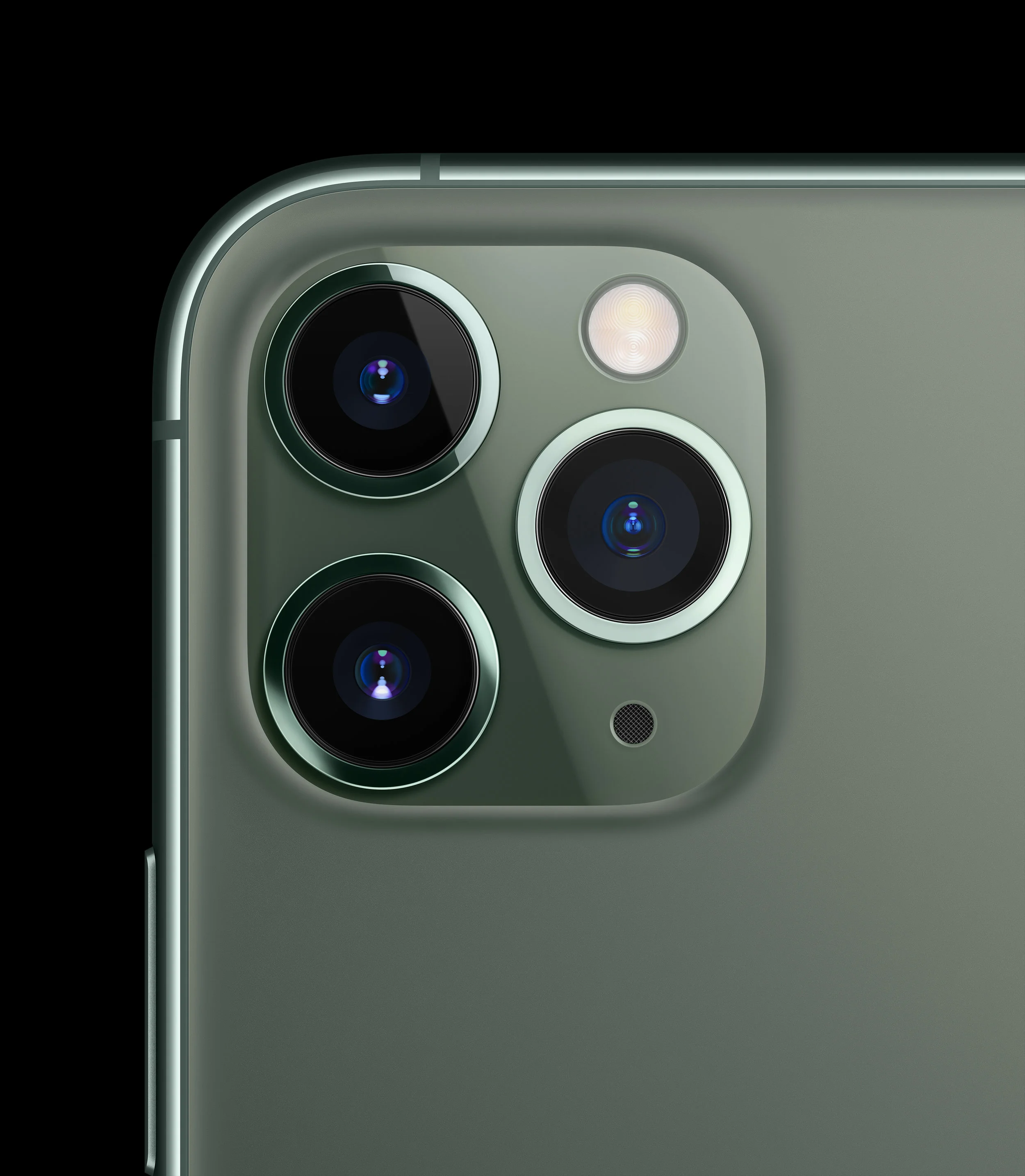
Apple_iPhone-11-Pro_Most-Powerful-Advanced_091019.jpeg

The most touted feature of the new iPhones, especially in recent years, is the camera. Each year, Apple delivers solid hardware advancements and software tweaks that usually add up to more than the sum of their parts. This year, the hardware is terrific, but the software works against it. The redesigned camera app absolutely sucks and I hate it. Here’s why:

  • The new drawer for the settings is redundant, but at least they finally got rid of that god awful square photo mode and just gave us an aspect ratio setting.

  • The zoom/lens switching interface is very inconsistent between camera modes, and it takes several seconds longer than before to go from a zoom distance somewhere between two lenses (like 1.8x zoom) back to any of the non-digitally zoomed options (0.5x, 1x, and 2x).

  • The app now also has an extremely annoying disregard for your manually adjusted settings. For instance, I wanted to use the flash for a photo but the iPhone thought night mode would be better (I tried it, and in this instance, it wasn’t). Moving my hand ever so slightly from the shutter button to toggle the flash setting at the top and back to the shutter button was enough movement to cause the iPhone to reanalyze the scene, and turn night mode back on. I had to do this four times while attempting to capture a single photo before I was able to hold the phone still enough that it didn’t override my choice to use the flash.

  • Deep Fusion was hyped up a whole lot on stage to be so astonishingly unremarkable in practice. My photos with deep fusion aren’t at all noticeably different than the ones without it.

A few positive notes:

  • Portrait mode still isn’t perfect, but it works a lot faster and more precisely than before.

  • The cool new feature that is supposed to use the wider lenses to capture what’s outside the frame so that you can rotate and adjust without cropping works very rarely and seemingly without any rhyme or reason, but when it does work, the photos are indistinguishable from the rest. Hopefully we’ll get to the point where the cameras are so tightly integrated that all three are used to capture each image, theoretically giving you remarkable detail regardless of how far away your subject happens to be.

  • Night mode impressed me.

And now for some real world examples: I wanted to put some of these features to the test, so my sister and I went kayaking to try and get some cool shots. They were good, but they weren’t overwhelmingly impressive. We left all of the settings on auto, only manually adjusting the zoom and focus.

The Auto Live feature was a disappointment, for some reason deciding not to capture a Live Photo despite obvious and intentional movement happening in the frame. The selfie camera was also very quick to refocus itself even after I’d just attempted to manually set the focus—the result was a bunch of photos like this one, where my face was fairly well exposed, but the sky was so overexposed that it appears almost completely white. The ultra wide angle camera was useful for shots like this, but generally it’s not very helpful and I think most people would benefit more from the telephoto lens—that would have been the better choice for the iPhone 11. Additionally, there seems to be so much software magic happening with each photo that you sometimes end up getting photos that are blurrier than they would’ve been before, which makes the whole thing feel a bit disingenuous. Look closely at the detail of the tree leaves and the surface of the water in this photo: it’s not exactly great.

The iPhone 11 Pro camera system can be summed up with one word: tradeoffs.

Emoji Gender Mania
public.jpeg

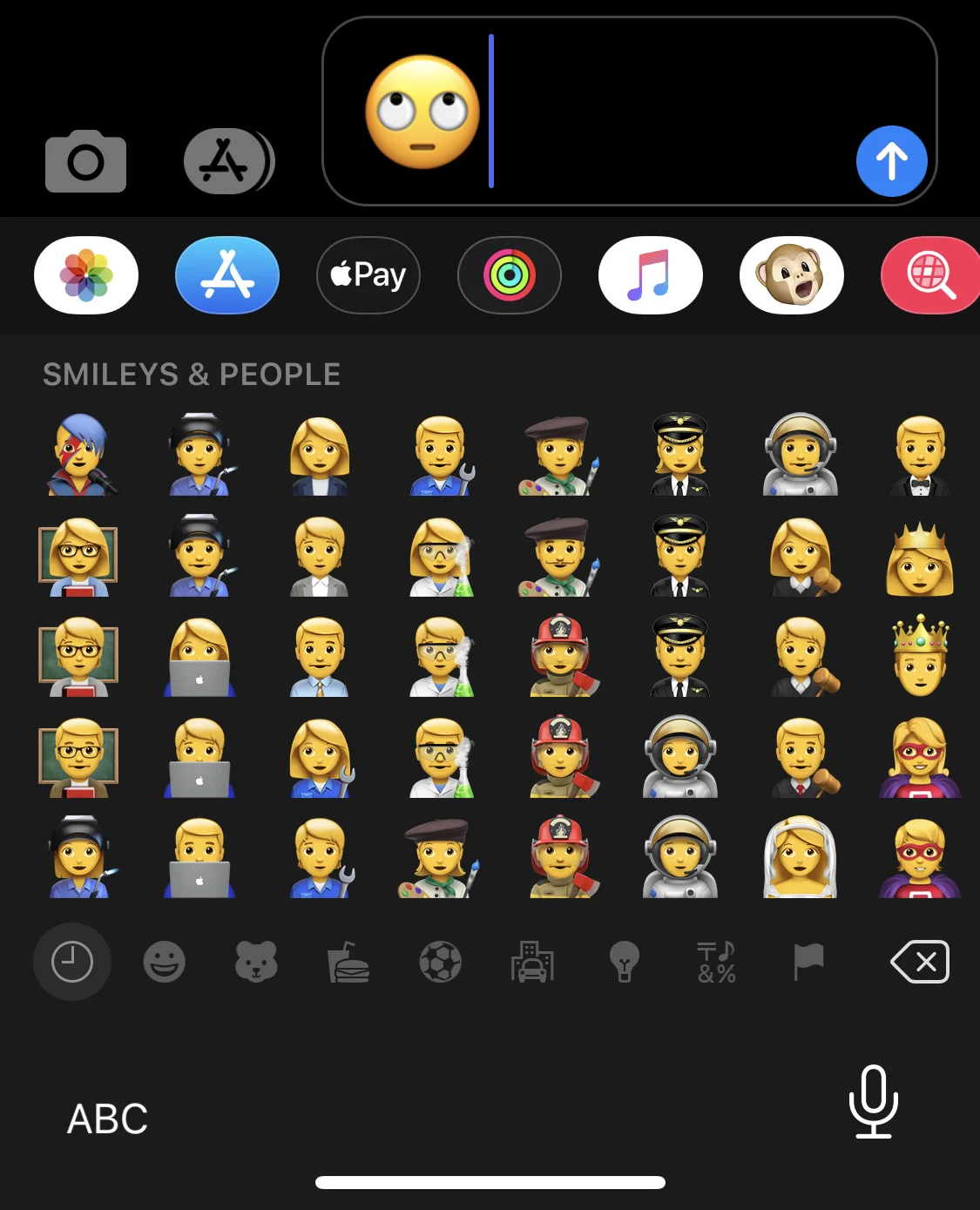
The second public beta for iOS 13.2 was recently released, and it’s a terrific update, including clearer privacy permissions for Siri, new Haptic Touch options, and a ton of new emoji.

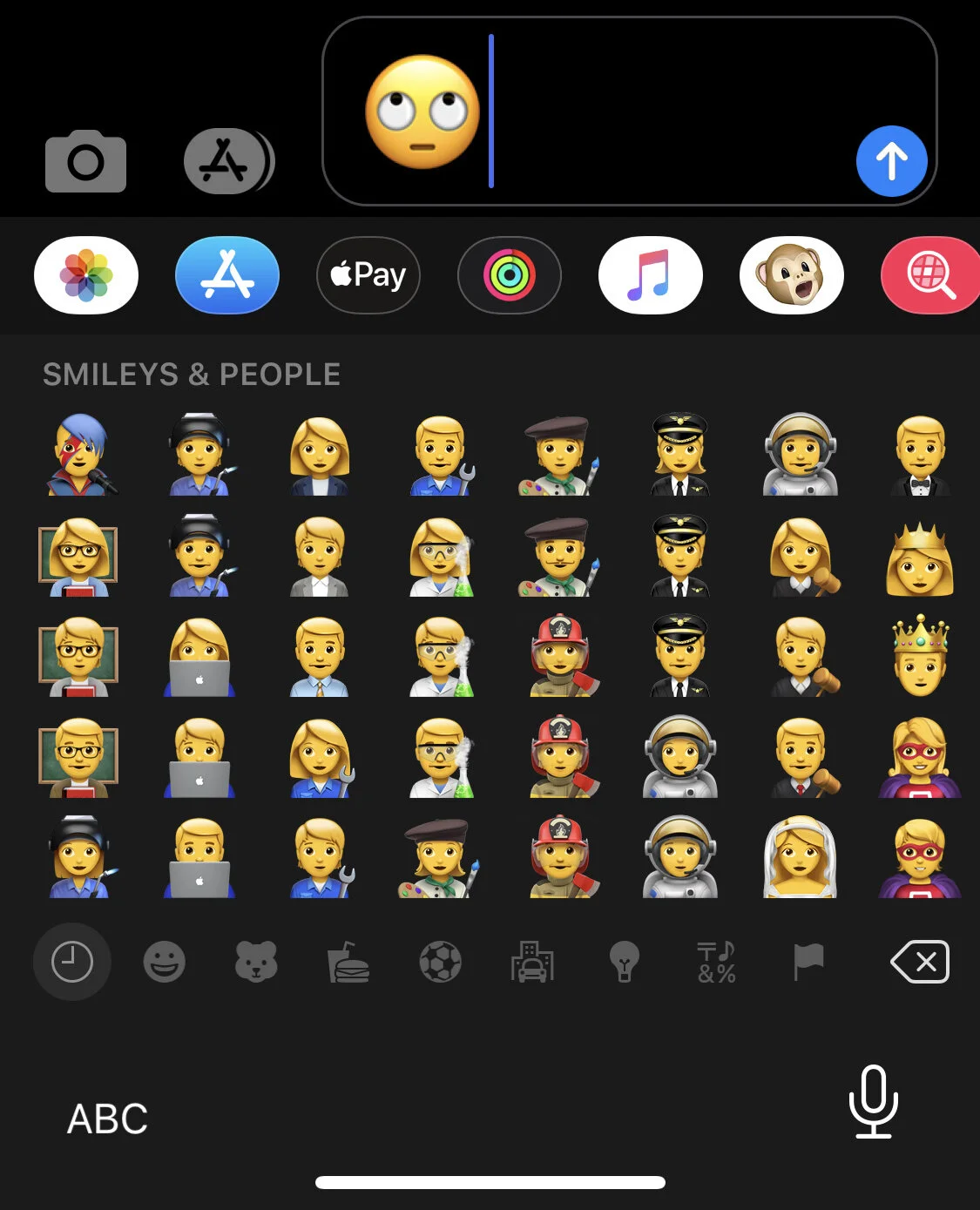
While some of the new emoji are great, a lot of them are a bit absurd. For every character emoji, Apple has added a third gender option.

While I don’t have a problem with representation — I particularly like the ones that are more representative of folks with various abilities, like the prosthetic limbs, hearing aids, wheelchairs, etc. — I do have a problem with creating specific emojis for a microscopic portion of the population which almost only serve to overcrowd the emoji picker.

If Apple insists on implementing multiple gender options for an emoji, it should work in a similar manner to the skin tone picker, and it should remember your last choice. Overcrowding was already an issue with only two gender options, and now the emoji keyboard is just a mess. As a man, I had roughly two times more emojis than I needed under the ‘people’ category, and having all those extras made it much harder to quickly pick out the ones I was looking for. Now the problem is getting two times worse, because not only do I have to train my eye to overlook all the female emojis, but now I have to ignore all the androgynous ones as well (which usually just have the female face with a weird haircut and neutral colored clothes).

I could go down a rabbit hole here with my thoughts on the whole ‘3+ genders’ thing, but suffice it to say that I think a lot of people need to try a bit harder to overlook gender stereotypes and present themselves how they want without denouncing their genitals. In a lot of cases, I believe the tendency to do this stems from cultural and individual laziness in regards to challenging the established gender stereotypes, and I actually think it’s regressive for one to just adopt a third gender rather than attempting to broaden the parameters for the two genders that exist in direct correlation with biological factors.

Whatever — not my circus, not my monkeys. My goal is in solving the real issue here; the overcrowded emoji picker. I need the people at Apple to realize that adding more emojis every time someone comes up with a new gender (or otherwise marginalized group) is unsustainable. After all, Memoji already does the job.

Twitter ‘Unintentionally’ Used Personal Data Provided For Account Security For Advertising Purposes

This is now the third time Twitter has had an allegedly accidental privacy snafu in the past few months. As I said last time this happened, I’m getting closer and closer to clicking the ‘delete’ button on Twitter, too.

Jack Dorsey: I now speak directly to you. I want you to know that you are not special. I’ve already deleted my Facebook and Instagram accounts, and your service is not only tangibly less successful than your competitors’, but also less useful to me, personally. If these ‘accidents’ don’t cease, I will have no problem getting rid of my Twitter account and encouraging my massive readership to do the same.

Facebook Wants To Be The Only Name In Hidden Surveillance Equipment

From category #16 of the Prohibited Content section of Facebook’s Advertising Policy:

16. Surveillance Equipment 

Ads may not promote the sale of spy cams, mobile phone trackers or other hidden surveillance equipment.

How noble of Facebook, right? Wrong; this is hypocritical of Facebook.

It’s honestly laughable, given how Facebook’s entire business model is centered around their products’ tendency to act as hidden surveillance equipment. They admit in their privacy policy that they actually ARE WATCHING YOU (any time you use their built-in camera, regardless of whether or not you actually take a photo or video) and TRACKING YOUR LOCATION (possibly twenty four hours a day, depending on your device settings).

They’re trying to make it seem like they’re looking out for their users, but it’s far more likely that they simply want to be the only big name in underhanded surveillance, so they prohibit other players in the industry from gaining traction by refusing to display their ads.

This seems like an appropriate time to remind ourselves that Facebook just announced a new camera they want you to install in your living room.

#deletefacebook

Thursday Night Football Is Now Being Broadcast In 4K HDR

The Verge’s Nilay Patel and Chris Welch do a deep dive into the technology that has finally made it possible to watch live football games in 4K HDR; while the nerdy details are interesting, the most exciting part for sports fans really is in the headline—the fact that that we can now watch our favorite pro teams with incredible detail and clarity (this comment won’t have aged well in five years) is huge.

It’s worth pointing out that the advancement of augmented reality in recent years has really made NFL games a lot more enjoyable. In just a few years, we went from only having those superimposed, yellow first down lines to having crazy run patterns and play breakdowns served up almost instantly, and they make complicated plays much easier to follow. It seems a bit odd that those effects came before 4K HDR, but I'm glad we’re finally getting caught up, and I’m sure this will be just as transformative. Hopefully 4K HDR broadcasting will soon expand to all NFL games and top college matchups as well (go Vols).

Breaking Olds: Google Play Store Hosts Malicious Apps

May Ying Tee and Martin Zhang, writing for Symantec:

In recent times we’ve seen multiple malicious apps found in the Google Play Store by various cyber security firms, including Symantec, yet this problem doesn’t seem to be dissipating. We have uncovered another wave of malicious apps in the Play Store which have been downloaded more than 2.1 million times.

Does this surprise anyone? No? Okay. Lets call this “Breaking Olds”—old news, presented as new news. Today’s Breaking Olds headline: The Google Play Store is full of trash. 🗑

A total of 25 Android Package Kits (APKs), mostly masquerading as a photo utility app and a fashion app, were published under 22 different developer accounts […]
These 25 malicious hidden apps share a similar code structure and app content, leading us to believe that the developers may be part of the same organizational group or, at the very least, are using the same source code base.

What these apps do is essentially pose as a legitimate app (often from the same developer) so that you’ll install them. It initially functions as expected, but some time after a user first launches the app, it downloads a remote configuration file that hides the app icon so that the user won’t realize it’s still there. Classy.

Once the app’s icon is hidden, the malware begins displaying advertisements, which are shown even when the app is closed. Full-screen advertisements are displayed at random intervals with no app title registered in the advertisement window, so users have no way of knowing which app is responsible for the behavior.

It’s seems absolutely preposterous to think that a third party app can completely commandeer a device’s screen at any point in time. Ying Tee and Zhang recommend Android users install a strong antivirus app to help protect themselves from malware like this, and also that users only download apps from trusted sources, which, apparently, does include the Google Play Store. In the article, Ying Tee and Zhang also mentioned “Google Play’s rigorous security testing,” which seems like a funny way to describe whatever approval process Play store apps go through, given the circumstances.

I find it incredibly difficult to believe that anyone who truly cares about privacy or security would ever use an Android device. Imagine having to install antivirus software on your iPhone—there would be riots at Apple stores around the world.

iPhone 11 Pro

I’m not gonna write a long, detailed review; there are tons of good, extensive reviews out there already, and besides, the camera is probably the only thing worth talking amount ad nauseam, and not necessarily for the reasons you might expect. However, I do want to hit the highlights as well as log a few thoughts that other reviewers haven’t mentioned yet, for those who are considering upgrading this year.

First of all, yes, the battery life if great. I’m noticing significantly more time (3+ hours) between charges compared to my iPhone XS Max.

Second, yes, the cameras are terrific—noticeably better than last year’s, at least in some conditions. Are they groundbreaking? No. Should most people go with the iPhone 11 instead of the iPhone 11 Pro? Yes. If you want my more thorough analysis of the cameras, here you go.

Third, the removal of 3D Touch sucks. I have always been a fan, and not having it makes some processes undeniably slower.

Fourth, the physical aspects of the device.

  • The matte back of the phone looks and feels really nice.

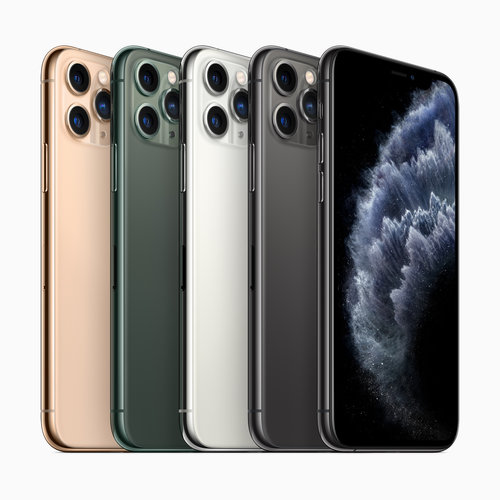
  • The midnight green looks boring in person, the silver looks white, the gold doesn’t have that weird green/pink tint like last year, and the space gray looks awesome.

  • It is noticeably thicker, and I don’t like it. I was hoping that it would get thinner, given the removal of the extra layer in the display that enabled 3D Touch (RIP), but nope.

  • It also seems to be particularly sturdy. I accidentally dropped it from a height of almost four feet, with no case, onto a tile floor. Not only was the iPhone still in perfect condition, it actually cracked the tile. I’ll give it a 10/10 for durability.

Fifth, the improvements to Face ID are hardly noticeable after coming from last years iPhone, but maybe you’ll see more of a difference if you’re upgrading from an iPhone X.

Sixth, the UWB technology is cool for what it will allow in the future, but the current improvements it brings to AirDrop are okay at best. While other iPhone 11 users do show up quickly, the feature where you point the iPhones toward each other to get them to show up at the top is too slow to be useful.

Seventh, the allegedly improved audio quality of the built in speakers seems to have been a myth.

I like the iPhone 11 Pro a lot, overall; it makes more trade offs than I’d like, but it’s still the best phone Apple has ever made. I just don’t think it deserves the name “Pro”—it needlessly adds to the amount of syllables I have to say when I talk about it, and it makes me feel like a show off-y asshole when it comes up. Besides, what truly new, pro level feature does it have that the regular iPhone 11 doesn’t have? The ultra wide angle lens? Nope. The telephoto lens? That’s been around since the iPhone 7 Plus. The chip? No, same chip. Battery life? Doesn’t make sense, given that the XR had the best battery life’s at year—this years Pro models were just playing catch-up. The stainless steel and matte glass design? Hardly.

Is this a great iPhone? Yes. Is it a Pro iPhone? No.

UPDATED: 9/30/19, 22:00

Facebook Wants To Watch You And Your Friends Watch TV

Hahahahaha this gives me anxiety.

public.jpeg

All jokes aside, this is horrifying. How anyone trusts Facebook at all is beyond me; the only explanation for trusting this company enough to PAY them to put an always-watching camera in one of the most intimate spaces in your home is blissful ignorance.

In perfect Facebook fashion, they’re trying to pass off this new “product,” Facebook Portal TV, as a unique way to connect with your friends while enjoying their video content, as if FaceTime and Skype aren’t good enough.

In any case, the Facebook Portal TV (cute name for a surveillance device, btw), despite having a name that suggests it would serve as a functional set top box like an Apple TV or Roku, doesn’t actually work with Netflix, Hulu, or really any other popular video service—just videos from Facebook Watch (whatever the hell that is). Despite the fact that it’s nearly useless, this isn’t all that surprising. After all, why wouldn’t Facebook make the most of this new “product” as a way to serve you more of their own ads? And with the built in camera (to which they have unfettered access because it’s their own hardware and they control all of the privacy permissions and device settings), they can gauge not only your reactions to the content and ads they’re showing you, but also the combined reactions of you and whichever of your friends you may be connected to via the built in video chat service.

Bottom line: if you buy this, you’re a moron.

#deletefacebook

Apple Event, September 2019

Due to a last minute scheduling conflict, this was the first Apple announcement in six yeas that I wasn’t able to watch live. However, it wasn’t a terrible one to miss—most of the upgrades this year were rather modest. Even still, I was fairly impressed by a few things they announced.

Apple Arcade:

I originally thought this service was destined to fail, but I’m a little more hopeful now. The games they demoed weren’t very exciting but with 100+ games, there are likely to be a few good ones, and $5 is cheaper than I think anyone expected, and cheap enough to get people to try it.

Apple TV+:

Apple TV+ is another service I was unsure about, but I think the way they’re choosing to roll it out will help them gain a lot of traction. $5 is way cheaper than anyone expected, and you get. a whole year free if you buy a new Apple device. Combine that with the star studded casts of their shows, and they’re definitely going to get people watching.

iPad:

This was a modest update, but its always nice to see the entry level iPad getting some love. $329 is just an incredibly accessible price point.

Apple Watch Series 5:

A few things to note here:

  • There are very few new features. The always on display is nice, but I honestly didn’t realize that it didn’t already have a compass. That’s hardly a tentpole feature, but its being dressed up as one.

  • There were rumors of sleep tracking capabilities, but those were apparently just rumors. Too bad.

  • The new Edition models are cool. I’ve been saying that a titanium case would be nice, but I was disappointed to see that it’s kinda dull and ugly. (UPDATE: 9/30/19, 20:30; after seeing one of the titanium watches in person, they’re actually pretty sleek. The photos don’t do it justice.)

  • I’m glad they’re finally letting you pair any watch case with any band.

  • There are finally some good improvements with the bands. There are now at least a few options of nice bands with black hardware, rather than all silver like in the past. The leather loops and Milanese loops now only cost $99, which is much more reasonable. Year after year, we’ve seen the bands get cheaper: first the link bracelets, then the modern buckles, and now the leather loops and Milanese loops. Hopefully next year the prices for the sport bands will drop by ten or twenty bucks — I think they’d sell a lot more of them if they were just a little bit cheaper.

All in all, the best watch to buy right now would be a series 4 on clearance, if you can find one.

iPhone 11:

People often ask me for advice on which new phone they should get, and the iPhone 11 is the perfect upgrade for almost anyone. It has all the nice features from the iPhone XR, and it’s $50 less expensive. The only people for whom this phone isn’t the ideal choice are those who are already on an annual upgrade plan (like Apple’s iPhone Upgrade Program), or those who are willing to pay a couple hundred extra bucks to stay on the absolute cutting edge of technology.

The Face ID improvements are great, and the new chip seems to be blazing fast. The improved water resistance is nice. The UWB location technology will be an absolute game changer, I just hope they’ve done their due diligence to keep it from being abused by apps like Facebook.

The new camera features are awesome. Night Mode looks spectacular.

iPhone 11 Pro:

The biggest news here was the new midnight green color. It’s rare that Apple is actually able to keep a secret like that, but it was a delightful surprise. The triple-camera setup on the back isn’t the most aesthetically pleasing design, but I appreciate their commitment to solid camera improvements, year after year. The 18w fast charger in the box is a nice touch, as is the further improved water resistance.

There’s actually some bad news here, though, and that is that they’re ditching 3D Touch, one of the tentpole features introduced with the iPhone 6s, in favor of Haptic Touch. I was a big fan of 3D Touch, and I thought it had a lot of potential, but it was poorly implemented so people didn’t generally know when or exactly how to invoke it. getting rid of it means that some features will take slightly longer to access, like adding a song to your up next due or previewing links. The only way I was going to be okay with this change was if removing a component of the display allowed the display to be noticeably thinner, thereby making the device thinner and lighter. Unfortunately, that wasn’t the case. The iPhone 11 Pro is 6% heavier and 5% thicker than the iPhone XS. If you’re looking for more than just my preliminary thoughts, check out my review of the iPhone 11 Pro.

All in all, this keynote was a mixed bag. A couple of disappointments for power users, but a solid step forward for those who are due for upgrades but don’t necessarily care about being on the cutting edge.

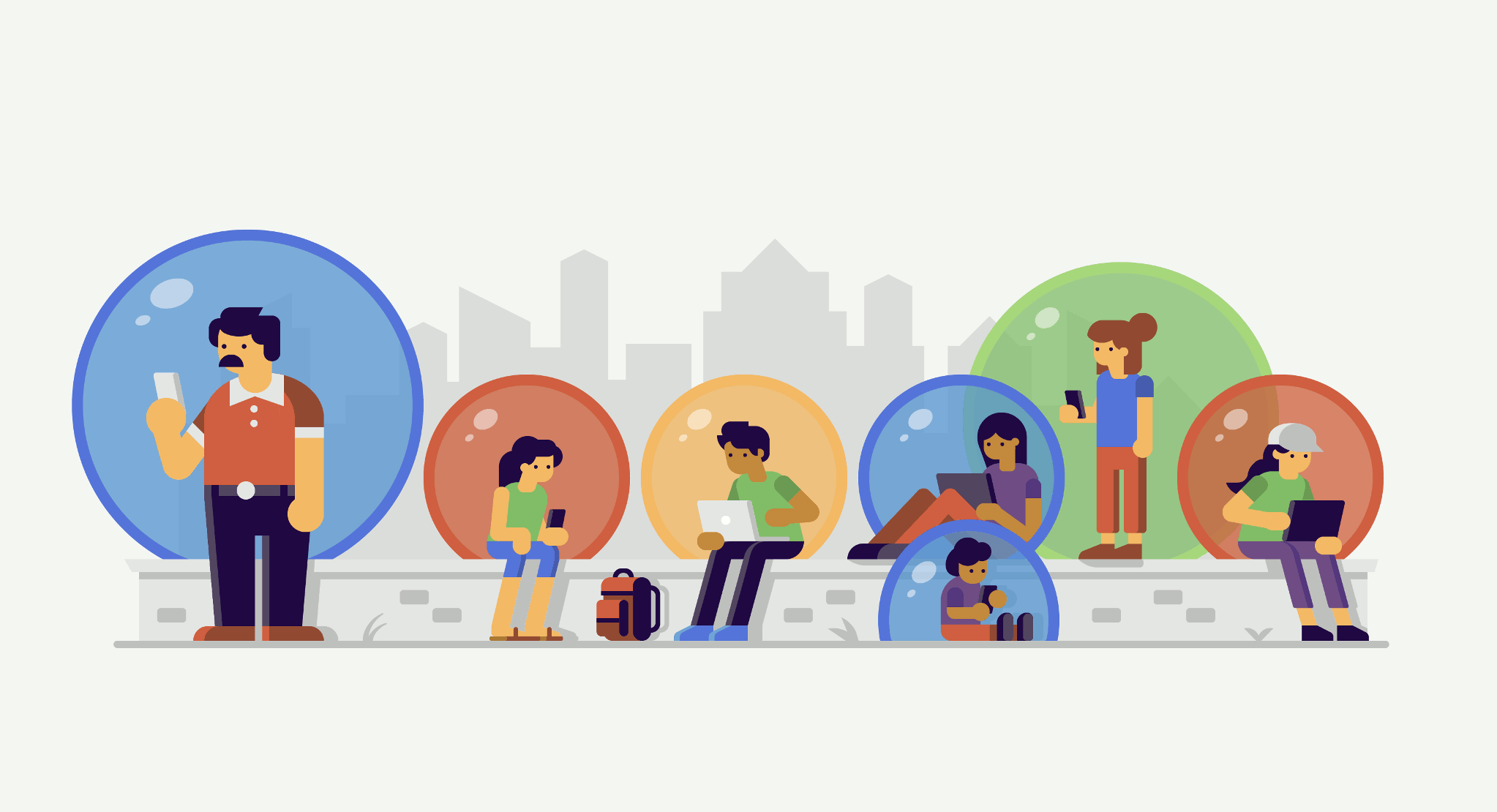
Information Gerrymandering In Social Networks

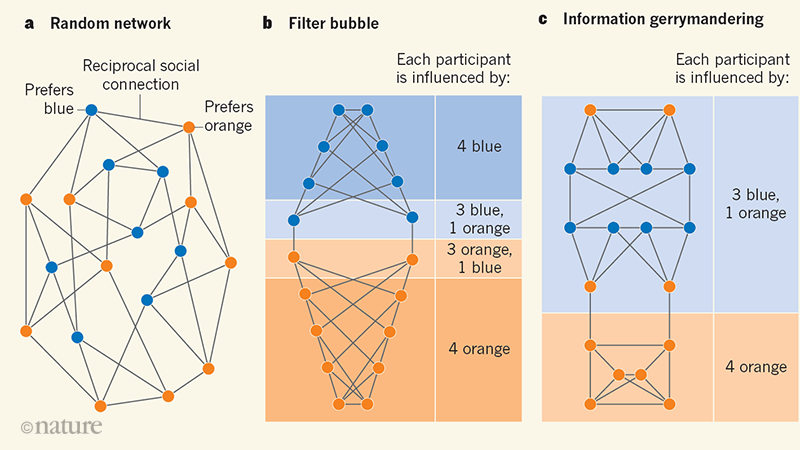
Ever feel like you’re always seeing posts from the same people on Facebook? That isn’t an accident. Your opinions are being quarantined for profit—it really is digital Gerrymandering, and it’s the reason that elections and politics are getting uglier and uglier; the electorate is becoming increasingly polarized as a result of having their beliefs affirmed by algorithms that skew their newsfeeds to lean whichever way they lean.

#deletefacebook

d41586-019-02562-z_17121850.png
Facebook’s Dating Service Is, Unfortunately, Made by Facebook

Brian Feldman, writing for New York:

It’s a seemingly useful service that also acts as a Trojan horse for the company’s existing interests.

Seeing as I am one of the single-est people I know and also one of the only people I know who doesn’t have a Facebook account, I really hope this doesn’t catch on. Facebook has no interest in helping people find love; they have an interest in collecting and monetizing user data, and this is just another iteration of those efforts.

Easily the most ironic part of this is that they’re marketing it as a safe and private option. They say that Facebook Dating won’t collect personal information to be used for advertising purposes, so that’s great (assuming they’re not lying, but that’s far from a safe assumption). However, you can’t JUST use the dating service—for the sake of “authenticity,” they’re requiring that users who want to use Facebook Dating also maintain an active Facebook profile in order to use Facebook Dating. So while the Facebook Dating service will allegedly respect your privacy, the primary Facebook service makes no such promises, and they’re mandating that you use it.

#deletefacebook

Facebook Data Leaked, Again

Zach Whittaker, writing for TechCrunch:

The exposed server contained more than 419 million records over several databases on users across geographies, including 133 million records on U.S.-based Facebook users

Is anyone surprised? These records included names, phone numbers, gender, and more.

How anyone still trusts Facebook is beyond me. Let’s not forget the shadow profiles or the flagrant abuses of the Cambridge Analytica scandal.

#deletefacebook