Posts in Societal Things
One Nation, Tracked

Fantastic reporting from Stuart A. Thompson and Charlie Warzel for The New York Times:

Every minute of every day, everywhere on the planet, dozens of companies — largely unregulated, little scrutinized — are logging the movements of tens of millions of people with mobile phones and storing the information in gigantic data files. The Times Privacy Project obtained one such file, by far the largest and most sensitive ever to be reviewed by journalists. It holds more than 50 billion location pings from the phones of more than 12 million Americans.

It’s about time that publications with big audiences start pounding this drum. Read their whole article, and begin to understand why this matters.

Location data is also collected and shared alongside a mobile advertising ID, a supposedly anonymous identifier about 30 digits long that allows advertisers and other businesses to tie activity together across apps. The ID is also used to combine location trails with other information like your name, home address, email, phone number or even an identifier tied to your Wi-Fi network.

The data can change hands in almost real time, so fast that your location could be transferred from your smartphone to the app’s servers and exported to third parties in milliseconds. […]

That data can then be resold, copied, pirated and abused. There’s no way you can ever retrieve it.

Unfortunately, there’s very little you can do to limit how your location data is shared. It’s important to wrangle in your location sharing settings (check out the “Privacy” section of CopyrightBro’s Digital Health Checkup), but even that isn’t enough to truly protect you. One of the best ways to limit companies’ ability to track you is to route all of your internet traffic through a VPN service. My family and I use ExpressVPN. These are paid services, but at $99/year for 5 devices (ExpressVPN’s best offer), it works out to 5¢ per device per day, which I think is worth the expense.

Is all of this surveillance and risk worth it merely so that we can be served slightly more relevant ads? Or so that hedge fund managers can get richer?

The answer here is obviously “no”. Targeted advertising is a user-hostile practice, and it deserves to be heavily regulated, if not outlawed entirely.

Today, it’s perfectly legal to collect and sell all this information. […] The companies profiting from our every move can’t be expected to voluntarily limit their practices. Congress has to step in to protect Americans’ needs as consumers and rights as citizens.

We are living in the world’s most advanced surveillance system. […] It was built to make money. The greatest trick technology companies ever played was persuading society to surveil itself.

Contact your lawmakers.

#deletefacebook

UPDATE: 12/31/19, 22:10;

As John Gruber points out on Daring Fireball, it is pretty hypocritical for The New York Times to publish such a piece while their own website is scraping up user data.

Starbucks' BYO Cup Program: A Tale of Disguised Corporate Waste

Let’s get this out of the way: Starbucks’ coffee usually tastes a bit burnt and is generally not as good as local coffee shops. But, Starbucks is convenient because they have a ton of locations (and drive-thrus), and they’re at least consistent in that each location uses the same ingredients (even if their baristas never put the same amount of them in your cup).

While I have favorite local coffee shops which I prefer to patronize, sometimes it’s just easier to go by Starbucks in the morning. In these cases, I will usually try to remember to bring my own Yeti cup so I can take advantage of their bring-your-own-cup program. Sure, call me a hippy dippy, tree-hugging liberal, but the biggest appeal is that my drink will stay hot for a lot longer. And, you know, if you can save a disposable cup from a landfill, why not? On top of that, Starbucks actually incentivizes customers to use the program, offering a 10¢ discount on your drink. I don’t go to Starbucks nearly enough for that to add up to anything worthwhile, but nonetheless, it’s slightly better than nothing. Combining those three very mild incentives (a tiny discount, feeling good about saving a cup, and having my drink stay hot) is enough to get me to play along.

Participating is a fairly straightforward process: I’ll place my order and let the barista know I’ve brought my own cup, and they proceed to take my cup and then a few minutes later I find it at the end of the bar with my beverage inside it. For the past several months, though, I’ve been noticing an aggravating and confusing trend.

Occasionally I’ll find myself watching as the barista prepares my drink, and lately I’ve been seeing a paper or plastic cup (depending on whether I’ve ordered something hot or cold) accompany my reusable cup as it makes its way down the line of drinks waiting to be prepared. What’s happening is the baristas are preparing my drink in the paper cup (which bears a sticker denoting what I’ve ordered), and then they simply pour the beverage from the paper cup into my reusable one before giving it back to me.

It doesn’t take a rocket scientist to recognize that this completely defeats the purpose of Starbucks offering a reusable cup discount program. From a financial perspective, Starbucks doesn’t save any money this way because they still end up using a paper or plastic cup anyway. From an eco-friendly perspective, there’s no difference here than if they’d just delivered the drink in the disposable cup anyway. While there’s a slight chance they could be recycling the plastic cups, Starbucks’ paper cups (like most paper cups) are lined on the inside to prevent liquid from breaking down the paper, and lined paper products can’t be recycled at all by most cities in the country. Those cups are definitely landfill bound.

CopyrightBro correspondents interviewed multiple Starbucks baristas and store managers in stores across the southeast, and we’ve been able to learn a bit more about this program and how it’s implemented. One Charlotte-area barista, when asked why she initially prepared the drink in the disposable cup, simply respond with “this is just how we were trained.” When our correspondent followed up with “doesn’t using a paper cup sort of defeat the purpose of having a reusable cup program?” she replied, “yeah, it’s a little off.” These sentiments were echoed by other baristas from other areas of the country, indicating that this is a pervasive issue stemming from a corporate directive, rather than a case of one or two rogue employees in charge of training. When asked what the purpose was behind this policy, one Memphis-area barista said “It kind of makes sense with the drive-thru because we don’t get their cup until they get to the window, but for customers in the cafe, it doesn’t make any sense, it is really stupid and wasteful.” When asked if they couldn’t just prepare drive-thru customers’ drinks in reusable containers before transferring them to the personal cups, he replied “yeah, there’s really no reason that wouldn’t work”.

This barista estimated that while roughly 20% of regular customers might bring their own cups, the total percentage would be far lower, likely around 1%. This figure is consistent with Starbucks’ Global Social Impact Report from 2018, which reported that in the preceding year, 1.3% of customers had received the personal cup discount. The report goes on to presume that the program therefore saved 42 million disposable cups, but this figure ignores reality, because we know that not nearly all of those 42 million transactions actually resulted in a saved cup.

Getting more into the numbers, back in 2011, Starbucks was at 1.9% adoption with their personal cup program, and they set a goal of reaching 5% adoption by 2015; clearly, they missed. By a lot. Interestingly, their 2018 report actually amends their goal and uses grandiose language like “double the use of reusable cups”, which sounds great but ignores the fact that personal cup use has actually declined by 32% since 2011. Doubling an adoption rate of 1.3% still only gets you to 2.6%, and doesn’t account for the fact that many of the transactions represented by those figures still waste plenty of cups. They’ve given themselves several years to achieve what they want you to believe is a lofty goal, aiming to achieve this measly 2.6% program adoption by 2022.

If the point of the personal cup discount is to incentivize customers to use the program for the benefit of the environment, then 10¢ is hardly enough to move anyone to action; if the point of the discount is to simply pass the savings from the one saved paper cup onto the customer, that’s nice of them, but kind of pointless if they end up using a paper cup in the process of preparing the drinks anyway. The barista from Memphis also expressed concerns that “the 10¢ discount is pointless”, and that it doesn’t really incentivize anyone to use the program — it’s hard to imagine that he could be wrong — you could find more than ten cents in a Starbucks parking lot at any given moment. If Starbucks wants people to take this program seriously, they need to stop wasting disposable cups, and they need to offer an incentive greater than a dime; a 25¢ discount as a part of a program that a less than two percent of their customers use seems manageable for a company as successful as Starbucks.

CopyrightBro reached out to the Starbucks Global Communications team for more information on why there’s such a defined trend of employees being trained to waste cups, and a Starbucks Spokesperson provided the following comment: “Starbucks baristas are encouraged to craft beverages directly in customers’ reusable cups whenever possible. Building on our long standing commitment to sustainability and an elevated customer experience, we are currently reviewing guidance to our partners about personal cup use as we continue to be mindful of waste.” While this comment shifts blame to the individual baristas, the pattern observed across a large geographic regions is too pronounced to be so easily explained away. The operative phrase from the comment provided seems to be “whenever possible”. This phrase could provide a tremendous amount of leeway to those mid-level corporate employees issuing directives to train employees in a manner contrary to the official guidance while deflecting the responsibility to the individual baristas by retorting that the official guidance is for them to use their own discretion. Otherwise, it’s hard to explain why so many baristas would report having been trained in a manner inconsistent with the comment provided.

The problem here doesn’t seem to be a few poorly trained employees, but rather a culture that focuses more on looking like they want to help the environment, rather than actually putting effort into doing so: it seems like their commitment to protecting the environment is just a P.R. move for Starbucks. Even more embarrassingly for a Fortune 500 company, it’s losing money from a financial standpoint. What kind of lunacy would lead a company to introduce a program that could cut costs on materials and make a positive environmental impact, only to have employees waste the same amount of materials anyway? They’ve effectively disguised a pattern of material and financial waste as a program designed to benefit the environment.

CopyrightBro does not encourage anyone to take advantage of corporate good will, but if you notice that a barista prepares your beverage in a disposable cup and then throws it away after transferring your drink to your personal cup, you can submit a complaint about what happened on Starbuck’s contact page, and they’ll typically credit your Starbucks Card with five or six bucks to get another drink, as well as pass down the feedback to the store your visited. Customers are going to have to hold Starbucks’ feet to the fire on this one: make sure you let them know how you feel next time their employees are unnecessarily wasteful on your behalf.


The LGB Alliance

In the midst of the recent J.K. Rowling controversy, a CopyrightBro correspondent stumbled across an interesting Twitter account, @AllianceLGB. After reading through some of their tweets and checking out their website, it’s clear that these folks are providing an important voice; they’re courageous enough to vocalize the feelings that cancel culture prohibits many in the LGB community from feeling free to express.

The LGB Alliance is a nonpartisan British nonprofit organization whose goal is to “advance the interests of lesbians, gay men and bisexuals at a time when we are under threat from concerted attempts to introduce confusion between biological sex and the notion of gender.“ This confusion sewn by aggressive trans rights advocates is to the direct detriment of people who experience same-sex attraction, who rightly believe that being associated and conflated with the transgender/transsexual/gender non-binary groups has a negative impact on the forward progress being made to advance LGB acceptance, particularly in less-progressive environments. The LGB Alliance is also working to “protect children and young people from being taught unscientific gender doctrines”, as well as asserting the scientific reality of the two biological sexes, while recognizing “that gender is a social construct which is used to impose often harmful and outdated stereotypes.”

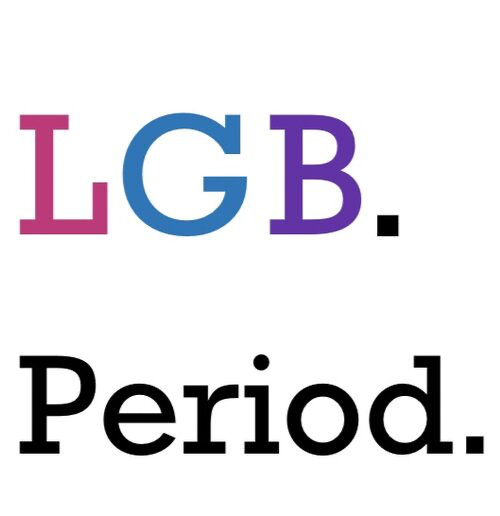
The beliefs championed by the LGB Alliance are beliefs that CopyrightBro is proud to endorse, as we also believe that more dialogue is needed to establish a public understanding of the differences between folks who are same sex attracted and those with varying gender identities, and that increased awareness will be to the benefit of both groups. In fact, on CopyrightBro, you’ll notice that we rarely (if ever) use the “LGBT” acronym; instead, we opt for “LGB” when referring to issues that are specific to sexual orientation, and in rare cases where it does make sense to couple issues relating to sexual orientation with those that relate to gender identity, we use “LGB&T”, which invokes an ampersand to reiterate the important distinction between the two groups.

Everyone deserves equal rights and to be treated with dignity, but that doesn’t mean that unrelated groups need to be conflated, especially when such relationships aren’t always symbiotic. If you’d like to learn more about the LGB Alliance and the work they do to support equal rights through reason and common-sense solutions that are truly respectful of and fair to all groups, you can visit their website for more information or to make a donation in support of their mission.

Rowling Faces Trans Cancellation For Suggesting That Science Matters

J.K. Rowling has written some stupid things lately (see: “Cursed Child”), but this isn’t one of them; her sentiments in this tweet near-perfectly represent my take in this instance, as well as on the broader issue of trans rights: do what you want as long as it isn’t harming others or infringing on someone else’s rights. However, I’m not convinced that some of the rights and privileges sought by the trans community aren’t stepping on the toes of other groups.

The fact that people are lambasting her for merely agreeing with someone who basically just said that biological sex is still a thing, is absurd. If you’re offended by scientific facts, re-fucking-evaluate; it’s not the rest of the world’s prerogative to avoid the truth (note that I said THE truth, not your truth) because you find it inconvenient.

John Legend & Kelly Clarkson Have Destroyed a Christmas Classic For Political Correctness-Clout

John Legend and Kelly Clarkson are both I credible vocalists, and for the first few seconds of their “Baby, It’s Cold Outside” cover, you think you’re in for a real treat. Unfortunately, it goes downhill fast: all you really need to know is that their #metoo era version this classic Christmas song sucks ass, and it does so without consent.

A true, stereotypical, self-victimizing Social Justice Warrior could actually argue that this song does the opposite of what it sets out to do, in a “men are so toxic and manipulative” sort of way. Despite the fact that the whole song is centered around a woman lamenting over how she shouldn’t stay the night with a man, she ultimately decides not to go home. The whole thing could be interpreted as an exercise in reverse psychology on the part of Legend’s character, who spends the entire song agreeing that she should leave, only to ultimately have her stay. I don’t subscribe to that ridiculous notion (though I’m sure the most liberal SJWs would), I just think the song sucks.

Furthermore, the songwriter who penned the original ballad, Frank Loesser (1910-1969), is credited with writing this horrible perversion as well, which I think is a legitimate example of doing something without consent. He does not deserve credit for the cringeworthy lyrics in Legend’s version of this song, which include such lines as “I’ve got to go away/I can call you a ride”, and “So, really, I’d better scurry/your driver, his name is Murray”.

If you’re looking for a charming, enjoyable new cover of “Baby, It’s Cold Outside” from artists with similarly incredible voices, look no further than Idina Menzel and Michael Buble’s cover.

That Facebook Accidentally Removed Elizabeth Warren’s Ads Is the Point

Brian Feldman, writing for Intelligencer:

The company’s current moderation system is designed to operate in an environment where context, often implied or not easily discernible to an outsider, does not matter. […]

Understanding this is the key to understanding why Big Tech is something to be concerned about. Even when it’s assumed to be operating in good faith and attempting to be fair, Facebook still makes the wrong call.

This story from March is hardly news, but it’s interesting and important because it highlights one of Facebook’s moral dilemmas that don’t get as much much focus as their privacy-related transgressions.

Historically, Facebook has been criticized for their content moderation and censorship practices (these criticisms largely revolved around the poor mental health resources offered to their contracted content moderators, who are poorly paid and required to sort through the worst content humans try to upload to the internet). Facebook’s record here is so astonishingly poor that it’s plausible that a presidential candidate might’ve had their posts removed based on the content of their message rather than the fact that they technically broke on of Facebook’s rules (which, in this case, was completely irrelevant to the context in which such a rule should apply). I’m not saying this was an innocent mistake on Facebook’s part, I’m saying that this level of inconsistency is not only problematic on it’s own, but it offers plausible deniability in cases where Facebook truly does remove content based on the message it carries. Given Facebook’s ubiquity in the western world, this is a threat to the freedom of information in our society at large.

Trump Backpedals On Flavored E-Cigarette Ban

It’s rare that President Trump deserves praise, but I felt it was in order when he announced that he was banning flavored cigarettes. As it turns out, he isn’t banning them because it wasn’t politically popular and he doesn’t have a fucking spine. From the New York Times:

Under pressure from his political advisers and lobbyists to factor in the potential pushback from his supporters, Mr. Trump has resisted moving forward with any action on vaping.

I find this supremely annoying. Everyone with a brain can piece together how vaping isn’t good for you, and Trump’s proposed ban would’ve been an excellent way to dial down the attractiveness of the practice to those who aren’t using it as an alternative to smoking.

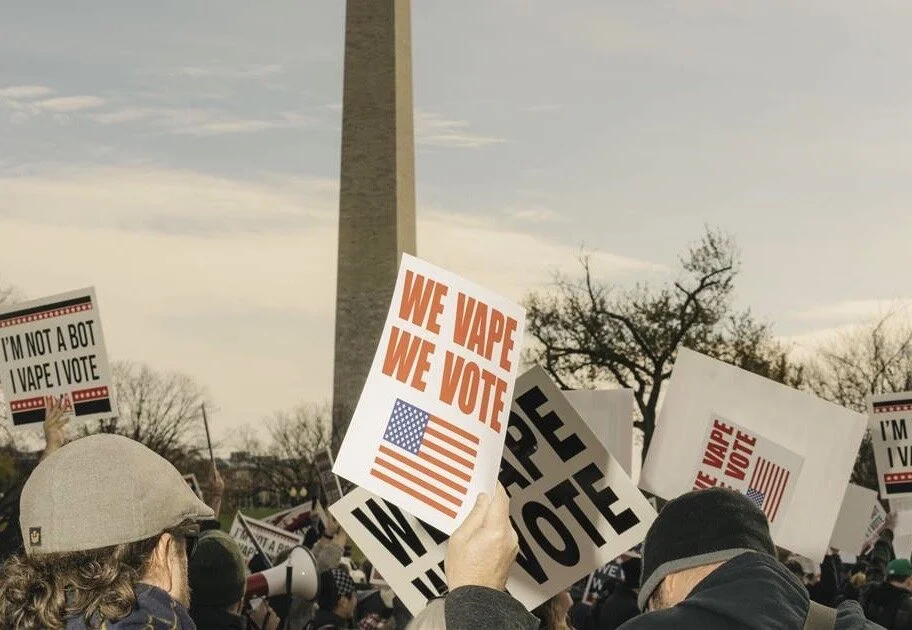
Trump’s supporters will probably try to play this as a win for civil liberties, but then why weren’t they expressing concerns about civil liberties in September when the ban was announced? I don’t think that’s where their concerns truly lie; the truth is that vaping is simply popular enough among Trump supporters that cracking down on it would lead to unavoidable political fallout:

[Trump] is concerned about his chances in 2020, and allies working for the vaping industry have told Mr. Trump of battleground state polling of his own voters that showed the issue costing him support. […] The poll, which surveyed battleground state voters who vape, showed negative results for Mr. Trump if he went ahead with a ban.

It’s pretty sad that this is the issue upon which Trump fans would be willing to withdraw their support. If I didn’t know better, I’d say it’s almost as if they’re easily hoodwinked by powerful people who don’t have their best interests at heart, and boy, do they have options.

The NFL, Militarized Masculinity, and A Really Annoying Hoodie

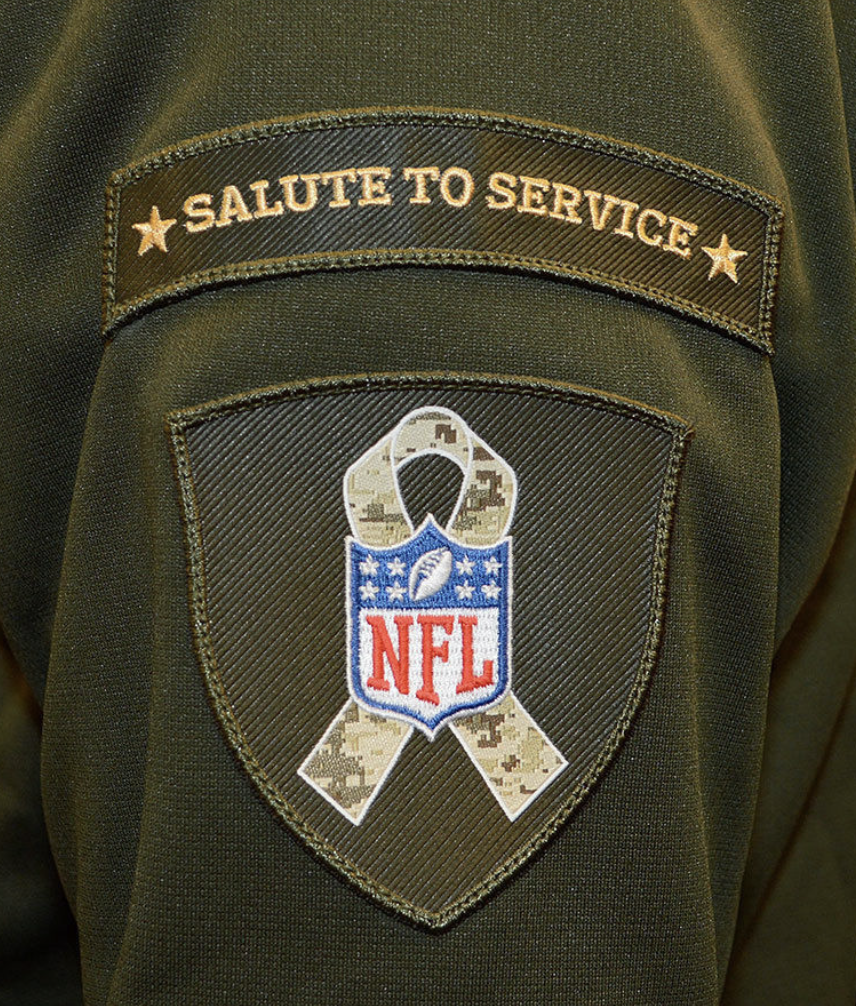
There are many displays of patriotism that occur during a football game (which often border on nationalism and militarism), and I've always assumed they were the prerogative of the NFL and therefore funded by the league. I was shocked to learn that our military actually foots the bill for these demonstrations, such as when the flag is stretched across the field before games and during halftime, special events like flyovers, and most recently, all the desert brown “Salute to Service” hoodies worn by players on the sidelines of last Sunday’s games.

As a patriot, I was outraged upon learning this information; I’ve written to my legislators to express my disapproval of the practice, and I recommend that anyone who supports our troops do the same. I’m a big football fan and I love going to games, but we’ve got to be honest with ourselves — the NFL is frivolous compared to the military — there’s absolutely no reason for us to divert funds which could be used to improve facilities and increase pay for our service members to finance wasteful and unnecessary marketing ploys for an organization made up of millionaires. While this is obviously a case of mismanaged tax dollars, I believe it’s symptomatic of a deeper problem in our society.

Sport has always been closely associated with masculinity, and football — a very physical competition between men wherein success is dependent upon the team’s ability to work together using strength, agility, and strategy to accomplish a goal — can be seen as a manifestation of masculinity. 

Unfortunately, masculinity in America has recently been receiving a lot of criticism, because it’s become interwoven with a violent brand of militarism (see: Masculinity and Militarism). The NFL realizes this and they’re using it to their advantage: their marketing team is savvy enough to see that drawing on the militaristic aspects of sport and trumping them up through the aforementioned displays creates a spectacle capable of engaging millions of men for whom football fulfills a need to connect with a more deeply masculine side of their identity, further ensnaring them in the idea of a masculinity that is predicated on militarism, which in the current political climate, can be easily mistaken for nationalist aggression.

Perhaps I’m wrong, but in that case, I find it puzzling that sporting events (which, as mentioned previously, possess an inherent masculinity) are the only types of large public events where these overly patriotic displays occur. If they were truly about celebrating our country and reverence for those who serve, why would these displays not occur at other events that AREN’T inherently masculine, like fairs, concerts, or parades? The key here is that the NFL knows there is a financial benefit to taking advantage of the militarized perversion of masculinity that many have been hoodwinked into accepting.

I’m not arguing that it’s bad for men to engage with or celebrate their masculinity, nor am I arguing that patriotic displays have no place in sport. In fact, I think we should take more opportunities to elevate favorable manifestations of masculinity, as well as to participate in patriotic displays which serve as reminders that we're ALL Americans with a shared set of values. The two are not mutually exclusive: as an Eagle Scout, I feel qualified to say that Boy Scouting is a good example of a program that celebrates masculinity and incorporates mildly militaristic practices that instill a deep respect for country (and actually leads many young men to serve) without conflating the two or perverting either.

The bottom line is this: if the NFL wants to have these displays, they should have to pay for them. It’s not the tax payer’s responsibility to buy “salute to service” hoodies for the millionaire athletes on the sidelines of a football game, and if they’re going to capitalize on the sacrifices made by our troops, they should at least have the dignity not to take money from those same troops to finance their disrespectful and socially detrimental marketing ploys. 

Masculinity and Militarism

I’ve said this before, but American men need to take a moment for some introspective analysis. For many American men, masculinity has become increasingly militarized in recent years, and that can be extremely dangerous. Let me start by clarifying that I’m not here to pedal the belief that masculinity is inherently toxic — though it can become perverse when left unchecked, such as in cases where men feel like violence is a useful way to assert their manliness; we all know that guy who brags about how many fights he’s been in — I think masculinity generally serves a useful purpose in how our society organizes itself and how individuals understand themselves, and allows for a certain level of cultural stability. Plus, it has had undeniable evolutionary benefits.

A common, positive aspect of masculinity is the man’s role as a protector, but that can be taken to an extreme, and I believe that’s what’s happening in cases where civilian men voluntarily adopt an arbitrarily militarized persona. Many men have bought into a sheepdog mentality where their masculinity is related to their ability or duty to defending others. The trouble comes in when these men don’t acknowledge just how boring everyday life is for most people in America. Rather than working to defend others from common, tangible threats, they spend their time obsessing over what they would do in various, wildly improbable scenarios to protect people (but importantly, only those whom they deem as worthy of their protection) from imagined threats of impending violence/warfare on American soil; it’s a self-aggrandizing exercise that becomes a self fulfilling prophecy when they prematurely escalate situations, consciously or otherwise, to live out their grizzly, heroic fantasies (often in situations where violence could’ve been avoided entirely).*

These men aren’t difficult to spot. They have American flags, rebel flags, and “don’t tread on me” flags everywhere. They have camouflage on everything, and they typically drive obnoxiously large and boisterous vehicles. They’re probably ashamed of their attractions to men, their small wieners, or both. They have preoccupations with excessively deadly firearms and other weapons of war (I’m not talking about your uncle who hunts, I’m talking about that nut at the pawn shop who has a closet full of illegally obtained automatic weapons and hand grenades). Additionally, they may well be police officers or first responders. Whether they occupy one of those roles or not, they’re all but guaranteed to harbor an obsessive degree of respect for police officers (and armed service members), as well as fire and EMS workers, to a lesser extent.

One only has to look to Nazi Germany to see how a militarized idea of masculinity can lead to widespread violence. The notion of defending one’s country can easily be mistaken as being congruent with xenophobia: defending your country does not equate to opposition to anyone who is foreign or different. On the other hand, we can look to Boy Scouting as an example of a program that uplifts masculinity while toeing the line between instilling a deep respect for our country that actually leads many young men to service, without resorting to the dangerous notion that masculinity can ONLY be achieved through service (which many who haven’t served interpret as a call to nationalist aggression).

American men who have been ensnared by that perverse misrepresentation of masculinity need to realize that while defending loved ones is a desirable masculine quality, it is foolhardy to preoccupy ourselves with preparation for a war that will likely never come, especially while plenty of real threats exist which we could direct our energy toward neutralizing, from public health issues like vaping and obesity, to privacy issues like Facebook and others companies profiting from unethically collected data, to societal issues like intolerance and the lack of credible media sources. While we focus our attention on reinforcing our masculinity through displays of aggression and militarization, we allow the real threats that endanger our loved ones to flourish.

*Graeme Wood made this point first.

UPDATED: 08/29/20, 14:34

Heliogen Presents A Solar Energy Breakthrough

Matt Egan, reporting for CNN Business:

Heliogen, a clean energy company that emerged from stealth mode on Tuesday, said it has discovered a way to use artificial intelligence and a field of mirrors to reflect so much sunlight that it generates extreme heat above 1,000 degrees Celsius.

Essentially, Heliogen created a solar oven — one capable of reaching temperatures that are roughly a quarter of what you'd find on the surface of the sun.

The breakthrough means that, for the first time, concentrated solar energy can be used to create the extreme heat required to make cement, steel, glass and other industrial processes. In other words, carbon-free sunlight can replace fossil fuels in a heavy carbon-emitting corner of the economy that has been untouched by the clean energy revolution.

Seems like this could be a real game changer. I don’t mean to sound uneducated, but my only concern is that a fourth of the temperature of the sun’s surface sounds a bit warm; are we sure that’s not gonna cause any unintended global heating?

Facebook App Records Everything Your Camera Sees While You Use The App

The Facebook app is recording everything your camera captures while you’re using the app, whether you’re using the camera or not. Do we really think this is a bug? I don’t. A few things to consider:

  1. Facebook’s privacy policy leaves the door open for them to record data from the camera even when you don’t press the shutter button.

  2. Guy Rosen, Facebook’s VP of Integrity (lol), said on Twitter that this “sounds like a bug”. Ahem, ‘sounds like’? Shouldn’t Facebook VPs know if this was a bug and be able to immediately give a negative or affirmative answer as to whether this is expected behavior for the app?

  3. Facebook hasn’t made an official statement addressing this issue.

So, that sucks, but what can you do? You can delete your Facebook account, first and foremost. If you’re not ready to take that step, at least go into your device’s privacy settings and disable the Facebook app’s access to your camera and microphone.

#deletefacebook

Words

This is my 100th post on CopyrightBro, so I wanted to do something a little bit special to mark the occasion. For those who may be wondering how this website was named, let me offer a brief explanation. I’m 23 years old, a recent college graduate, and a man; someone who fits those identifiers can be known colloquially as a “bro”. The “copyright” part of the name originates from the premise of the site: it’s a place where I can publish writing, photos, and other pieces of intellectual property for which I possess the copyrights. Also, if you move the “©” symbol to the end of the word “bro”, it spells “Broc” — clever, I know.

In any case, it should be obvious to anyone looking at this site that, despite my sometimes unperfect grammar and the occasional typi, I find words to be extremely important; they make effective communication possible, and sharing ideas is an essential aspect of the human experience. Therefore, I decided that for my 100th post, I wanted to share a collection of words that mean a lot to me. What follows is a small collection of quotes that I’ve found particularly profound, quotes which have influenced the way I perceive the world, quotes which have shaped the decisions I’ve made; hopefully you’ll find reading these words to be as exciting as I found the process of curating them (a process which is ongoing — this page will be updated). Without further ado:

No man is such a craven that the influence of love cannot inspire him with a courage that makes him equal to the bravest born.

— Plato

Every lie we tell incurs a debt to the truth; sooner or later, that debt is paid.

— Valery Legasov

It ain’t about how fast I get there, ain’t about what’s waiting on the other side, it’s the climb.

— Miley Cyrus

Rocky Top, you’ll always be home sweet home to me, good ole Rocky Top, Rocky Top, Tennessee

— The Osborne Brothers

What does it say about the world we live in, if an adult man is told how and whom he should love?

— Unknown

Here's to the crazy ones. […]

The people who are crazy enough to think they can change the world, are the ones who do.

— Rob Siltanen

Ask not what your country can do for you, ask what you can do for your country.

— John F. Kennedy

History doesn’t repeat itself, but it does rhyme.

— Mark Twain (or not?)

Friendship is unnecessary, like philosophy, like art.... It has no survival value; rather it is one of those things which give value to survival.

— C. S. Lewis

And you understand now why they lost their minds and fought the wars, and why I’ve spent my whole life trying to put it into words

— Taylor Swift

What unites people?

Armies? Gold? Flags?

Stories. There’s nothing in the world more powerful than a good story. Nothing can stop it. No enemy can defeat it.

— Tyrion Lannister

The future doesn’t belong to the fainthearted, it belongs to the brave.

— Ronald Reagan

If we are to have another contest in the near future of our national existence, I predict that the dividing line will not be Mason and Dixon's but between patriotism and intelligence on the one side, and superstition, ambition and ignorance on the other.

— Ulysses S. Grant

While we have our eyes on the future,
History has its eyes on us.

— Amanda Gorman

“Words are our most inexhaustible source of magic”

— J. K. Rowling

UPDATED: 01/21/21; 10:04

Facebook Is Trying To Pick A Side. Don't Let Them.

Facebook has long been a bit vague when it comes to laying out their political leanings. That seems to be coming to a calculated end.

This excellent piece from Popular Information illustrates a case where Facebook is breaking their own rules, seemingly, for political reasons. In this instance, they’re refusing to enforce a rule that bans networks of political “news” pages that work together but don’t acknowledge that they’re affiliated. It seems that most who’ve read this piece are, understandably, perceiving it as a threat because of the massive power Facebook demonstrably holds over the American electorate, which is a valid concern. However, I don’t believe that Facebook’s decision to allow one very successful, very political network of allegedly unaffiliated pages to continue operating was made for the sake of promoting a political agenda; no, this is an exercise in self preservation.

Facebook’s malfeasance is one rare topic upon which liberals and conservatives generally agree. There have been many calls for Facebook to be more heavily regulated from Republican and Democratic legislators alike, however I believe that the Democrats have slightly outpaced Republicans in calling for Facebook to be dealt with, despite the fact that the notion of privacy as a civil liberty seems to fall slightly more in line with traditional conservatism. This trend can likely be attributed to the fact that Democrats and their elected officials tend to be a bit younger than Republicans, and thus more in tune to issues of this nature.

Given the extreme political division our country is experiencing (which Facebook has cultivated for monetary gain), the fact that their deservingness of punishment is one topic most people can agree upon puts Facebook in a very dangerous position, not to mention the fact that the drum beat is growing ever louder, and more and more people are tugging at the curtain.

One solution to that looming threat? Take a side, and further capitalize upon the division you’ve sewn by allowing that side to defend you to the death. Give one side or the other a couple free passes, have a few chats with the right folks, and then step back while that side begins to see you as one of their own, and then you’re good to go. It honestly doesn’t matter which side Facebook takes, because taking either side would all but ensure that party's loyalty, not only because they don’t want to upset Facebook and have their reach limited, but because both parties are so committed to doing the opposite of what the other party wants.

Now, in this case, Facebook seems to have chosen to ally themselves with the Republicans, but again, which side they pick doesn’t really make a difference. In defense of the Republicans, Facebook just as easily could’ve jumped on the left-bound bandwagon — a few public statements in support of people with confusing genders and a few removed Trump ads, and they’d have them in their pocket, too. I believe this choice was made out of convenience; as mentioned above, slightly fewer conservative law makers have gone after Facebook.

If you’re a Republican, this should offend your sensibilities. As stated previously, privacy is a civil liberty that has long been a value of traditional conservatives, and Facebook is the biggest threat to personal privacy our country has ever seen. True conservatives should be outraged that Facebook is even trying to get in bed with them, and that their purported reason for doing so is their mutual support of free speech — what Facebook is trying to paint as free speech (political advertisements that include false statements of fact), isn’t. It’s paid speech, it’s false advertising, and it’s speech that presents a clear and present danger — it’s NOT protected by the First Amendment. In any case, free speech is a patently American value, not a partisan one.

Facebook worked hard for a long time to avoid taking a side, and we should enforce that hard earned neutrality by refusing to allow the public perception of Facebook to shift. They do not deserve to be seen as a company guided by any sort of moral compass or political agenda, because in reality, their chief motivators are, and have always been, financial.

TL,DR: Facebook is picking a political side so that their own regulation will become a partisan issue, and therefore never actually gain enough traction for any meaningful legislation to pass.

#deletefacebook

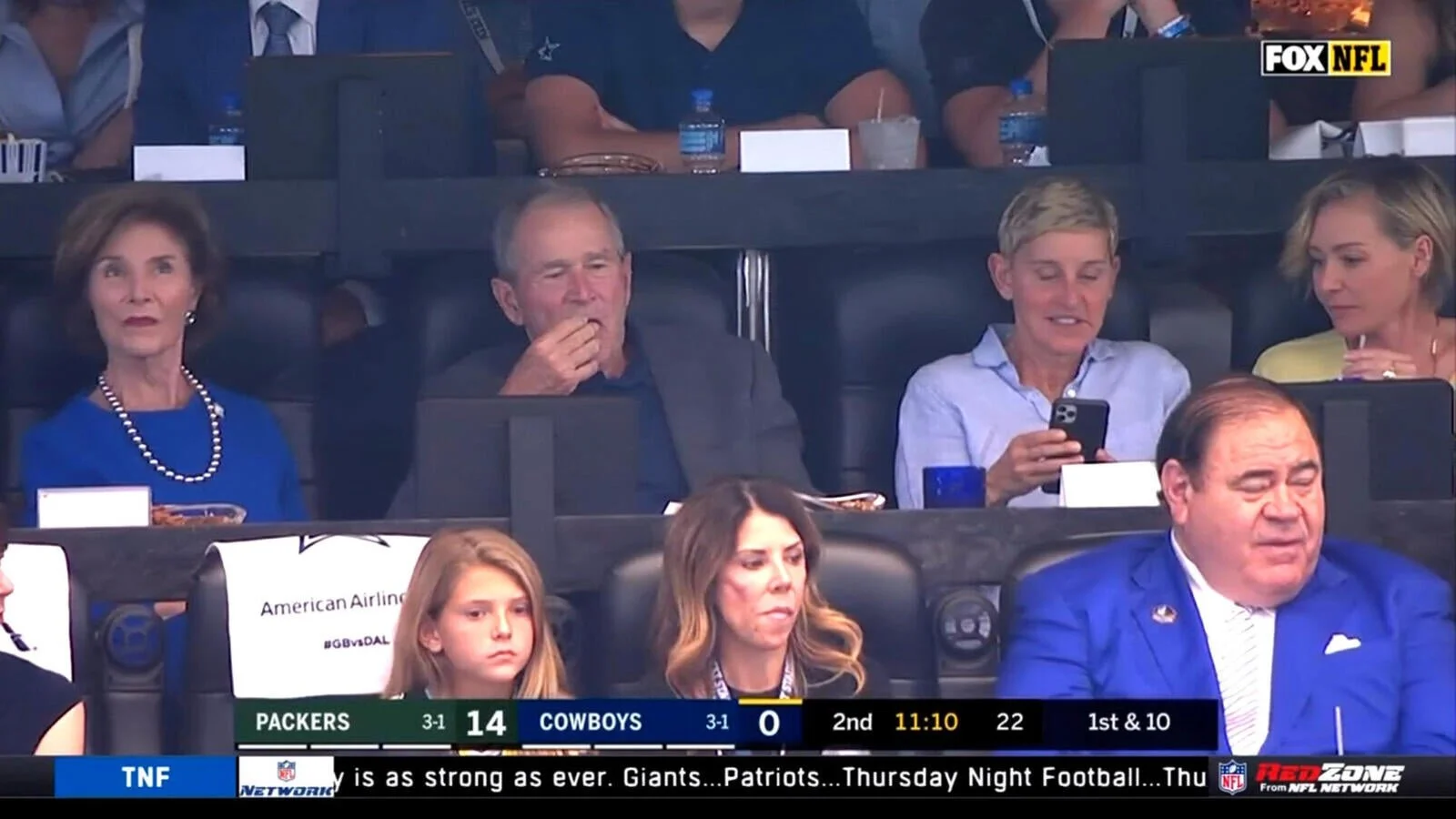
Ellen and George W. Bush

Cydney Henderson writing for USA Today:

Sunday's spotting of the unlikely duo had many fans throwing a flag on the play. 

I take issue with this verbiage. They aren’t throwing flags, they’re throwing tantrums.

We need to see more stories of people with opposing political beliefs treating each other with civility, not denigrate each other for getting along. Our country is grappling with the most intense political division since the civil war, and we need to be frequently reminded that despite our differing opinions, we’re all on the same team.

As politically divided as everyone is, it’s astonishing to me that super libs are gonna give Ellen shit for saying “be kind to everyone” — this is cancel culture at its most dangerous, and for some reason, the gays and trans people and all the SJW’s in that camp are leading the charge. My theory is that the “LGBTQIA+” label removes individual responsibility and enables those people to behave cruelly in the name of a minority group, thus serving as an outlet for the frustration caused by their own insecurities and internal conflict; they often accuse others (especially same sex attracted men who disagree with them 🙋🏼‍♂️) of hating themselves, but it’s almost is if they’re projecting when they do that…

Here’s the rub: progress is never made through cruelty or indignation. How can you negotiate if you don’t come to the table?

Emoji Gender Mania
public.jpeg

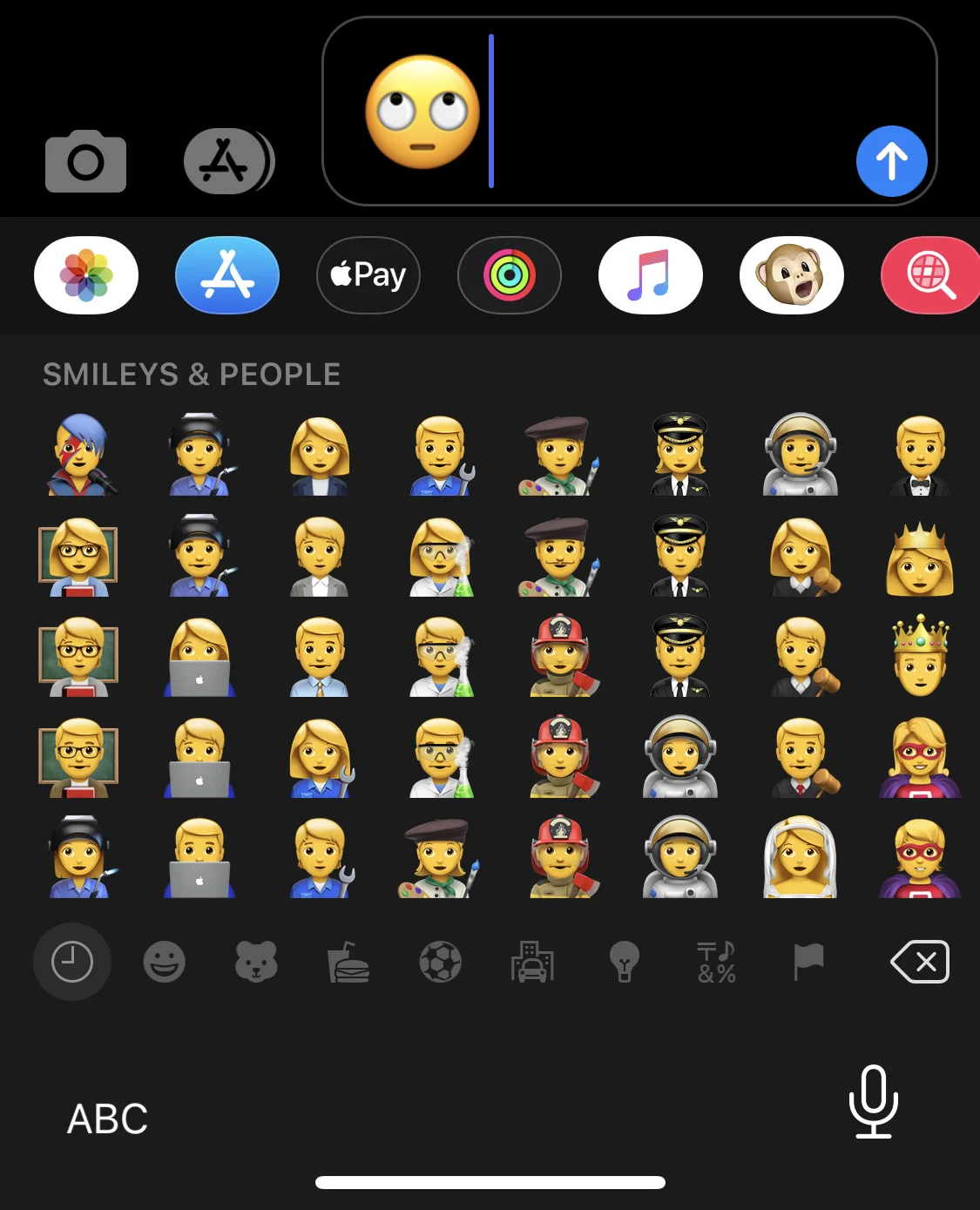
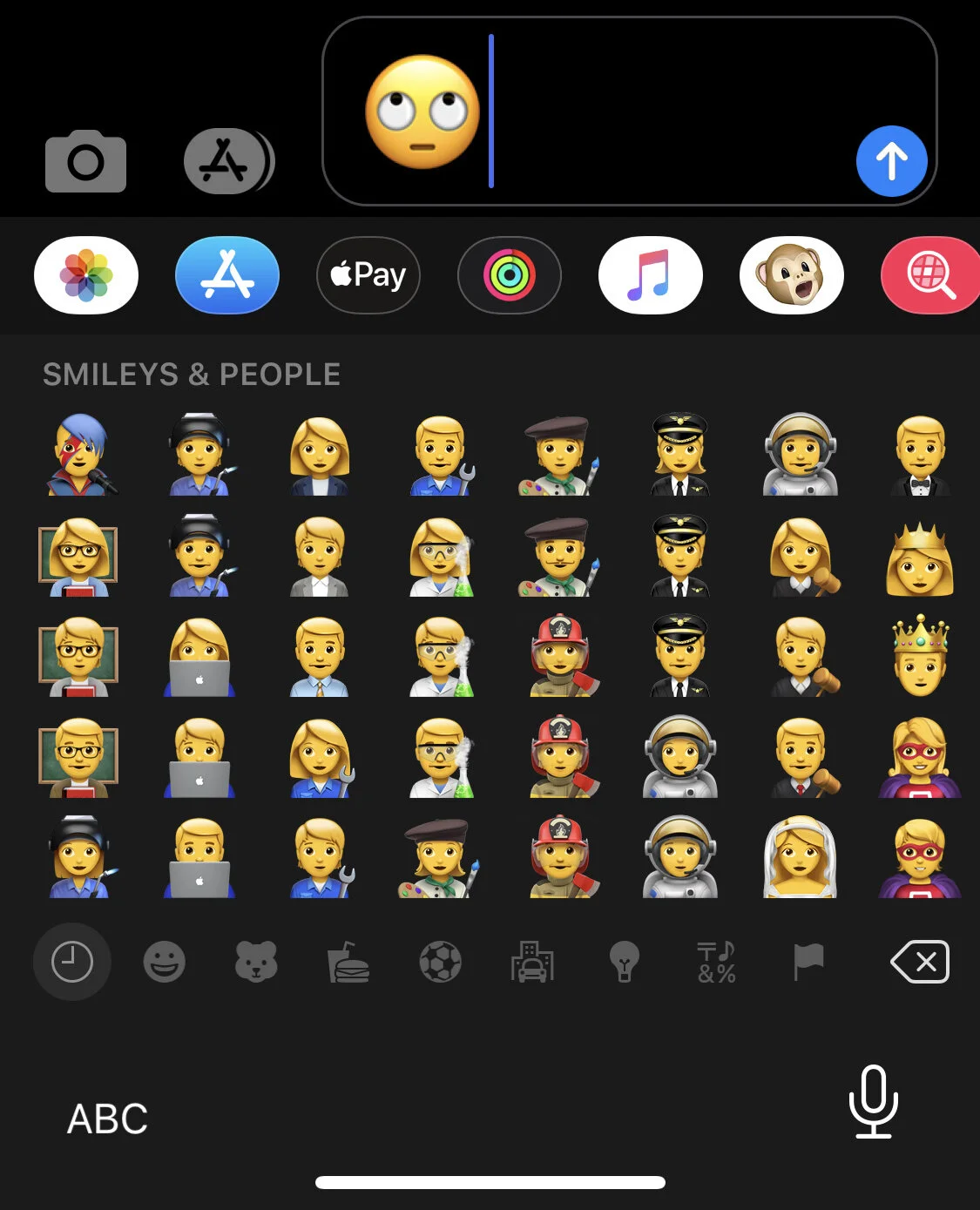
The second public beta for iOS 13.2 was recently released, and it’s a terrific update, including clearer privacy permissions for Siri, new Haptic Touch options, and a ton of new emoji.

While some of the new emoji are great, a lot of them are a bit absurd. For every character emoji, Apple has added a third gender option.

While I don’t have a problem with representation — I particularly like the ones that are more representative of folks with various abilities, like the prosthetic limbs, hearing aids, wheelchairs, etc. — I do have a problem with creating specific emojis for a microscopic portion of the population which almost only serve to overcrowd the emoji picker.

If Apple insists on implementing multiple gender options for an emoji, it should work in a similar manner to the skin tone picker, and it should remember your last choice. Overcrowding was already an issue with only two gender options, and now the emoji keyboard is just a mess. As a man, I had roughly two times more emojis than I needed under the ‘people’ category, and having all those extras made it much harder to quickly pick out the ones I was looking for. Now the problem is getting two times worse, because not only do I have to train my eye to overlook all the female emojis, but now I have to ignore all the androgynous ones as well (which usually just have the female face with a weird haircut and neutral colored clothes).

I could go down a rabbit hole here with my thoughts on the whole ‘3+ genders’ thing, but suffice it to say that I think a lot of people need to try a bit harder to overlook gender stereotypes and present themselves how they want without denouncing their genitals. In a lot of cases, I believe the tendency to do this stems from cultural and individual laziness in regards to challenging the established gender stereotypes, and I actually think it’s regressive for one to just adopt a third gender rather than attempting to broaden the parameters for the two genders that exist in direct correlation with biological factors.

Whatever — not my circus, not my monkeys. My goal is in solving the real issue here; the overcrowded emoji picker. I need the people at Apple to realize that adding more emojis every time someone comes up with a new gender (or otherwise marginalized group) is unsustainable. After all, Memoji already does the job.

The Boomer Meme President

From an opinion piece by Molly Roberts for The Washington Post:

There’s something known to those who grew up online as a “cursed boomer meme.” These memes are cursed because they are, basically, bad: occasionally indecipherable and almost never achieving the effect they intend. They’re boomer memes because they come from that crowd-of-a-certain-age that seems to have stumbled onto the Internet and now keeps bumping into things.

Many of these memes are variations on formats popular among millennials, but warped to the edges of recognition by some soon-to-be grandfather who has recently discovered the wonders of Photoshop […]

Some are originals, borrowing only the conventions of meme-making — macros with the white “Impact” font, say, or excessive collaging — to build something bafflingly new. Most of all, they’re deadly earnest, which is sort of the opposite of what memes are supposed to be.

It’s not that the president loves memes, though he does. It’s that he loves these cursed memes in particular. Because as much as Trump is the Nickelback president, or the post-truth president, or the reality TV president, or the 140-character president, he is, above all, the cursed boomer president.

Roberts makes a terrific point here. I think this will ultimately be one of the best ways to describe Donald Trump — the president who was woefully out of touch, not only with his constituents, but with the rapidly changing world he was surprised to find himself “leading.” In most of his actions, but especially in what he does online, Trump really is like an old person who just doesn’t quite get it.

The thing about many people who are around Donald Trump’s age (and a lot of early Gen Xers, too) is that they really don’t seem to understand the nuance of what’s happening in the world around them. Nevertheless, you can bet your balls that they intend to be just as loud and as adamant as they’ve ever been, if not more so, for the sake of exuding a false bravado to mask their perpetual confusion.

White Evangelicals Love Trump And Aren't Confused About Why. No One Should Be.

Anthea Butler offers a brutal (but for the most part, accurate) take in this opinion piece for NBC News.

She’s a bit bold with some of her statements, and I think she misses the fact that a lot of white evangelicals have good intentions, but she also makes some very astute and well articulated points:

Their imagined powerlessness, and the need for a strong authoritarian leader to protect them, is at the root of their racial and social animus. Their persecution complex is a heady mix of their fear of “socialists,” Muslims, independent women, LGB[&]T people and immigration. Their feelings of fragility, despite positions of power, make them vote for people like Donald Trump — and morally suspect candidates like Roy Moore. Rhetoric, not morality, drives their voting habits.

She’s spot on in pointing out that white evangelicals are driven by a persecution complex and deep seated fear (so deep that most of them probably aren’t even aware of its existence) that the status quo is changing in a manner that could put them in a position where they’re no longer the dominant social authority in America.

Trump delivered evangelicals from the shame of losing, and they will back him again in 2020 to avoid losing again. So perhaps we should take evangelicals at their word that they will support Trump come hell or high water, rather than twisting ourselves into knots trying to figure out why.

This hits the nail on the head. They aren’t wearing red hats because they think that’s what Jesus would do, they’re wearing them because they represent the vindication they felt in the wake of the 2016 election, and a hope that they can return to an America in which their authority wasn’t questioned. Perhaps they could regain some the respect and authority that’s been eroded if they were to focus less on their pride and more on actually helping people and being a legitimate moral authority. Fat chance.