This is why Elizabeth Warren is in my top three for the 2020 election; she has a terrific way of playing by the rules while embarrassing her critics. Her response to last week’s Facebook advertising policy change (news which led me to read the policy and notice a glaringly hypocritical policy about ads for surveillance equipment) was the best clap back anyone could’ve hoped for.
You know that identity politics has a firm hold on our nation when journalists for the New York Times are incapable of understanding why an open minded, moderate presidential candidate could attract followers. Lisa Lerer’s piece is trash, and she is only serving to further divide our country by telling the far left snowflakes and SJW’s who read her nonsense that having a variety of opinions is so bad that it’s not only considered treasonous within the Democratic Party, but that it equates to appealing to white nationalists, anti-Semites, and the alt right. Disgusting.
Tulsi had a pretty good response.
Dan Lamothe, writing for Dan Lamothe writing for
The Pentagon will deploy an additional 1,800 troops to Saudi Arabia, senior defense officials said Friday, a modest increase in the U.S. military’s presence in the Middle East meant to deter Iranian aggression. […]
President Trump has approved the deployment of an additional 14,000 U.S. troops to the Middle East since spring
I am not a pacifist, but our presence in the Middle East is not a necessity, it’s war mongering. Fourteen thousand is a huge number, and the brave men and women we send to fight for us deserve the respect of only being called upon when it’s truly necessary. True patriots should see our continued military engagement in Middle Eastern affairs as a direct affront to our troops.
Specifically in the case of the Iranian attack on Saudi Arabian oil installations, that’s a situation that should be between Iran and Saudi Arabia; our dog doesn’t need to be in that fight. In any case, Saudi Arabia sure seems to fit the bill for “shithole country,” so it’s hard to imagine why Don is so apt to help defend them. Perhaps it’s because he and the Saudi crown prince share a distaste for the free press (read: the Saudi government chopped up a journalist last year).
Cydney Henderson writing for USA Today:
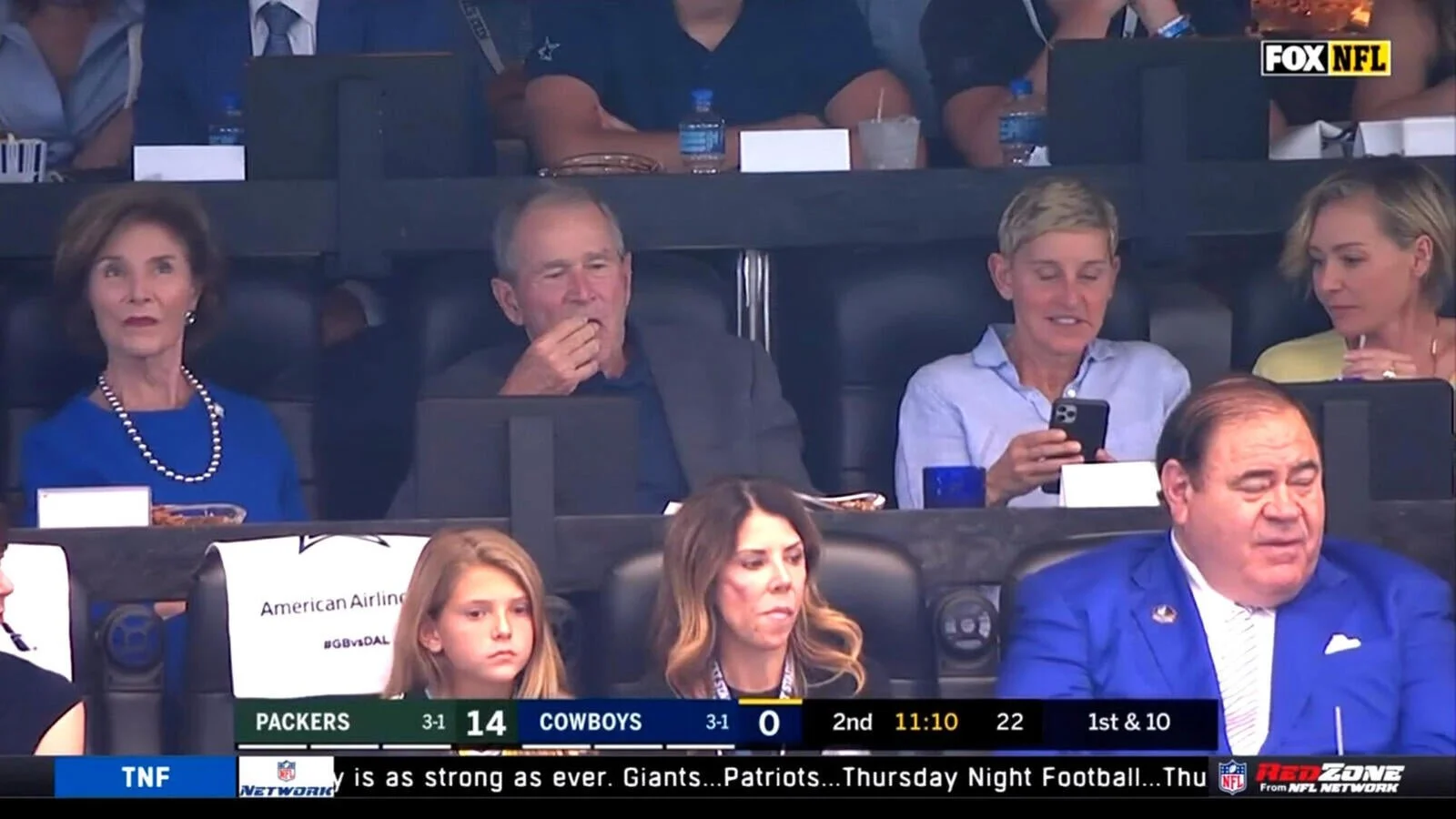
Sunday's spotting of the unlikely duo had many fans throwing a flag on the play.
I take issue with this verbiage. They aren’t throwing flags, they’re throwing tantrums.
We need to see more stories of people with opposing political beliefs treating each other with civility, not denigrate each other for getting along. Our country is grappling with the most intense political division since the civil war, and we need to be frequently reminded that despite our differing opinions, we’re all on the same team.
As politically divided as everyone is, it’s astonishing to me that super libs are gonna give Ellen shit for saying “be kind to everyone” — this is cancel culture at its most dangerous, and for some reason, the gays and trans people and all the SJW’s in that camp are leading the charge. My theory is that the “LGBTQIA+” label removes individual responsibility and enables those people to behave cruelly in the name of a minority group, thus serving as an outlet for the frustration caused by their own insecurities and internal conflict; they often accuse others (especially same sex attracted men who disagree with them 🙋🏼♂️) of hating themselves, but it’s almost is if they’re projecting when they do that…
Here’s the rub: progress is never made through cruelty or indignation. How can you negotiate if you don’t come to the table?
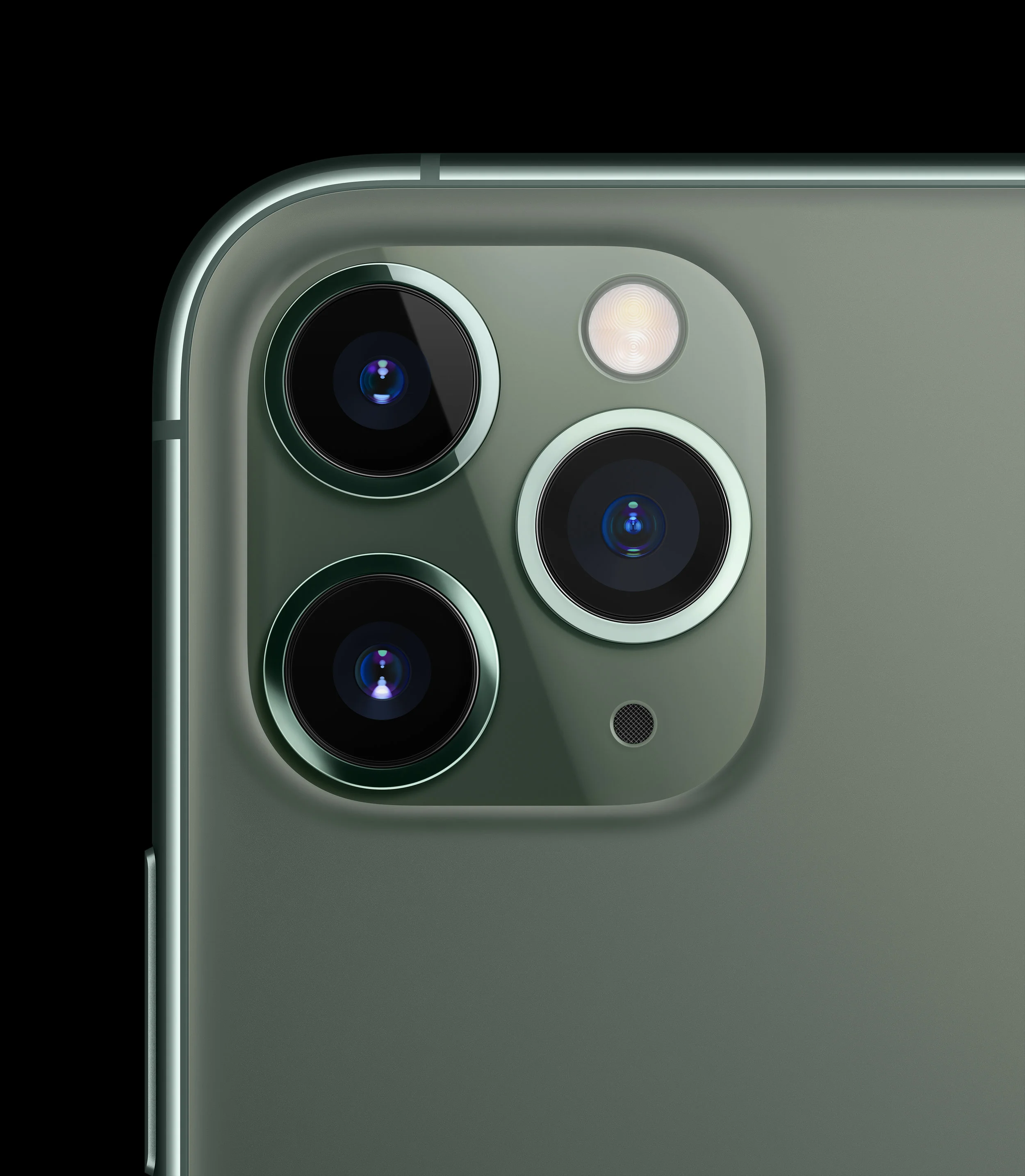
The most touted feature of the new iPhones, especially in recent years, is the camera. Each year, Apple delivers solid hardware advancements and software tweaks that usually add up to more than the sum of their parts. This year, the hardware is terrific, but the software works against it. The redesigned camera app absolutely sucks and I hate it. Here’s why:
The new drawer for the settings is redundant, but at least they finally got rid of that god awful square photo mode and just gave us an aspect ratio setting.
The zoom/lens switching interface is very inconsistent between camera modes, and it takes several seconds longer than before to go from a zoom distance somewhere between two lenses (like 1.8x zoom) back to any of the non-digitally zoomed options (0.5x, 1x, and 2x).
The app now also has an extremely annoying disregard for your manually adjusted settings. For instance, I wanted to use the flash for a photo but the iPhone thought night mode would be better (I tried it, and in this instance, it wasn’t). Moving my hand ever so slightly from the shutter button to toggle the flash setting at the top and back to the shutter button was enough movement to cause the iPhone to reanalyze the scene, and turn night mode back on. I had to do this four times while attempting to capture a single photo before I was able to hold the phone still enough that it didn’t override my choice to use the flash.
Deep Fusion was hyped up a whole lot on stage to be so astonishingly unremarkable in practice. My photos with deep fusion aren’t at all noticeably different than the ones without it.
A few positive notes:
Portrait mode still isn’t perfect, but it works a lot faster and more precisely than before.
The cool new feature that is supposed to use the wider lenses to capture what’s outside the frame so that you can rotate and adjust without cropping works very rarely and seemingly without any rhyme or reason, but when it does work, the photos are indistinguishable from the rest. Hopefully we’ll get to the point where the cameras are so tightly integrated that all three are used to capture each image, theoretically giving you remarkable detail regardless of how far away your subject happens to be.
Night mode impressed me.
And now for some real world examples: I wanted to put some of these features to the test, so my sister and I went kayaking to try and get some cool shots. They were good, but they weren’t overwhelmingly impressive. We left all of the settings on auto, only manually adjusting the zoom and focus.
The Auto Live feature was a disappointment, for some reason deciding not to capture a Live Photo despite obvious and intentional movement happening in the frame. The selfie camera was also very quick to refocus itself even after I’d just attempted to manually set the focus—the result was a bunch of photos like this one, where my face was fairly well exposed, but the sky was so overexposed that it appears almost completely white. The ultra wide angle camera was useful for shots like this, but generally it’s not very helpful and I think most people would benefit more from the telephoto lens—that would have been the better choice for the iPhone 11. Additionally, there seems to be so much software magic happening with each photo that you sometimes end up getting photos that are blurrier than they would’ve been before, which makes the whole thing feel a bit disingenuous. Look closely at the detail of the tree leaves and the surface of the water in this photo: it’s not exactly great.
The iPhone 11 Pro camera system can be summed up with one word: tradeoffs.
The second public beta for iOS 13.2 was recently released, and it’s a terrific update, including clearer privacy permissions for Siri, new Haptic Touch options, and a ton of new emoji.
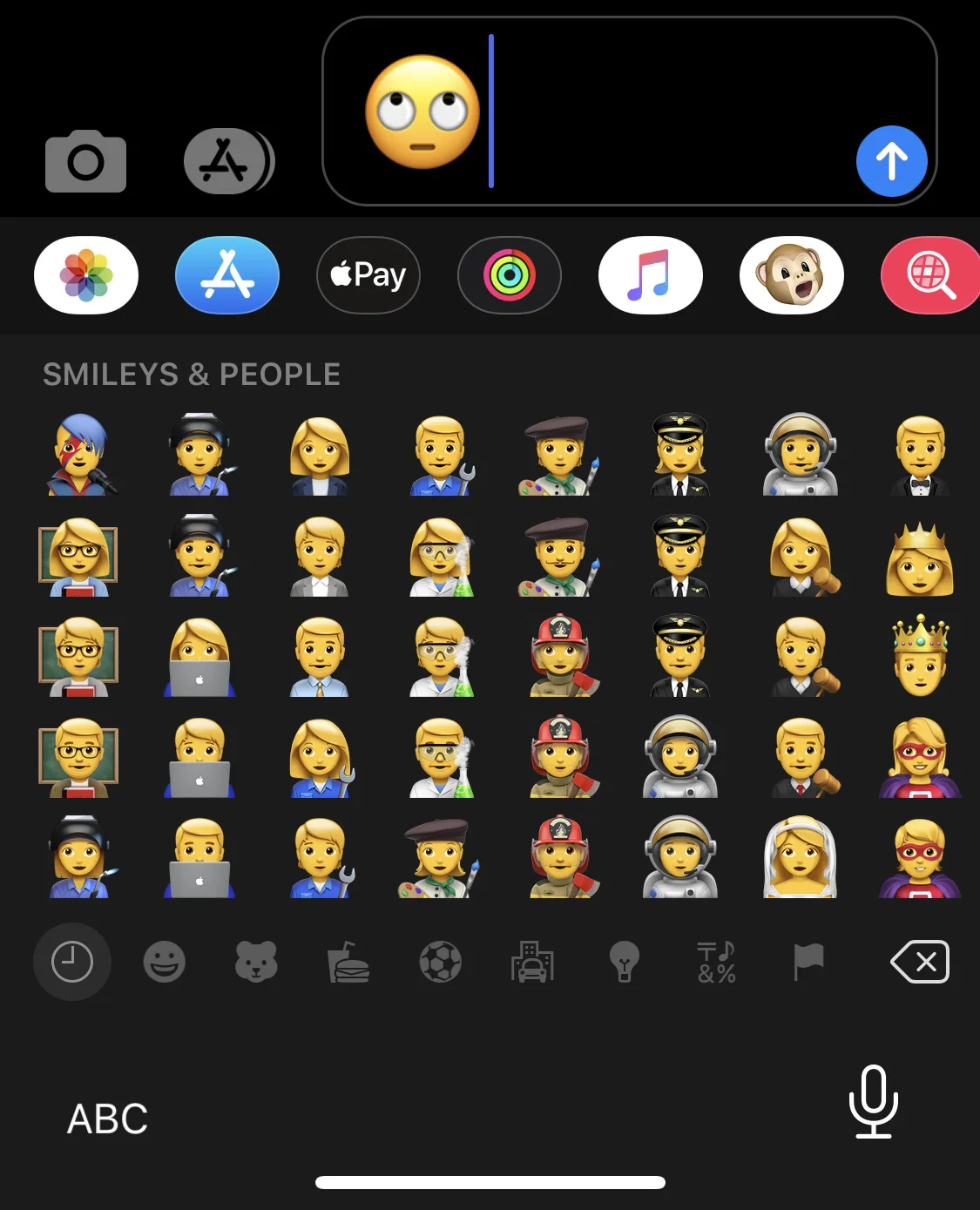
While some of the new emoji are great, a lot of them are a bit absurd. For every character emoji, Apple has added a third gender option.
While I don’t have a problem with representation — I particularly like the ones that are more representative of folks with various abilities, like the prosthetic limbs, hearing aids, wheelchairs, etc. — I do have a problem with creating specific emojis for a microscopic portion of the population which almost only serve to overcrowd the emoji picker.
If Apple insists on implementing multiple gender options for an emoji, it should work in a similar manner to the skin tone picker, and it should remember your last choice. Overcrowding was already an issue with only two gender options, and now the emoji keyboard is just a mess. As a man, I had roughly two times more emojis than I needed under the ‘people’ category, and having all those extras made it much harder to quickly pick out the ones I was looking for. Now the problem is getting two times worse, because not only do I have to train my eye to overlook all the female emojis, but now I have to ignore all the androgynous ones as well (which usually just have the female face with a weird haircut and neutral colored clothes).
I could go down a rabbit hole here with my thoughts on the whole ‘3+ genders’ thing, but suffice it to say that I think a lot of people need to try a bit harder to overlook gender stereotypes and present themselves how they want without denouncing their genitals. In a lot of cases, I believe the tendency to do this stems from cultural and individual laziness in regards to challenging the established gender stereotypes, and I actually think it’s regressive for one to just adopt a third gender rather than attempting to broaden the parameters for the two genders that exist in direct correlation with biological factors.
Whatever — not my circus, not my monkeys. My goal is in solving the real issue here; the overcrowded emoji picker. I need the people at Apple to realize that adding more emojis every time someone comes up with a new gender (or otherwise marginalized group) is unsustainable. After all, Memoji already does the job.
This is now the third time Twitter has had an allegedly accidental privacy snafu in the past few months. As I said last time this happened, I’m getting closer and closer to clicking the ‘delete’ button on Twitter, too.
Jack Dorsey: I now speak directly to you. I want you to know that you are not special. I’ve already deleted my Facebook and Instagram accounts, and your service is not only tangibly less successful than your competitors’, but also less useful to me, personally. If these ‘accidents’ don’t cease, I will have no problem getting rid of my Twitter account and encouraging my massive readership to do the same.
From an opinion piece by Molly Roberts for The Washington Post:
There’s something known to those who grew up online as a “cursed boomer meme.” These memes are cursed because they are, basically, bad: occasionally indecipherable and almost never achieving the effect they intend. They’re boomer memes because they come from that crowd-of-a-certain-age that seems to have stumbled onto the Internet and now keeps bumping into things.
Many of these memes are variations on formats popular among millennials, but warped to the edges of recognition by some soon-to-be grandfather who has recently discovered the wonders of Photoshop […]
Some are originals, borrowing only the conventions of meme-making — macros with the white “Impact” font, say, or excessive collaging — to build something bafflingly new. Most of all, they’re deadly earnest, which is sort of the opposite of what memes are supposed to be.
It’s not that the president loves memes, though he does. It’s that he loves these cursed memes in particular. Because as much as Trump is the Nickelback president, or the post-truth president, or the reality TV president, or the 140-character president, he is, above all, the cursed boomer president.
Roberts makes a terrific point here. I think this will ultimately be one of the best ways to describe Donald Trump — the president who was woefully out of touch, not only with his constituents, but with the rapidly changing world he was surprised to find himself “leading.” In most of his actions, but especially in what he does online, Trump really is like an old person who just doesn’t quite get it.
The thing about many people who are around Donald Trump’s age (and a lot of early Gen Xers, too) is that they really don’t seem to understand the nuance of what’s happening in the world around them. Nevertheless, you can bet your balls that they intend to be just as loud and as adamant as they’ve ever been, if not more so, for the sake of exuding a false bravado to mask their perpetual confusion.
From category #16 of the Prohibited Content section of Facebook’s Advertising Policy:
16. Surveillance Equipment
Ads may not promote the sale of spy cams, mobile phone trackers or other hidden surveillance equipment.
How noble of Facebook, right? Wrong; this is hypocritical of Facebook.
It’s honestly laughable, given how Facebook’s entire business model is centered around their products’ tendency to act as hidden surveillance equipment. They admit in their privacy policy that they actually ARE WATCHING YOU (any time you use their built-in camera, regardless of whether or not you actually take a photo or video) and TRACKING YOUR LOCATION (possibly twenty four hours a day, depending on your device settings).
They’re trying to make it seem like they’re looking out for their users, but it’s far more likely that they simply want to be the only big name in underhanded surveillance, so they prohibit other players in the industry from gaining traction by refusing to display their ads.
This seems like an appropriate time to remind ourselves that Facebook just announced a new camera they want you to install in your living room.
I’m late to the game here, and this is more of an internal monologue of my thoughts than a thorough review, but I wanted to finally write about some of the things that have stuck with me from Avengers: Endgame. I thought it would be premature to do it before now because I wanted the chance to rewatch it a few more times, but since you can buy the film on iTunes now, I’ve been able to rewatch it again (after seeing it in theaters twice back in April) and organize my thoughts. If you haven’t seen it yet, (well, firstly wtf is wrong with you, and secondly,) here’s your ⚠️ Spoiler Warning.
Generally, I really liked the movie, and I think it will have more replay value than most finales, like “Harry Potter and the Deathly Hallows Part 2” or “The Hunger Games: Mockingjay Part 2.” I think they did a fantastic job with the character arcs, but I did have a few issues with the film from a plot perspective.
First of all, Carol Danvers (Captain Marvel) seems a bit too powerful to be believable. She can travel at nearly the speed of light, and she seemed fairly capable of handling Thanos by herself. I get that they tried to balance out her apparent invincibility and general ability to whoop ass by saying that there were a lot of other planets that needed her help—fine, that makes sense. But what doesn’t make sense is that for so long after the Avengers pull off their “time heist” and have all six infinity stones, she was still nowhere to be found. It seems like no matter what else she was doing, all six infinity stones being in the same place at the same time would be enough to warrant her immediate attention.
I also think that the Captain Marvel character (specifically as she’s presented in Endgame) would’ve benefited from being about 15% less cocky. I get that we’re hyping up the whole female power-equality-feminism thing, but there’s a difference between cockiness and confidence. In a similar vein, I thought that whole female character ensemble towards the end of the fight when they help Carol get the stones in the special glove (does it have a name? I don’t think it does. I’m calling it the Iron Gauntlet) to the van was a little much. I know we’re talking about a universe with superheroes and magic rocks, but what are the odds that all the female characters ended up in the same exact spot at the same time on that massive battlefield? The similar moment in Infinity War with Nat, Wanda, and Okoye was much better. While we’re on the subject of women, the movie would’ve benefited from more Natalie Portman (as Jane, not Thor🙄).
Next, lets talk about the whole time travel thing. Time travel is a fairly weak plot device, and its primary weakness is that it often creates a lot of logical problems; Endgame was not immune to this weakness. The easiest way to reconcile with these plot holes is to ignore them, because once you get started, you probably aren’t coming out of that rabit hole for a while. Cause like, what about that whole timeline where Loki got away with the tesseract? How did Tony solve the question of time travel in five minutes by inverting a mobius strip (which is already inverted)? And wouldn't the Avengers have seen Cap putting all the stones back while they were collecting them, since they had to be returned to the same moments they were taken from? Or was there a little wiggle room? If so, why didn’t he put the soul stone back a few seconds before Nat fell to her death? How could Cap live out a life with Peggy while she had a husband? Why didn’t they just go back and take the stones from Thanos with the Iron Gauntlet before he used them in Infinity War? If changing the past doesn't actually impact the future, then all of those things should have been possibilities. And why don’t they just make more Pym Particles?!?
Though, I will concede that, to Endgame’s benefit, the stories that Marvel has been telling do span a rather wide amount of time, so there were unique ways that they were able to use time travel to incorporate humor and heart. At the end of the day, I’m not mad that they resorted to using time travel, I just wish they’d come up with something better.
Moving on from my grievances with the plot, the story did complete a lot of character arcs really nicely, namely for the six original Avengers, and I think we can give credit for part of that maturation to the five year gap between Infinity War and Endgame. Tony is a lot more compassionate and level headed. Bruce was able to finally establish some internal peace between himself and Hulk. Thor (while a hot mess for most of the movie) finally accepted that he simply wasn’t the person everyone expected him to be. I can’t say too much for Clint—not gonna lie, I wish it had been him who had died for the soul stone, but that wouldn’t have had the same emotional impact. Natasha really transformed from the beginning of the MCU, and I think she had the most beautifully tragic life of all the Avengers, but her motivations were finally out of the shadows, and her arc was truly complete. Cap really changed a lot as well, maintaining the same optimism and grit he always had, but also allowing himself to be a lot less uptight.
Speaking of Cap (and briefly regressing to one of those rabbit hole plot issues), I think we’ve all known since “Age of Ultron” that he would eventually wield Mjölnir, but I didn’t realize that he would be able to use it to also conjure lightning. That seemed a little gratuitous and a bit too much outside of his territory; Thor is a god, but Cap isn’t, and I don’t think he would be able to adopt Thor’s powers just because he’s worthy of wielding his weapon.
Getting back to the subject of character arcs, I want to address the several impactful death scenes. Tony’s death was slow and you knew it was coming for several minutes. To me, this had less emotional impact than the two most memorable close calls he had, in Infinity War when Thanos stabbed him, and in Civil War at the end of his fight with Cap (I honestly thought Cap was about to bash his head in with that shield the last time he brought it down into Tony’s chest). In any case, I thought it was done well, and I liked how Pepper and Peter were so present for it. Iron Man is my favorite Avenger, but Natasha’s death really cut deep—I actually think I was more upset about her death than any other. It was just such an emotionally impactful completion of her character arc. Scarlett Johansson’s acting and the music really took that scene to another level. I hate that Tony and Nat had to go, but I’m honestly surprised that more characters didn’t bite it, especially some of the auxiliary Avengers (Bucky, Rhodey, Scott, I’m looking at y'all). And as for Thanos’s ultimate death scene: I didn’t like it. There’s something satisfying about having a villain’s cold, obviously dead body be presented on screen as opposed to having them just fade into nonexistence (Harry Potter screwed this up, too).
Overall, I really liked the movie, and felt like it was an appropriately epic conclusion to the MCU as we’ve known it.
Also worth noting: this movie really changed how I watch “Age of Ultron.” Up until this point, I’d considered AoU to be the weakest of the four Avengers movies, and it was hard to look past the fact that the main plot driver, Ultron, was a fairly weak concept. However, now I don’t think we’re giving it enough credit. It works a lot better after having seen Endgame. There are quite a few Endgame easter eggs, and it’s clearer than ever just how much leg work that movie did in terms of expanding the MCU, from furthering character arcs and tying in a lot of second tier players, to introducing the infinity stones, to setting up “Captain America: Civil War.” AoU had a lot of ground to cover, and it’s clearer than ever after watching Endgame how well of a job it did, despite having the weakest plot line of the four Avengers films.
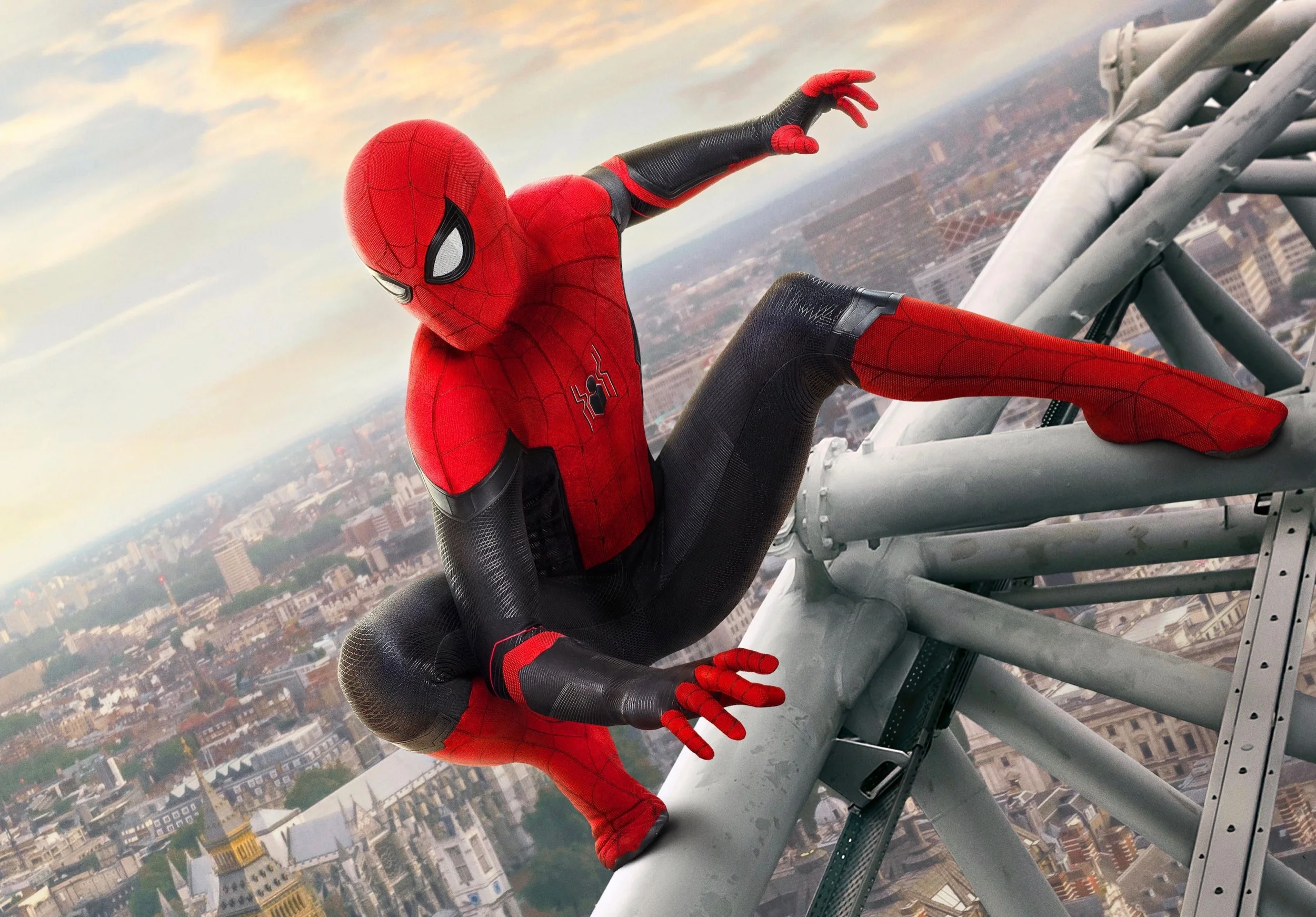
I was excited to learn that this blurb I wrote a few weeks ago is no longer relevant. Even though I wasn’t throughly impressed by “Spider-Man: Far From Home,” it’s still one of the better Spider-Man sequels, simply because it exists within the Marvel Cinematic Universe, and I’m relieved that Disney and Sony were able to negotiate a new deal.
Anthea Butler offers a brutal (but for the most part, accurate) take in this opinion piece for NBC News.
She’s a bit bold with some of her statements, and I think she misses the fact that a lot of white evangelicals have good intentions, but she also makes some very astute and well articulated points:
Their imagined powerlessness, and the need for a strong authoritarian leader to protect them, is at the root of their racial and social animus. Their persecution complex is a heady mix of their fear of “socialists,” Muslims, independent women, LGB[&]T people and immigration. Their feelings of fragility, despite positions of power, make them vote for people like Donald Trump — and morally suspect candidates like Roy Moore. Rhetoric, not morality, drives their voting habits.
She’s spot on in pointing out that white evangelicals are driven by a persecution complex and deep seated fear (so deep that most of them probably aren’t even aware of its existence) that the status quo is changing in a manner that could put them in a position where they’re no longer the dominant social authority in America.
Trump delivered evangelicals from the shame of losing, and they will back him again in 2020 to avoid losing again. So perhaps we should take evangelicals at their word that they will support Trump come hell or high water, rather than twisting ourselves into knots trying to figure out why.
This hits the nail on the head. They aren’t wearing red hats because they think that’s what Jesus would do, they’re wearing them because they represent the vindication they felt in the wake of the 2016 election, and a hope that they can return to an America in which their authority wasn’t questioned. Perhaps they could regain some the respect and authority that’s been eroded if they were to focus less on their pride and more on actually helping people and being a legitimate moral authority. Fat chance.
The Verge’s Nilay Patel and Chris Welch do a deep dive into the technology that has finally made it possible to watch live football games in 4K HDR; while the nerdy details are interesting, the most exciting part for sports fans really is in the headline—the fact that that we can now watch our favorite pro teams with incredible detail and clarity (this comment won’t have aged well in five years) is huge.
It’s worth pointing out that the advancement of augmented reality in recent years has really made NFL games a lot more enjoyable. In just a few years, we went from only having those superimposed, yellow first down lines to having crazy run patterns and play breakdowns served up almost instantly, and they make complicated plays much easier to follow. It seems a bit odd that those effects came before 4K HDR, but I'm glad we’re finally getting caught up, and I’m sure this will be just as transformative. Hopefully 4K HDR broadcasting will soon expand to all NFL games and top college matchups as well (go Vols).
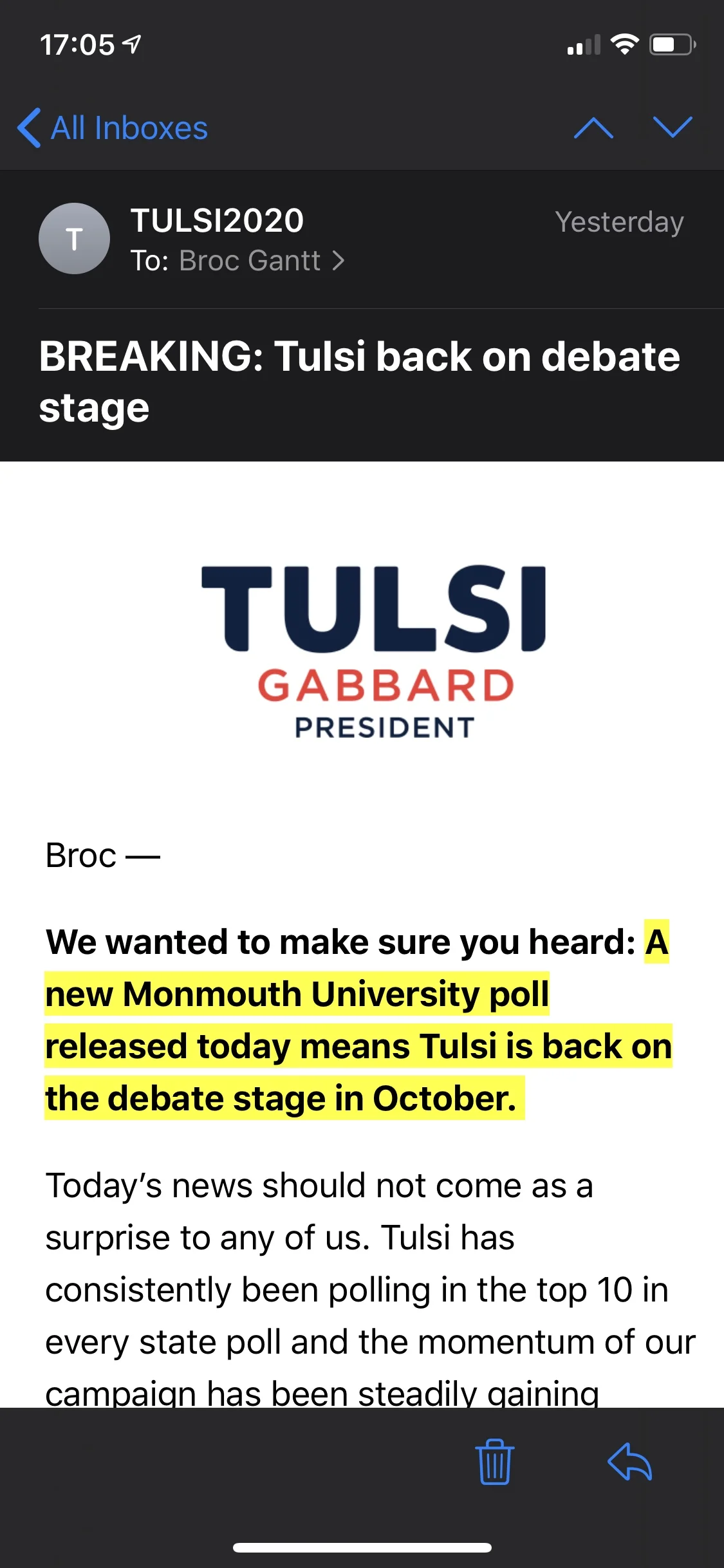
Tulsi Gabbard has been one of my top 2020 picks for a while now. She’s level headed, she’s a veteran, and she’s moderate enough that she can easily appeal to independent voters. A few weeks ago when it became clear that she wasn’t going to qualify for the September debate, I more or less moved on, knowing that it would be almost impossible for her to recover from such a large setback.
So, imagine my surprise when I received this email saying that Tulsi will be on the stage again in October; I had to read it a few times to believe it. She’ll have to really kick ass, but if she does, she could very well be the candidate people flock to, having thwarted the huge Democratic Party political machine, who clearly didn’t want to have to consider her as a viable candidate for the nomination. I hope her campaign sees a huge rejuvenation, and that she’s able to not only defeat Trump and the Republican Party, but to use this as an opportunity to truly challenge the status quo in Washington, and call out the hypocrisy of the Democratic Party as well.
May Ying Tee and Martin Zhang, writing for Symantec:
In recent times we’ve seen multiple malicious apps found in the Google Play Store by various cyber security firms, including Symantec, yet this problem doesn’t seem to be dissipating. We have uncovered another wave of malicious apps in the Play Store which have been downloaded more than 2.1 million times.
Does this surprise anyone? No? Okay. Lets call this “Breaking Olds”—old news, presented as new news. Today’s Breaking Olds headline: The Google Play Store is full of trash. 🗑
A total of 25 Android Package Kits (APKs), mostly masquerading as a photo utility app and a fashion app, were published under 22 different developer accounts […]
These 25 malicious hidden apps share a similar code structure and app content, leading us to believe that the developers may be part of the same organizational group or, at the very least, are using the same source code base.
What these apps do is essentially pose as a legitimate app (often from the same developer) so that you’ll install them. It initially functions as expected, but some time after a user first launches the app, it downloads a remote configuration file that hides the app icon so that the user won’t realize it’s still there. Classy.
Once the app’s icon is hidden, the malware begins displaying advertisements, which are shown even when the app is closed. Full-screen advertisements are displayed at random intervals with no app title registered in the advertisement window, so users have no way of knowing which app is responsible for the behavior.
It’s seems absolutely preposterous to think that a third party app can completely commandeer a device’s screen at any point in time. Ying Tee and Zhang recommend Android users install a strong antivirus app to help protect themselves from malware like this, and also that users only download apps from trusted sources, which, apparently, does include the Google Play Store. In the article, Ying Tee and Zhang also mentioned “Google Play’s rigorous security testing,” which seems like a funny way to describe whatever approval process Play store apps go through, given the circumstances.
I find it incredibly difficult to believe that anyone who truly cares about privacy or security would ever use an Android device. Imagine having to install antivirus software on your iPhone—there would be riots at Apple stores around the world.
Karin Brulliard, writing for The Washington Post:
The sparrows and finches that visit backyard feeders number fewer each year. The flutelike song of the western meadowlark — the official bird of six U.S. states — is growing more rare. The continent has lost nearly 3 billion birds representing hundreds of species over the past five decades, in an enormous loss that signals an “overlooked biodiversity crisis,” according to a study from top ornithologists and government agencies. […]
There are 29 percent fewer birds in the United States and Canada today than in 1970.
I don’t know quite what to say about this, other than that it is very sad. Almost as sad as the fact that some people don’t believe humans are having any significant impact on our environment.
Good news: Kik is shutting down. If you don’t know what Kik is, all you need to know is that it’s a messaging app that was slightly popular a few years ago but is now used by practically nobody. You may be asking, “But Broc, why does this matter at all, let alone constitute good news?” Let me explain.
Now, I don’t know why this is the case, but for some reason there are a ton of trolls, bots, and pic collectors on the Grindr app (if you’re unfamiliar with Grindr, it’s an app for connoisseurs of freshly ground coffee). These trolls, bots, and pic collectors can sometimes be sneaky, but 99 times out of 100, they’re very easy to spot because they follow the same general conversation pattern, and that’s because they’re there to accomplish a task: to get you to waste your time and money on one of their pitiful scam websites where they’re promoting whatever happens to be the sketchy service du jour—one day it might be an incredible new male enhancement product, the next it could be a dating service for all of the sexy MILFs in your town who “NEED SEX NOW.” Very clickbait-y, you know the type.
Conversations with these accounts generally go like this: they introduce themselves with some funny remark or otherwise interesting statement, and then send you just enough slightly blurry photos of a decently attractive person to gain your confidence. They’ll likely also ask you to send photos of yourself in return—the images they ask for range from seemingly benign (like a photo of your face) to more private (like photos of your.. um, beans). This is when it goes south: after collecting your photos (or before, if you refuse to send any) they proceed to feed you some bullshit excuse about how the app doesn’t seem to be working properly, so that you’ll think it’s reasonable when, a few moments later, they ask you to use the Kik app to communicate with them instead. Now, Grindr can be pretty buggy at times, and users often decide to communicate on other platforms (like iMessage or Snapchat) to avoid the bugs, so to someone who isn’t familiar with the scams these trolls are trying to pull, this may seem like a reasonable request.
You’re probably wondering why they bother with Kik—it’s a fair question. The only apparent reason for this is that, to their credit, Grindr has far more stringent terms than Kik which dictate what users are allowed to send to each other, so while sending links on Grindr would quickly result in their account being banned, sending those links doesn’t cause a fuss on Kik.
You may also wonder why they would want to collect photos from you: the more photos of attractive people they collect, the more photos of attractive people they have to lure in new victims. This is especially problematic because they’re redistributing sensitive photos without permission. By chance, it’s possible that a bot may even send you photos of your OWN beans; I can tell you from personal experience that this is not a fun time, because you know that if they’ve accidentally made it back to you, plenty of other people have seen and been taking credit for that photo of your beautiful beans along the way, and aside from making you feel violated, it’s just not fair to take credit for work that isn’t your own.
This annoyance isn’t Kik’s fault, but it’s satisfying nonetheless that it will soon be brought to a grinding halt. It’s been a long time coming, but I’m glad that the next time one of these fake profiles asks me to message them on Kik, I can inform them that Kik no longer exists, and tell them to promptly go grow some beans of their own.
UPDATE: 10/20/19, 17:30;
Kik has announced that they will not be shutting down their messaging service as a result of an acquisition by MediaLab. So, damn. Hopefully the new management team will pull through on their promises to fight spam, and make it harder for people to be taken advantage of on their platform.
I’m not gonna write a long, detailed review; there are tons of good, extensive reviews out there already, and besides, the camera is probably the only thing worth talking amount ad nauseam, and not necessarily for the reasons you might expect. However, I do want to hit the highlights as well as log a few thoughts that other reviewers haven’t mentioned yet, for those who are considering upgrading this year.
First of all, yes, the battery life if great. I’m noticing significantly more time (3+ hours) between charges compared to my iPhone XS Max.
Second, yes, the cameras are terrific—noticeably better than last year’s, at least in some conditions. Are they groundbreaking? No. Should most people go with the iPhone 11 instead of the iPhone 11 Pro? Yes. If you want my more thorough analysis of the cameras, here you go.
Third, the removal of 3D Touch sucks. I have always been a fan, and not having it makes some processes undeniably slower.
Fourth, the physical aspects of the device.
The matte back of the phone looks and feels really nice.
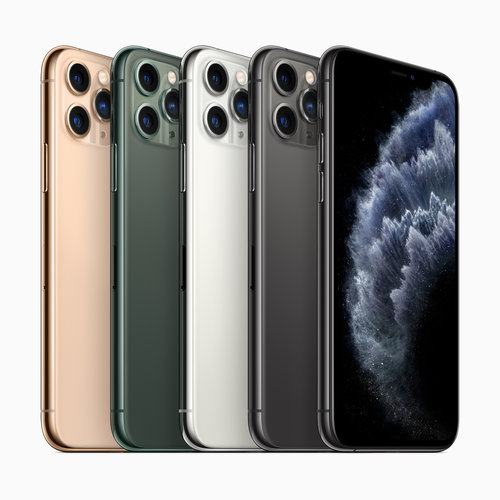
The midnight green looks boring in person, the silver looks white, the gold doesn’t have that weird green/pink tint like last year, and the space gray looks awesome.
It is noticeably thicker, and I don’t like it. I was hoping that it would get thinner, given the removal of the extra layer in the display that enabled 3D Touch (RIP), but nope.
It also seems to be particularly sturdy. I accidentally dropped it from a height of almost four feet, with no case, onto a tile floor. Not only was the iPhone still in perfect condition, it actually cracked the tile. I’ll give it a 10/10 for durability.
Fifth, the improvements to Face ID are hardly noticeable after coming from last years iPhone, but maybe you’ll see more of a difference if you’re upgrading from an iPhone X.
Sixth, the UWB technology is cool for what it will allow in the future, but the current improvements it brings to AirDrop are okay at best. While other iPhone 11 users do show up quickly, the feature where you point the iPhones toward each other to get them to show up at the top is too slow to be useful.
Seventh, the allegedly improved audio quality of the built in speakers seems to have been a myth.
I like the iPhone 11 Pro a lot, overall; it makes more trade offs than I’d like, but it’s still the best phone Apple has ever made. I just don’t think it deserves the name “Pro”—it needlessly adds to the amount of syllables I have to say when I talk about it, and it makes me feel like a show off-y asshole when it comes up. Besides, what truly new, pro level feature does it have that the regular iPhone 11 doesn’t have? The ultra wide angle lens? Nope. The telephoto lens? That’s been around since the iPhone 7 Plus. The chip? No, same chip. Battery life? Doesn’t make sense, given that the XR had the best battery life’s at year—this years Pro models were just playing catch-up. The stainless steel and matte glass design? Hardly.
Is this a great iPhone? Yes. Is it a Pro iPhone? No.
UPDATED: 9/30/19, 22:00
Google has no shame. This is a blatant copy of Apple Arcade. And the sad thing is that Apple Arcade doesn’t even seem good enough to copy—I’ve tried about ten games so far, and eight were so bad I deleted them within five minutes of opening the app for the first time.
Hahahahaha this gives me anxiety.
All jokes aside, this is horrifying. How anyone trusts Facebook at all is beyond me; the only explanation for trusting this company enough to PAY them to put an always-watching camera in one of the most intimate spaces in your home is blissful ignorance.
In perfect Facebook fashion, they’re trying to pass off this new “product,” Facebook Portal TV, as a unique way to connect with your friends while enjoying their video content, as if FaceTime and Skype aren’t good enough.
In any case, the Facebook Portal TV (cute name for a surveillance device, btw), despite having a name that suggests it would serve as a functional set top box like an Apple TV or Roku, doesn’t actually work with Netflix, Hulu, or really any other popular video service—just videos from Facebook Watch (whatever the hell that is). Despite the fact that it’s nearly useless, this isn’t all that surprising. After all, why wouldn’t Facebook make the most of this new “product” as a way to serve you more of their own ads? And with the built in camera (to which they have unfettered access because it’s their own hardware and they control all of the privacy permissions and device settings), they can gauge not only your reactions to the content and ads they’re showing you, but also the combined reactions of you and whichever of your friends you may be connected to via the built in video chat service.
Bottom line: if you buy this, you’re a moron.