Posts in Politics
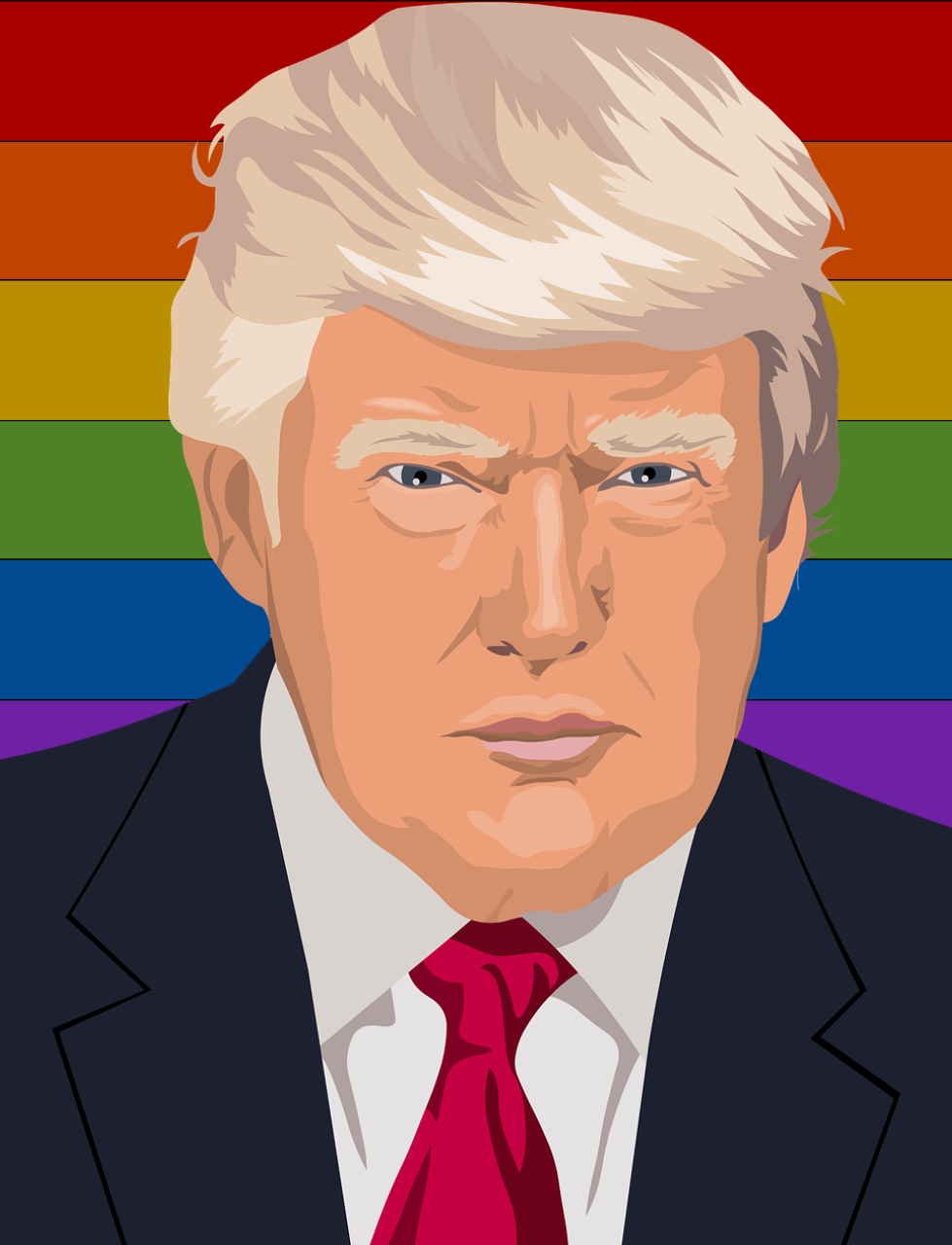
Trump Thinks Mayor Pete’s Marriage is ‘Great’ and ‘Absolutely Fine’

Bookmark this for future reference.

"Don't you think it's just great to see the fact that you've got a guy there on the stage with his husband and it's normal?" Fox's Steve Hilton asked. 

"I think it's absolutely fine, I do," Trump said.

He agreed with Hilton’s assessment that Buttigieg’s candidacy “is a sign of great progress,” adding “yeah, I think it’s great. I think that’s something that perhaps some people will have a problem with, I have no problem with it whatsoever.”

This excerpt is from a CNN article*, but you can find the original video here.

Hopefully the day never comes when Trump falls back on attacking Buttigieg’s sexuality, but if it does, we’ll at least have this to sow discord among the homophobic bigots who never question Trump’s commitment to their straight white interests.

*It’s worth pointing out that CNN’s analysis of this story was a bit jaded and poorly informed, despite the fact that this was a rare occasion where they could’ve painted Trump in a positive light. They make the mistake of conflating LGB issues with transgender issues, as well as deploying the tired tactic of bringing up Mike Pence’s alleged historical support for conversion therapy to paint the Trump administration as homophobic. The fact is that while portraying Trump and his cronies as homophobic makes CNN’s more left leaning audience more likely to despise the administration, CNN’s status as a left leaning media outlet criticizing Trump for alleged homophobia is only going to entice Trump’s supporters to be more brazenly homophobic. The leftist media is, once again, throwing gay people under the bus for their own benefit. Division drives ratings.

American Democracy Just Took A Shotgun Shot To The Face

Today is a shameful day to be an American. What happened in the Senate last night offends truth and spits on the constitution.

In case you missed it, the Senate voted against hearing from witnesses in the impeachment trial. The final vote was 51-49, with two Republican senators joining the Democrats who voted for witnesses. Mitt Romney of Utah and Susan Collins of Maine both voted to hear from witnesses. You could call this bravery, or you could call it an effort to save face. Collins is from a purple state and is up for reelection in November. Romney had long been critical of Trump, and wants to seem like he can think for himself. Lisa Murkowski of Alaska and Lamar Alexander of Tennessee, both seen as potential swing votes, sided with republicans in refusing to allow witnesses to testify.

Have you EVER heard of a trial that didn’t have any witnesses? These 51 feckless Republicans are engaging in one of the most democratically damaging, partisan coverups in the history of our nation, for a president that they don’t like deep down anyway. Republicans DON’T like Donald Trump, they’re afraid of him. This vote will be seen as a point of inflection by future historians studying how the great American experiment went wrong. It is a vote that will permanently shift the balance of power from three coequal branches of government towards dictatorship. We are on a slippery slope, and the Senate just tore down the guardrails.

Some important things that happened during the “trial”:

Trump’s lawyer, Alan Dershowitz (who also represented Jeffery Epstein and OJ Simpson, FYI) argued that a president cannot be impeached for doing something to help his own reelection if he believes that his reelection is in the national interest. This is what those of us in the industry refer to as a “blank check”. Basically, this translates to “he can’t be impeached for anything, ever”.

Trump’s defenders also claimed that if the argument against him is so strong, the prosecutors shouldn’t need any witnesses to prove their case. Wild.

Republican Senator Marco Rubio claims that even though the president’s actions do warrant impeachment, he shouldn't necessarily be impeached. Translation: the rules only apply to some people some of the time.

Republican Senator Rand Paul tried to have SCOTUS Chief Justice and presiding officer over the impeachment trial John Roberts read the whistleblower’s name on national television. Roberts refused. Paul then said the alleged whistleblower’s name twice in interviews, because he’s a shitty person.

A bipartisan group of senators asked the president’s team to promise that Trump wouldn’t use private citizens to conduct foreign policy in the future, referring to Rudy Giuliani’s role in the Ukraine scandal. The president’s lawyers responded by saying that Giuliani wasn’t conducting foreign policy, he was just in Ukraine doing personal business for Trump. Which, might I point out, UNDERMINES THE WHOLE FUCKING ARGUMENT THAT TRUMP WASN’T NEGOTIATING WITH UKRAINE FOR PERSONAL GAIN.

Bernie Faces Cancellation By Trans People After Being Endorsed By Joe Rogan

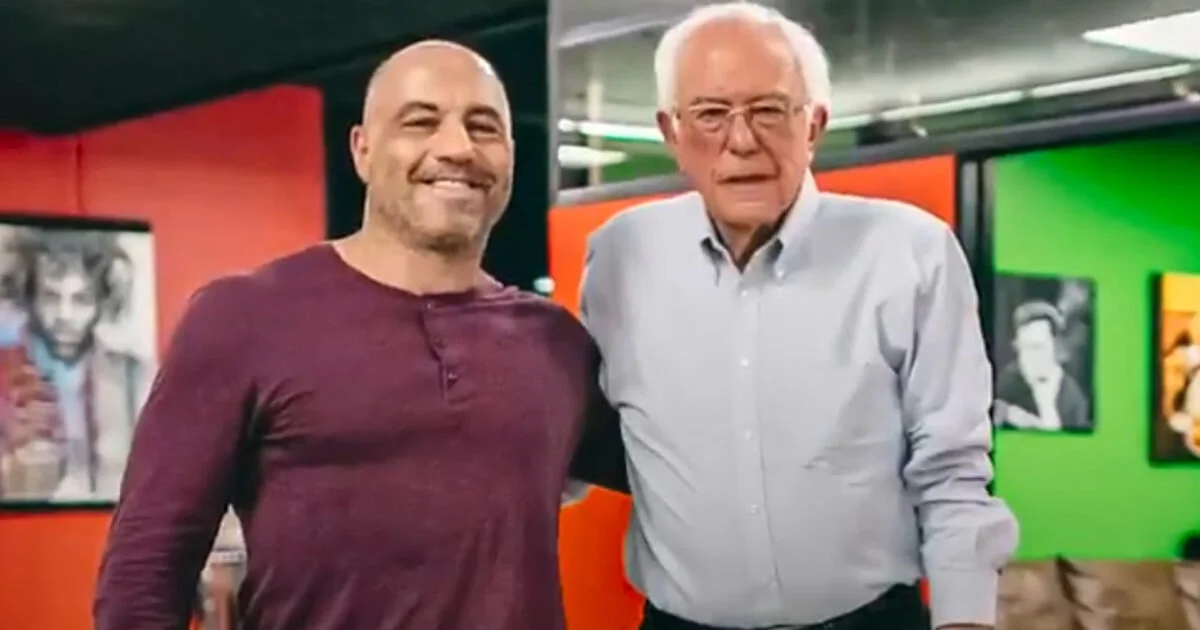
On Tuesday, Joe Rogan more or less endorsed Bernie Sanders on his podcast, The Joe Rogan Experience. He commended Bernie for his consistency and for having a fairly clean record. It was a good episode that touched on a lot of important subjects, I’d recommend giving it a listen.

Anyway, Bernie’s campaign tweeted a clip from the podcast, more or less accepting the endorsement:


This seems like a good thing for anyone who wants Trump out of the White House. Joe Rogan has a huge audience, and he’s not decidedly liberal or conservative. Ezra Klein (@erzaklein on Twitter) offered the following take:

Bernie’s strength is that he can win over some voters who are skeptical of Democrats - like Joe Rogan. If you think getting Trump out of office is actually important, that’s a good thing, and he should lean into it.

People from the radical left, particularly trans people, disagreed. They accuse Rogan of many horrible things, namely they want people to believe that he’s transphobic (a weightless accusation to begin with; Rogan’s take on trans people boils down to treating people equally while acknowledging biological facts). Further, they purport that Bernie’s acceptance of Rogan’s endorsement is just absolutely egregious, and they’re expecting apologies from Bernie, expecting him to denounce the endorsement, and are even claiming that all the truly woke people on the left won’t support Bernie now that he’s accepted this endorsement. To think that Rogan is transphobic is ridiculous, let alone that Bernie’s acceptance of Rogan’s endorsement makes Bernie transphobic by proxy. It’s almost incomprehensibly stupid that real people think this way.

Let’s acknowledge the irony of this situation, wherein pointing out that Bernie had very little that could be used against him, Rogan gave people something to use against Bernie. Of course, Rogan was expecting the opposition to come from the right — the side who would naturally oppose Bernie, a self-proclaimed democratic socialist — but instead, the outrage is pulsing from the radical left.

This is why cancel culture is such a parasite to our society. If you disagree with them at all, they’ll try to cancel you and anyone near you, and not only is it childish and temperamental, it’s self destructive. Klein, again:

This’ll get me ratio’d or whatever but a lot of Twitter seems to want to enforce a politics where you only work or ally with people you agree almost totally with. but to get anything done in our system requires working with people you often disagree with.

Tearing down Bernie (currently the highest polling democratic candidate in Iowa and New Hampshire) will only make it more likely that Trump gets reelected, and he’d certainly be less of a positive force for trans people. The lack of foresight these “progressives” have is absolutely mind boggling.

Donald Trump & Abortion

Christians, listen up. If you voted for Donald Trump because you think he’s such a terrific Christian role model and he wants to overturn Roe v. Wade and criminalize abortion, you’d be pleased to hear that today, Donald Trump is speaking at an anti-abortion rally.

However, you may not be pleased to hear that in 1999, he was asked in an interview with NBC “would President Trump ban partial birth abortion?” to which he replied “I’m very pro-choice.” The interviewer confirmed with him “you would not ban it?” and he reaffirmed “No. I am pro-choice in every respect and as far as it goes”.

I personally have mixed feelings about abortion: I believe we ought to restrict it to cases of incest and danger to the mother. Donald Trump disagrees. The fact that he’s pounding a different drum now is not indicative of a change of heart, it’s indicative of the fact that he knows his audience and knows how to squeeze votes out of his evangelical base. I believe true Christians will ultimately see through his deception on the abortion issue.

What Trump is doing is not motivated by a respect for human life, it’s motivated by greed and a desire to keep himself in Christians’ good graces so that they’ll reelect him. Unfortunately, Trump’s recently adopted stance on abortion won’t do anything to curb the practice in the long run. While his statements and actions have enflamed state legislatures to the point that a few very red states have passed new laws banning abortion, those laws are all too radical and incendiary to make a real difference; they’ll be overturned as soon as the current leaders in those states are replaced. For example, Alabama has now restricted abortion to such a ridiculous extent that if a 10 year old girl were to be raped and impregnated by her father, and she decides to abort the baby, she could be imprisoned for life. Virtually nobody on either side thinks that’s the right way to handle this issue.

The legislation needed to restrict abortion will have to be carefully weighed to ensure that abortion is an option in the very rare cases where it makes sense, but not available as a form of birth control. Donald Trump is hurting the long term prospects of such legislation ever being passed by radicalizing the opposition and leading them to take up positions that make them less supportive of any new laws that would restricting abortion, but we know that ultimately doesn’t matter to him, because as he’s confirmed, he’s “very pro-choice”.

But just because Trump isn’t really pro-life doesn’t mean the rest of us shouldn’t be, and we have another option.

Abortion has been a well-documented practice since the height of the Greek and Roman civilizations millennia ago, and governments have tried making it illegal, without success in reducing the number of abortions. It’s certainly something that we need to address, but broadly criminalizing it is not the best way to actually prevent abortions from happening, it’s just a good way to punish people who have them. And unfortunately, punishing someone after they’ve had an abortion doesn’t undo the loss of life.

There’s a better, more immediate way to reduce abortions than just making it illegal, and that is by improving sex education and increasing access to birth control and contraceptives so that fewer unwanted pregnancies occur in the first place. You can argue for abstinence, but realistically, that’s not a solution: not everyone’s religion requires them to abstain from sex until marriage, and regardless of whether you think they’re wrong or right, we can agree that out of wedlock sex that doesn’t lead to unwanted pregnancy is favorable to out of wedlock sex that does lead to unwanted pregnancy where women may consider abortion.

Donald Trump has no plan to reduce the number of abortions taking place in America, but Joe Biden does. Joe’s plan would provide greater access to birth control and contraceptives. If you truly want to see progress on reducing abortions in the United States, pick Joe Biden.

PoliticsGuest Userjanuary20
Democratic Debates 3-6

You may have noticed that CopyrightBro had lots to say after the first and second democratic debates, but neglected to publish anything about debates 3, 4, 5, and 6. This wasn’t a mistake. Those debates were all rather unmemorable; none of them were groundbreaking, and none of the candidates seemed to evolve much or show new sides of themselves. It was a very “same story, different day” sort of situation. Honestly, I was sick of hearing the same argument about healthcare every. Single. Time. I got burnt out.

I do want to briefly comment on some of the candidates and note how my thoughts on them have changed over the course of the the four debates I haven’t already commented on.

The Defeated

Harris: Kamala also seemed to use her blackness as a tool at times, which I just think is bad form. She dropped out rather suddenly, citing a lack of funding. That’s plausible — she was taking hits in the debates and donations seemed to stall — but I think her exit could potentially be explained by blackmail. She seems like she might have some particularly nasty skeletons in her closet. In any case, she’s demonstrated that she’s a terrific senator and prosecutor during the Kavanaugh hearings, and I think we’re better off having her stay in the Senate.

O’Rourke: He’s gone. Unfortunately, he gave Republicans a terrific sound bite to use to rile up their base when he yelled “hell yes, we’re going to take your AR-15” during a nationally televised debate.

Gilibrand: As predicted, she simply didn’t have enough momentum to get to the White House. I still like her dedication, though, and she’s still memorable months after leaving the debate stage.

Booker: While I was warming up to him, he didn’t seem particularly genuine to me in a lot of scenarios, and he seemed to accentuate his blackness when it was convenient. I don’t think he was a bad guy, but I’m not upset that he’s out of the race.

Gabbard*: Tulsi is no longer one of my top picks. I think she’s a very interesting candidate, but I’m less convinced of her character. Perhaps I’ve been swayed by the negative media coverage she’s received in the wake of being caught up in a twitter storm that accused her of being a Russian asset. In any case, it’s also interesting that she feels so at home on Fox News; I’m not sure what to think of that. It’s worth noting that she was the only candidate to not qualify for a debate, and then qualify for the one that succeeded the one for which she didn’t qualify.

Yang*: He made it farther than I expected, and he was somehow able to hype up his Freedom Dividend plan the whole way.

*It’s worth noting that while these candidates didn’t qualify for the most recent debate and I’ve characterized them as “defeated”, they still haven’t ended their campaigns, so they technically aren’t out of the running.

The Late Boomers Bloomers:

Tom Steyer: Bought his ticket.

Mike Bloomberg: Bought his ticket.

The Pack Leaders

Elizabeth Warren: I think Elizabeth Warren has the best chance of beating Donald Trump. The other serious contenders, Pete, Biden, and Bernie, each have flaws which I think will be enough to keep them from pulling enough Trump voters onboard, despite that they do all boast unique advantages. All in all, I think Warren has a solid set of plans, and if she can truly crack down on corruption to even a tenth of the extent to which she hopes, America will be much better for it.

Pete Buttigieg: I like Pete’s more moderate politics more than I like Warren’s more progressive ideas, and I think Pete has made a good effort to reach out to independents and moderate Republicans. I think it’s more important than ever to try to slow down the swing of the political pendulum, and the best way to do that, in my opinion, is to get people from both sides of the aisle on your team, not just enflame your base against your competition; the enflamatory approach will just make those who lose the election even more angry and the winning side will feel more vindicated, deepening the divide in our country. However, I don’t think Pete is terribly electable because he’s gay. Even though he’s the type of guy whose sexuality doesn't precede him, it will be difficult for a gay man to take votes away from Trump’s evangelical base. All in all, I think that if Pete gets the nomination, the amount of hate that would flow from Trump’s ignorant base would be enough to move gay people back, regardless of whether Pete wins the general election. While I like him the best and would like to see a same-sex attracted president, I don’t think America is ready for that. Give it another ten years, and then I think a same-sex attracted man could make a strong run for the presidency without incurring so much hate that his candidacy ultimately results in a step back for LGB people.

Bernie Sanders: Bernie’s health is a concern, as well as his age. From a policy standpoint, he’s very similar to Elizabeth Warren. I’m not surprised that he’s a serious contender, but I don’t think he’s our best option. The fact that he calls himself a democratic socialist gives the right a lot of ammunition to use against him and convince him that he’s a threat to democracy, even though those same people would likely agree with a decent amount of Bernie’s ideas. The word “socialist” has such strong connotations that I doubt anyone claiming such a label could win against the republican propaganda machine.

Joe Biden: I really had hoped that people wouldn’t still be taking Joe Biden seriously at this point, but here we are. While his name recognition will help him and the nostalgia of the Obama administration may pull a select few undecided voters to his team, I think there’s a solid argument to be made that he’s the most career-y of the career politicians running in 2020. Not to mention the fact that Trump has already gotten a head start on attacking Biden, I don’t think it’s smart to give him the nomination. As far as policy goes, he’s very similar to Pete, except he’s way older, and given the choice, I think we’d be crazy not to install a younger POTUS.

Last But Not Least

Amy Klobuchar: I think Amy is a another very interesting candidate. If you’d asked me four months ago to list the candidates who’d still be around at this stage, I never would’ve guessed Amy would have a place in that group. I still find her to be a very genuine candidate. The facts that her jokes don’t always land is retable yet cringeworthy. I appreciate her moderate take on a lot of issues, and her demonstrated ability to win in purple and red districts is a huge plus. She handles herself well in debates and would wipe the floor with Donald Trump. Unfortunately, I don’t think she has a great chance of getting the nomination due to her low rank in the polls and the fact that she’s facing two stronger candidates who are also occupying that moderate space, but who have the benefit of being male (though one is gay, so that detracts a bit from the male privilege points he receives). It seems unlikely that she’ll be the nominee, but I’ll be very happy if she is.

UPDATED: 1/24/20, 09:27

PoliticsGuest Userjanuary20
National Archives Pulls Back From Censorship

It’s concerning that the National Archives would have allowed a photo they’re displaying to be censored in the first place, but at least they’re making it right.

 
PSA: The FBI Wants To Crack Your iPhone's Passcode

This is a classic case of same story, different day. If you recall, in the wake of the San Bernardino shooting in 2015, the FBI had a showdown with Apple where they wanted Apple to give them access to the shooter’s iPhone 5c, which was locked with a passcode. Apple provided what help they could, but stopped short of doing what the FBI ultimately asked them to do, which was build a backdoor that would’ve let them in.

Now, in the wake of the Pensacola shooting, the FBI is again asking Apple to unlock a device for them. Apple has provided all of the data they can, including information from the shooter’s iCloud account, but they are again refusing to build the FBI a backdoor.

The technological aspects of this can be quite confusing, but put simply, the type of encryption that Apple uses to secure iPhones and iPads prevents anyone who doesn’t have that device’s passcode, including the FBI and Apple itself, from being able to access the contents of that device. There is no backdoor, there is no secret key. They do not exist.

While it would be possible for Apple to build a key that would let the FBI in, it would be inexplicably dangerous. It would require Apple to build an altered version of iOS which could then be installed on a device that law enforcement wants to unlock. Apple’s concern is that if such software was created, law enforcement could take advantage of it, a rogue operative could get access to it and then spread it around on the dark corners of the internet, etc. There are an infinite number of ways that the existence of such software could destroy the security of every iPhone and iPad in the world. In essence, if Apple creates software to get around the passcode of this one device, that same software could be used to get around the passcode on YOUR device. Apple CEO Tim Cook described such a version of iOS as the “software equivalent of cancer”.

The FBI is framing this in a way that makes it sound like they don’t want a magic key, they just need into this one device. They keep asserting that they don’t want a backdoor. But the problem is that, essentially, they’re still asking for a backdoor. They’re getting deep into the semantics to try and move public perception to their favor. In any case, what they call it doesn’t matter, because what they want is a master key. Once that master key is created, it’s out there forever, and your device’s passcode has been cracked, too.

Those who would give up essential Liberty, to purchase a little temporary Safety, deserve neither Liberty nor Safety.

— Benjamin Franklin

Ukrainian President Volodymyr Zelensky Is A Diplomat Of Historic Proportions

Isabelle Khurshudyan and David L. Stern, writing for The Washington Post:

Ukraine knew Flight 752 had been shot down, but it was careful not to antagonize Iran […]

Ukraine wanted its investigators to gather hard evidence of their own to prove that a missile had downed the plane, Danilov said, suggesting that their work ultimately pressured Iran into accepting responsibility. They were also careful to avoid sharp criticism of Iran during this time to ensure its cooperation in the probe. […]

“Once again, Zelensky walked a thin diplomatic balance beam and came out without falling flat on his face,” said Nina Jankowicz, a scholar at the Wilson Center. “For a political novice, he seems to have a keen sense of exactly how to appease opposing factions in order to protect Ukraine’s interests.”

The United States shouldn’t need to look to Ukraine for an example of how to conduct diplomacy, but the Commander in Cheeto needs to grab his magic marker and take some notes.

Props to Zelensky for dealing with Iran responsibly in the wake of a tragedy that could’ve easily led to war; we can all exhale a bit, now. Let’s not forget that while the plane that Iran shot down was mostly carrying Iranian passengers, there were also Brits, Canadians, Germans, and Swedes onboard. This could’ve been an international disaster for the U.S.

Handled poorly, this event could’ve gone down very similarly to the assassination of Austrian Archduke Franz Ferdinand (the event that kickstarted the First World War). Ferdinand’s assassination likely would’ve been of relatively little historical significance had a multitude of powerful nations not gotten involved to protect their smaller allies, but that’s not how things went down. What started out as a conflict between Austria-Hungary and Serbia dramatically escalated at each turn, until it had quickly devolved into the most devastating war humanity had ever experienced. The international alliances of 1914 were positioned in such a way that just a handful immeasurably impactful decisions lied between peaceful resolution and The Great War. Fast forward 105 years, and Zelensky found himself having to make a similarly impactful decisions, and he made the right call.

Iran Briefing

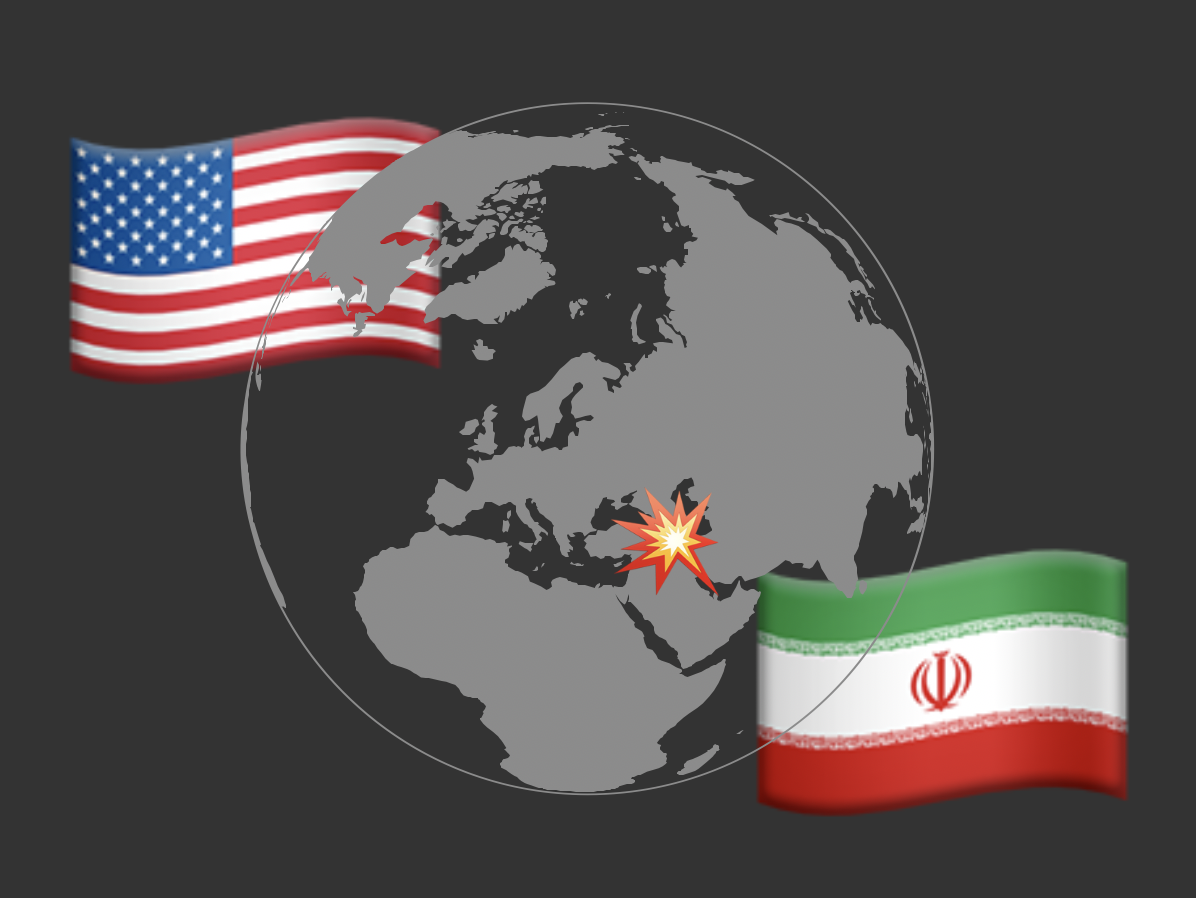
In the wake of what was very nearly a war between the United States and Iran, we need to ask ourselves how we ended up on the brink and take an uncomfortable look at what happened while we were there.

What Went Down

Background info: In 2017, Trump pulled the U.S. out of the Iran Nuclear Deal, an agreement between Iran and the U.S., the U.K., France, China, Germany, and Russia that was negotiated by President Obama in 2015 and arranged for the lifting of economic sanctions against Iran in exchange for them to ramp down their nuclear developments. The deal wasn’t perfect, but Iran was at least playing by the rules, and (for the most part) continued to do so even after the U.S. pulled out. The current conflict kicked off in May, 2019 with a report from Israeli intelligence officials that alerted the U.S. to an alleged Iranian plot to attack U.S. forces in the region, prompting the United States to send the USS Abraham Lincoln aircraft carrier to the Middle East as a reinforcement measure, leading to a month of threats between leaders of the two nations. Tensions grew worse a month later when Iran shot down a U.S. drone; they say the drone was in Iranian airspace, the U.S. claims it was over international water. Iran also bombed a Saudi oil field last September; this attack was largely unprovoked, though there was growing pressure within the country for their leaders to do something, due to the recession they were experiencing as a result of the sanctions reimposed by Trump when he pulled the U.S. out of the Iran Nuclear Deal (which caused a 75% decrease in Iranian oil exports). The attack on the Saudi oil field further damaged U.S.-Iranian relations because Saudi Arabia is a United States ally (for some reason).

December 27, 2019: A rocket attack on an Iraqi air base killed one American civilian-contractor, injured four American servicemen, and killed two Iraqis. The attack was allegedly carried out by Kata'ib Hezbollah, a military group supported by Iran.

December 29, 2019: The United States attacked five facilities in Iraq and Syria which had ties to Kata’ib Hezbollah; the attacks resulted in the deaths of at least 25 people.

December 31, 2019: An Iran-backed mob attacked the United States embassy in Baghdad, Iraq. No U.S. citizens were harmed because they were able to shelter in a safe room inside the compound, though the mob did start fires and vandalize the embassy. This prompted President Trump to deploy additional troops to Iraq.

January 3, 2020: President Trump authorizes a missile strike killing Qasem Soleimani (the second most powerful person in Iran and the figurehead of the Iranian military) at an airport in Baghdad. Trump warned Iran not to retaliate, and preemptively sent more troops the area as a precaution (at this point, 14,000 troops have been deployed to the Middle East since May, 2019).

January 4, 2020: Donald Trump threatens to attack Iranian cultural sites if they retaliate after Soleimani’s killing. Targeting cultural sites is a war crime under international law.

January 5, 2020: Secretary of Defense Mark Esper and Secretary of State Mike Pompeo have both explicitly contradicted the President’s statement that they intended to target cultural sites, leading Trump to double down on his commitment.

January 5, 2020: Iran announces that they will no longer honor the 2015 Iran Nuclear Deal, completely abandoning all the commitments they made to limit their nuclear development.

January 7, 2020: Iran attacks Iraq’s Al Asad and Erbil air bases, both of which house American troops. No casualties were reported, and Iranian officials indicated that this would be the extent of their revenge for the killing of Soleimani.

January 8, 2020: Donald Trump delivers an address announcing that the U.S. will refrain from using force in response to the 1/7/20 missile attacks, instead announcing further sanctions and encouraging other nations to withdraw from the Iran Nuclear Deal.

Things To Consider

We aren’t at war right now, and by all indications, this chapter of the saga is over. While I feel compelled to give Trump credit for showing the restraint it took to not respond to the Iranian attack on the Iraqi bases at Al Asad and Erbil with military force, that would be a bit like rewarding a toddler for safely exiting a pool after jumping into the deep end with no floaties. While the United States has had a complicated and troubled relationship with Iran for decades with more than a few points of contention, the U.S. seems responsible for exacerbating things this time. So, why did this whole thing spiral so quickly towards a war?

Simply put, it was because the Trump administration claimed that they had credible intelligence suggesting an imminent attack against Americans, and that killing Soleimani was an effort to stop it: that’s the big kickoff point for this whole thing. Yes, there were events that led up to it, but they were all pretty tit-for-tat, low consequence actions. The Soleimani strike was the headline grabbing event that really catapulted this ordeal to a much higher level.

So, was it justified? Evidence of an imminent attack has not been released, and the White House has so far refused to provide any further information. Democratic and Republican Senators have condemned the administration for providing little to no justification of their decision to kill Soleimani, after having received a briefing from the White House where they were given access to confidential details surrounding the strike (some Senators have also said that the information they receiving was not of a sensitive nature, and should be made available to the public). So, the question here is why the strike was ordered in the first place, given that it seems quite disproportionate to kill Iran’s second highest ranking official as a direct response to a far less significant attack on our Iraqi embassy where nobody was hurt.

A few potential answers to this question exist. Perhaps Trump was itching for a war. After all, he has publicly and repeatedly demonstrated in the past that starting a war with Iran is a good way to win reelection. Perhaps he wanted to distract from the impeachment proceedings at the start of the week when they could’ve potentially gotten ramped up again. Maybe he was expecting the unsavory headlines announcing that John Bolton — Trump’s previous National Security Advisor who was on the infamous Ukraine call at the heart of the impeachment inquiry — was willing to testify if subpoenaed by the Senate, and wanted to do something that take attention away from that development. However, let’s try to give Trump the benefit of the doubt, here. It’s not impossible that the action was truly taken to prevent an imminent attack against the U.S. Unfortunately, this seems less likely given that, after the White House’s briefing, even some Republicans have dismissed the intelligence on the alleged attack as being trivial and disingenuous.

Another thing that we need to ruminate upon is Trump’s willingness to commit war crimes. Soleimani’s killing, given his rank in the government of a sovereign state (and despite his role as a leader of paramilitary terrorist groups) can be categorized as an assassination and therefore a war crime in its own right. This is troubling, but it’s also a gray area. It’s easy to see that killing him wasn’t a proportionate response, but it’s hard to call it a war crime (even though it technically was) given that Soleimani has committed a long list of atrocities and certainly deserved to be taken out (a point where Democrats and Republicans seem to agree). More troubling, though, is that Trump threatened to attack Iranian targets of cultural significance. This displays a blatant disregard for international law, even while Trump’s advisors were adamantly against the idea. Yet, Trump doubled down. There’s not much we can analyze here: Trump threatened to willfully and indisputably break international law. Love him or hate him, that’s not something any voter with a conscience can ignore; it’s enough to give even the most passionate Trump fans pause.

It’s also appropriate that we acknowledge the loss of life that has transpired as a result of the actions our country has taken. Fortunately, only one American lost their life, but that’s not true for the Iranians. Soleimani’s death sent Iran into an emotional tailspin, and at least 56 people died after being trampled in a stampede at Soleimani’s huge, public, very emotional funeral procession. Additionally, 176 people died after Iran shot down a Ukrainian airliner shortly after it took off from Tehran, presumably by mistake, as a result of the heightened tensions and fear of attack that led them to more aggressively defend their airspace. I’m not saying that any of these deaths are the United States’ fault — they all boil down to Iranian government negligence — but none of those people would be dead if we hadn’t exacerbated this conflict by killing Soleimani. It’s not a great look, and our allies likely aren’t thrilled with us right now, as the plane that crashed was carrying not only Iranian citizens, but also Canadians, Brits, Germans, and Swedes.

We must also ask: are we safer? Trump said that killing Soleimani was an action taken to avoid a war, not start one. Unfortunately, one of the most significant consequences of his action against Iran was that it gave them an excuse to get out of the nuclear deal, and they’re now back to unbounded development of their nuclear program. Do you feel safer?

This whole episode is one that should cause Americans to reflect. We almost sent a bunch of nineteen year olds to war with a country who had done little to provoke such response, and for what? What did we stand to gain? What were we defending ourselves from? The American people and our allies deserve answers to those questions, and the Trump administration owes them to us. Hopefully those answers don’t lie in the lined pockets of America’s defense contractors.

UPDATED: 1/10/20, 20:21

Iran Attacks Iraqi Bases Housing American Troops Following Soleimani Assassination

Fortunately, early reports indicate that no Americans were killed.

If this is the case, we need to cut our losses and pull our troops out before American life is lost: we need to do everything we can to deescalate this whole situation immediately. Any further action from the U.S. will all but guarantee a war with Iran that nobody wants (except those at Lockheed Martin and anyone facing impeachment trials), and Iran has promised to attack on U.S. soil if we retaliate. Not that we should fear them, but we should have enough respect for the lives of Americans at home and abroad to stop antagonizing and provoking the Iranians.

UPDATE: 1/8/20, 11:40;

President Trump just announced that no military action will be taken against Iran, though he will impose economic sanctions. Though he mischaracterized Iran’s attack as “stepping down” when, in reality, that’s exactly what he’s doing, his decision not to pursue a military “solution” nonetheless seems appropriate, and assuming Iran was honest in indicating that they have no plans to further avenge Soleimani’s assassination, the United States is dodging a boomerang. However, let us not forget that Trump’s confirmation that was more than willing to commit war crimes, should this situation have escalated.

Why Are We Barking?

Everyone knows that dogs bark at other dogs when they want to challenge their alpha male status, and that the dominant dog doesn’t bark back because he knows his status is already recognized.

The attack on our Iraqi embassy was highly concerning, and increased troop presence in the area wasn’t a bad response, though, as I remarked a few days ago, we ought to tread lightly in order to avoid another long war. We also need to be asking a lot of questions, and then making sure that our leaders know where We The People stand on this issue. Killing one of Iran's top military leaders seems reckless and uncalled for. Yes we were threatened and everyone in the western world seems to agree that the world is better off without Soleimani, but that doesn’t mean we needed to take him out as a reaction. It was brash and just makes a volatile situation worse.


It’s also worth noting that Trump frequently accused Obama of planning to start a war with Iran to ensure his re-election. Seems like that idea never quite fell out of his head. It’s concerning that Trump is engaging with the Iranians in this tit for tat little showdown that could easily escalate into a proxy war. Trump has threatened the Iranians not to respond; what are the odds that they’re going to roll over and take this? Pretty low, and he knows it.


If push comes to shove, everyone on this big blue planet knows that the United States could handle the Iranians with both hands tied behind our back; we could literally wipe them off the map, and our allies would be grateful that we had (even if they’d publicly denounce such actions to save face). But why even engage Iran? Let them bark; we hardly ought to fear their bite. We only need to bite if we’re attacked; a subordinate dog won’t attack a dominant dog more than once.

When we bark back, we send them and the rest of the world a message that their attempts to fuck with us carry some weight, and that isn’t a message an alpha male ought ever send. Americans who are excited for war are just showcasing their ignorance and their inferiority complexes (@POTUS). We, as a nation, don’t need to prove ourselves.

Trump Re-Announces Flavored E-Cigarette Ban (Sort of)

According to The Washington Post, the Trump administration has reversed course (again) on their decision regarding restricting access to flavored vaping products. After originally announcing an aggressive ban (which I personally supported), fear of the political ramifications the ban would have amongst their base led them to backpedal on that announcement (a move I harshly criticized). Now, they’re compromising a bit.

This ban seems to be only on flavored e-cigarette pods (excluding tobacco and menthol flavors), sparing the liquids sold in vape shops. In other words: they’re coming for you, Juul.

As I’ve mentioned before, I try to give Trump credit when he deserves it: this is certainly better than not doing anything, but I liked the sound of their original promise better.

United States’ Iraqi Embassy Attacked

Falih Hassan, Ben Hubbard, and Allish J. Rubin, reporting for The New York Times:

Protesters broke into the heavily guarded compound of the United States Embassy in Baghdad on Tuesday and set fires inside in anger over American airstrikes that killed [25] members of an Iranian-backed militia over the weekend.

The U.S. needs to respond to this attack swiftly and forcefully, but we also need to avoid another decade of war.

Ryan Browne and Caroline Kelly, reporting for CNN:

The United States will send approximately 750 soldiers to the Middle East immediately, Defense Secretary Mark Esper confirmed in a written statement Tuesday, after attacks broke out in Baghdad among hundreds of protesters in response to airstrikes in Iraq and Syria conducted by US forces on Sunday. 

"At the direction of the Commander in Chief, I have authorized the deployment of an infantry battalion from the Immediate Response Force of the 82nd Airborne Division (in Fort Bragg, North Carolina) to the U.S. Central Command area of operations in response to recent events in Iraq," Esper said, adding that additional forces "are prepared to deploy over the next several days."

"This deployment is an appropriate and precautionary action taken in response to increased threat levels against U.S. personnel and facilities, such as we witnessed in Baghdad today.”

Obviously I hope for the safety for all of our troops, but as a North Carolina boy planning on joining the military, the deployment of troops from Fort Bragg hits close to home. Thoughts, prayers, good vibes, whatever you got: send ‘em to the boys heading to Iraq tonight. 🇺🇸 👏🏼🤙🏼✌🏼✊🏼🇺🇸

UPDATED: 1/8/20, 21:26

Trump Rally Attendants Cheer For Recent Polls That Support Impeachment

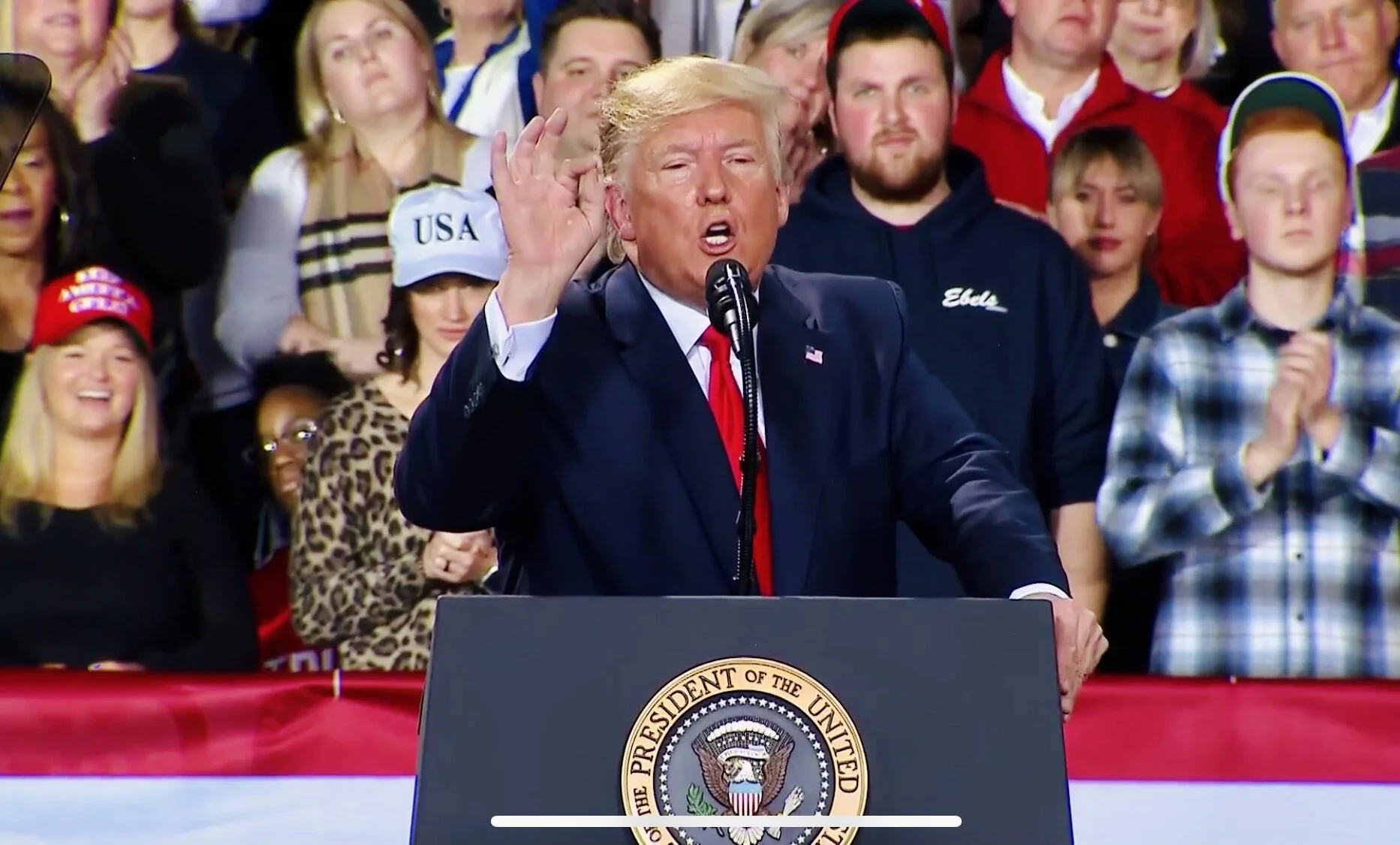
Donald Trump, implying his own allegedly-superb popularity among the American electorate during a rally in Michigan, just asked his audience “have you seen my polls for the last four weeks?”. Raucous applause ensued.

Obviously, those in the audience have not seen any recent polls. The latest poll from Fox News reports that 55% of Americans want Trump impeached and removed from office, compared to just 43% who don’t think he should be impeached.

PoliticsGuest Userdecember19
Trump Officially Impeached

Today is a historic day. President Donald Trump just became the third President in American History to have officially been impeached by the House of Representatives.

As of the moment this article was published, Donald Trump himself was still unaware of his impeachment, because he was in the middle of holding a rally to distract from the impeachment process.

If you’re not sure what this means or how the process continues from this point, check out CopyrightBro’s Impeachment Briefing.

PoliticsGuest Userdecember19
Impeachment Briefing

There’s so much information about the impeachment of Donald Trump that it’s easy to lose sight of the forest for the trees given the constantly-bloated 24-hour news cycle that surrounds our President. There are a few important things that We The People need to understand at this point in the game: how the impeachment process works, what Trump is being accused of having done wrong, and how the political party machines will try to use the whole charade to their benefit. Once you understand those things in context, you can begin to form your own educated opinions about how our congressional leaders and executives are conducting themselves, and whether or not the President deserves to be impeached.

On The Process

The most fundamental thing to understand is how the impeachment process works. I am no legal expert, but there’s a common misconception that impeachment IS the act of removing a President from office, when in reality, impeachment is a step in a process that can lead to the removal of the President. The first step in the impeachment process is for the House of Representatives to conduct an investigation into whether the President (or other public officer) may have done something wrong. If they find evidence that he or she has done something wrong, whether it be a criminal act or behaving in a manner inconsistent with their office, the House Judiciary Committee will draft articles of impeachment.* The articles of impeachment are the legal documents asserting that the President has done something wrong, and explaining what they are being charged with. After these articles are drafted, the House Judiciary Committee will hold a vote to determine whether they should be advanced to the full HOR for consideration. If they vote no, the process is over, but if they vote yes, then the whole House will vote on whether or not to “impeach” the President. If they vote no, again, the process ends. If they vote yes (a simple majority is sufficient), the president will have been officially “impeached”, but that doesn’t mean that he will be removed from office, necessarily. If he is impeached, then the Senate takes over the process, because they’re the chamber of Congress responsible for holding a trial of the President to determine whether he is guilty of what he is accused of in the articles of impeachment. After the trial, the full Senate will vote on whether or not the President is guilty and should be removed from office. A two-thirds majority is required to remove the President from office, at which point, the Vice President would become the President.

*It’s important to note that an impeachable offense does not necessarily have to be a specific crime, but it must meet the one of the three descriptions laid out by the founding fathers in the constitution, which include “treason”, “bribery”, and “other high crimes and misdemeanors”.

What Trump is Accused Of

In the case of Donald Trump, the House Judiciary Committee has drafted two articles of impeachment, and this morning, the committee voted 23-17 to advance them to the full House of Representatives for consideration and a vote, which will likely take place next week. The two articles of impeachment against President Trump accuse him of “abuse of power” and “obstruction of congress”, which are both offenses that can be categorized as “other high crimes and misdemeanors”. The articles of impeachment are freely available on the internet, and anyone who wants to discuss this impeachment process should read them. Click here to download a PDF version. They’re only 9 pages long, and there’s really no excuse not to read them. Here is a summary of the contents and implications of each article, with necessary context:

  • Article One — The first article of impeachment brought against Trump charges him with with “abuse of power”. This is the article that defines the offense that kicked off this whole impeachment process. A lot of people probably assume that the impeachment has something to do with allegations of collusion by the Trump campaign with the Russian operatives who interfered in the 2016 election, but this is not the case. Article one is narrow in scope, focusing solely on the much more recent issue of Trump’s call with Ukrainian President Volodymyr Zelensky. According to an anonymous whistleblower, Trump leveraged U.S. military aid to Ukraine (aid which we’ve been providing for years) on Zelensky’s willingness to open an investigation into the activities of Hunter Biden (the son of former Vice President and 2020 Presidential candidate, Joe Biden), whom Trump believed was guilty of corruption and a beneficiary of nepotism based on his position on the Board of Directors for a Ukrainian energy company called Burisma Holdings (Hunter Biden had no experience in the energy industry when he took the board seat). The concern here is that, even if Hunter Biden and Joe Biden were guilty of corruption, Presidents still aren’t allowed to seek help from foreign governments in elections, which is likely the reason Trump wanted dirt on Biden (who is one of the top polling candidates who may oppose Trump in the 2020 general election). The benefit of the doubt, in this case, is fairly weak. That argument is that perhaps Trump was only interested in fighting corruption, but starting with his biggest political opponent seems like a convenient choice when Trump hadn’t requested any other foreign governments to initiate investigations of any other potentially corrupt American citizens.

  • Article Two — The second article of impeachment charges Trump with “obstruction of Congress”, and relates to his conduct during the House’s investigation. The Constitution gives the House of Representatives the “sole power of impeachment”, and under this constitutional power, they have to authority to subpoena witness testimony, records, and any other evidence that would be useful in determining whether to impeach the President. The White House, under Trump’s authority, submitted a letter to the House leaders stating their unwillingness to cooperate with the investigation, saying that it was “illegitimate” because the full House of Representatives didn’t vote on whether or not to impeach the President before conducting their investigation. This seems (and is) ridiculous; it is the equivalent of asking for an indictment decision before the police officers/investigators are allowed to collect any evidence. Indeed, Trump did completely refuse to comply, handing over none of the requested documents and prohibiting those who work for him to testify, thereby infringing the HOR’s Constitutional right to collect such evidence to conduct their “sole power of impeachment”.

Things To Consider

Given that America is so divided over President Trump, it’s important to look at this from both sides.

While a lot of angry, ill-informed Democrats have been shouting “impeachment” since Trump won the election, congressional Democrats were slow to actually initiate the impeachment process against President Trump. Of course, some will say this is because they had no concrete evidence, while others will say it was merely a strategic decision by Nancy Pelosi.

Of course, there is some degree of truth to both of those claims. Conclusive evidence that Trump colluded with the Russian operatives who influenced the 2016 election never surfaced. To many Trump supporters, in the wake of the long and unsuccessful campaign to oust him over the whole “Russian Collusion” fiasco, the whole issue of him having allegedly abused his power in the Ukraine case feels like it’s been a blitz attack by Democrats, carried out swiftly and recklessly with the sole hope of removing him from office, regardless of the facts. However, anyone smart enough to have ended up in Congress can see how this is likely to play out: the House of Representatives will impeach Donald Trump, and then he’ll be acquitted by the Senate. As far as the political fallout, it could really go either way. It could enrage Democrats and moderates who feel that the claims against Trump were unfairly dismissed, and drive them to vote in record numbers in 2020. It could also make Republicans and those who have always supported Donald Trump feel vindicated, and drive them to support him even more passionately.

However, the Democrats are rightly pointing out that even if you think you’ve been unfairly charged with something, you don’t get to just skip your court date and ignore subpoenas; I recently got a traffic ticket for making an illegal left turn in an intersection where there was no posted signage prohibiting my left turn. I think it’s extremely unfair, but I still have to go through the proper legal channels to prove my innocence, I can’t simply refuse to participate in the legal process altogether, because those are crimes of their own, and in Trump’s case, they directly impede the House’s “sole power of impeachment”. The biggest issue here is not what happened with Ukraine, though that is problematic, if true. The big issue here is that Trump, by refusing to cooperate with the legally conducted impeachment inquiry and instructing those beneath him to also refuse to cooperate, he is directly challenging the separation of powers and usurping power from the House of Representatives, regardless of whether the allegations from Article One were valid. This, if not punished, would set a dangerous precedent that gives the executive branch more power than the legislative branch, which is directly contrary to the form of government envisioned by the Founding Fathers. When our Constitution was drafted, the authors sought to separate power equally between three distinct branches with a system of checks and balances so that no branch could amass more power than the two, because when that happens, the entire republic is placed on a slippery slope that can lead to dictatorship. That may sound dramatic, but let us not forget that Adolf Hitler rose to power by being elected democratically, and then usurping power by delegitimizing and weakening the German legislative body.

Next week, the full House of Representatives will vote on whether or not Trump should be formally charged with the offenses listed in the articles of impeachment. You may be wondering why the evidence against Trump isn’t abundantly clear at this point, given that the HOR vote to impeach him is the next step in the process. To use the earlier analogy of a criminal trial, at this point in the process, evidence has been collected and we’re waiting on an indictment — evidence, in any legal case, impeachment or otherwise, wouldn’t necessarily become public until it is brought up in the actual trial — so despite the fact that there seems to be little evidence in support of Article One, in fact we just don’t know what that is, both because the Trump administration refused to provide any, and the small number of witnesses who testified to the House Judiciary Committee had no legal obligation to do so publicly. It is also worth noting that there is one piece of solid evidence which could immediately exonerate the President, though it has only been partially released. The White House, naturally, keeps records of all of Trump’s phone calls, but so far they have only provided a “rough transcript” of his call with the Ukrainian President during which the alleged abuse of power occurred. Now, “rough transcript” is little more than an oxymoron: either the transcript provided is exact or it is a summary, there is no such thing as a “rough transcript”.

If the full House of Representatives does vote to impeach, Donald Trump will become the third President in United States history to actually have been impeached.

A formal trial would then take place in the Senate. After both sides have had the opportunity to provide evidence and testimony, the Senate will vote on whether or not the President deserves to be removed from office based on the results of the trial they conduct. However, it’s very unlikely that Senate Majority Leader Mitch McConnell will conduct anything resembling a just trial. He has remarked that he wants the whole process to be very quick, allegedly for the sake of expediency, although it seems more likely that he hopes to prevent the President from digging himself into an even deeper hole during his testimony to the Senate. McConnell went so far as to state that allowing either side to call witnesses would be “mutually assured destruction”.

Given the deep partisan divide in Congress right now and the fact that the Republicans have the majority (with 53 seats; the Democrats have 45, and there are two independents), it is highly unlikely that 20 Republicans (the number needed to reach the two-thirds majority needed to remove Trump, assuming all of the Democrats and independents vote for removal) would break rank with the rest of their (usually) pro-Trump party. However, this could serve as an out for a silent faction of Republican Senators who think Trump is doing irreparable damage to their party, and in that case, a landslide could happen quite suddenly. The odds are extremely low, but the political situation in America is so volatile that we would be remiss not to consider all possibilities.

At the end of the day, it is most likely that Donald Trump will be impeached but not removed, though that doesn’t mean that the whole process will have been for naught. Donald Trump is a parasite to our nation, and historians will look back on this moment in history as a turning point, and they will place the blame at the feet of the Senators who refused to conduct a just trial and convict him for the offense(s) of which he is admittedly guilty, offenses which will lead to the destabilization of our federal government and the eventual collapse of our republic.

UPDATED: 12/14/19; 09:50