Cocktail Napkin Calculations For Expected M1X Performance
Analysis (and speculation) by Jason Snell on Six Colors:
Though Gurman’s report suggests these would be 10-core systems, the important number is the number of high-performance cores—eight. Though energy-efficient cores are very helpful in keeping a Mac bubbling along nicely, they don’t make enormous contributions to the overall top performance of a device. It’s all about the performance cores. And eight is—follow me here—twice as many as four.
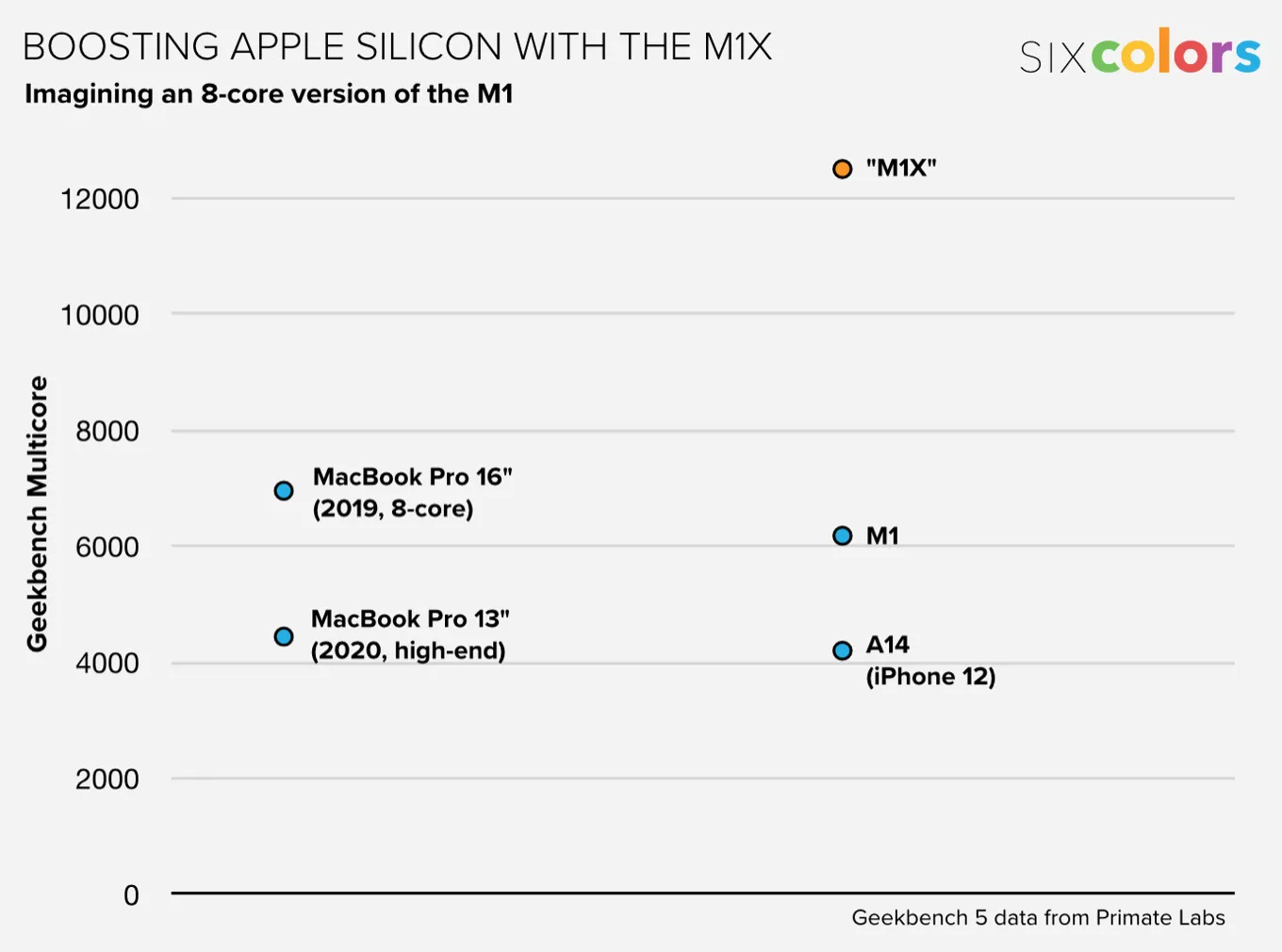
So if an M1 processor scores around a 6180 in GeekBench 5’s multi-core score, I can extrapolate and guess that a new chip—let’s call it the M1X, because I’m guessing that this chip is based on the same cores as the M1 and the A14 chips—would score roughly double the M1—let’s say 12,500.
To put this in context, I’ve included the current high-end Intel MacBook Pro models in the chart. The M1 models already surpass the existing 13-inch MacBook Pro with Touch Bar, but the eight-core 16-inch model still wins out in overall multiprocessor performance. (I’m leaving aside single-core performance, graphics power, and energy efficiency here and just focusing on top CPU speed.)
The 16-inch MacBook Pro would pale in comparison to the M1X, though. And it’s not hard to imagine Apple executives appearing in a video next week and declaring that the new MacBook Pros are roughly twice as fast as their predecessors.
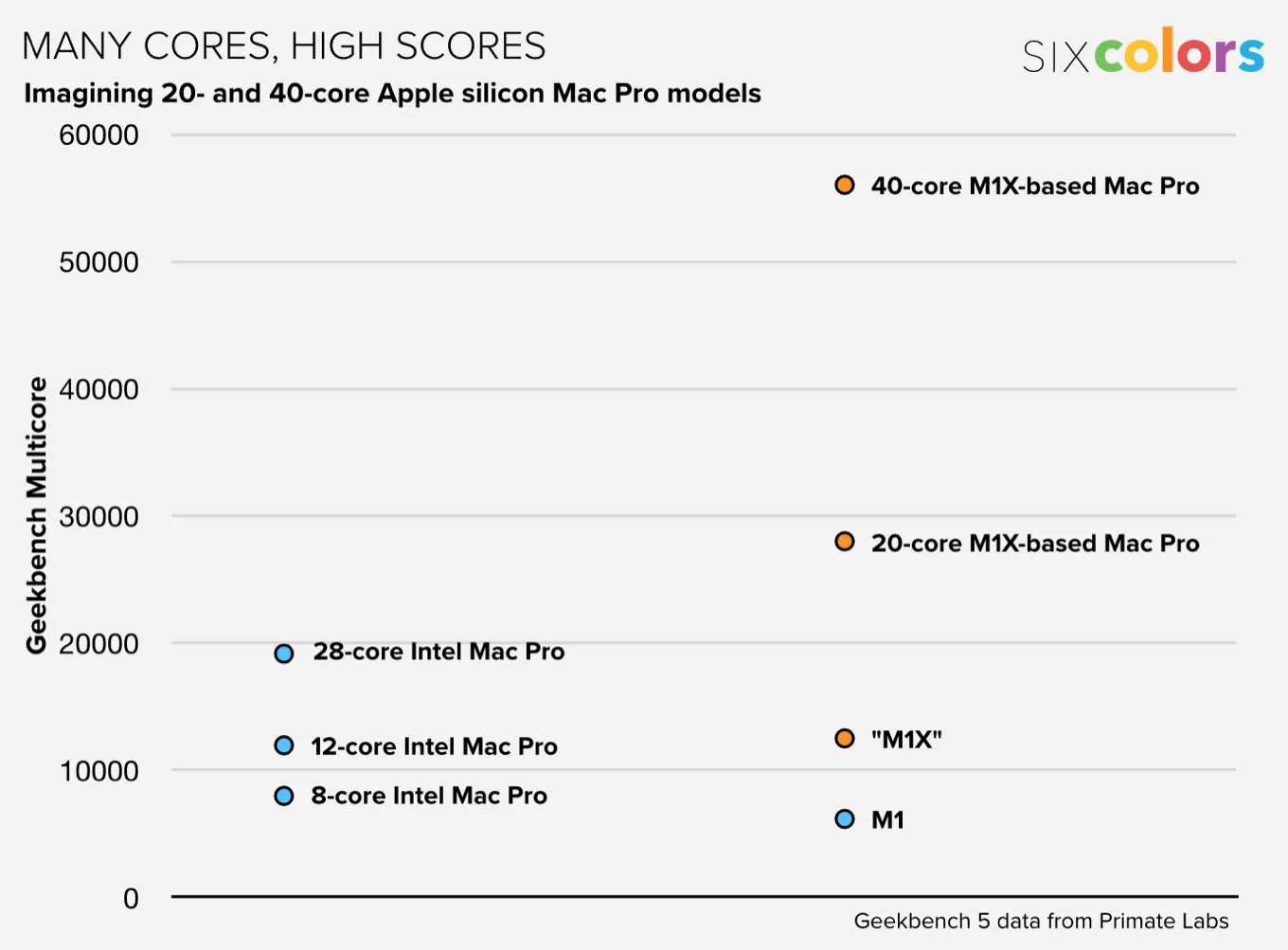
Just for kicks, I also threw together a chart based on Gurman’s report that Apple is also planning Mac Pro models based on the same chip design, but variants with 20 and 40 performance cores. Yep, that’s a lot of cores. Just for kicks, let’s make a guess about future Mac Pro performance and compare it to existing Intel-based Mac Pro models:
The back-of-the-envelope calculation suggests a 20-core Apple silicon-based Mac Pro would be quite a bit faster than a 28-core Intel Mac Pro at multiprocessor performance, making it the fastest Mac of all time. And that 40-core model would be… well, yeah, more than twice as fast as the previous speed champion.
Advances like this just don’t happen. Yes, technology improves every year and computers get faster, but Apple is the only player in the industry making chips that routinely double their clock speed. They’ve been on an exponential increase with the A-series chips, and the M-series is based on the same basic formula, using the same cores. If the M-series chips continue to improve at the same rate as the A-series, Apple’s M-series chips will be a decade ahead of Intel and the rest of the industry within the next three years.
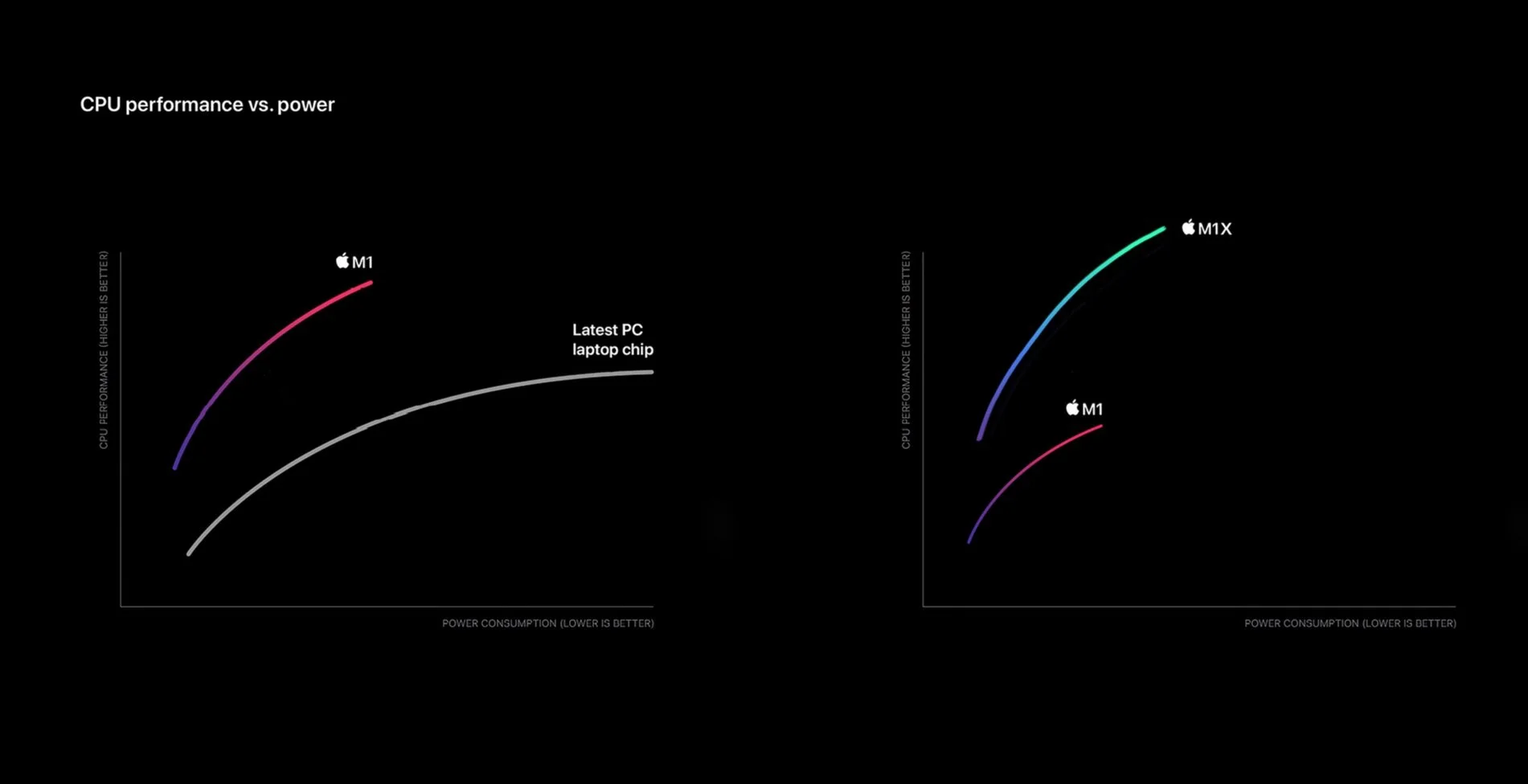
The charts above were Snells, but I made one too (right). It's very scientific and precise, just like the one Apple showed last fall (left).