#quitgoogle
People often ask me why I have such a vehement hatred for Facebook, and it’s hard to give a concise answer. In short, Facebook presents a unique challenge to our country and the world at large — they do not have a moral compass, they are motivated entirely by their own greed, yet they’re an almost unstoppable entity fueled by the riches of their exploitative successes. They have contributed significantly to the deep political division in our country today, and their social network has been used to collect unimaginable amounts of data on everyone who uses the service, as well as those who don’t.
One of CopyrightBro’s most elementary goals is to shed light on the true, abusive nature of Facebook’s business, and convince you to delete your account. There are better ways to connect with the people you care about than through a company whose business model relies on the exploitation of their users. If you aren’t paying for a service, you’re not the customer, you’re the product.
The articles listed below are some of the most jaw dropping, informative, and essential pieces that CopyrightBro has to offer, and they provide a good starting point for someone who wants to educate themselves on why Facebook is such a parasite to our society. If you’re not afraid of a trip down the rabbit hole, you can find the whole archive of Facebook related content here.
Important context: many people aren’t aware of this, but Facebook owns Instagram and WhatsApp, as well as other popular services. It’s important to understand that their same privacy policy and pattern of corporate negligence and malpractice affect these services as well.
The #deletefacebook Newsfeed
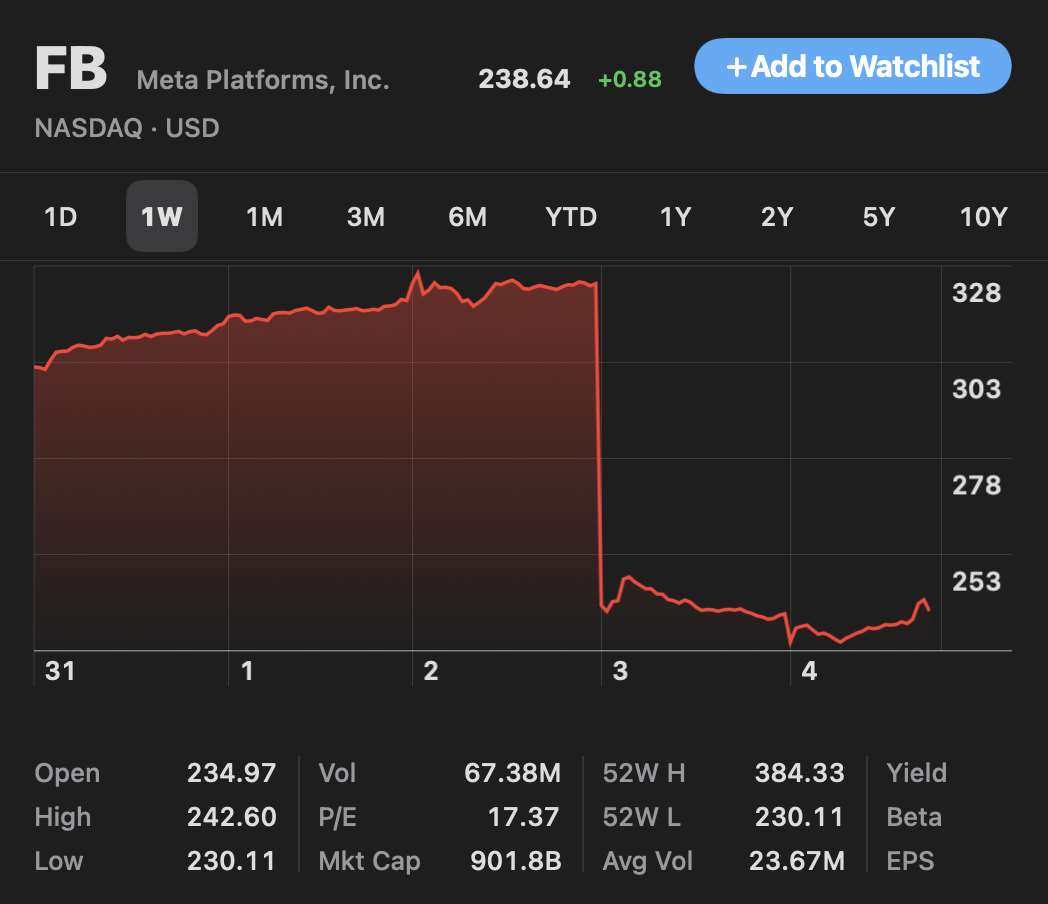
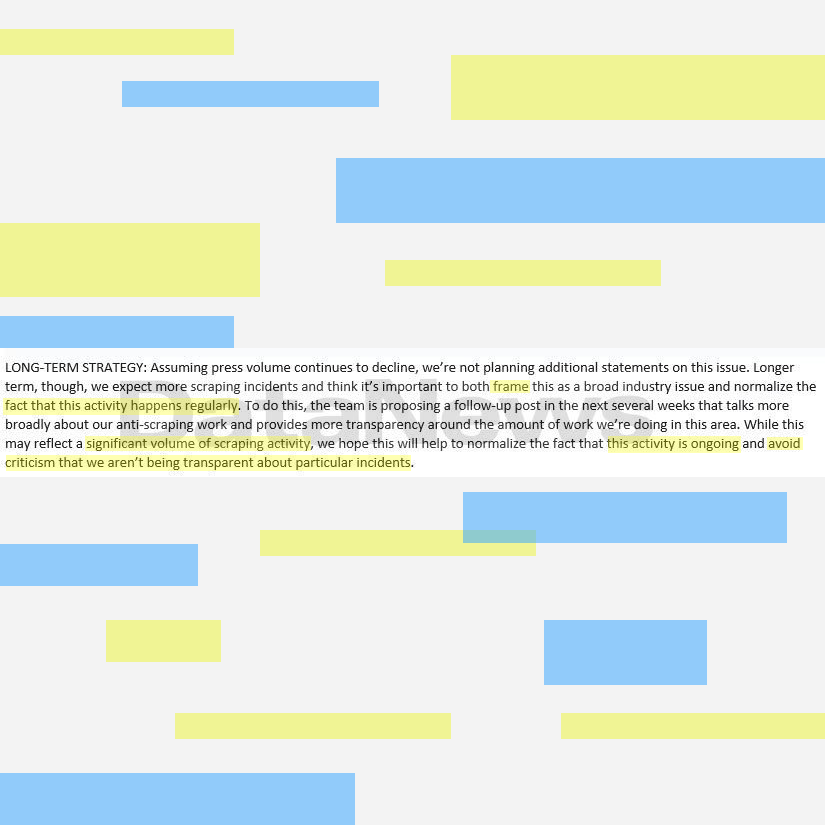
These fuckers are absolutely shameless. Rather than putting forth any meaningful effort to actually prevent data leaks from their surveillance network, they just want to convince you that it’s something you’ll have to live with and not really a big deal. It’s just a part of their larger to plan to keep user’s from realizing how much value all the data Facebook steals from them really holds.
#deletefacebook
Rob Price, writing for Business Insider earlier this year:
In an email to Facebook's chief financial officer at the time, Zuckerberg said Facebook wanted to buy Instagram to give itself more time to fend off competitors.
"One way of looking at this is that what we're really buying is time. Even if some new competitors springs up, buying Instagram, Path, Foursquare, etc now will give us a year or more to integrate their dynamics before anyone can get close to their scale again," he wrote. "Within that time, if we incorporate the social mechanics they were using, those new products won't get much traction since we'll already have their mechanics deployed at scale."
Isobel Asher Hamilton, Katie Canales, and Paige Leskin, reporting for Business Insider last week:
The lawsuits allege that Facebook used a strategy of neutralizing competitors before they could threaten the company's dominance of the social-media market. The suits call out Facebook's decisions to buy rather than compete with Instagram and WhatsApp, and they allege it imposed "anticompetitive conditions" on software developers.
Both complaints seek a "divestiture of assets" for Facebook — that is, breaking off Instagram and WhatsApp from the social-media giant. Additionally, Facebook could be required to get approval from the government before any mergers or acquisitions in the future.
[…]
The coalition of attorneys general, led by New York Attorney General Letitia James, began an investigation into Facebook in September 2019, and the FTC subsequently joined. Attorneys general from 46 states as well as Washington, DC, and Guam have signed on to the lawsuit. The only states whose attorneys general have not signed on are Alabama, Georgia, South Carolina, and South Dakota.
Forty six states. That’s more than enough to pass a constitutional amendment. Facebook is about to get fucked up.
This investigation (and any resulting regulation) is clearly focusing on antitrust issues, but I sincerely hope that congressional leaders take a long hard look at Facebook’s privacy practices while they’ve got them under the microscope.
I hope Facebook gets what they deserve for capitalizing on the destruction of privacy and the polarization of the American people.
#deletefacebook
Hartley Carlton, reporting for MacRumors:
Facebook has today attacked Apple in a series of full-page newspaper ads, asserting that iOS 14's privacy changes regarding data gathering and targeted advertising are bad for small businesses (via Bloomberg).
The ads are running in the New York Times, Wall Street Journal, and Washington Post, feature the headline "We're standing up to Apple for small businesses everywhere."
Earlier this year, Apple introduced a number of privacy changes that curb the ability of companies like Facebook to gather data on users and target adverts. In iOS 14, Apple has made the "Identifier for Advertisers," used by Facebook and its advertising partners for ad targeting, an opt-in feature, providing more transparency for users who would prefer not to be tracked in apps and on websites. The update simply asks users if they want to agree to ad tracking or prevent cross-app and cross-site tracking to provide targeted ads.
I was going to post the text of the ad and pick it apart line by line, but it would be a waste of time. Facebook has committed a logical fallacy, completely misrepresenting what Apple has chosen to do (which is give people more control over what data they share with big companies) as some sort of offensive play against small businesses. It’s a strawman argument designed to make small businesses look like the victims of Apple’s “forced software update”.
John Gruber recently wrote about this on Daring Fireball, again making the salient point that the privacy issue boils down to entitlement:
The entitlement of these fuckers is just off the charts. They have zero right, none, to the tracking they’ve been getting away with. We, as a society, have implicitly accepted it because we never really noticed it. You, the user, have no way of seeing it happen. Our brains are naturally attuned to detect and viscerally reject, with outrage and alarm, real-world intrusions into our privacy. Real-world marketers could never get away with tracking us like online marketers do.
This so clearly isn’t about small businesses not being able to advertise as effectively, it’s about facebook no longer being able to run behind you with a shop-vac, sucking up every crumb of data you leave behind. Don’t think they aren’t still trying though, Apple’s privacy tools are just limiting their ability to do so a little, taking them down from an industrial grade shop-vac to a consumer grade Dyson.
But still, let’s humor Facebook for a second and respond to their strawman argument. Here’s my take: if you built a small business that relies on Facebook (for advertising or any other aspect of your business), then you built a shitty small business. You put all your eggs in one basket, so captivated by the reach they could offer you that you didn’t consider the risks of relying on a company whose business model was inherently unethical and who could pull the rug out from under you at any moment. The problem here is not Apple giving people control over their own data, it’s that your small business was built on a foundation of stolen information that facebook gobbled up and turned into something you could use to target potential customers with. Looks like it’s time for you to find a more honest way to reach potential new customers.
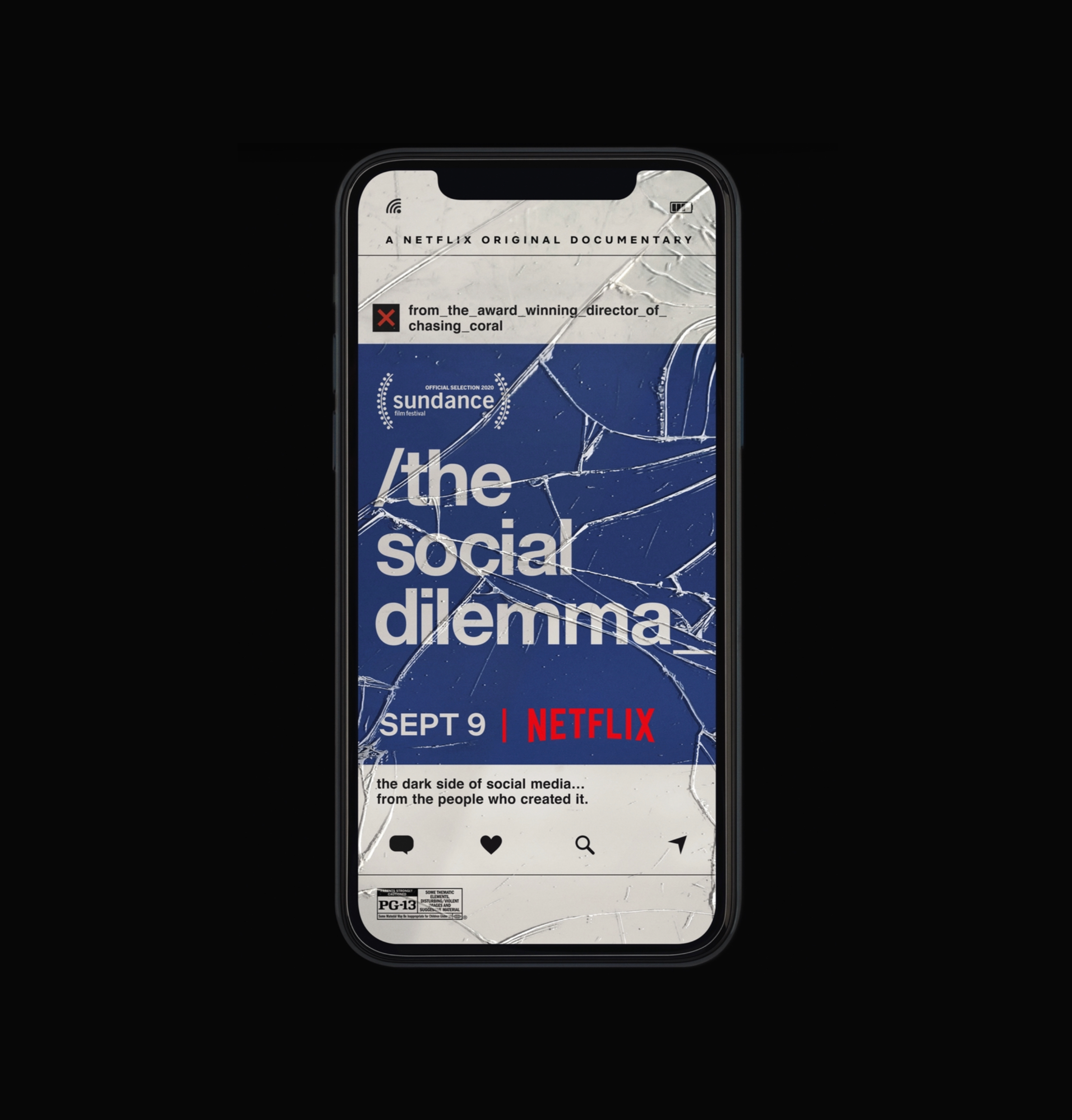
“The Social Dilemma” is a new documentary on Netflix that talks about the dangers posed by social networks and other big tech companies who draw large portions of their revenue from advertising. It details how the people who created platforms like Facebook, Instagram, Google, and others intentionally designed features to exploit human psychology and make their products addictive. It’s a good follow up to “The Great Hack”, another incredible documentary that explores how dangerous these companies are through a more political lens.
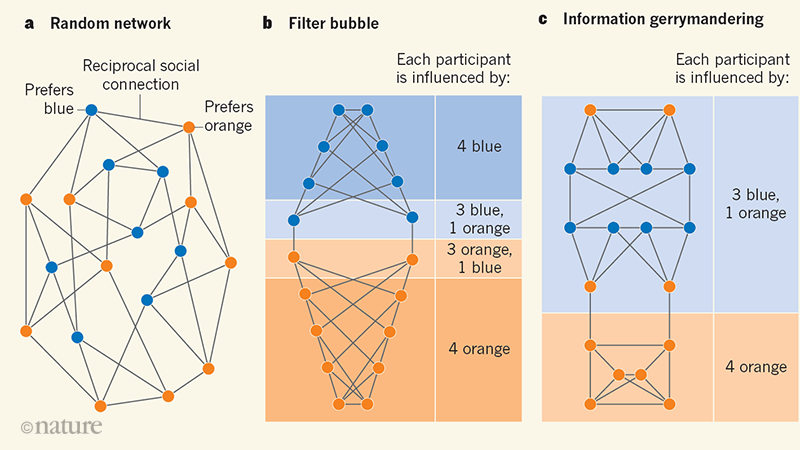
“The Social Dilemma” features a long list of ex-silicon valley inventors and programmers confirming the fears I’ve had about social media for a while now. The whole problem boils down to greed. Companies that make their money from advertising are greedy, and they deal in the business of selling human attention. The more of your attention you give to them, the more they can predict and influence your behaviors, and they’ve demonstrated that they have no problems auctioning off your attention to the highest bidder, and subsequently allowing those bidders to use your attention and the mountains of data they have on you to manipulate your feelings and your behavior. We saw what this can lead to with the Cambridge Analytica scandal; political polarization is only getting worse, and it’s already to the point where people are practically experiencing separate realities because algorithms — that very few people understand, even within the companies — are presenting them with inflammatory ads that offer “alternate facts” based on what they think will keep them engaged with the platform. The more time you spend on a social media app, the more ads you see, and the more money they make. Their goal is to capture 100% of your attention, and they have more than a few unsavory tricks up their sleeves.
The picture this film paints is bleak, but we do have a chance of brightening it up. People have got to understand what’s going on, how if affects them, and where the path we’re currently on will lead us so that we can start a real conversation about these issues and demand that companies like Google and Facebook be regulated. On an individual level, the best thing you can do is to delete your accounts. Personally, I’ve deleted my Facebook and Instagram accounts, and I’ve switched to using DuckDuckGo as my default search engine instead of Google.
I’ll admit that deleting your social media accounts is easier said than done. People are afraid they’ll lose touch with people or that they’ll be less informed. While I am in touch with fewer people on a regular basis, my connections with those people are much deeper and far more fulfilling. I’m more informed than ever, and my opinions are more reasoned and less reactive. I recognize that not everyone has the self control to delete their accounts, but there are some things you can do to reduce their influence over you. For starters:
Never share anything that you haven’t personally fact checked from at least one other source (by the way, your friend who also shared it isn’t a source).
In services that allow it, opt out of receiving personalized ads. Never click on ads.
Turn off notifications so you’re less tempted to log on.
#deletefacebook